
|
Cosmostigma cordatum (Poir.) M.R.Almeida, Fl. Maharashtra 3A: 239 (2001). (syn: Asclepias racemosa Roxb., Fl. Ind. ed. 1832, 2: 32 (1832), nom. illeg.; Cosmostigma acuminatum Wight, Icon. Pl. Ind. Orient. 4: t. 1270 (1848). ; Cosmostigma racemosum Wight, Contr. Bot. India: 42 (1834).; Cosmostigma racemosum var. glandulosum Costantin in H.Lecomte, Fl. Indo-Chine 4: 117 (1912). ; Hemidesmus cordatus (Poir.) Schult.; Periploca cordata Poir. in J.B.A.M.de Lamarck; Tylophora punctata Kostel., Allg. Med.-Pharm. Fl. 3: 1084 (1834).) as per WCSP;
.
India (E- & peninsular India, Assam), ?Burma, Sri Lanka, Java (introduced), Vietnam as per Catalogue of Life;
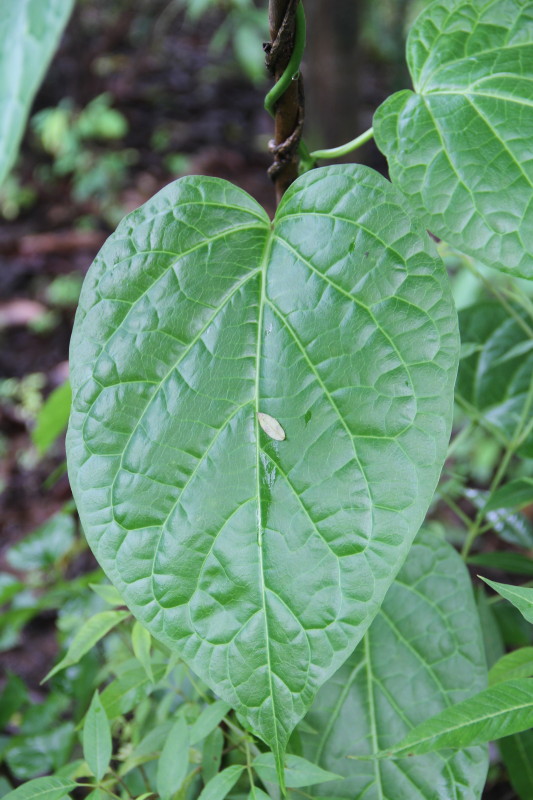
. KOZ-moh-STIG-muh — Greek: kosmos (ornament); stigma, which in botany refers to the receptive tip of a carpel … compiled from the web kor-DAY-tum — heart-shaped, referring to leaves … Dave’s Botanary . commonly known as: green milkweed creeper • Gujarati: શેંદવેલ shendvel • Kannada: ಘರ ಹೂವು ಗಿಡ ghara hoovu gida • Konkani: बैल दोडकी bail dodki, घारफुली gharphuli, मरोय maroy, सूतकांती sutakanti • Malayalam: വട്ടോളം vattolam, വട്ടുവള്ളി vattuvalli • Marathi: जटी jati, मारवेल marvel, शेंडवेल shendvel • Mundari: जटी jati • Tamil: கருத்தங்கண்ணி karuththangkanni, பெரும் காகமுகன் கொடி perum kaakamugan kodi • Telugu: అడవి తమలపాకు adavi tamalapaaku • Tulu: ಮಲ್ಲ ಪೆತ್ತತಜಂಕ್ malla petthathajanku, ಮಿರೆ ಬಾಪುಥ ತಪ್ಪು mire baaputha thappu, ಪೇರ್ ಕುಜುಂಬೆ peru kujumbe
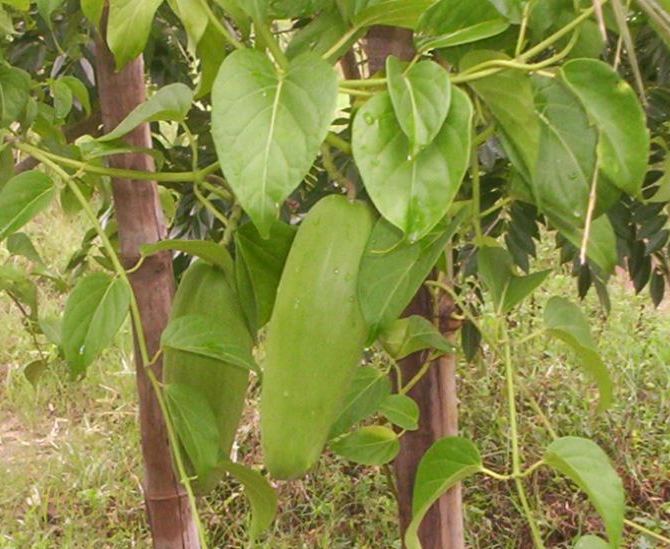
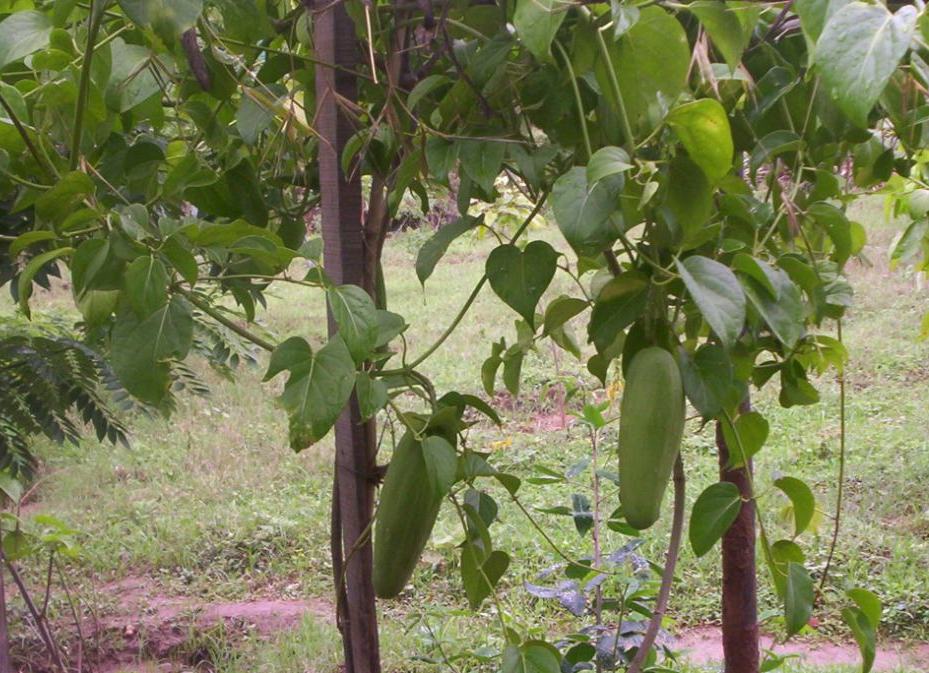
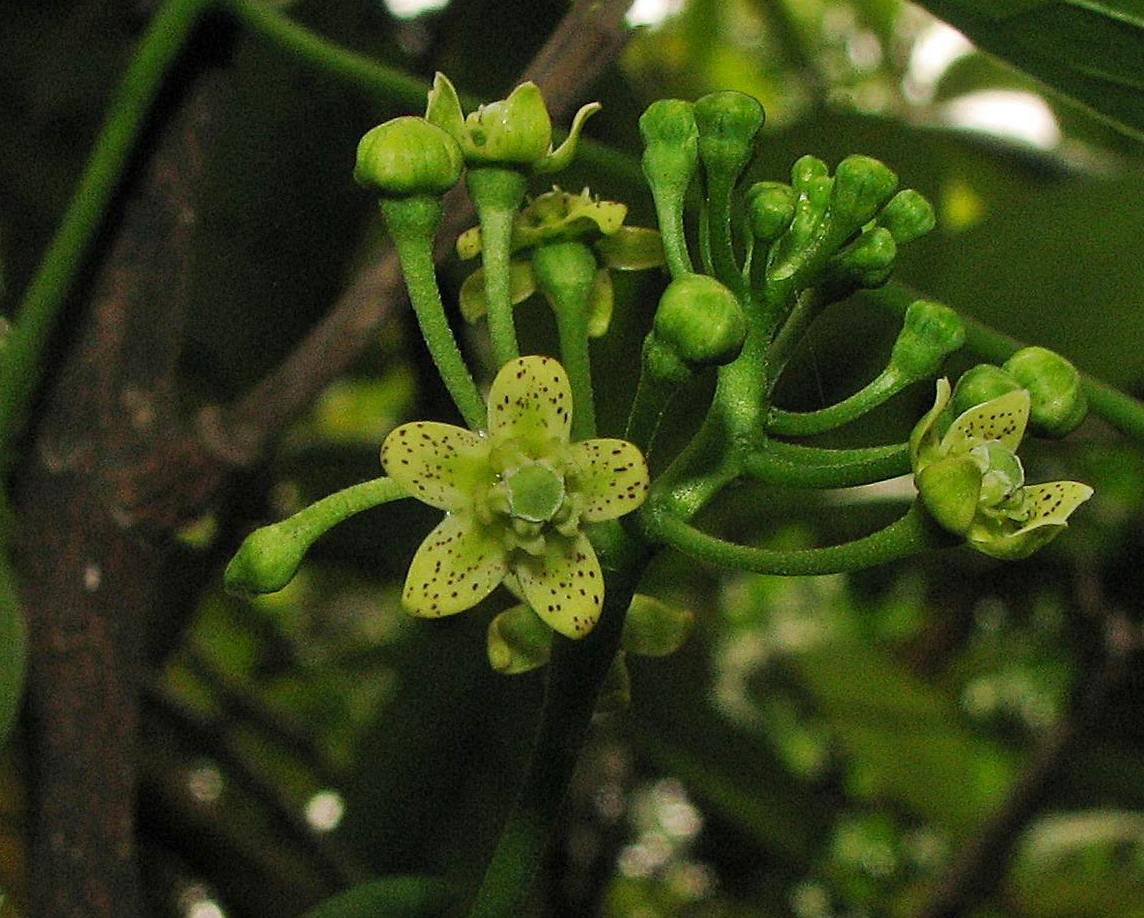
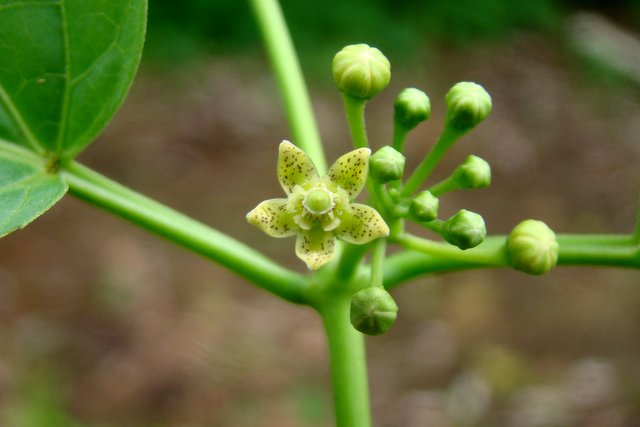
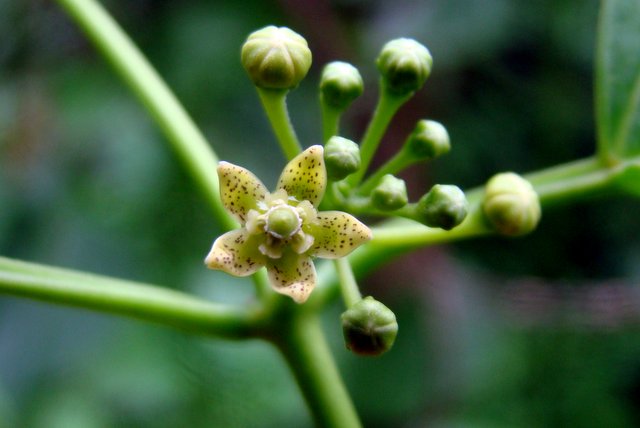
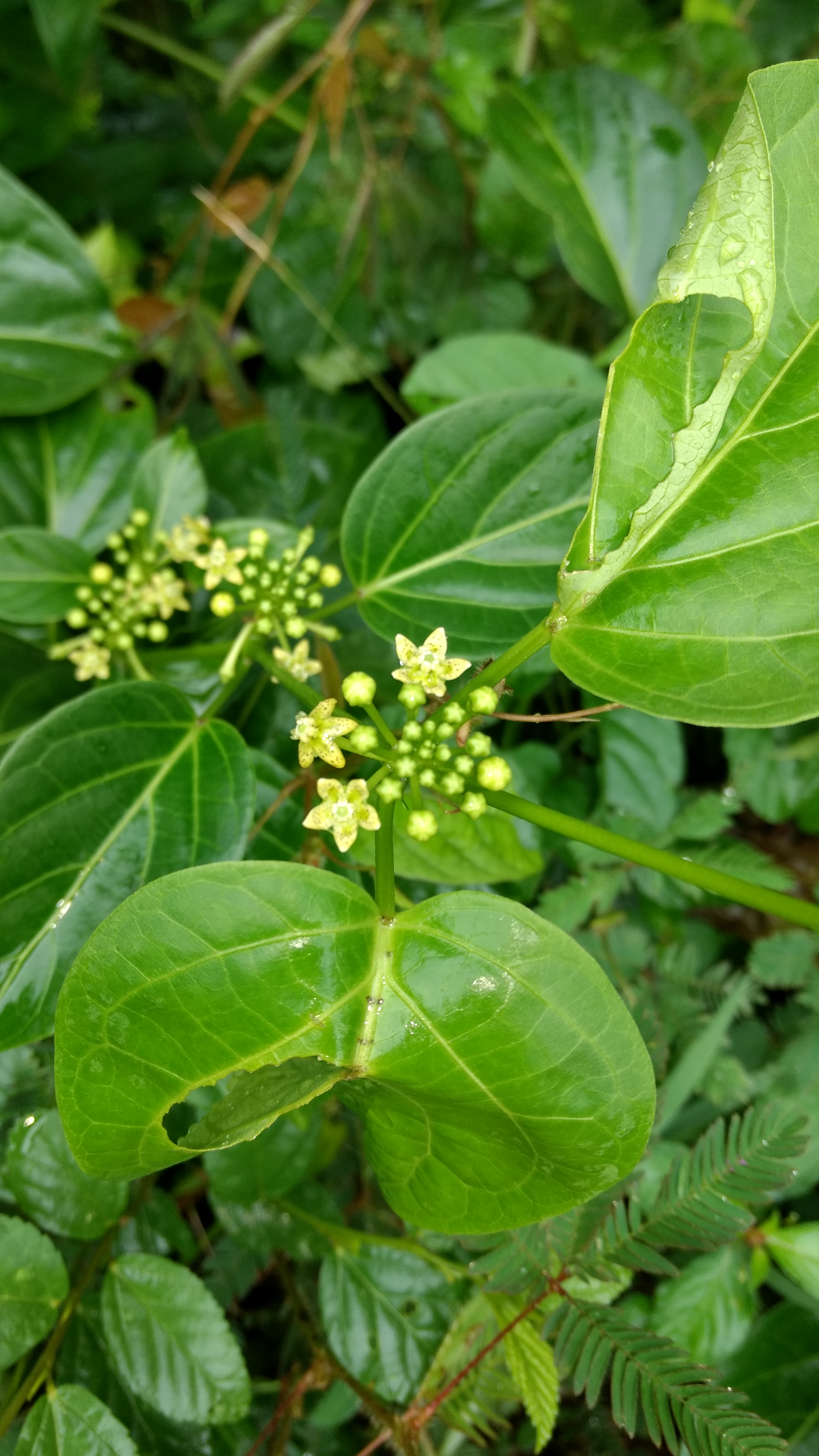
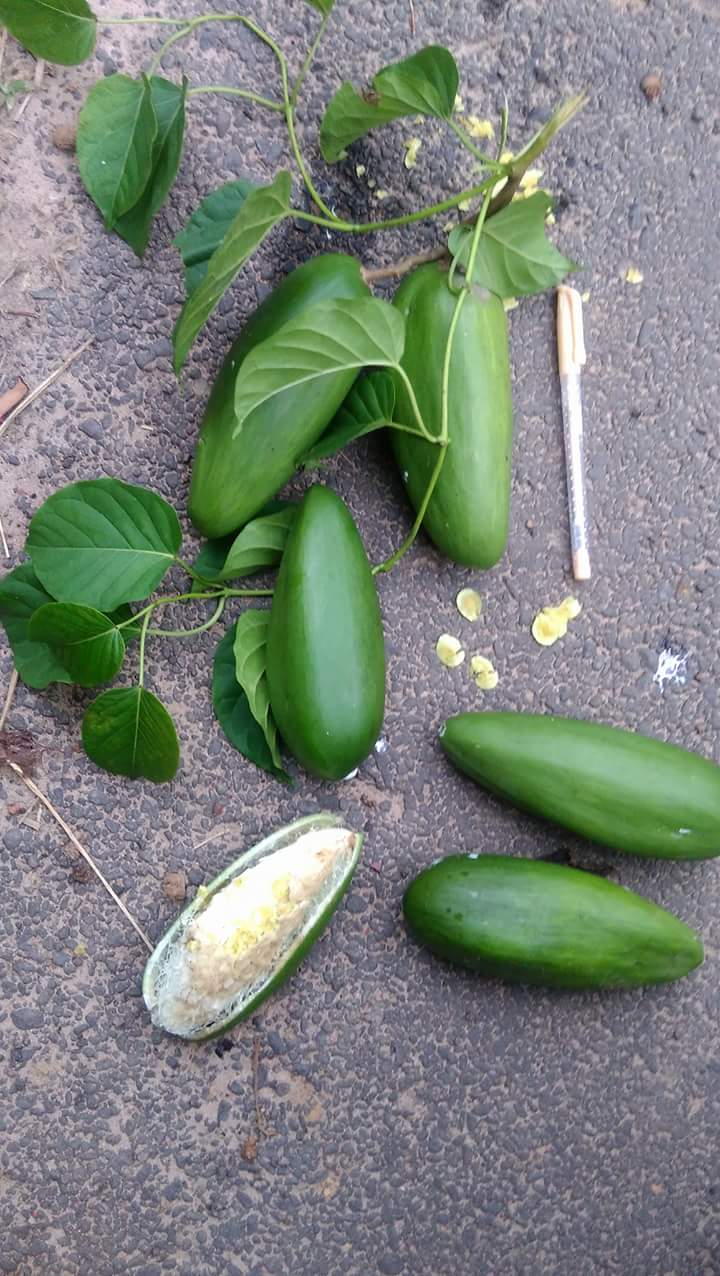
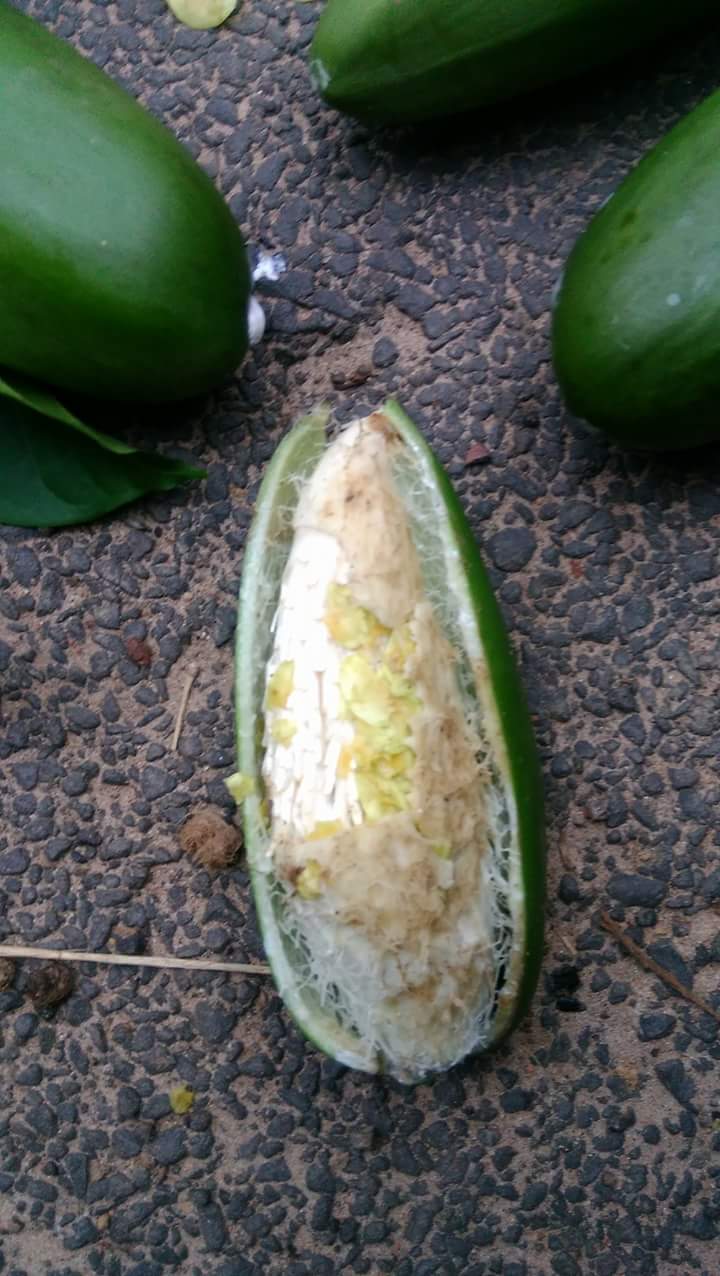
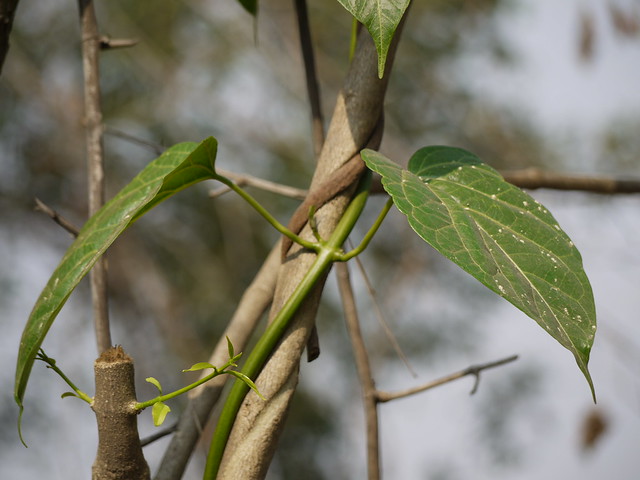
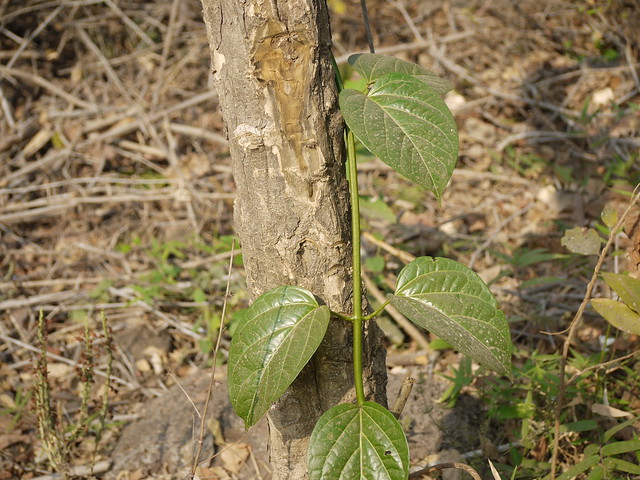
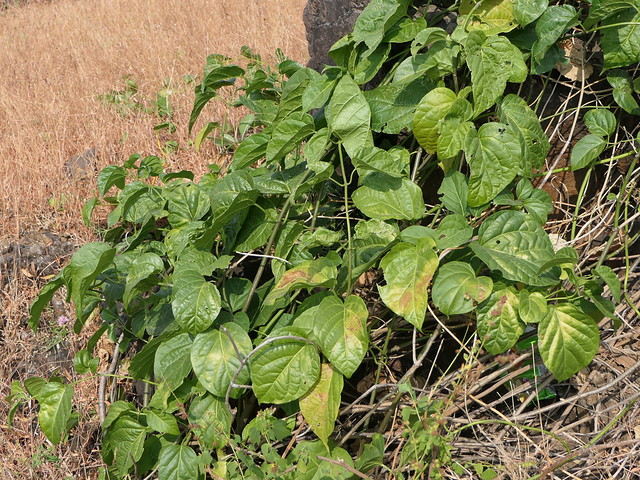
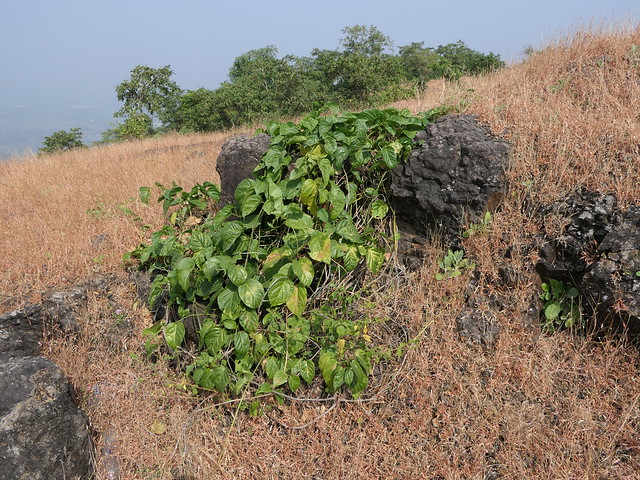
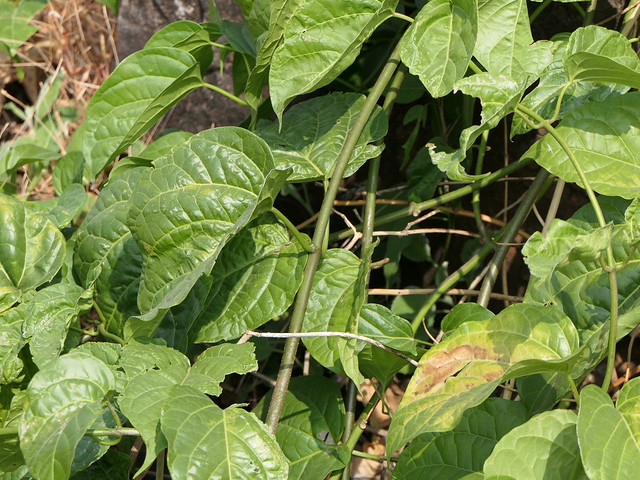
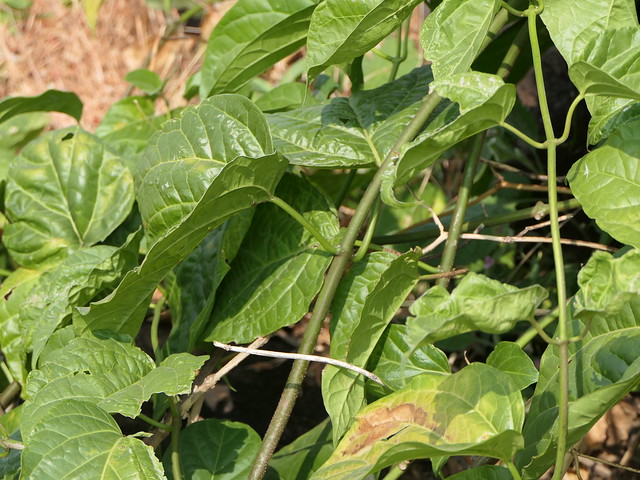
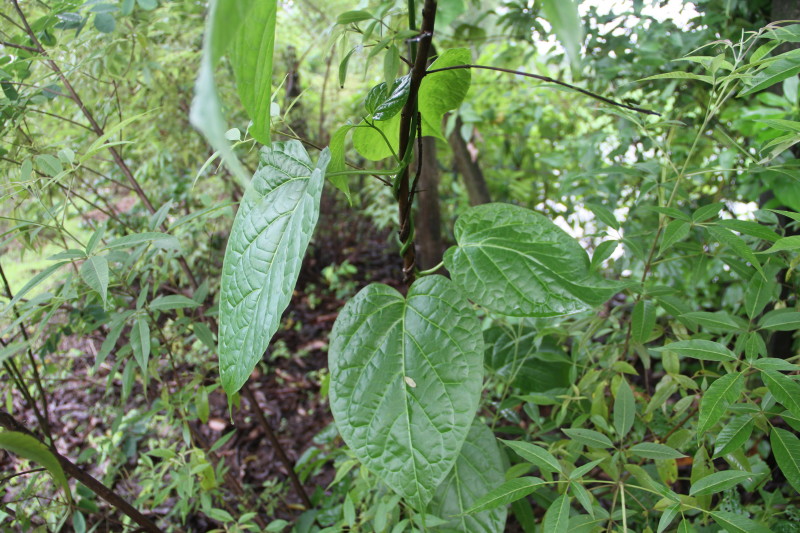
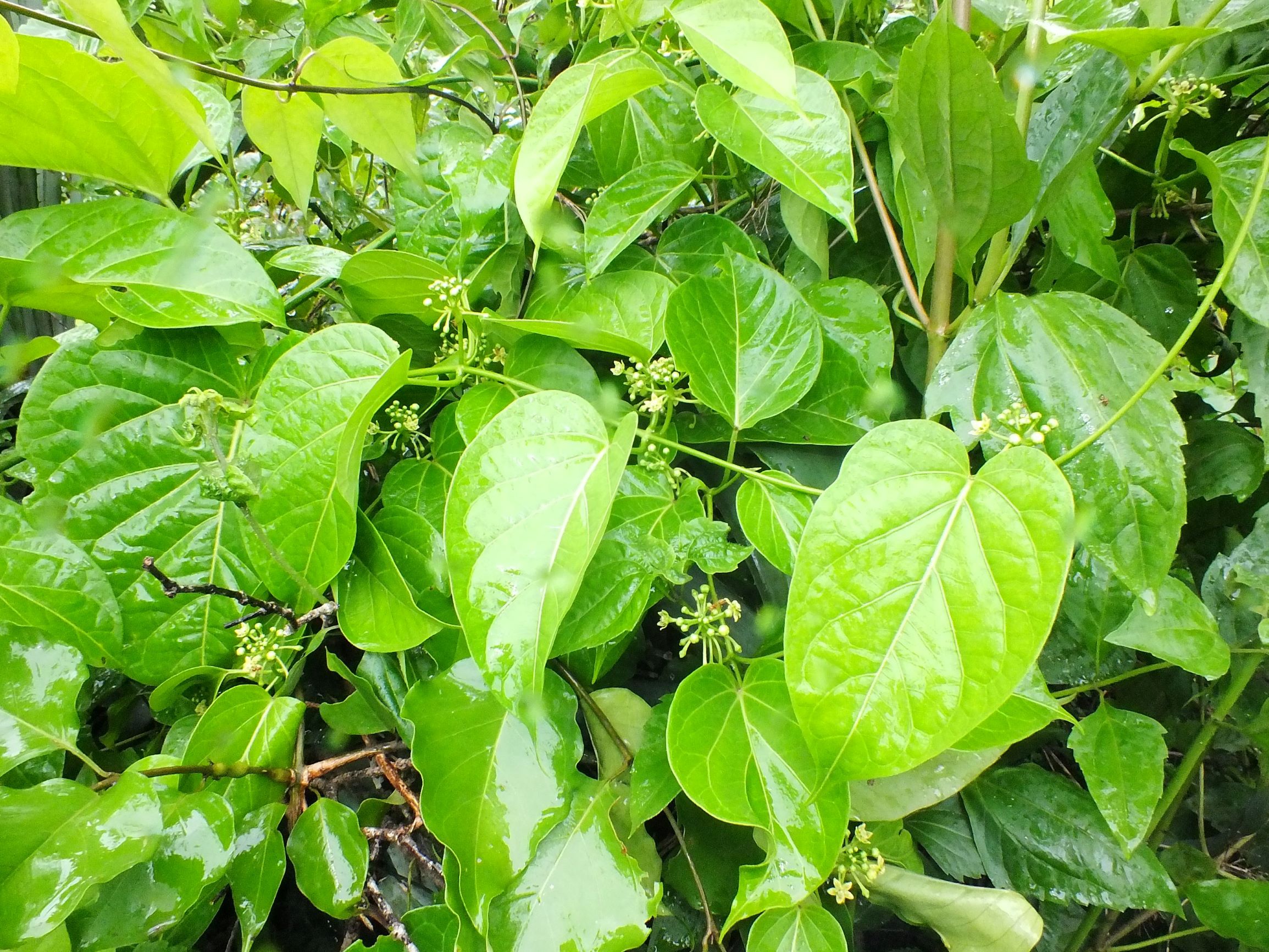
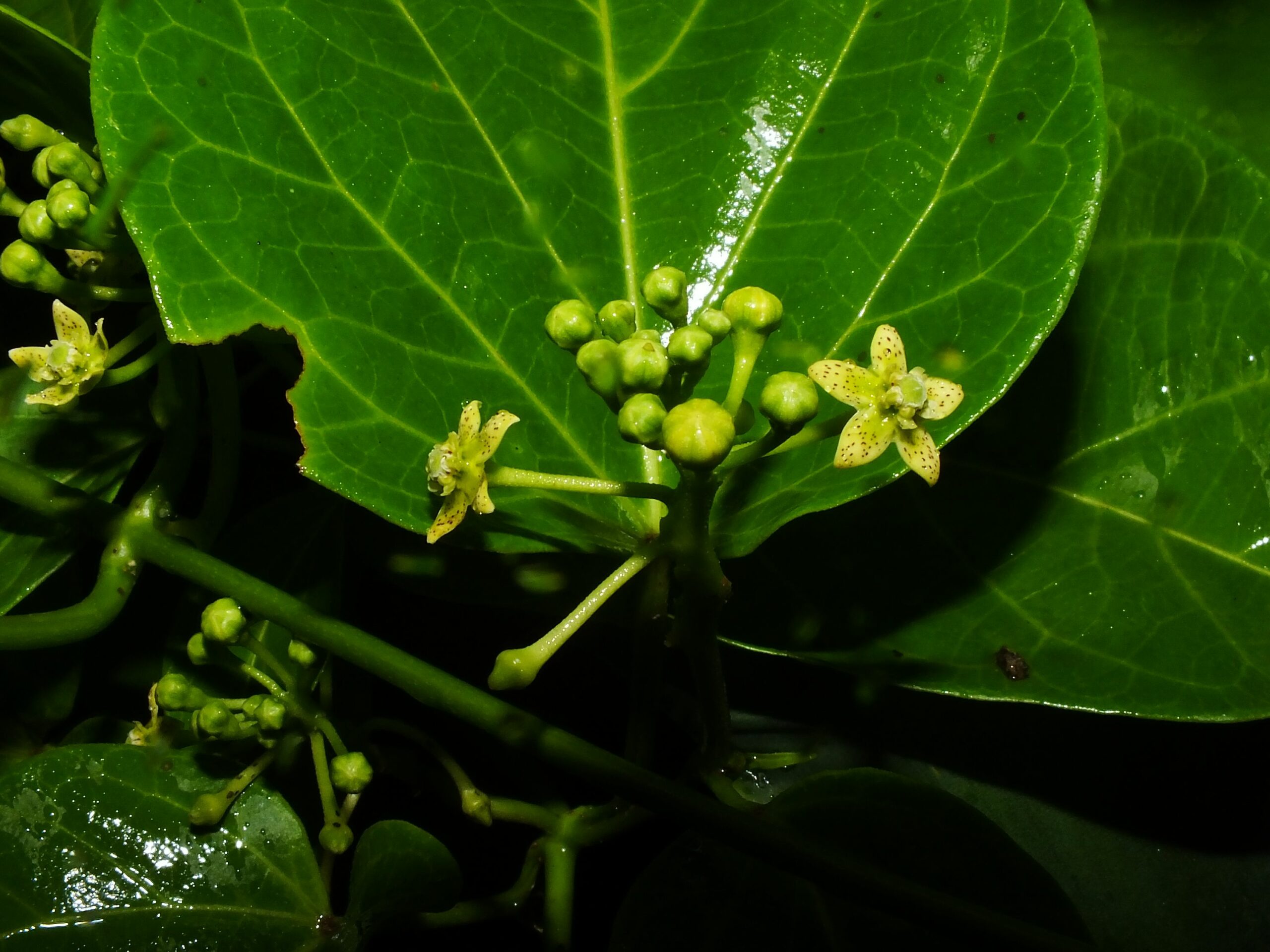
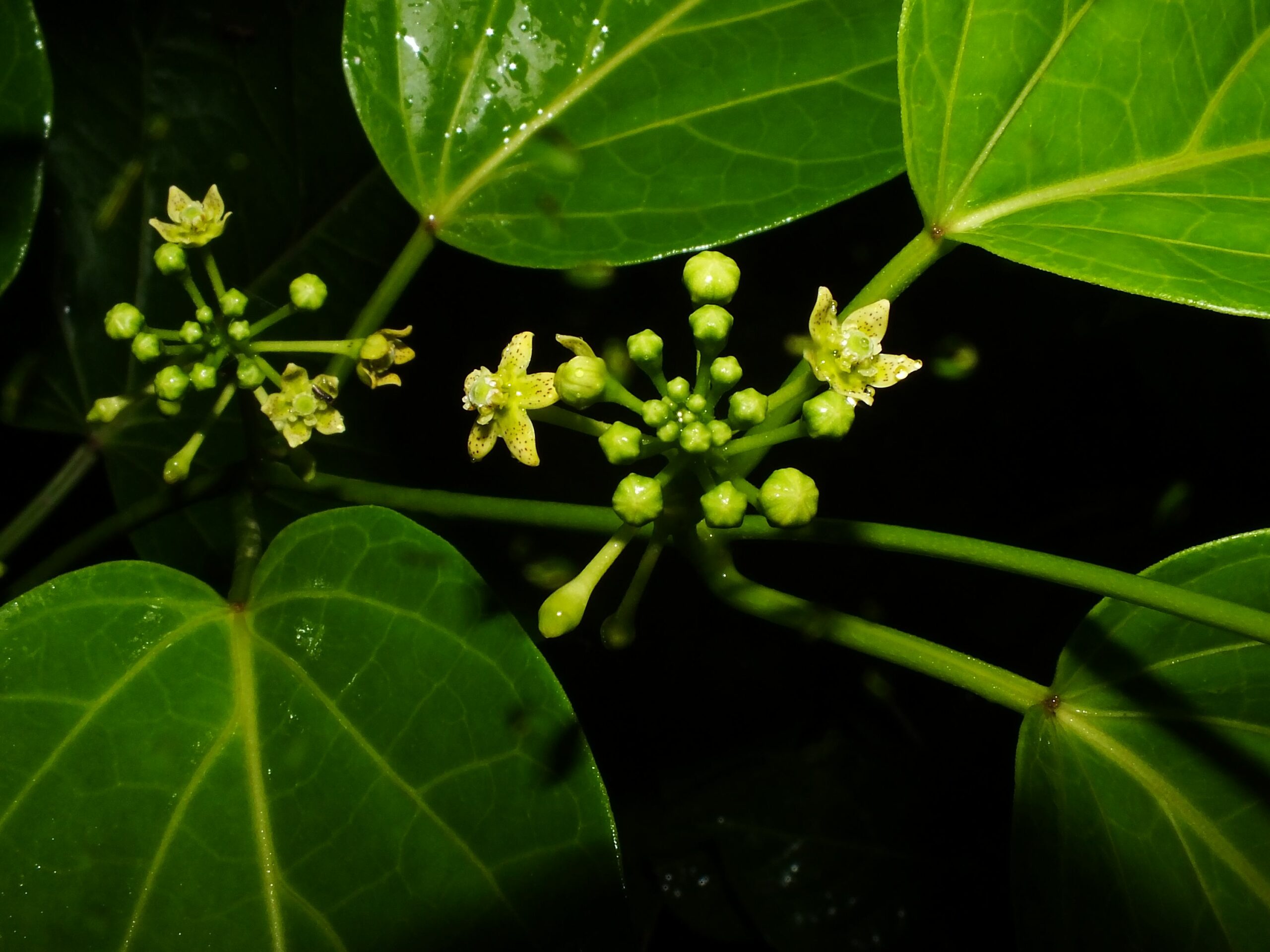
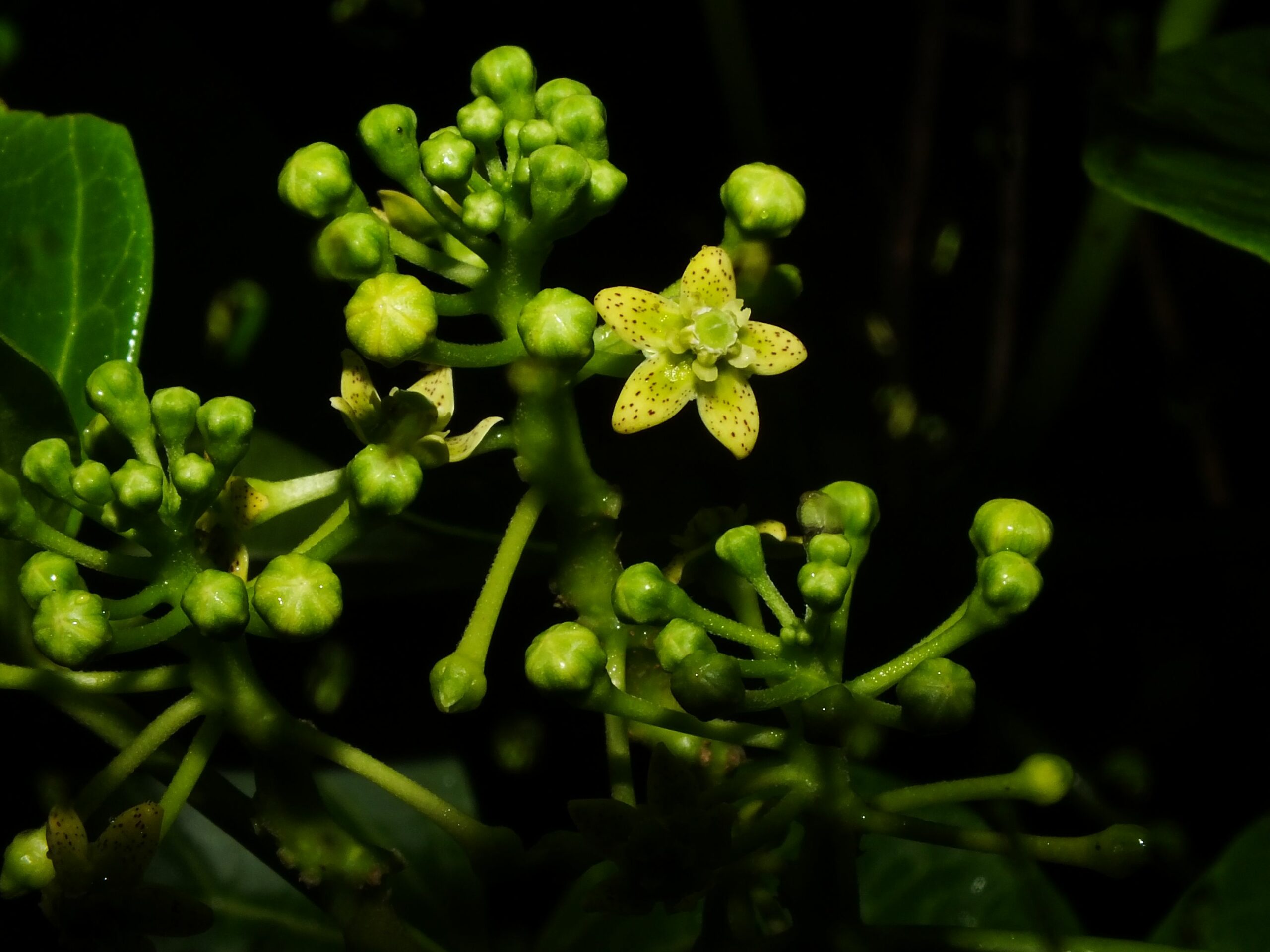
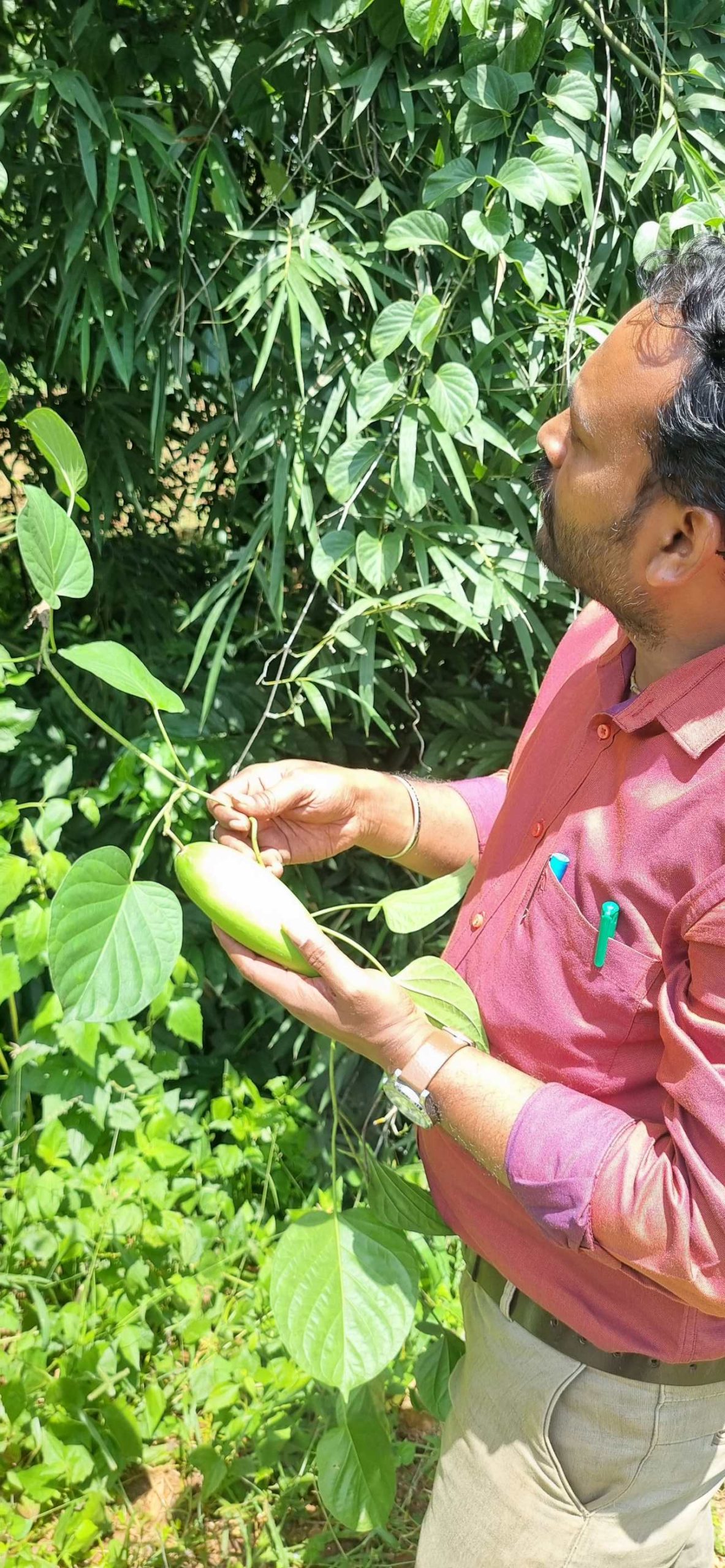
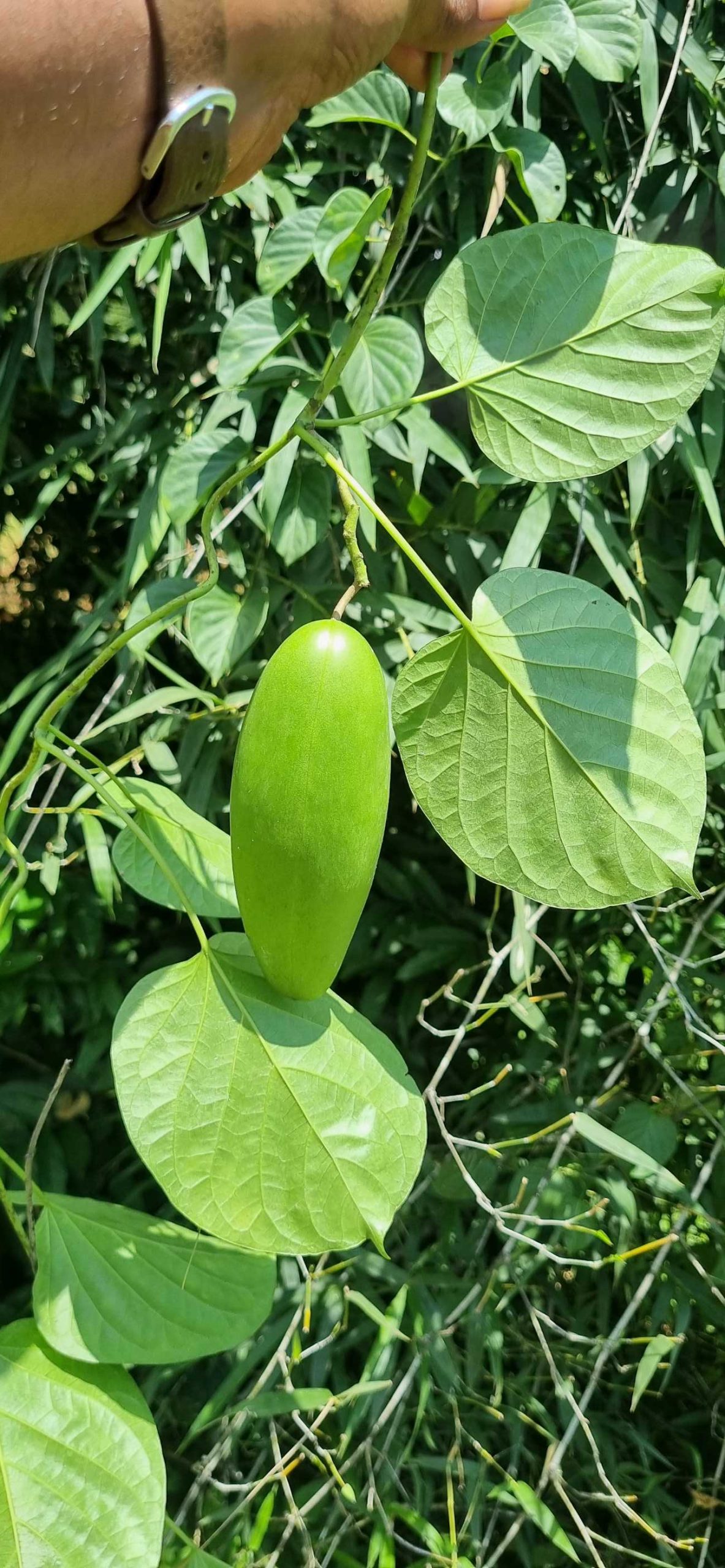
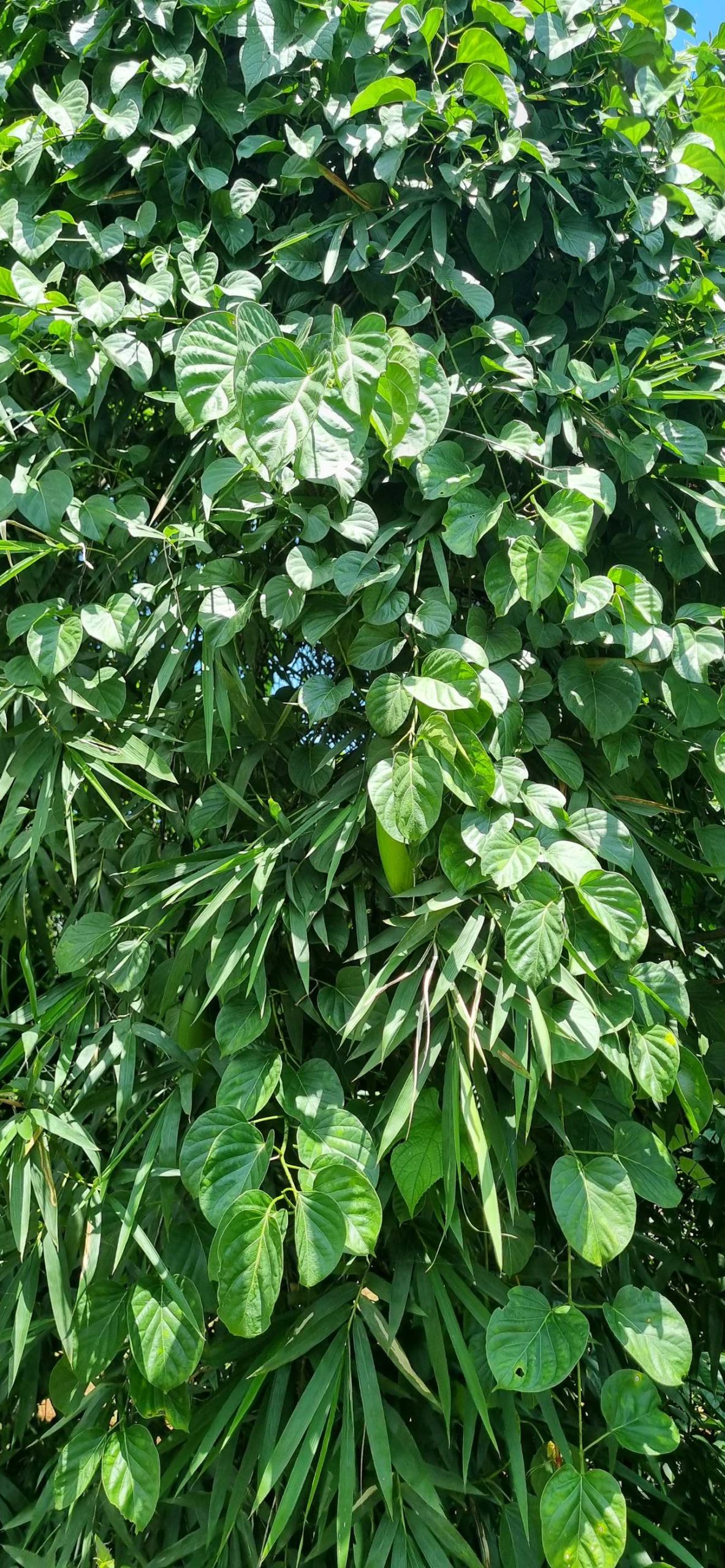
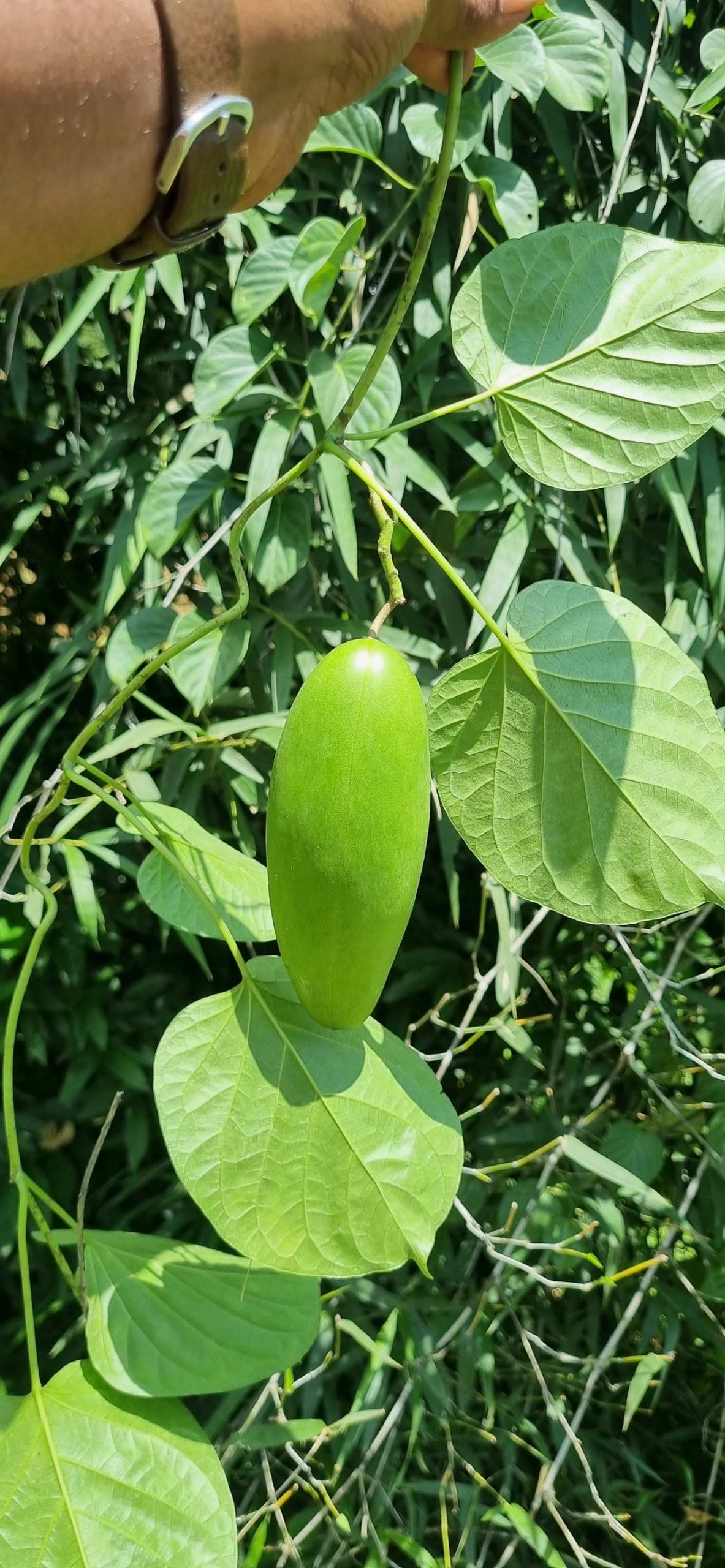
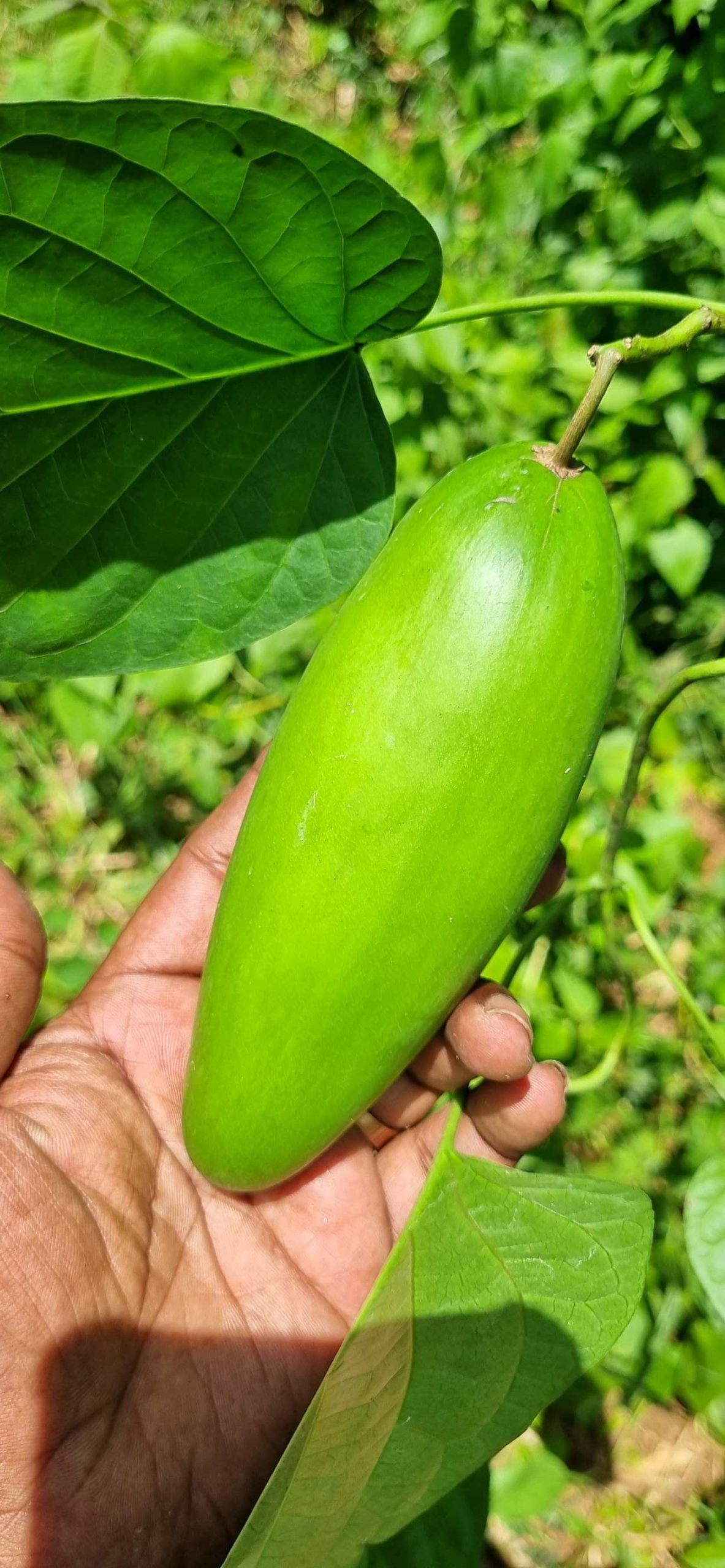
.. Climbing herbs, stem glabrous. Leaves 6-10 x 3-5 cm, ovate, apex acute or acuminate, base rounded or subcordate, 5-ribbed, glabrous with a few small black glandular papillae at base, lateral nerves 3 pairs; petiole to 2.5 cm long. Racemes to 2.5 cm long. Flowers 8 mm across, many together; pedicels 1 cm long, slender, pubescent; sepals small, ovate to orbicular, ciliate; corolla greenish-yellow with brown dots, 4 mm long, lobes ovate; gynostegium 2 mm across, outer corona lobes orbicular, emarginate, membranous; inner corona similar to outer. Flowering and fruiting: April-June
Moist deciduous forests, scrub jungles and sacred groves
Indo-Malesia
(Attributions- Dr. N Sasidharan (Dr. B P Pal Fellow), Kerala Forest Research Institute, Peechi as per India Biodiversity Portal)
.
efloraindia: Toxocarpus beddomei: 2 images. Sharing the images of Toxocarpus beddomei from NBNP. Anaikatti, Coimbatore.
Location: NBNP Garden, Anaikatti.
Habitat: Garden Habit: Climber. Toxocarpus beddomei To me it looks like Cosmostigma racemosum. Please check. I support … opinion
Cosmostigma racemosum: 1 image. Sharing a photograph of Cosmostigma racemosum from Kankeshwar, Alibag region.
Family: Asclepiadaceae Date/Time: 23-06-2012 / 10:45AM Habitat: Wild Plant Habit: Climber.
Cosmostigma racemosum : Attachments (2). 5 posts by 5 authors. Excellent catch. Cosmostigma racemosum Wight is a synonym of Cosmostigma cordatum (Poir.) M.R.Almeida
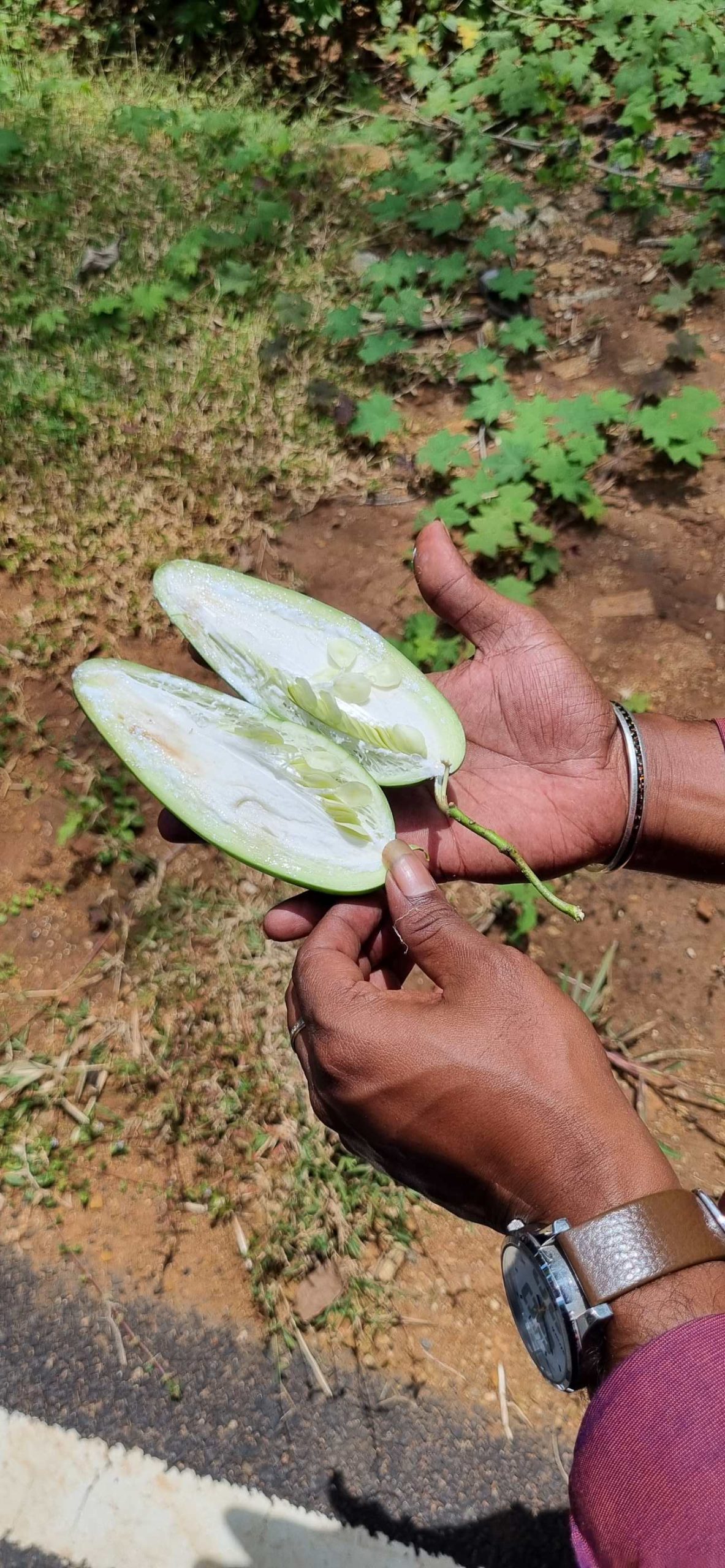
ID KANNUR 37- 1 : 2 posts by 1 author. 1 image- 3 MB. Pl. also check comparative images at Apocynaceae Cosmostigma racemosum My guess is Cosmostigma racemosum. Location Rajnagar Kumarghat Unakoti district Tripura Please provide the habit photo etc. in full not as cropped ones. The cropped photographs are useful as additional photographs Habitat photos are attached. The photographs (habit) are not clear & could not make out any thing. Nevertheless, based on the leaves and fruits, for me, it is not Dregea volubilis. We have these plants here. The fruits and leaves do not tally. The fruits are a pair of follicles in Dregea volubilis. Venation of the leaves also looks different. Please watch out for the flowers . I think close to images at Cosmostigma cordatum (Poir.) M.R.Almeida I checked images of leaf of Cosmostigma racemosum on internet and I think the leaf of my sample is not exactly heart shaped. I think matches with images at Is there any other species of this genera in Tripura?
Climber FOR ID :: Nagla forest :: 20 MAR 10 : 6 posts by 3 authors. 2 images. Nagla forest … part of Sanjay Gandhi National Park
Elevation range: sea level to about 600 ft asl … March 20, 2010 Hopefully the leaves give some hint to ID.
One of my flickr contacts has given me ID of Cosmostigma racemosum, and I am convinced with the ID. The leaves match with those in my earlier sightings.
I think if you can keep a watch on its flowering, it will further clear all our doubts.. June-July would be the probable flowering time..
Thanks … I agree. Unfortunately that plant got lost after 2010.
I will yet keep a lookout for this plant whenever I visit that place in Nagla forest.
bushy vine FOR ID :: Prabalmachi, near Panvel :: 30 NOV 19 : 5 posts by 3 authors. 4 images.
Prabalmachi between Matheran and Panvel Date: November 30, 2019 … Altitude: about 390 m (1,280 ft) asl
… some greens ? Dear friends, Looks like Cosmostigma racemosum to me Thanks very much … for the possible ID. Yes, it possible for Cosmostigma cordatum as suggested by …
Leaf arrangement and venation seems to match. Climber for ID : 19072013 : RV 1 : Attachments (2). 5 posts by 3 authors.
Please help me to identify this climber found in wild in Sudhagad area, near Mumbai…..
the leaves are almost 10 inches long……….
I was told by locals that when their cattle get injured, they make a paste of these leaves and apply it on the wound.
it is some Asclepiadaceae member a Heterostemma species .. can be H. dalzelli. can be found in Snajay Gandhi National park, Silionda trail.
Cosmostigma racemosum Yes, Cosmostigma is correct . 91 ID wild plant: 16 images. Please ID wild plant,
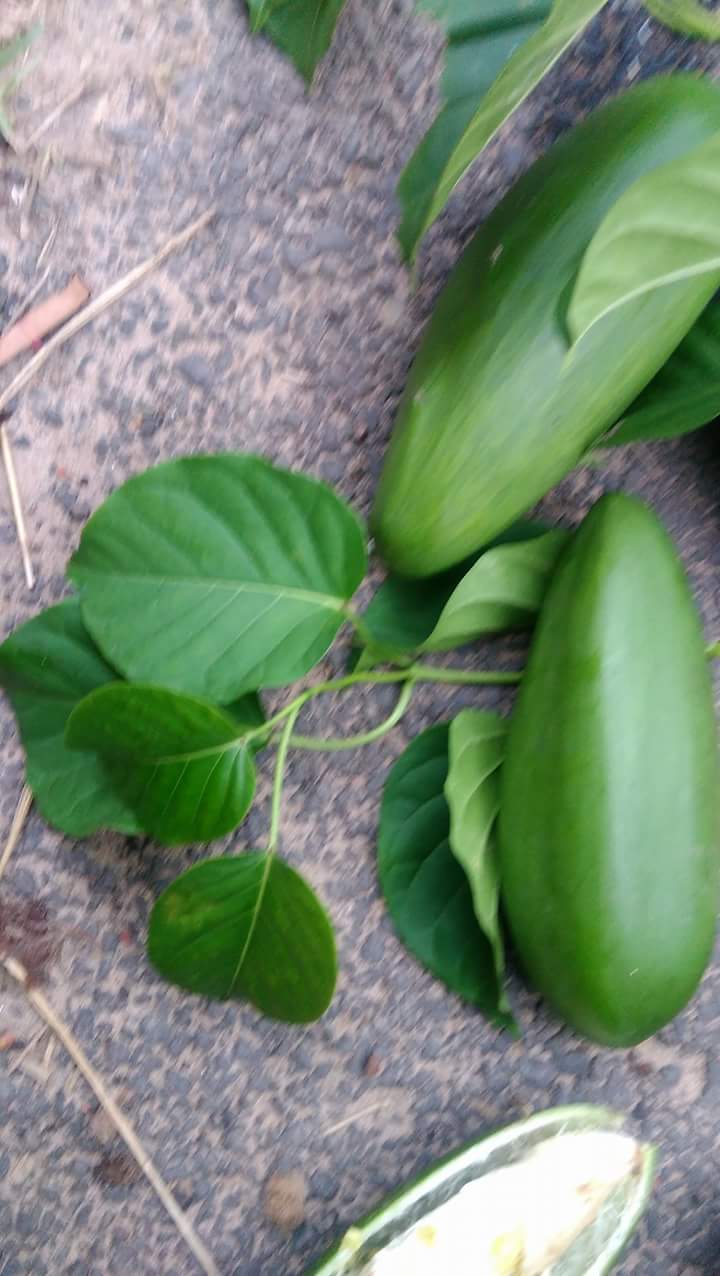
Location: near Reserve Forest, Chathamattom, Ernakulam District, (Kochi) Kerala PIN:686671 Flower date: 06.06.2021, 05.25pm Altitude: 1400fsl Habitat: wild moisture Plant habit: climbing, branches, big stem but flexible, long lasting Height: 06 meters Leaves: opposite, heart shaped, apex, smooth but a strange smell if rubbed (smell like coriander+ decayed garlic), purple spotted base Flower: diameter:08mm, yellow with black spots, mild fragrance Fruit: oval green Seed: Camera: mobile LG K10 2017 13mp Cosmostigma racemosum (Roxb.) Wight Yes, it is …, Thank you very much. Sharing more information: it’s leaves smell is like asafoetida, when rubbed. Nice set … and agree with … For Id, .
Very nice photographs. For me the ID is correct. I have come across this plant. Yes .
Cosmostigma cordatum (Poir.) M.R.Almeida . 020525PKD1: I’d pls: 5 high res. images. Pl. give place, habit, habitat and date details etc. Collected from Khandagiri Odisha on May 2025 May be .
Names of Plants in India :: Cosmostigma cordatum (Poir.) M.R.Almeida: 1 image.
Cosmostigma cordatum (Poir.) M.R.Almeida KOZ-moh-STIG-muh — Greek: kosmos (ornament); stigma, which in botany refers to the receptive tip of a carpel … compiled from the web
kor-DAY-tum — heart-shaped, referring to leaves … Dave’s Botanary . commonly known as: green milkweed creeper • Gujarati: શેંદવેલ shendvel • Kannada: ಘರ ಹೂವು ಗಿಡ ghara hoovu gida • Konkani: बैल दोडकी bail dodki, घारफुली gharphuli, मरोय maroy, सूतकांती sutakanti • Malayalam: വട്ടോളം vattolam, വട്ടുവള്ളി vattuvalli • Marathi: जटी jati, मारवेल marvel, शेंडवेल shendvel • Mundari: जटी jati • Tamil: கருத்தங்கண்ணி karuththangkanni, பெரும் காகமுகன் கொடி perum kaakamugan kodi • Telugu: అడవి తమలపాకు adavi tamalapaaku • Tulu: ಮಲ್ಲ ಪೆತ್ತತಜಂಕ್ malla petthathajanku, ಮಿರೆ ಬಾಪುಥ ತಪ್ಪು mire baaputha thappu, ಪೇರ್ ಕುಜುಂಬೆ peru kujumbe
known for / parts made use of: the leaves and roots (medicinal) … compiled from the web. botanical names: Cosmostigma cordatum (Poir.) M.R.Almeida … homotypic synonyms: Periploca cordata Poir. … heterotypic synonyms: Asclepias racemosa Roxb. • Cosmostigma racemosum Wight … and more at POWO, retrieved August 16, 2026 Bibliography / etymology / notes
Links listed as references in the notes below, may not remain valid permanently. Portals / websites have a tendency to re-organize / revise their content, leading to change in URLs of pages in their site. Some sites may even close down at their own will. The bits about the languages of India mentioned below are merely some bare facts gathered from the internet; just enough to satisfy curiosity about “where” could the listed names be best prevalent in India. All English transliterated names to be taken sensu amplo.
~~~~~ ENGLISH ~~~~~
written and spoken widely, in most parts of India
green milkweed creeper
~~~~~ GUJARATI ~~~~~
written in: Gujarati (ગુજરાતી) … spoken in: Gujarat, Dadra & Nagar Haveli, Daman & Diu
શેંદવેલ shendvel
~~~~~ KANNADA ~~~~~
written in: Kannada (ಕನ್ನಡ) … spoken in: Karnataka
ಘರ ಹೂವು ಗಿಡ ghara hoovu gida
~~~~~ KONKANI ~~~~~
written in: Devanagari (कोंकणी) / Kannada (ಕೊಂಕಣಿ) / Malayalam (കൊങ്കണി) / Perso-Arabic (کونکنی) / Romi (Konknni) … spoken in: Goa, Karnataka, Maharashtra, Kerala, Gujarat
बैल दोडकी bail dodki, घारफुली gharphuli, मरोय maroy, सूतकांती sutakanti
~~~~~ MALAYALAM ~~~~~
written in: Malayalam (മലയാളം) … spoken in: Kerala, Lakshadweep
വട്ടോളം vattolam, വട്ടുവള്ളി vattuvalli
~~~~~ MARATHI ~~~~~
written in: Devanagari (मराठी) … spoken in: Maharashtra, Karnataka
जटी jati
HISTORICAL VARIANTS IN LITERATURE
The 1887 BNHS Record: जती (Jati) — The British recorded it phonetically as “Jati“. Lacking Devanagari script markers, later editors back-translated the soft English “t” into a Marathi त instead of the correct retroflex ट. … compiled from the web.
The Government Gazetteer Record: जाती (Jati) — A later hyper-correction. Editors assuming “जती” was a typo for the well-known word “जाती” (class/species/wild jasmine) elongated the vowel to make it look grammatically standard in text. … compiled from the web.
मारवेल marvel (or मारवेळ maravel), शेंडवेल shendvel (or शेंडवल shendval)
~~~~~ MUNDARI ~~~~~
written in: Mundari Bani, Odia, Devanagari, Bengali, Latin … spoken in: Jharkhand, Odisha
जटी jati
~~~~~ TAMIL ~~~~~
written in: Tamil (தமிழ்) … spoken in: Tamil Nadu, Puducherry, Andaman & Nicobar Islands
கருத்தங்கண்ணி karuththangkanni, பெரும் காகமுகன் கொடி perum kaakamugan kodi
~~~~~ TELUGU ~~~~~
written in: Telugu ( తెలుగు) … spoken in: Andhra Pradesh, Telangana, Puducherry
అడవి తమలపాకు adavi tamalapaaku
~~~~~ TULU ~~~~~
written in: Tigalari (Tulu) was used for writing Vedic texts in Sanskrit, Kannada (ತುಳು), Malayalam (തുളു) … spoken in: Karnataka, north Kerala
ಮಲ್ಲ ಪೆತ್ತತಜಂಕ್ malla petthathajanku, ಮಿರೆ ಬಾಪುಥ ತಪ್ಪು mire baaputha thappu
ಪೇರ್ ಕುಜುಂಬೆ peru kujumbe
~~~~~ KNOWN DISTRIBUTION in INDIA ~~~~~
Andhra Pradesh, Goa, Gujarat, Karnataka, Kerala, Maharashtra, Odisha, Tamil Nadu
~~~~~ Created on: 13:33 16-08-2026 ¦ Last updated: 17:41 18-08-2026 (DD-MM-YYYY) ~~~~~
Names compiled / updated at https://dineshvalke.blogspot.com/2026/08/cosmostigma-cordatum-poir-mralmeida.html
വട്ടോല vattola or വട്ടോലം vattolam is the correct English and Malayalam spelling. I found the word / name വട്ടോളം in Malayalam Wikipedia …
What you are suggesting – വട്ടോല vattola or വട്ടോലം vattolam could be correct for only some set of natives.
Please visit my query:
https://share.google/aimode/wU2ZACMlRwujHbwVw Please let me know if you think വട്ടോലം vattolam has to be included in the compilation.
For entire query:
. References:
WCSP Catalogue of Life (syn. of Hemidesmus indicus (L.) R. Br.) The Plant List Ver. 1.1 (Cosmostigma racemosum Wight is a synonym of Cosmostigma cordatum (Poir.) M.R.Almeida) Flora of Karnataka
Dinesh Valke’s Flickr Post Flowers of India India Biodiversity Portal Larval Host Plants Wikimedia Commons An Excursion Flora of Central Tamilnadu, India By K. M. Matthew (1995- details) |
Cosmostigma cordatum

Updated on August 31, 2026