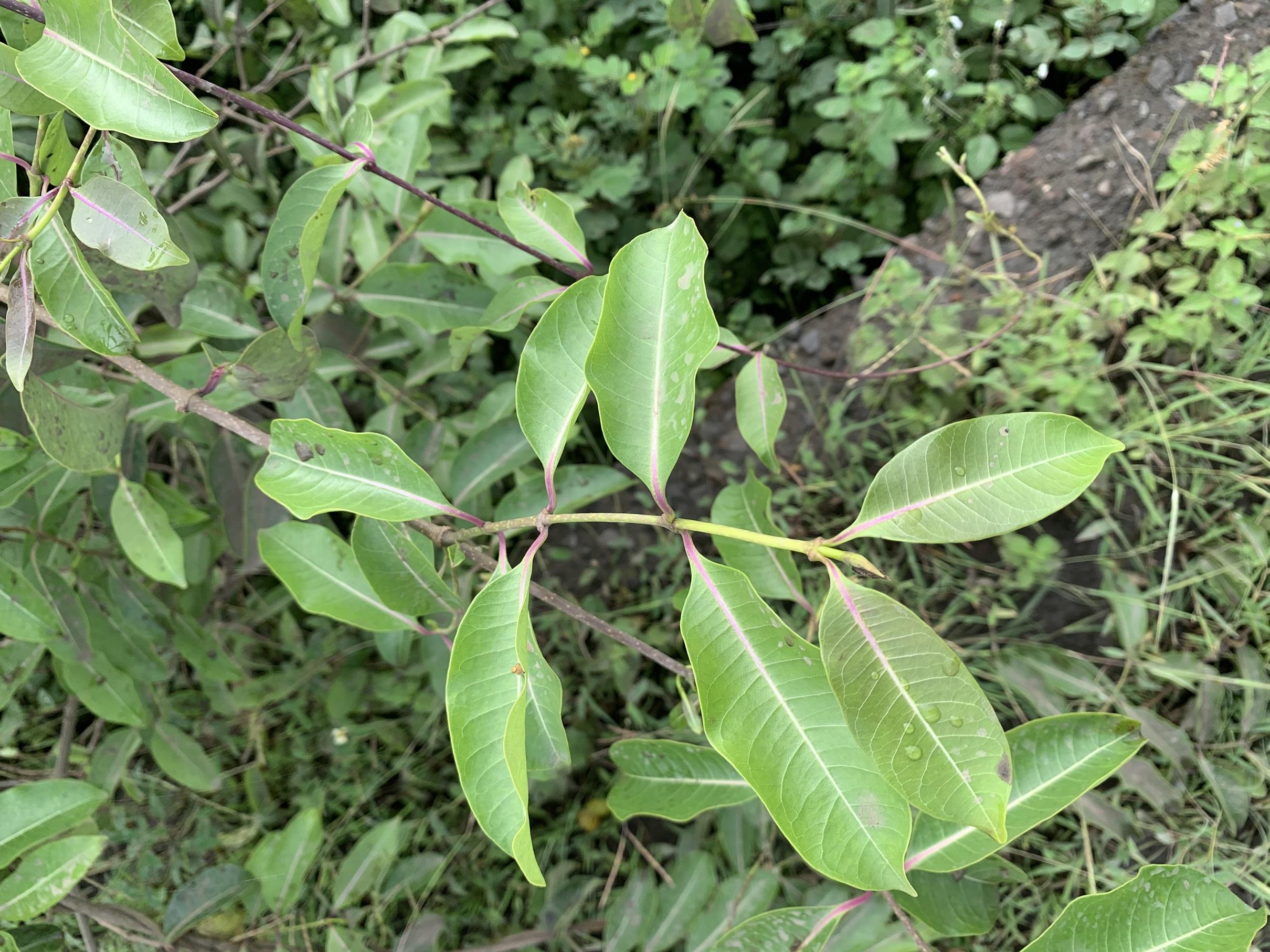
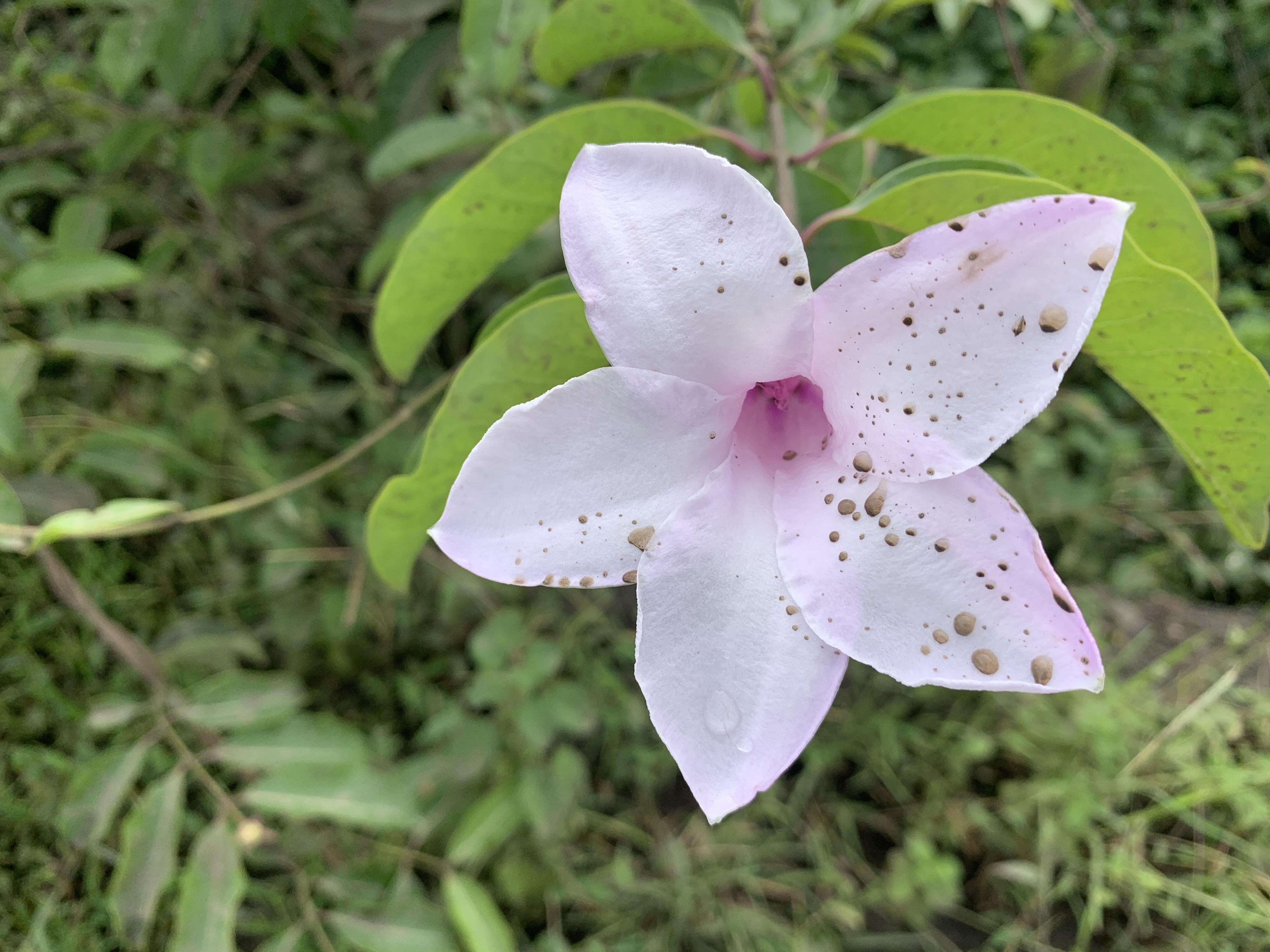
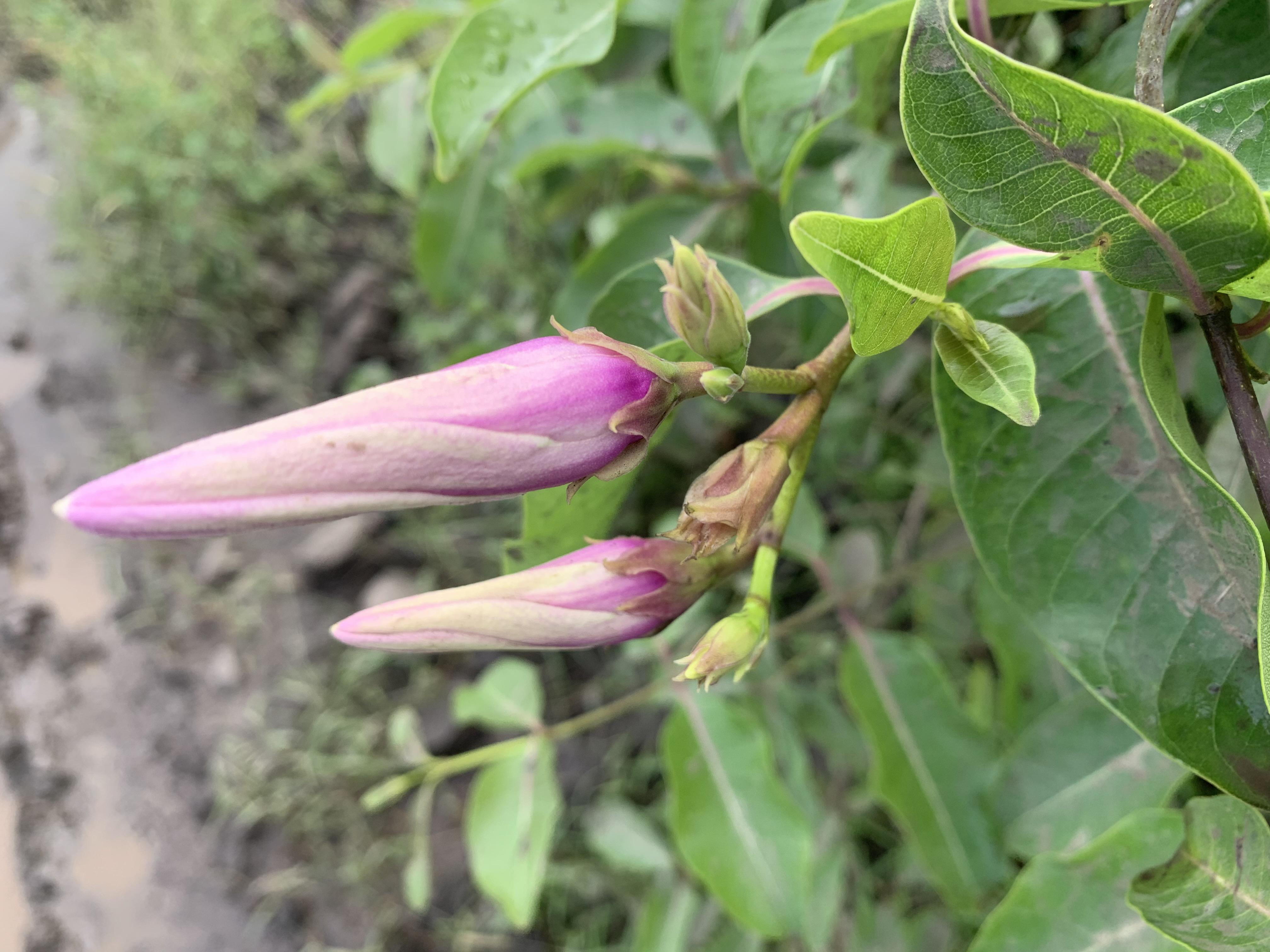
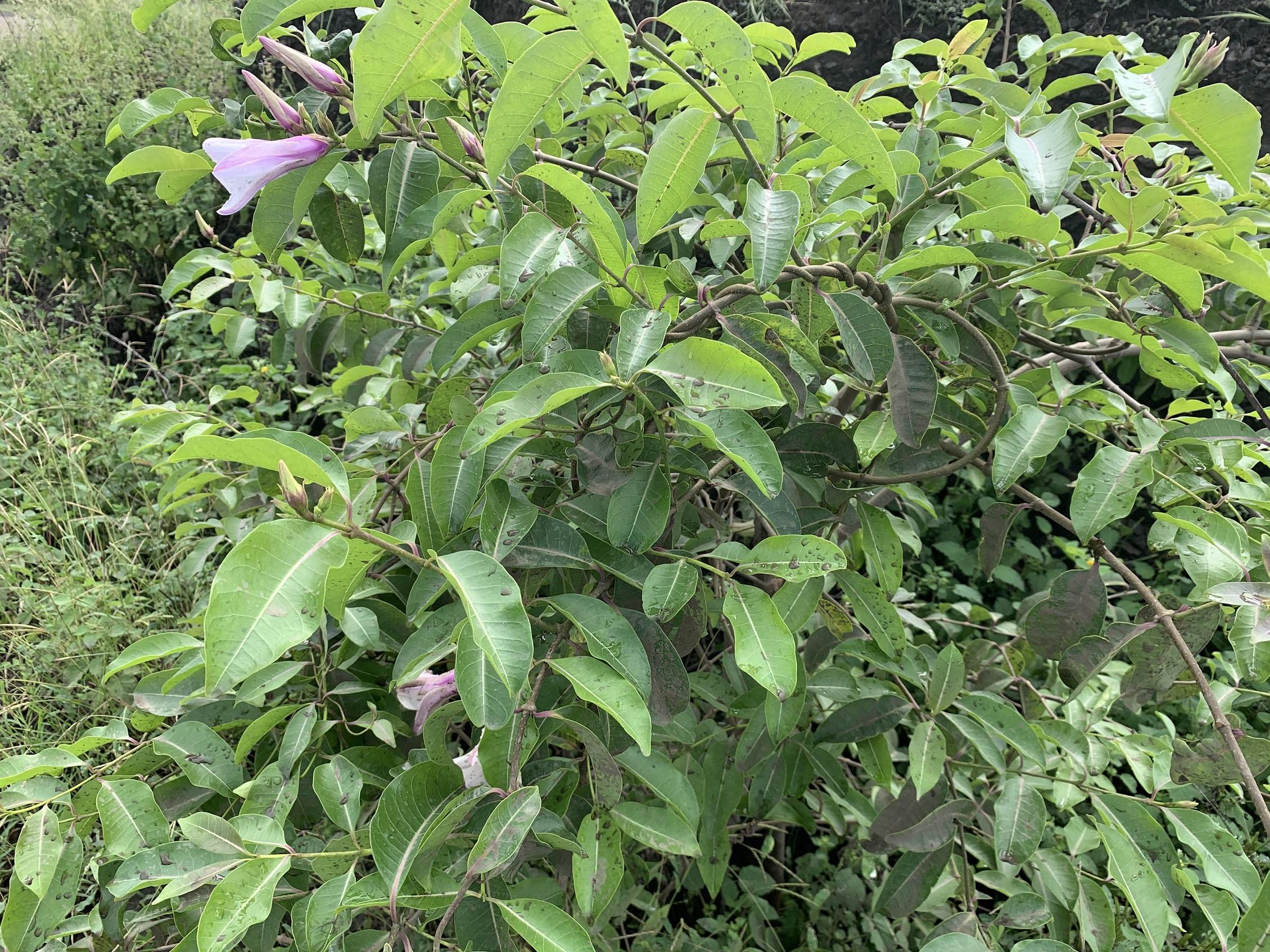
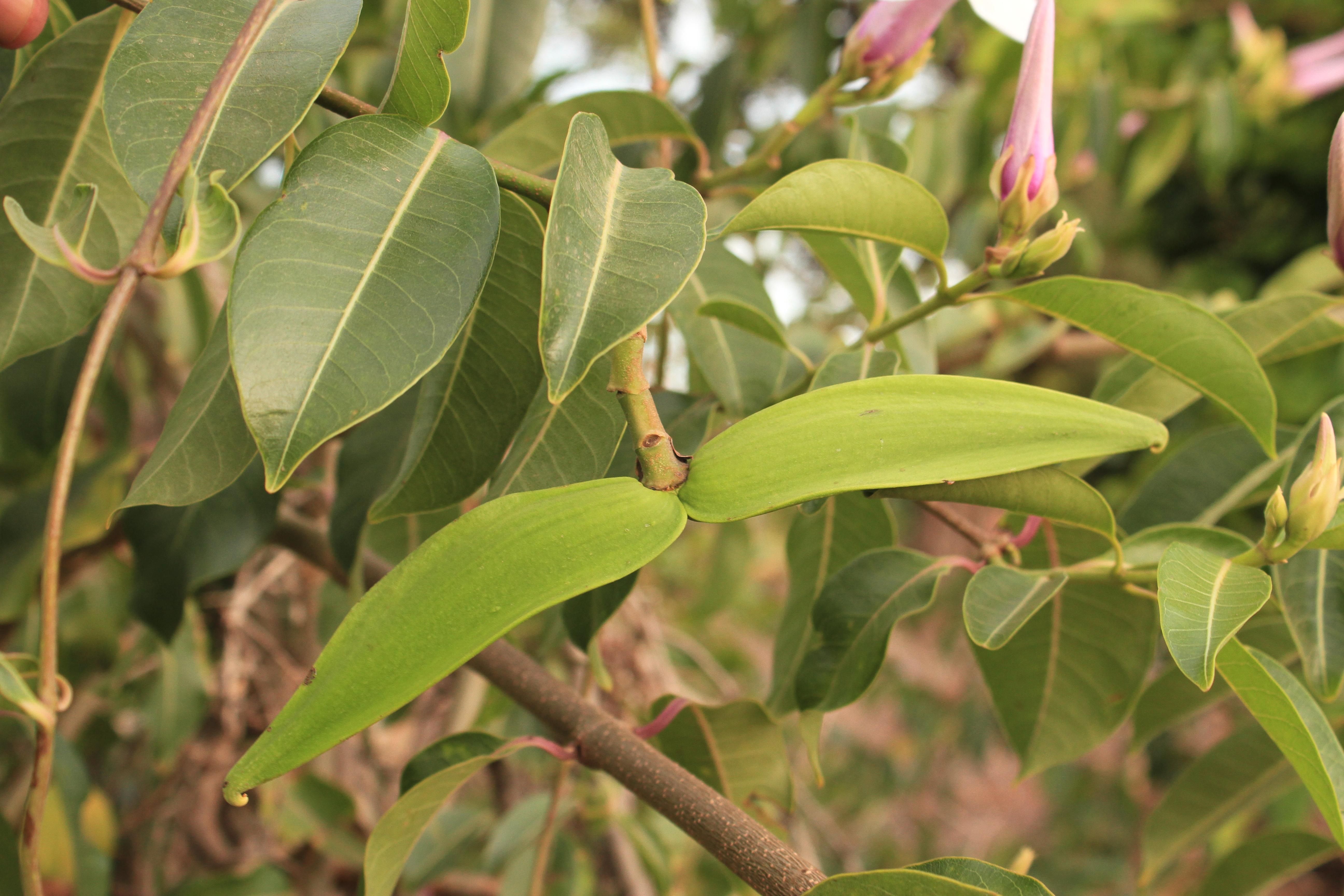
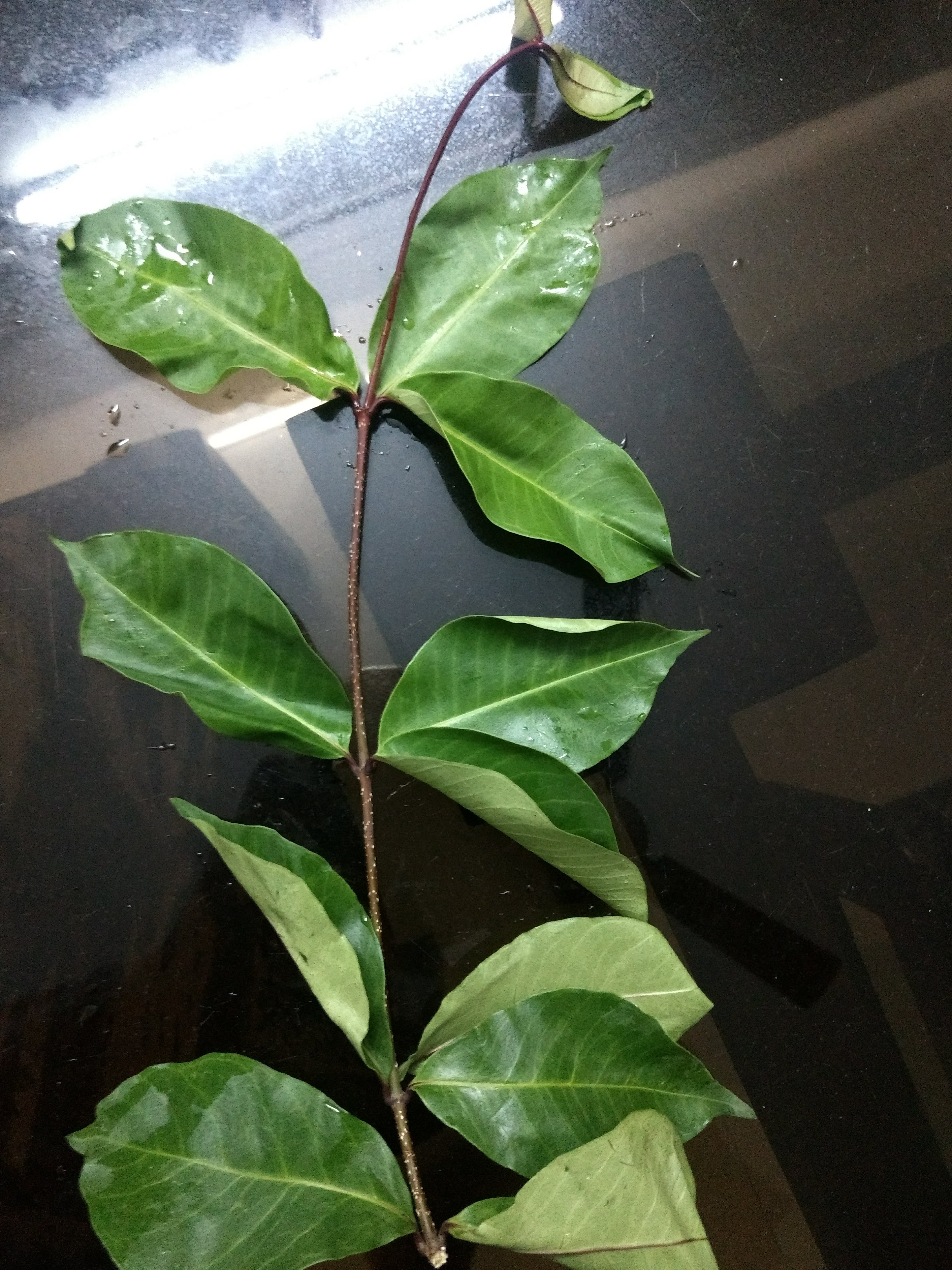
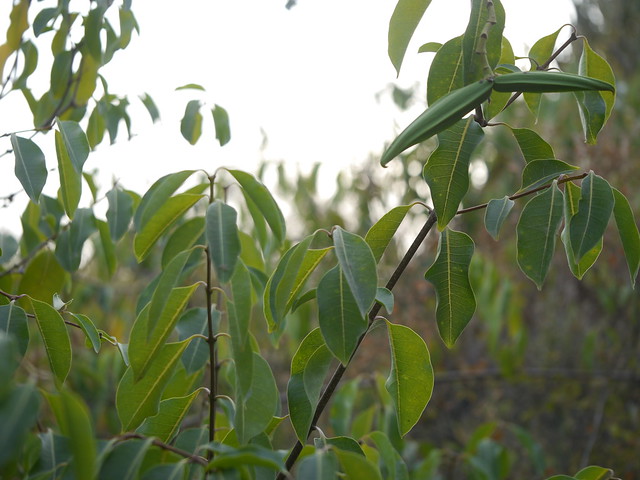
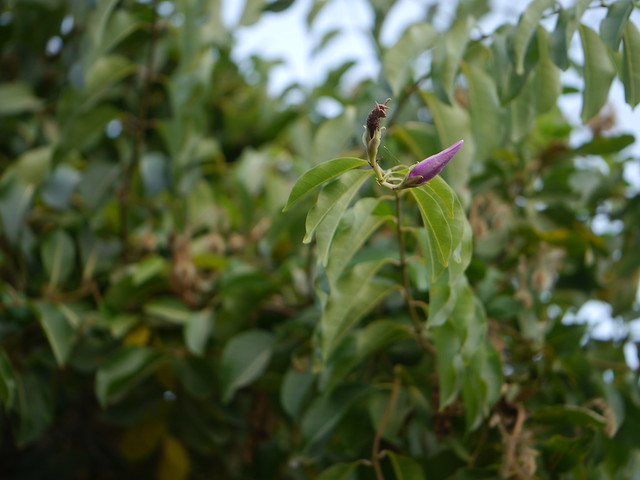
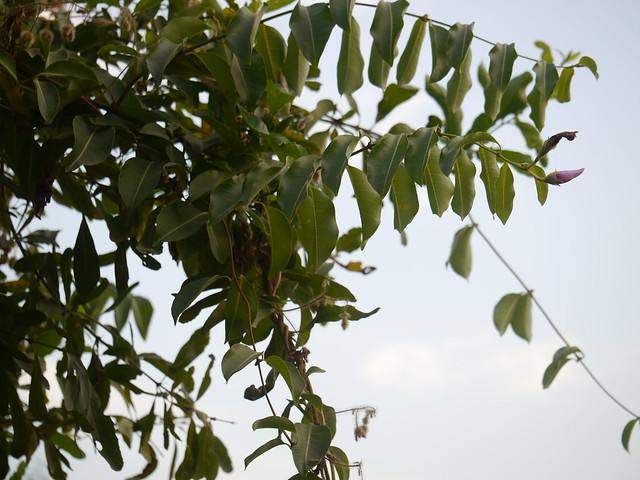
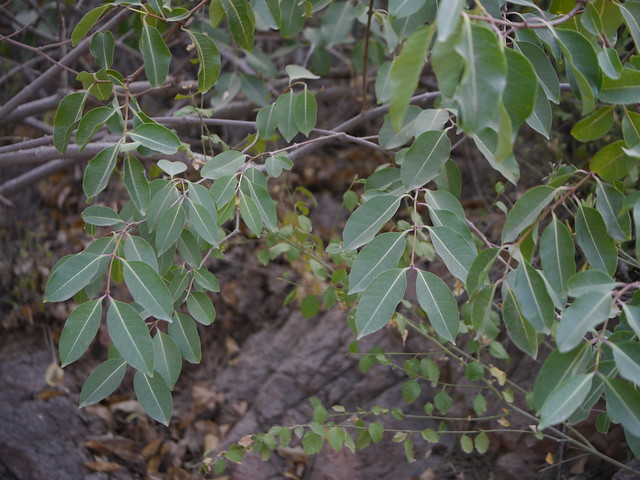
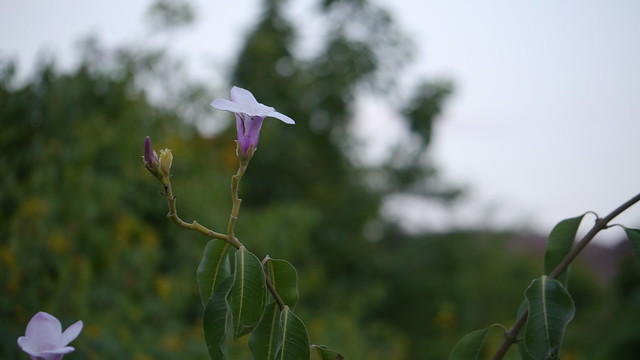
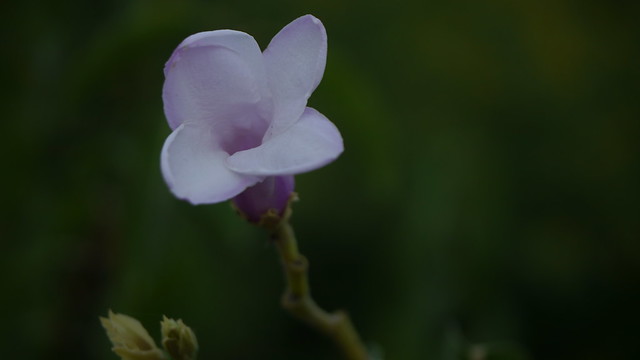
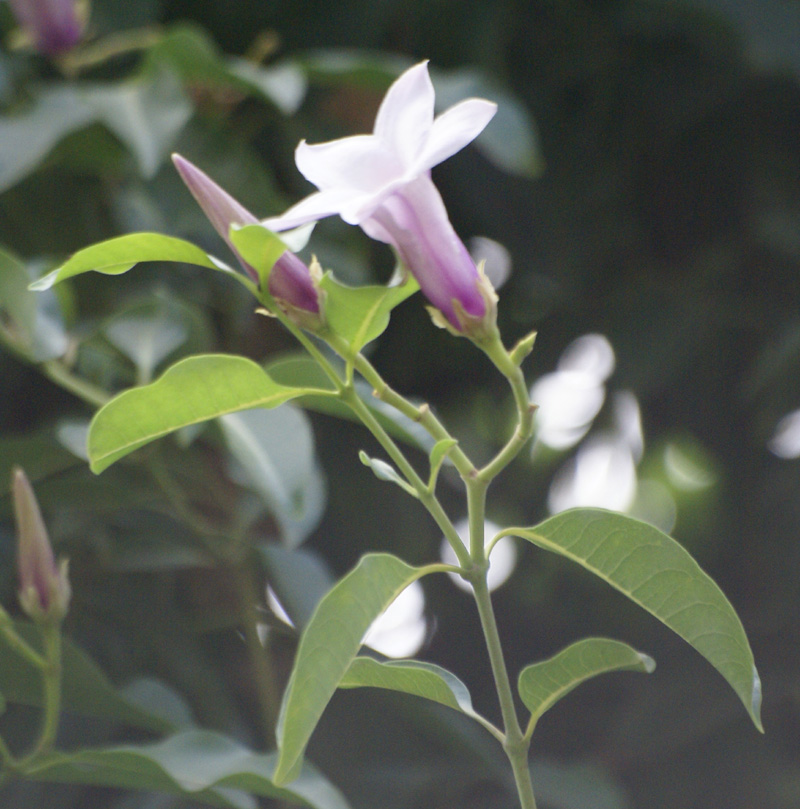
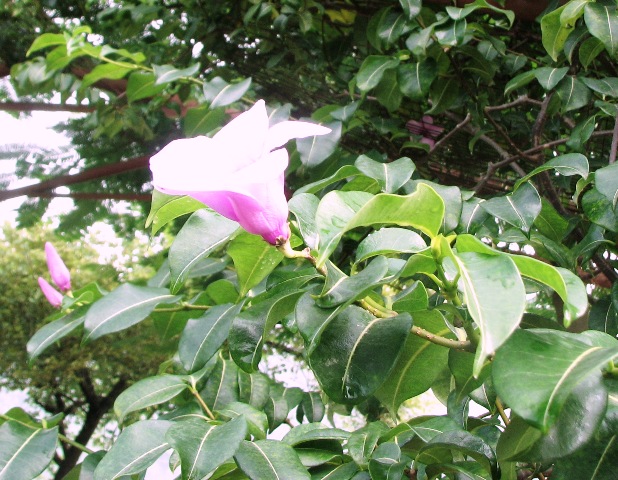
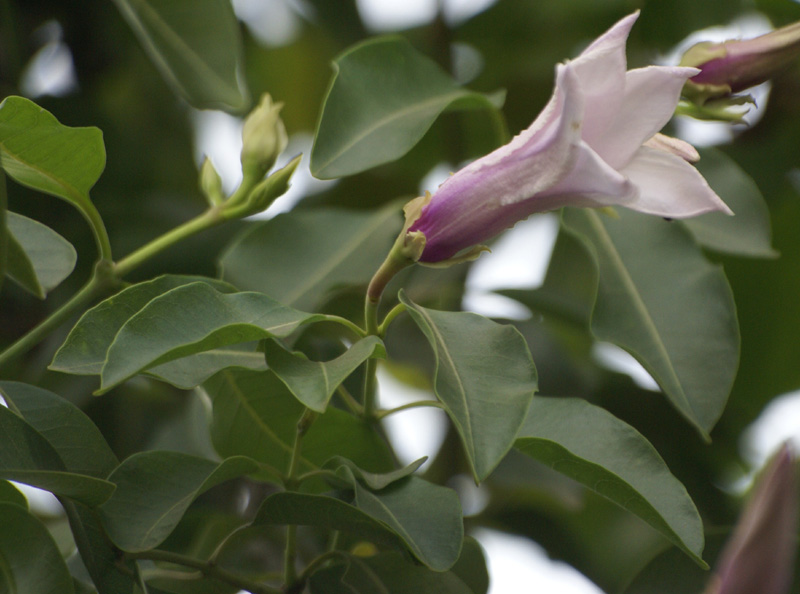
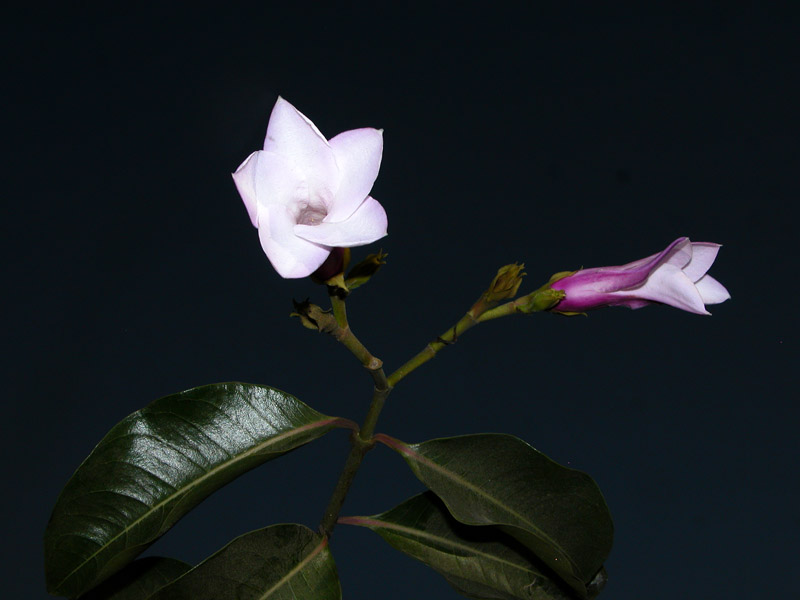
Cryptostegia grandiflora

.
krip-toh-STEEJ-ee-uh or krip-toh-STEG-ee-uh — hidden covering … Dave’s Botanary
gran-dih-FLOR-uh — with large flowers … Dave’s Botanary
,

commonly known as: rubber vine • Bhili: रबडबेल rabad-bel • Gujarati: આકડચુરી aakadchuri, ગુલાબી મોટી ડોરી gulabi moti dori, પરદેશી મોટી ડોરી pardeshi moti dori, રબરવેલ rabarvel • Hindi: आकडछुरी aakadchhuri, चाबुक छड़ी chabuk chhari, दूधीबेल dudhibel, रबर की बेल rabar ki bel • Kachchhi: આકડવલ aakadval, કચ્છી રબરવલ kachchhi rabarval • Kannada: ಹಂಬು ರಬ್ಬರ್ ಗಿಡ hambu rabbar gida, ರಬ್ಬರ್‌ ಬಳ್ಳಿ rabbar balli • Konkani: फिरंगी वाखांडी phirangi vakhandi • Malayalam: പാല paala • Marathi: विलायती वाकांडी vilayati vakandi • Rajasthani: विलायती आकड़ो vilayati aakro • Tamil: கருடப்பாலை karudappaalai, பாலை paalai, ரப்பர் கொடி rappar kodi • Telugu: గంట పాల ganta paala, రబ్బరు తీగ rabbaru theega
Names compiled / updated at https://dineshvalke.blogspot.com/2026/08/cryptostegia-grandiflora-roxb-ex-rbr.html
.

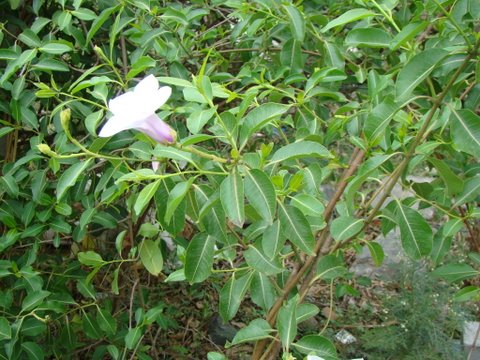
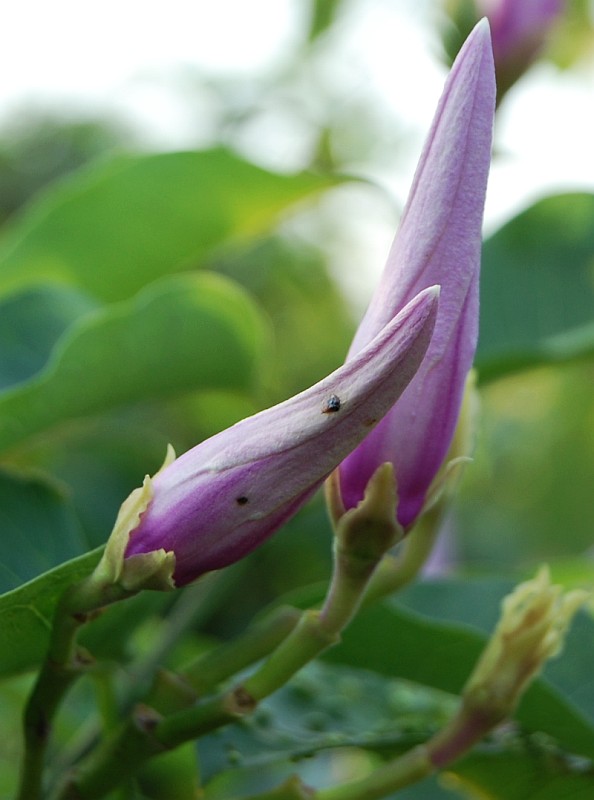
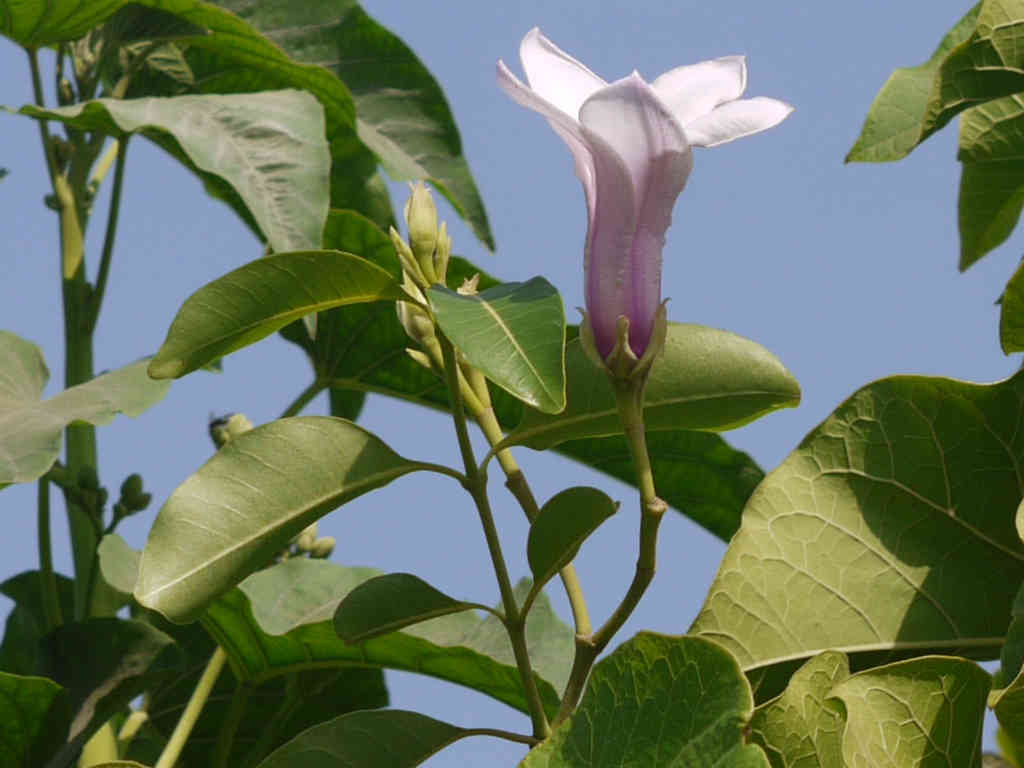
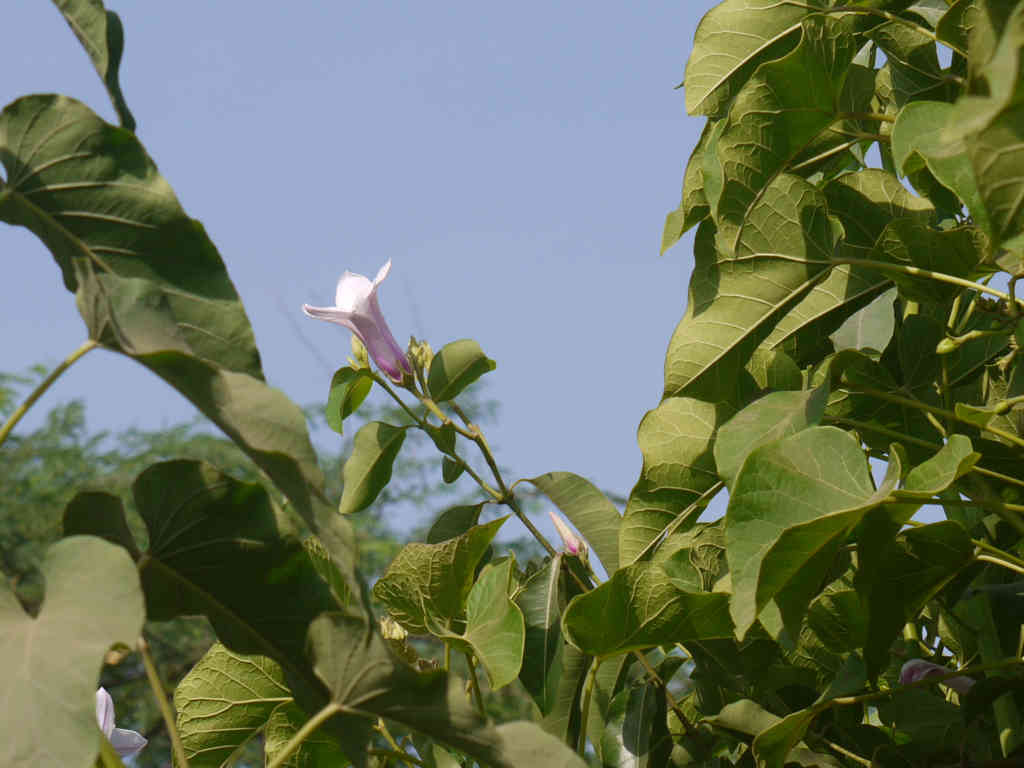
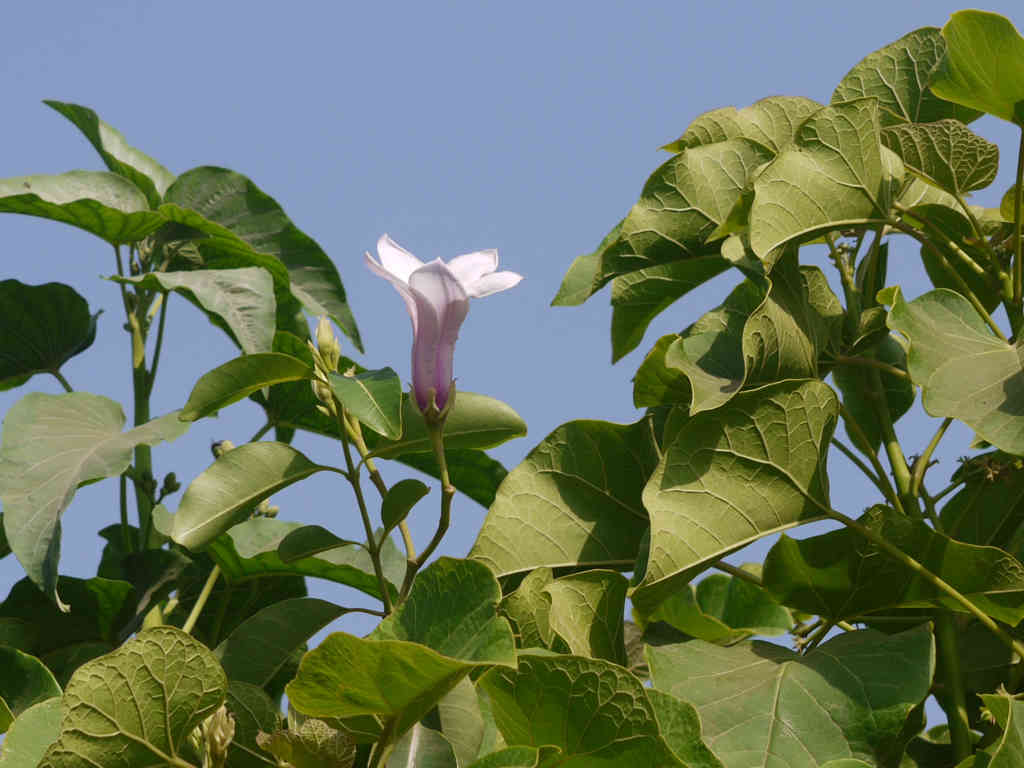
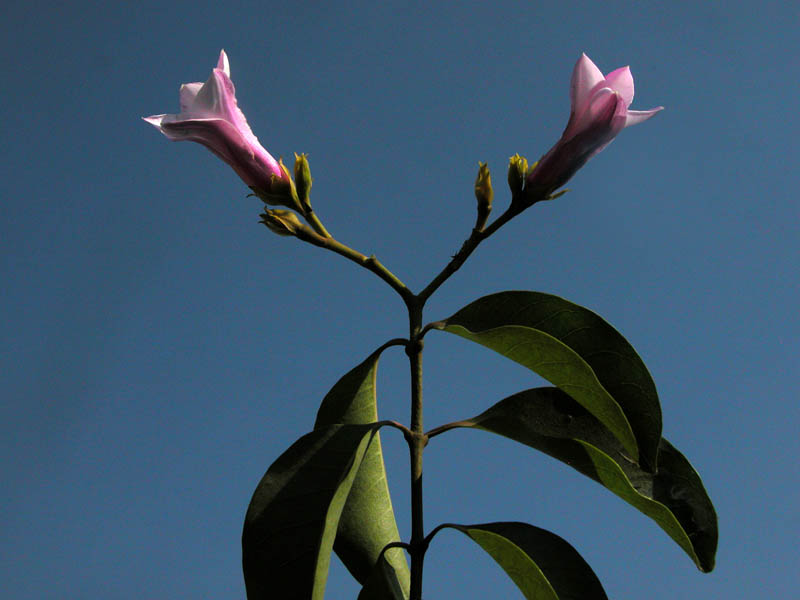
/wp-content/uploads/2020/10/DSC02282-8.JPG
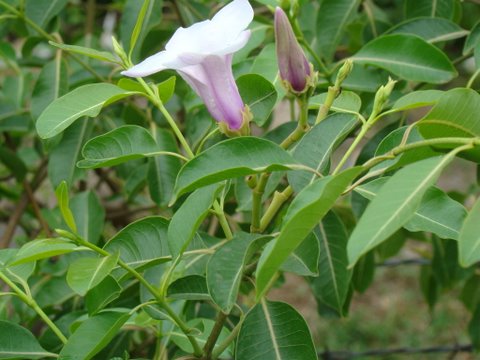
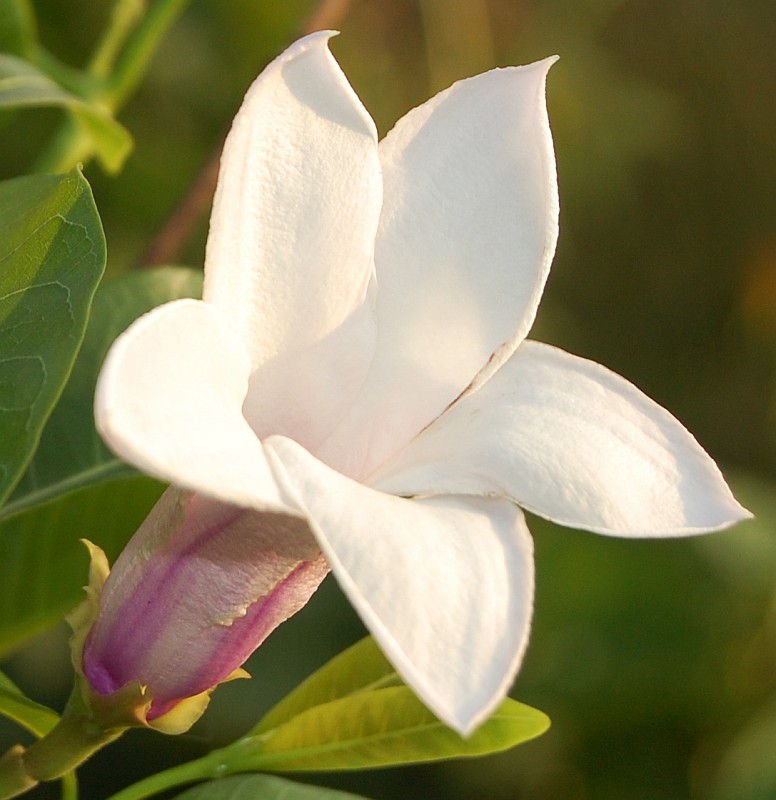
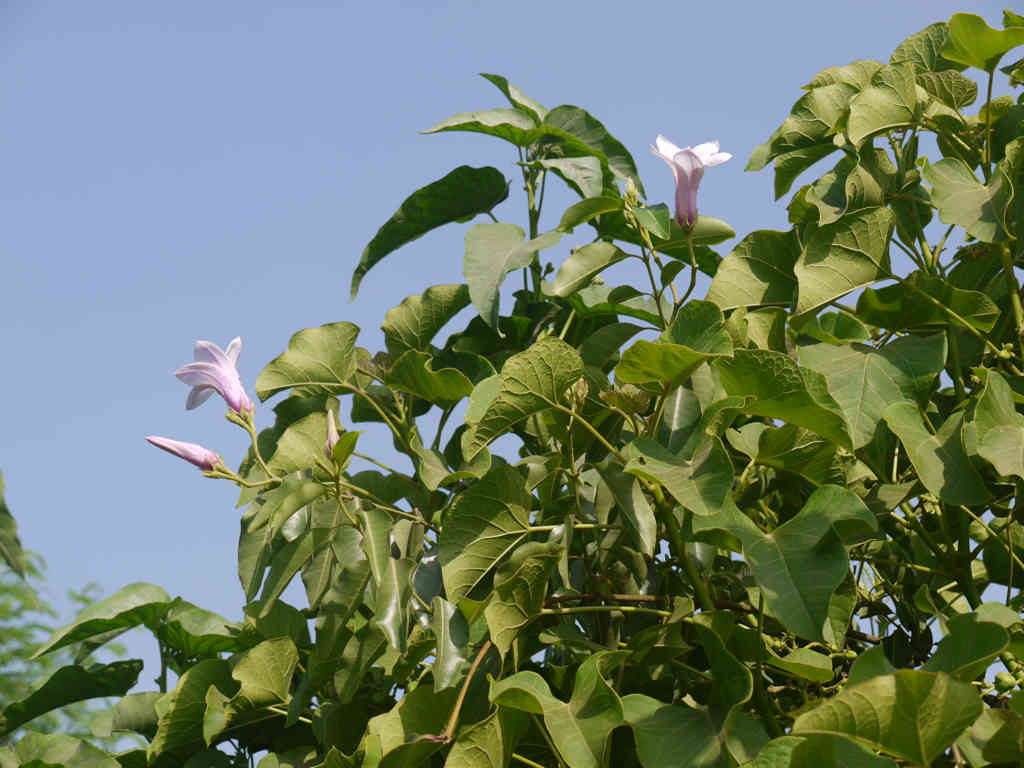
/wp-content/uploads/2020/10/DSC02283-8.JPG
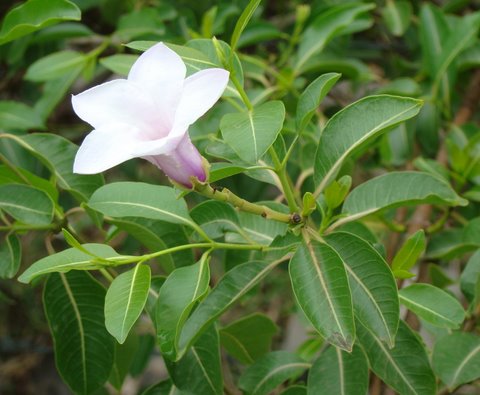
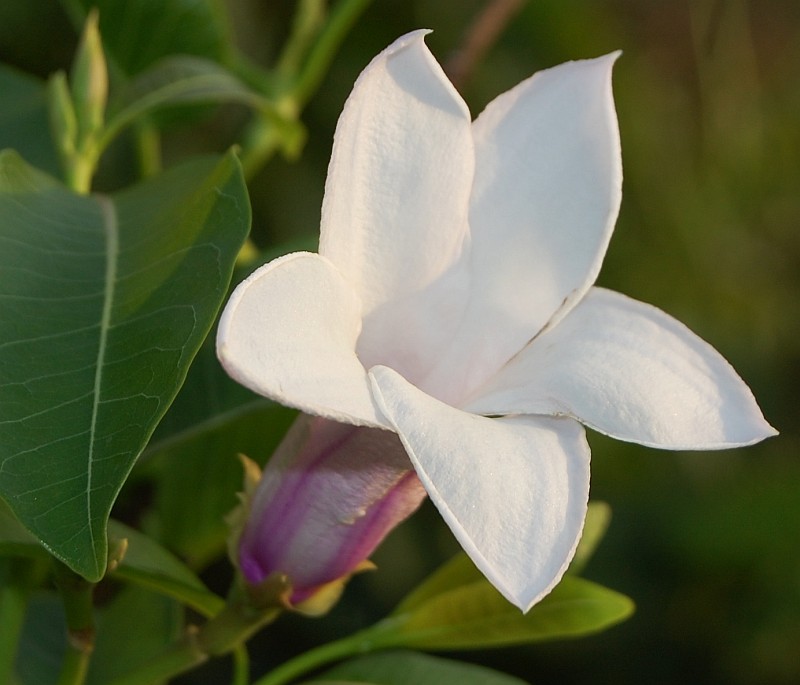
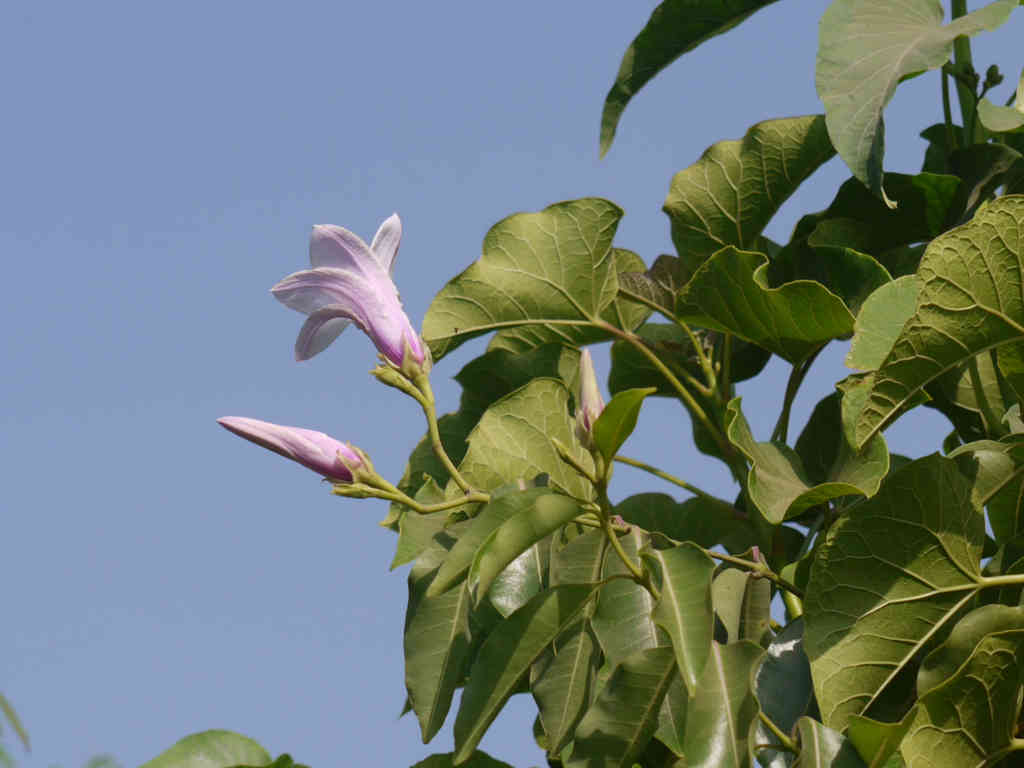
/wp-content/uploads/2020/10/DSC02284.JPG
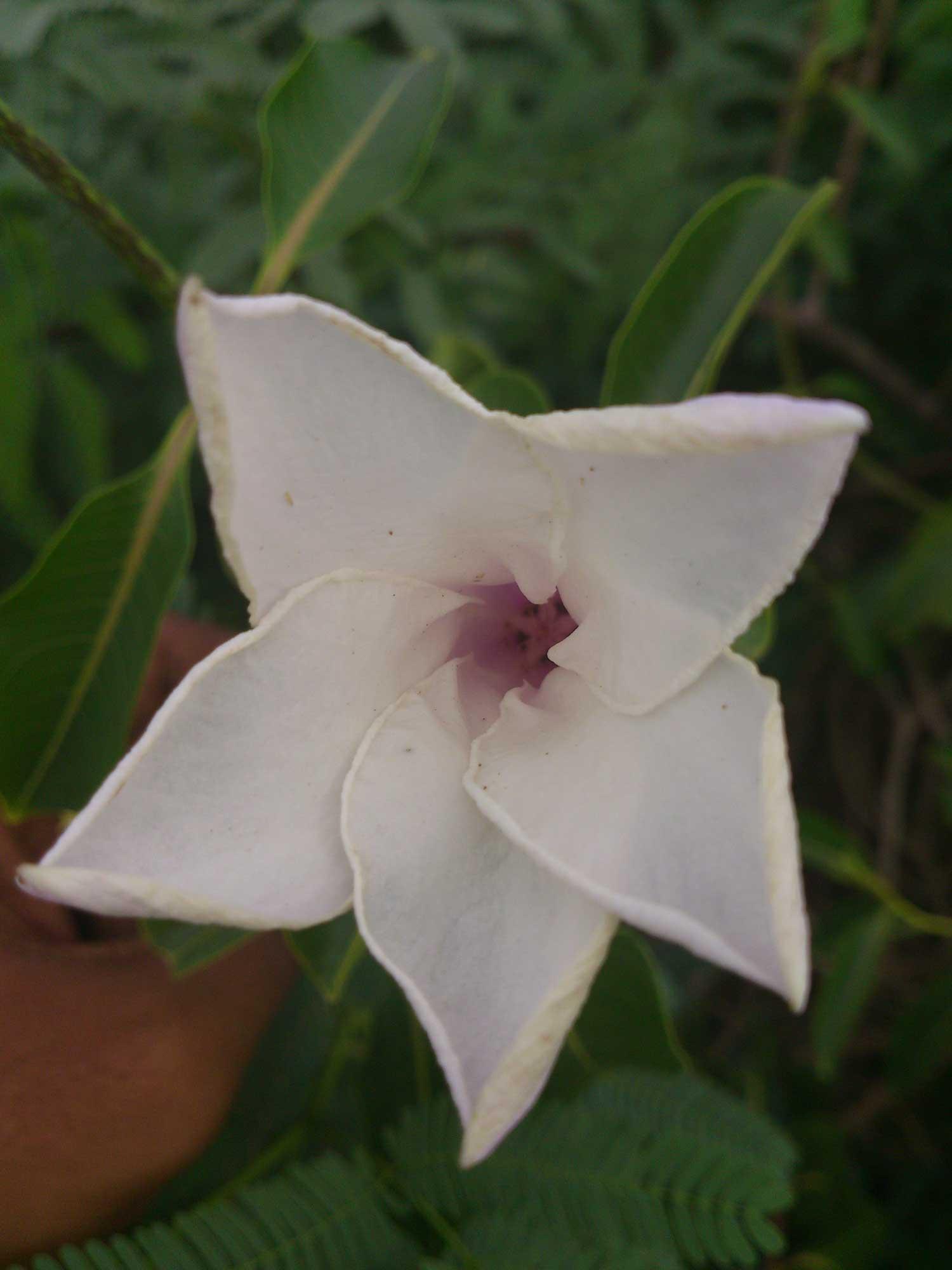
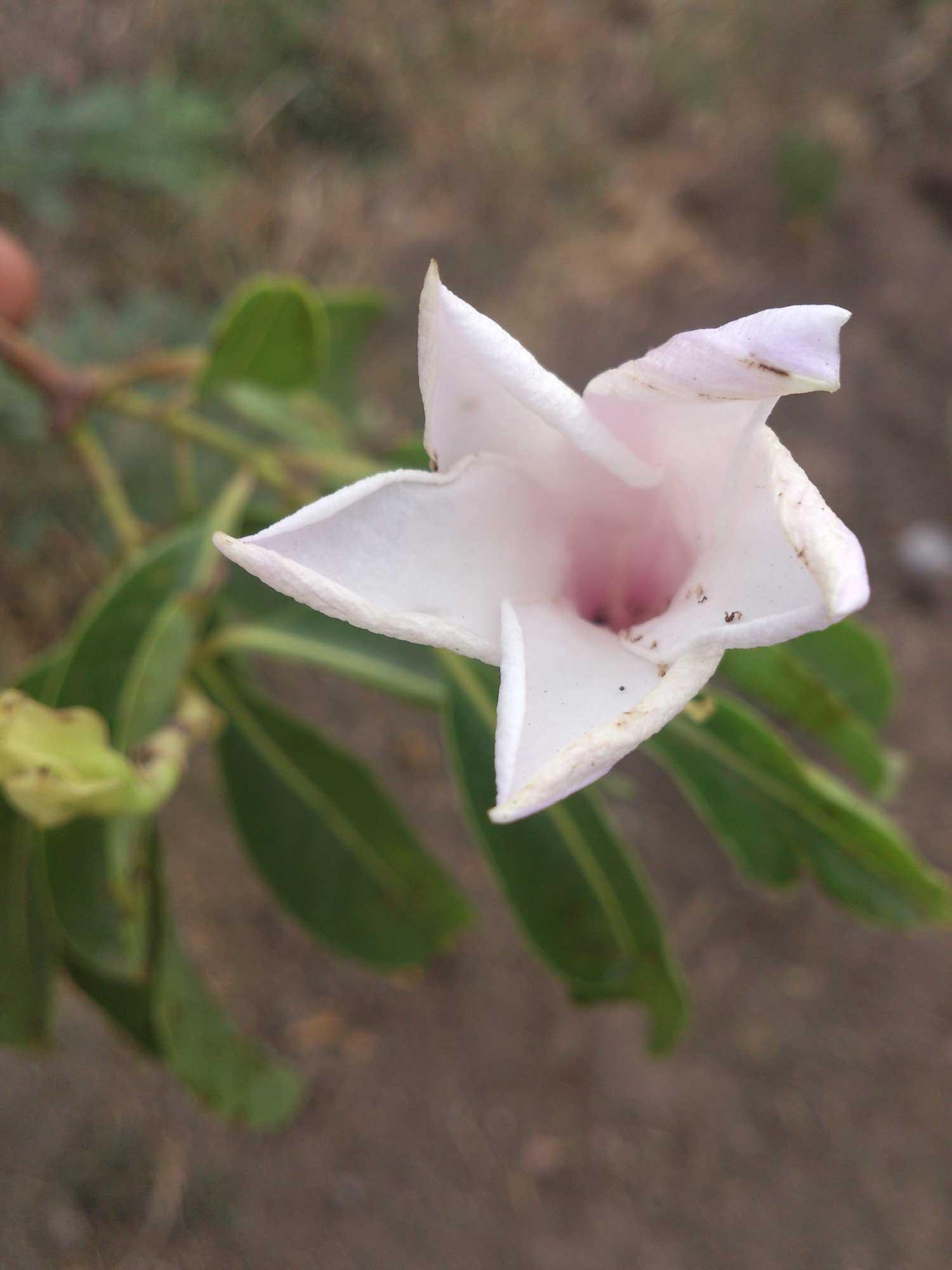
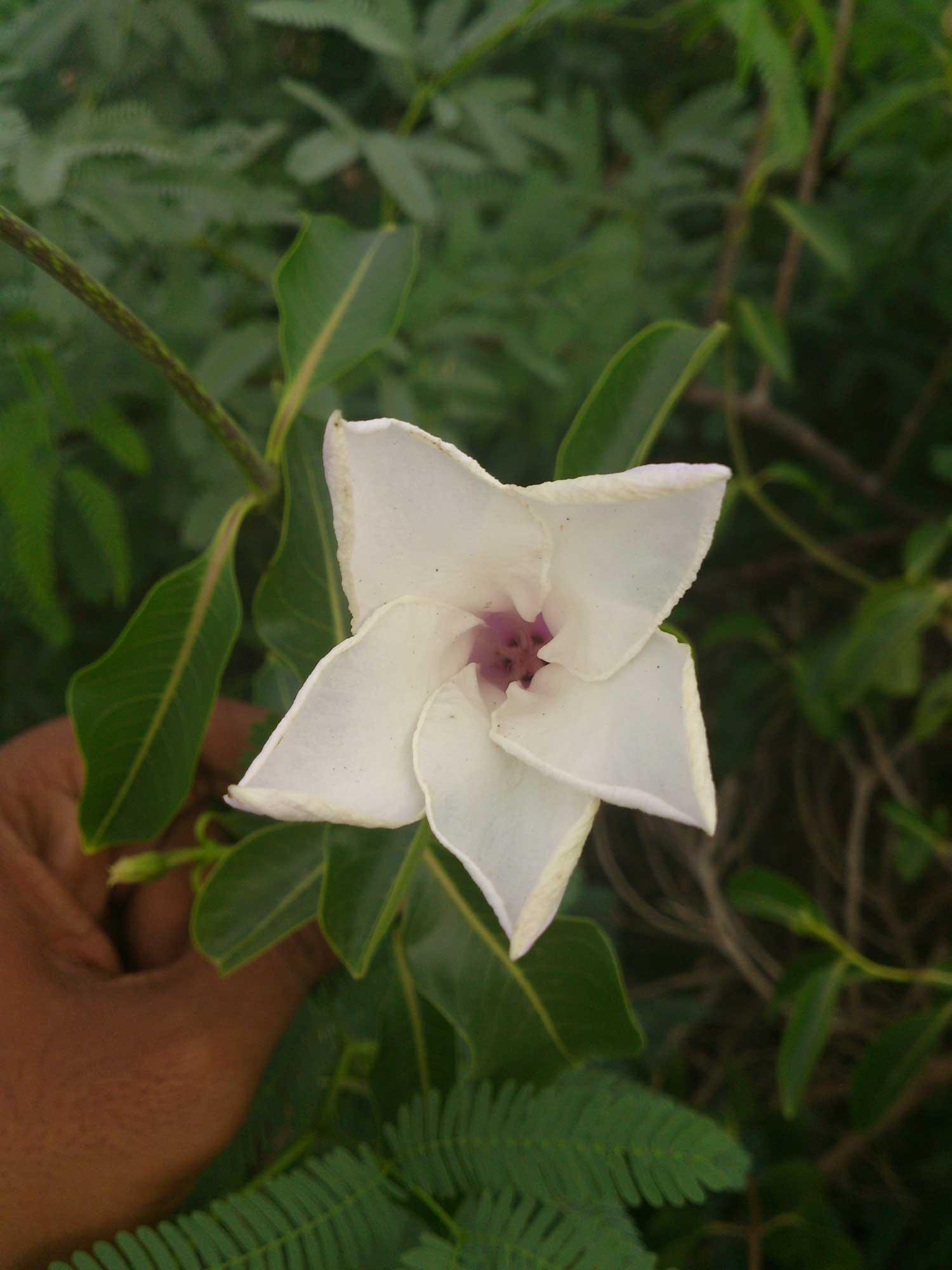
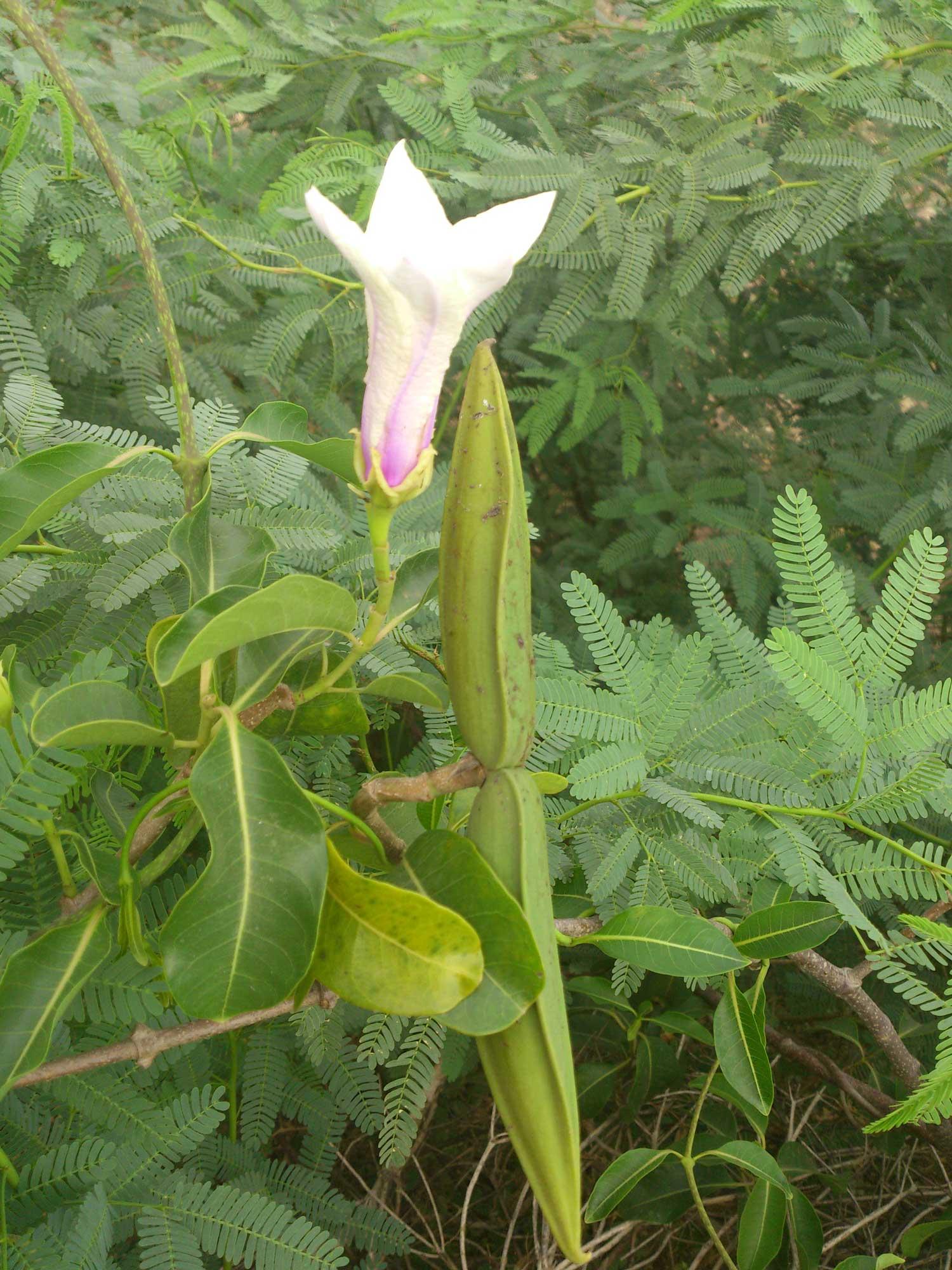
Request for Species Id DKV 17062011-1:
Mhow, Dist Indore, Madhya Pradesh
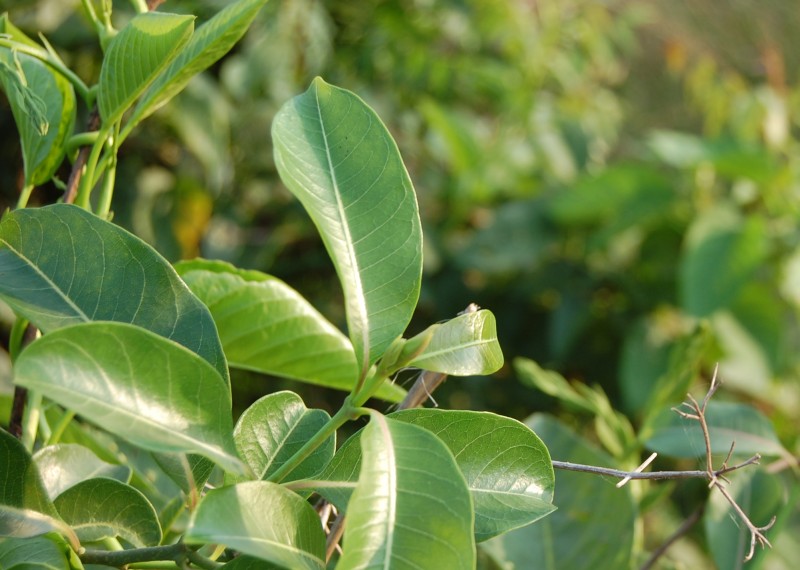
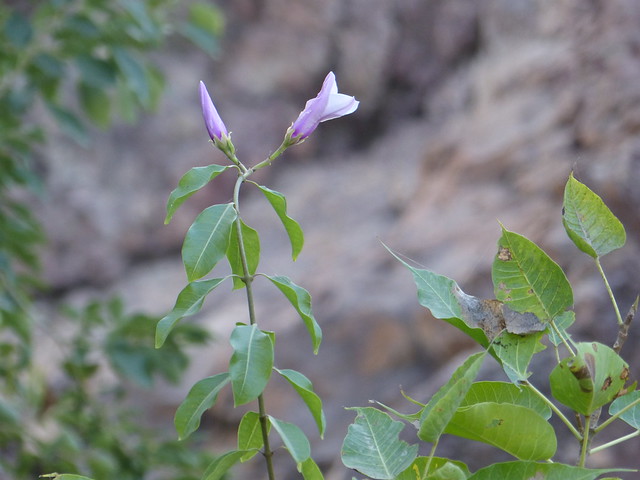
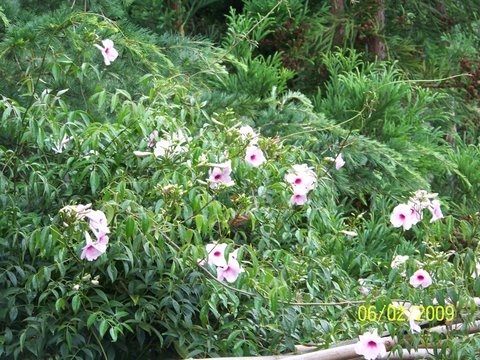
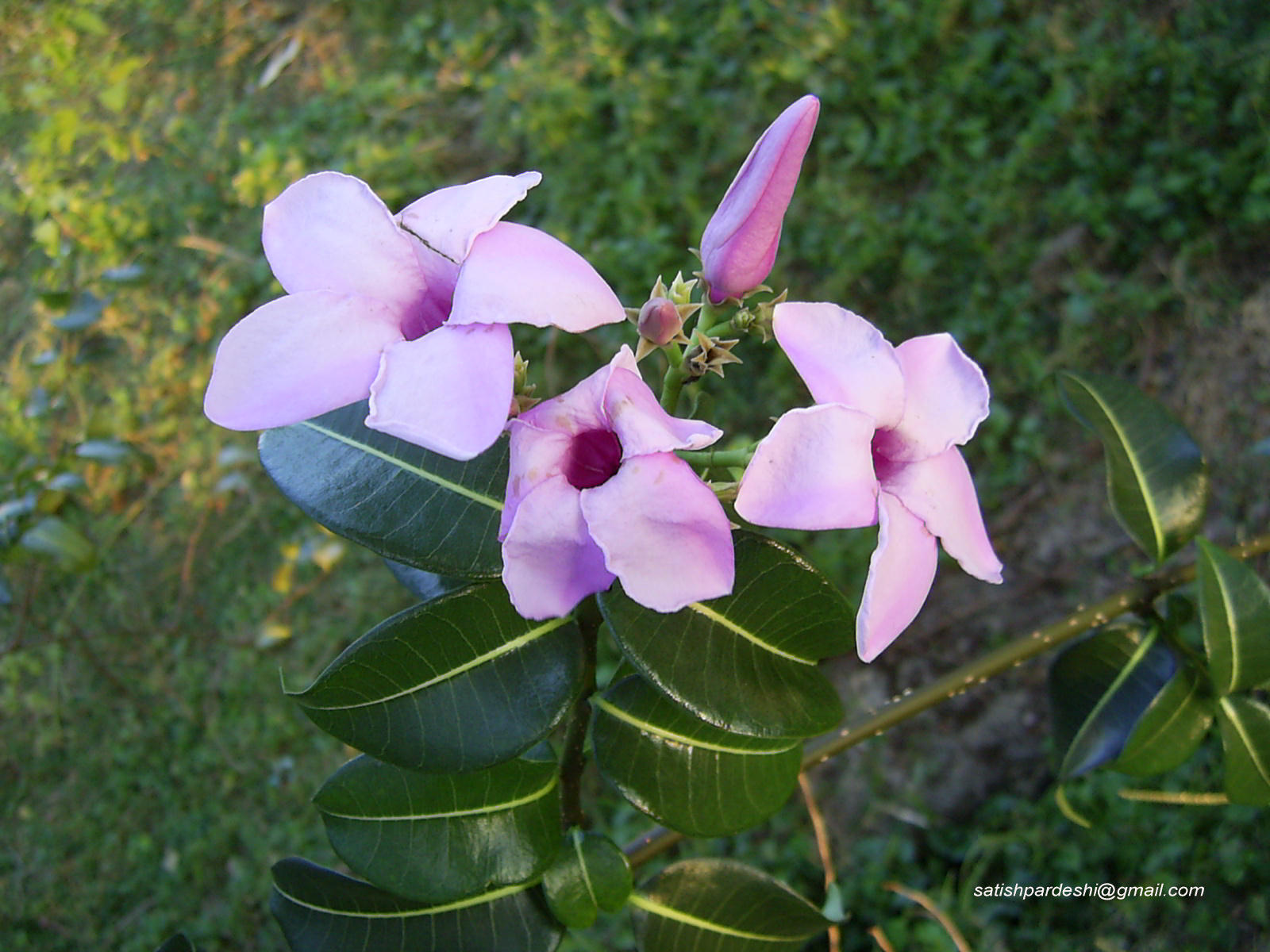
Seen on the roadside. The flowers are very much like that of the besharam (Ipomoea carnea) but the leaves are thicker and of a different shape.

It is Cryptostegia grandiflora from family Apocynaceae
Commonly called as Rubber vine.


Yes Cryptostegia grandiflora, and unlike Ipomoea carnea it is a woody climber.


Beautiful flowers, no doubt… BUT…. ANOTHER FOUL WEED…
this was new to me… so I googled it… this is what I learned…in very very short… its a weedy problem of great significance…. Horrified at what I found…

Originally from Madagascar,  was most likely imported  because of its beautiful flowers… escaped from gardens, and is now a weed of horrific importance.. Its seedpods are prolific,  producing up to 800+ seeds each, they fly off when pods open, remain viable for up to a year, germinate in moist soil, riverbanks in two weeks, in areas with at least 400mm rain, smothers native plants and kills stands of short trees,(there is one photo from australia…
showing the ghost trees covered with vines..at this link:
http://www.weeds.org.au/rubber_vine_mgt_guide.pdf)
MY question…
since you saw and photographed it from the roadside… was this plant part of a stand of these? has agro-forestry department in Maharashtra or Madhya pradesh started looking at this weed?


/wp-content/uploads/2020/10/DSC_4466bFlowerCloseup.jpg/wp-content/uploads/2020/10/DSC_4465aFlower.jpg/wp-content/uploads/2020/10/DSC_4467Leaves.jpg

Flowering Plant | 20May2011AR01 from Bangalore:
Flowering Plant | 20May2011AR01 from Gollarapallya, Bangalore
Date/Time-06 May 2011 05:49PM
Location- Place, Altitude, GPS- Gollarapalya Bangalore
Habitat- Garden/ Urban/ Wild/ Type-, Wild, Lake side
Plant Habit- Tree/ Shrub/ Climber/ HerbShrub
Height/Length-approx – 3.5 Meter approx
Leaves Type/ Shape/ Size- Shape – Ellyptic, 15cms
Inflorescence Type/ Size-
Flowers Size/ Colour/ Calyx/ Bracts
– 8-10cms, White, Pink


I too think that this is Cryptostegia grandiflora Roxb. ex R.Br. of Apocynaceae family.


/wp-content/uploads/2020/10/plant_image4.jpg
/wp-content/uploads/2020/10/plant_image3.jpg
/wp-content/uploads/2020/10/plant_image2.jpg
/wp-content/uploads/2020/10/plant_image1.jpg
Req. for Plant ID:
Req. for Plant ID
Photographed on 13.6.2012 at a village near Kurnool Andhra Pradesh.

Cryptostegia grandiflora
Apocynaceae
earlier Aesclepiadaceae


/wp-content/uploads/2020/10/IMG_1422-2.jpg
/wp-content/uploads/2020/10/IMG_1421_3.jpg
/wp-content/uploads/2020/10/IMG_1420-9.jpg
/wp-content/uploads/2020/10/IMG_1421_2.jpg
/wp-content/uploads/2020/10/IMG_1421_1.jpg
/wp-content/uploads/2020/10/IMG_1421.jpg

efloraofindia:”For Id 28072012MR1’’ roadside tree at Pune:
24 July 2012
Kindly help Id this roadside tree at Blue Nile restaurant crossing Pune
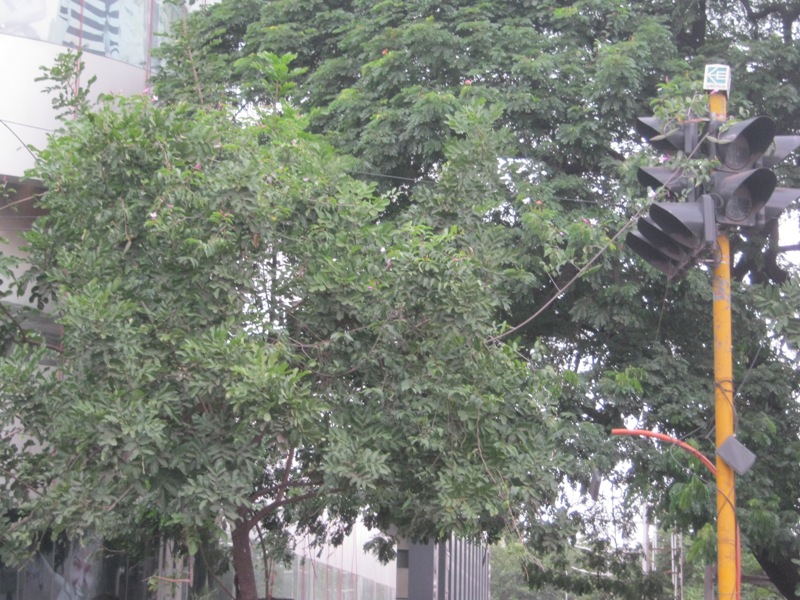
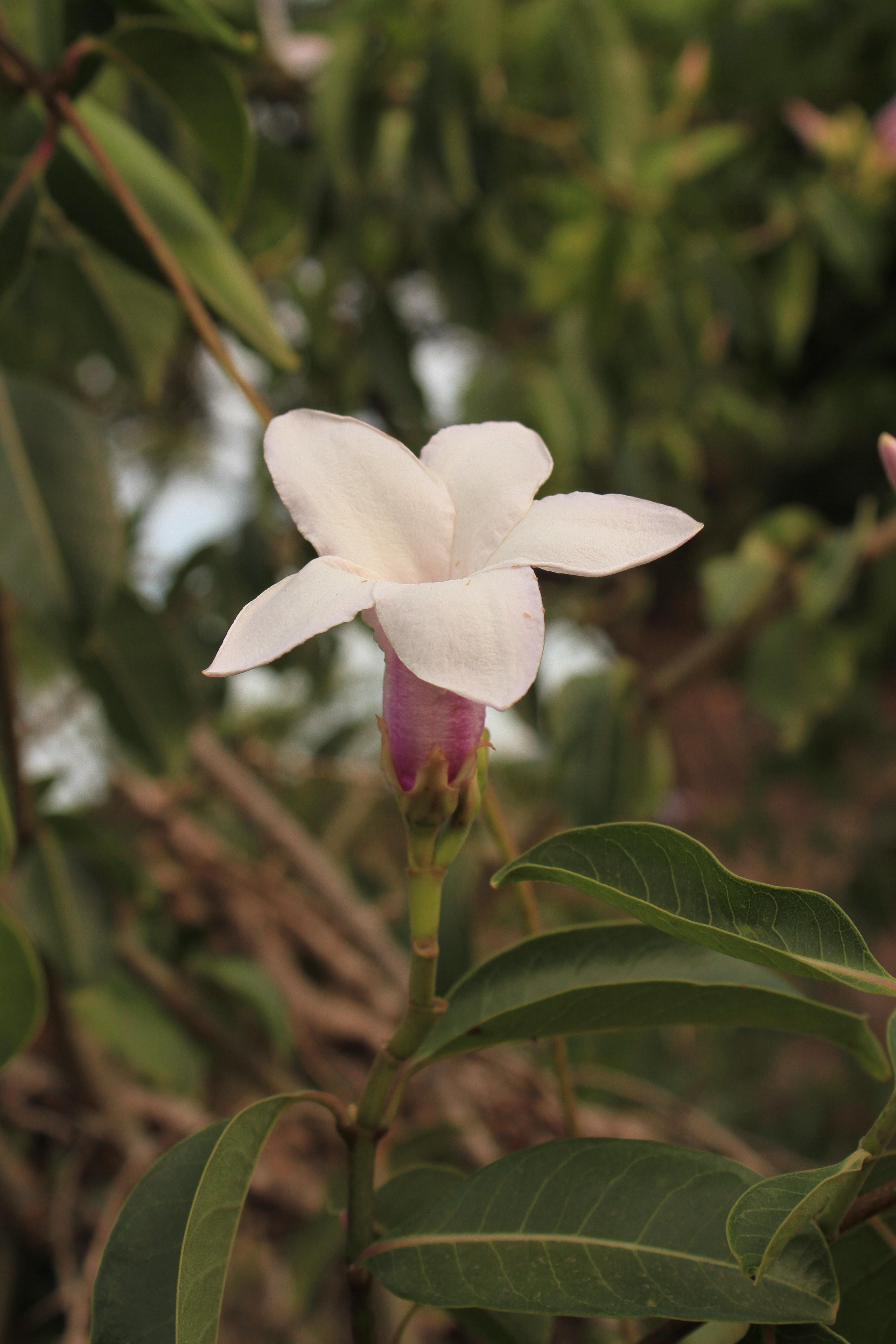
The tree is full of beautiful trumpet shaped white flowers with pink stalk. I have crossed this place 2 times in the last 3-4 months and flowers were there both the times. But I am confused, as when I zoomed the images it appears as if these flowers belong to some other plant engulfing this tree. I can see some ?fruit capsules in pic IMG_1421_1. Kindly ignore the rain tree in the pic. Sorry for the bad quality of pics .


I think this has to be Cryptostegia grandiflora a climber. Flowering profusely in many areas in Pune at present. The pods are characteristic.
Attaching my photographs posted earlier.
Family : Asclepiadaceae.


/wp-content/uploads/2020/10/kdam%20004.jpg
/wp-content/uploads/2020/10/kdam%20001.jpg


Cryptostegia grandiflora Roxb. ex R.Br. SN April 01 : Attachments (2). 2 posts by 2 authors.
Cryptostegia grandiflora Roxb. ex R.Br., Fam: Apocynaceae, introduced climber, naturalized in several areas in the southern states.


/wp-content/uploads/2020/10/100_1322.JPG
a climber for i.d. – indiantreepix | Google Groups : 6 posts by 4 authors. Attachments (1)
A climber, possibly a garden plant. From Dirang- 5500 ft.  For i.d.

check out with Cryptostegia madagascarensis as it also has glossy, thick leaves and pink flowers.
Cryptostegia madagascarensis Boj., Hort. Maurit. 212, 1837; Almeida, Fl. Mah. 3: 222, 2001; Singh et al, Fl. Mah. St. 2: 388, 2001. Origin:
Native of Madagascar.
other wise this can be a Argyreia species or an Ipomoea species. (Convolvulaceae)
if any close up view of flowers or leaves can be provided. it would be of great help for ID.


It is Cryptostegia either madagascarensis or grandiflora. It is also known as


the following key shall help you to differentiate between C. madagascarensis and C. grandiflora
1. Flower deep pink; Corona pink ————– C. madagascarensis
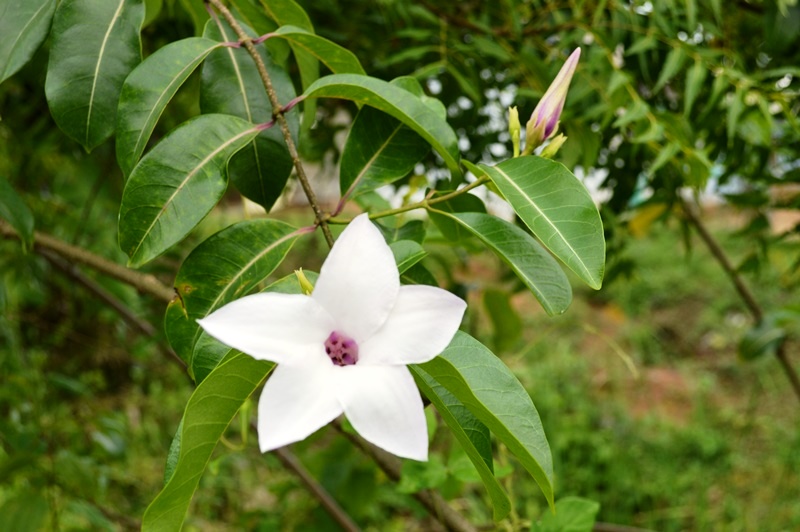
1. Flower white with pink or purplish tinge; Corona brown —– C. grandiflora


/wp-content/uploads/2020/10/Cryptostegia%20madagascarensis-Asclepidiaceae.jpg
/wp-content/uploads/2020/10/Cryptostegia_madagascarensis_corona.jpg

information about Cryptostegia Sps. – indiantreepix | Google Groups : 2 posts by 2 authors. 2 correct images as above.

1. Flower deep pink; Corona pink—-C. madagascarensis

1. Flower white with pink or purplish tinge; Corona brown—C. grandiflora 

Cryptostegia grandiflora R. Br., Bot. Reg. 5: 435, 1819; Hook.f., Fl. Brit. India 4: 6, 1883; Cooke, Fl. Pres. Bombay 2: 245, 1958 (Repr.); Almeida, Fl. Mah. 3: 221, 2001; Singh et al, Fl. Mah. St. 2: 386, 2001.
Synonym: Nerium grandiflorum Roxb., Fl. Ind. 2: 10, 1832.
Common names: Vilayti-vakundi, Chabuk-chhuree, Kauli, Rubber Vine.
Origin: Native of tropical Africa.
Cryptostegia madagascarensis Boj., Hort. Maurit. 212, 1837; Almeida, Fl. Mah. 3: 222, 2001; Singh et al, Fl. Mah. St. 2: 388, 2001.
Origin: Native of Madagascar.

I think C. madagascarensis is correct Id.


From below given differences, I think 1st & 2nd pictures are of Cryptostegia grandiflora & 3rd & 4th pictures are not of Cryptostegia grandiflora
Members are requested to check their postings accordingly.
These are the differences given in Factsheet:
Rubber vine (Cryptostegia grandiflora) is very similar to a closely related species that is known as purple rubber vine (Cryptostegia madagascariensis ). It is also relatively similar to the garden plant known as purple allamanda (Allamanda blanchetii). These species can be distinguished by the following differences:
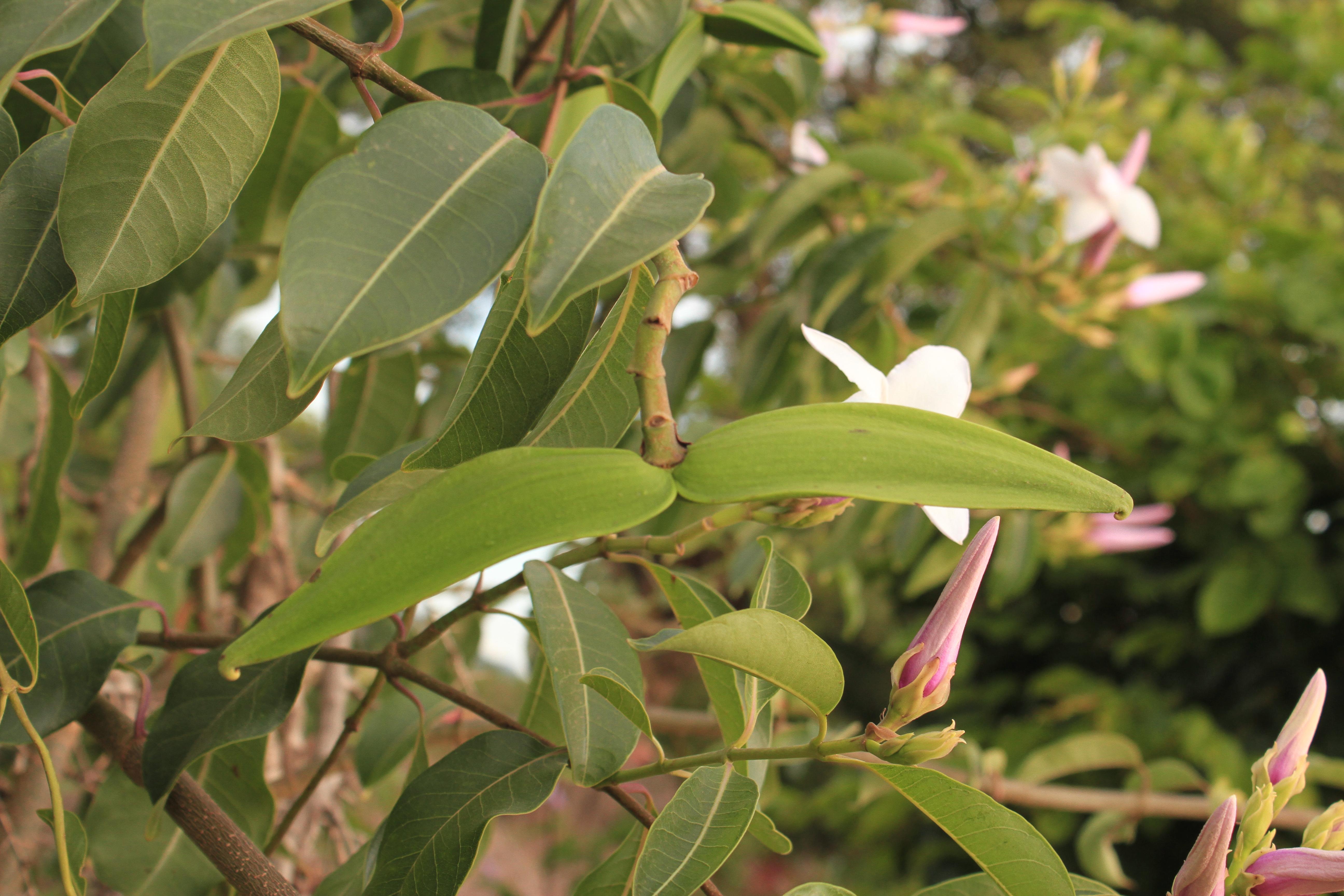
  • rubber vine (Cryptostegia grandiflora) has oppositely arranged leaves with slightly reddish or purplish-coloured stalks (i.e. petioles) and midribs. Its younger branches and leaves are always hairless (i.e. glabrous), its flowers are usually pale pink in colour with a much deeper coloured throat, and its paired fruit are commonly each more than 10 cm long.
  • purple rubber vine (Cryptostegia madagascariensis ) has oppositely arranged leaves with yellowish-green coloured stalks (i.e. petioles) and midribs. Its younger branches and leaves may sometimes be slightly hairy (i.e. puberulent), its flowers are usually uniformly bright pink or purplish in colour, and its paired fruit are always each less than 10 cm long.
  • purple allamanda (Allamanda blanchetii) has its leaves arranged in whorls of three or more along its stems (i.e. they are verticillate). Its younger stems and leaves are somewhat hairy (i.e. pubescent), its flowers are usually uniformly bright pink or purplish in colour, and its rounded fruit are rarely seen.

Third and fourth picture is of Strophanthus gratus of Apocynaceae


/wp-content/uploads/2020/10/IMG_2518.JPG
/wp-content/uploads/2020/10/IMG_2515-4.JPG
/wp-content/uploads/2020/10/IMG_2516.JPG
Please help me identify 240417 SCS 2 : 1 post by 1 author.
Please help me identify this woody climber from Peddamandyam Mandal, Chittoor District of Andhra Pradesh.
Seen commonly on the steam banks, road sides where moisture is relatively high.

Thanks, … Pl. check with comparative images at Apocynaceae


This plant is Cryptostegia grandiflora which belongs to the family Periplocaceae.


/wp-content/uploads/2020/10/IMG_20180506_192914457_LL.jpg
ID KANNUR 0601 : 3 posts by 2 authors. Attachments (1) – 2 MB.
Please identify this straggler from Kannur District of Kerala

sir i think Cryptostegia sp.
Similar to Criptostegia grandiflora.


/wp-content/uploads/2020/10/q4csS6Ui_Lh4_kXq0L8nP0NxmYXDnQZ2JR-WyxxTP99vE2PC6AsNjST9YOHTUvW9N3F9KkwBODMP6N7j8ANYMBl8V3q5yKXyaKxjEMzNSrRUx5A-w5000-h5000.jpg/wp-content/uploads/2020/10/kf4UWhVSJ8TkNQ6JBLeJ5VoAO_Wx6BaacRglseRkfFzKSUNc9FF3ZTiuKqWhECZLruE0cMRKdfamF0ZDxs3Vq-wbZ8tiqa20Jtr4dZMayAcYzEk-w5000-h5000.jpg/wp-content/uploads/2020/10/_7BLfqTIX4SUpZO00eetx3T096rZkRRZ5qXNCBW9io1xwluZFurE9Ps2b48LRRIDwdC9HJF3afk9iAzU-CCGZFJO7WomW8KPbGcGphQSx3-Ryuc-w5000-h5000.jpg/wp-content/uploads/2020/10/_kI1SAQmqgRFZQ_rSA5yAz8MhHvdQPh2zKToEO_fTVJN13yFyt1ngsQUAcXZ7cEK4Huy_Mv8Q5v9xtd3TmjHS0UMf3L6EuBYWIxIWqsngxb_EJU-w5000-h5000.jpg/wp-content/uploads/2020/10/apeEn-1kmZmXpvF2X5nONifJ43KqJfpABRlZ06QincMZW-sJ8IT-wZTnmH3KMHQGUHqnm0CqpCQfcPYJdCMNKFq2xATaAYfFU6125lxpuSvqK38-w5000-h5000.jpg/wp-content/uploads/2020/10/qk5e4U79yTVa9bq_24-DxrGQDsQIM-829Hyj-HjOIKP3PvuRzX-n1XDrqYY3CdnlQcsUGNJY8TPswJ0Pn0lrAf1QwU2L7FmF3Xw6IFFPUJVWOek-w5000-h5000.jpg/wp-content/uploads/2020/10/BTNoH47qfpBdWsc_4qpzwGV3X3q7JqLT3OZ5i5AjS62XmF8bhJxfK7QMIZibzh7Ye0u6OQItRYQa14M1WXWMpasH4uFNQx_ULUKvvaj-m-g5cJs-w5000-h5000.jpg
Cryptostegia grandiflora :: Rao Jodha Desert Rock Park :: 24 OCT 18 : 5 posts by 4 authors. 7 images.
Rao Jodha Desert Rock Park  Jodhpur
Date: October 24, 2018 … Altitude: about 300 m (980 feet) asl
Cryptostegia grandiflora  Roxb. ex R.Br.
Photos taken at various spots in the park.

ah! the rubber vine


/wp-content/uploads/2020/10/Cryptostegia-grandiflora-Delhi-1.jpg/wp-content/uploads/2020/10/Picture%20002%20Lav%20Ipo.jpg/wp-content/uploads/2020/10/Cryptostegia%20grandiflora1.jpg/wp-content/uploads/2020/10/Cryptostegia-grandiflora-Delhi-2.jpg/wp-content/uploads/2020/10/P1170810.jpg/wp-content/uploads/2020/10/P1170812.jpg/wp-content/uploads/2020/10/Cryptostegia%20grandiflora2.jpg/wp-content/uploads/2020/10/P1170813_cropped.jpg/wp-content/uploads/2020/10/P1170814.jpg/wp-content/uploads/2020/10/P1170813.jpg/wp-content/uploads/2020/10/Picturewhole%20%20bush.jpg

at the dame place Lake Kalote– Sept’09?; Pune 5 Nov 2009; May 29, 2010 at 4.36pm IST: Rajguru Nagar, Pune;  last week of June 2010 in Tadgaum, Gujrat; from Delhi;

Cryptostegia grandiflora from Delhi – efloraofindia | Google Groups
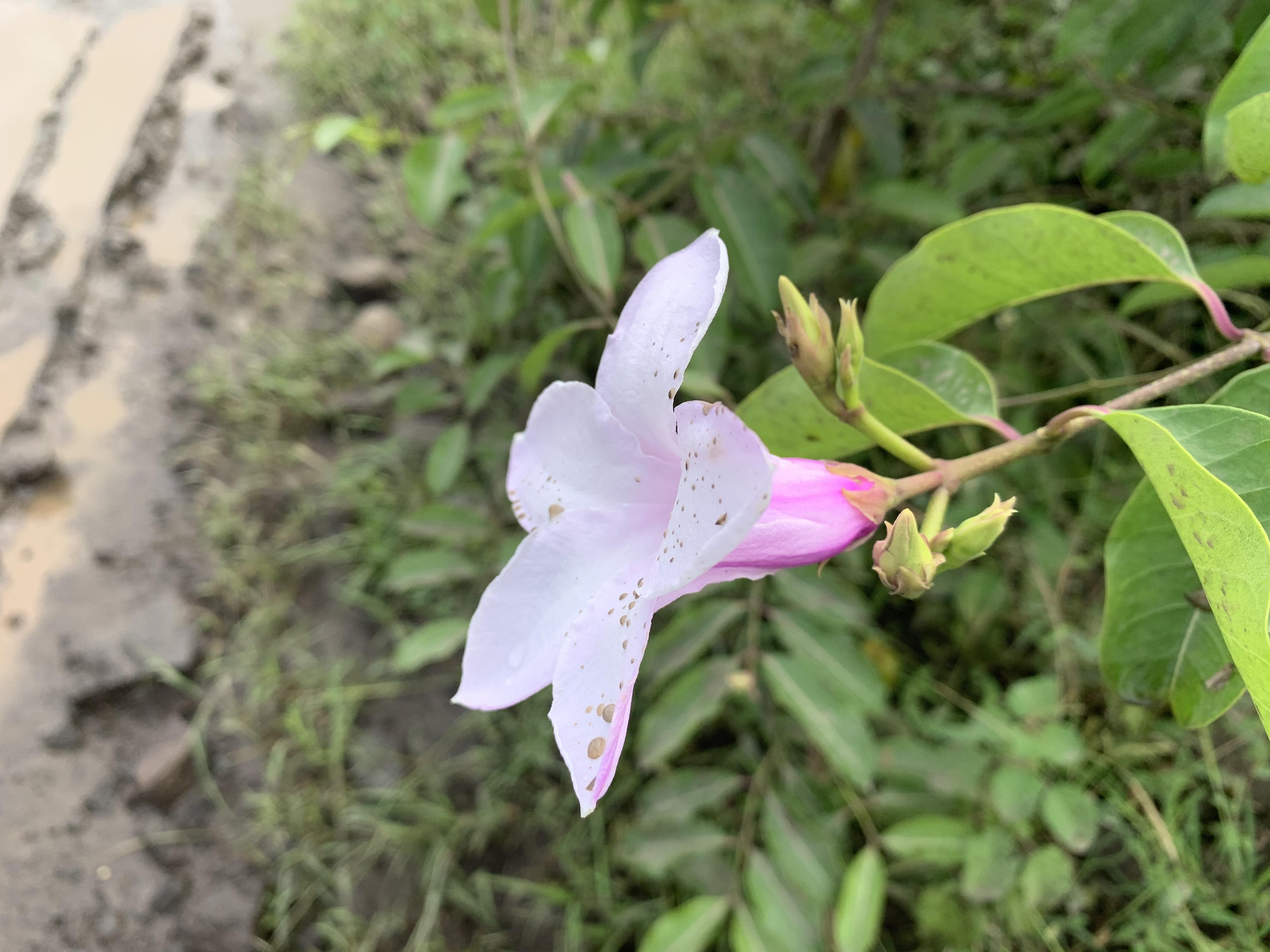
DV – 29MAY10 – 0436 :: trumpet flower – efloraofindia | Google Groups
Cryptostegia grandiflora – indiantreepix | Google Groups
ID BK4 – indiantreepix | Google Groups


/wp-content/uploads/2020/10/Cryptostegia%20grandiflora_Hampi%20Dudhebavi2.jpg/wp-content/uploads/2020/10/Cryptostegia%20grandiflora_Hampi%20Dudhebavi4.jpg/wp-content/uploads/2020/10/Cryptostegia%20grandiflora_Hampi%20Dudhebavi1.jpg/wp-content/uploads/2020/10/Cryptostegia%20grandiflora_Hampi%20Dudhebavi3.jpg/wp-content/uploads/2020/10/Cryptostegia%20grandiflora_Hampi%20Dudhebavi5.jpg
Satara, MH :: Cryptostegia grandiflora :: ARK2020-039 : 5 posts by 3 authors. Attachments (5)
Saw this climber along a ghat road near Satara, MH in October 2019, quite commonly seen in that area.

Yes, ma’am, it’s common in my native (Chittoor) too,
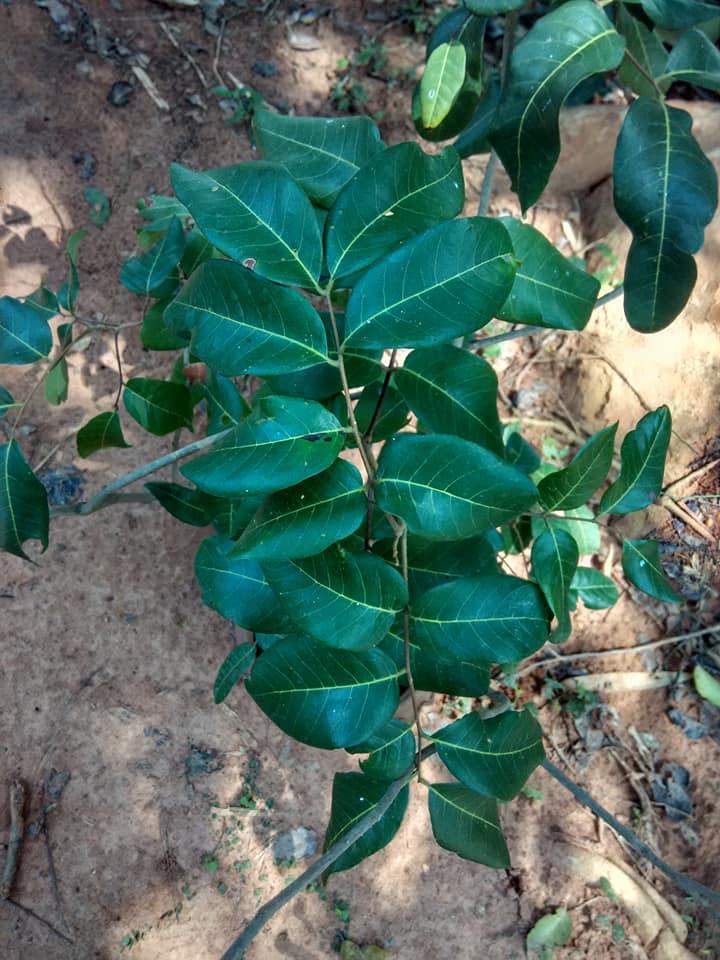


/wp-content/uploads/2020/10/22491983_1377495705683091_429357226840846349_n.jpg/wp-content/uploads/2020/10/22491819_1377495759016419_1472774204696879712_n.jpg
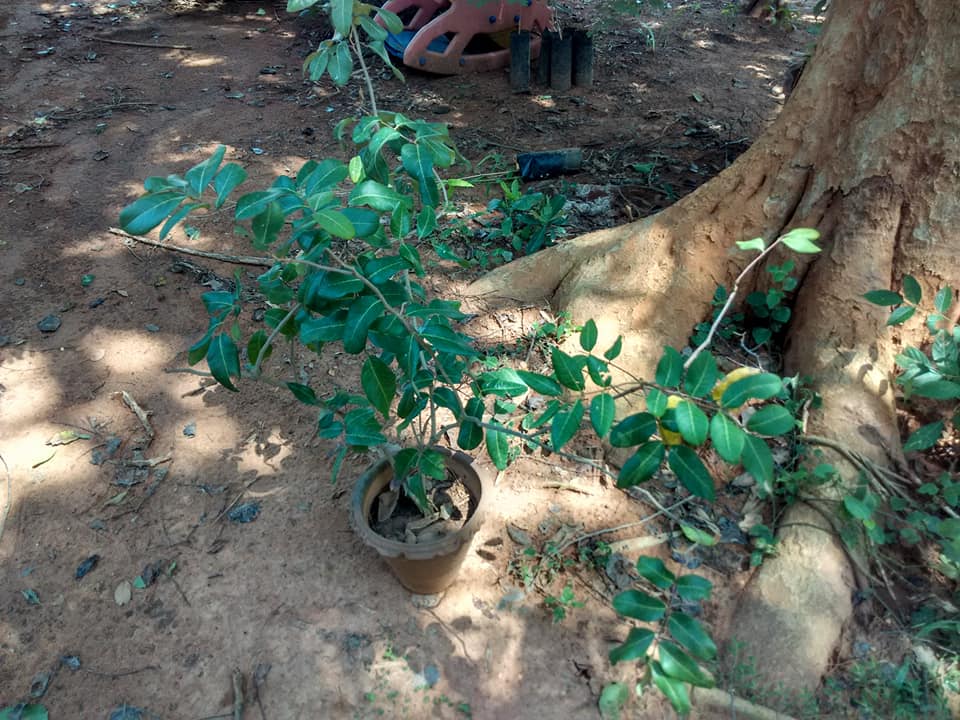
211017BHAR02 – Plant IN POT : 6 posts by 2 authors. Attachments (2)
Found in Auroville botanical Garden near Pondicherry, Tamil Nadu.
Any idea?

Appears to be from Apocynaceae.


This may be a sapling of Drypetes sepiaria


This is not Drypetes sp.
It’s Cryptostegia grandiflora.


.


Flower for Id -ID09032023SH1: 1 very high res. image.

Flower for Id pl.
Location – Bhigvan, Maharashtra
Date – January 2023

This is
https://efloraofindia.com/2011/02/20/cryptostegia-grandiflora/


.


Names of Plants in India :: Cryptostegia grandiflora Roxb. ex R.Br.: 1 image.
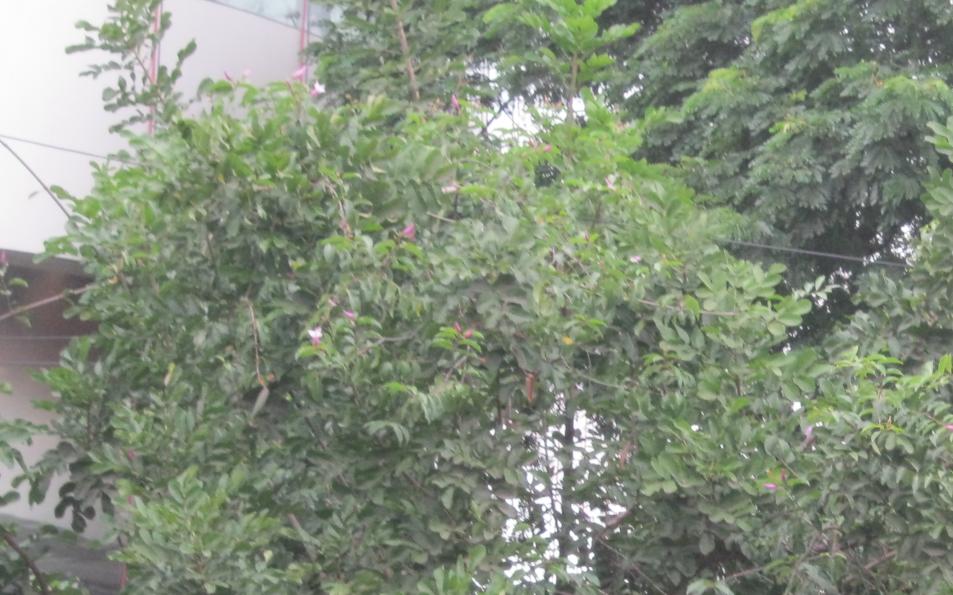
Cryptostegia grandiflora Roxb. ex R.Br.
krip-toh-STEEJ-ee-uh or krip-toh-STEG-ee-uh — hidden covering … Dave’s Botanary
gran-dih-FLOR-uh — with large flowers … Dave’s Botanary
,

commonly known as: rubber vine • Bhili: रबडबेल rabad-bel • Gujarati: આકડચુરી aakadchuri, ગુલાબી મોટી ડોરી gulabi moti dori, પરદેશી મોટી ડોરી pardeshi moti dori, રબરવેલ rabarvel • Hindi: आकडछुरी aakadchhuri, चाबुक छड़ी chabuk chhari, दूधीबेल dudhibel, रबर की बेल rabar ki bel • Kachchhi: આકડવલ aakadval, કચ્છી રબરવલ kachchhi rabarval • Kannada: ಹಂಬು ರಬ್ಬರ್ ಗಿಡ hambu rabbar gida, ರಬ್ಬರ್‌ ಬಳ್ಳಿ rabbar balli • Konkani: फिरंगी वाखांडी phirangi vakhandi • Malayalam: പാല paala • Marathi: विलायती वाकांडी vilayati vakandi • Rajasthani: विलायती आकड़ो vilayati aakro • Tamil: கருடப்பாலை karudappaalai, பாலை paalai, ரப்பர் கொடி rappar kodi • Telugu: గంట పాల ganta paala, రబ్బరు తీగ rabbaru theega

known for / parts made use of: milky latex, leaves, roots, stem, flowers, whole plant … compiled from the web.

botanical namesCryptostegia grandiflora Roxb. ex R.Br. … homotypic synonymsNerium grandiflorum (Roxb. ex R.Br.) Roxb. … and more at POWO, retrieved August 23, 2026
Bibliography / etymology / notes
Links listed as references in the notes below, may not remain valid permanently. Portals / websites have a tendency to re-organize / revise their content, leading to change in URLs of pages in their site. Some sites may even close down at their own will. The bits about the languages of India mentioned below are merely some bare facts gathered from the internet; just enough to satisfy curiosity about “where” could the listed names be best prevalent in India. All English transliterated names to be taken sensu amplo.

~~~~~ ENGLISH ~~~~~
written and spoken widely, in most parts of India
rubber vine
  • Flowers of India … (accessed: August 23, 2026)
  • Rubber Vine is by far the most dominant and recognizable English name used across India. Also better known as “Indian Rubber Vine” — It is primarily found in the older trade and economic botany books. Even though the plant is native to Madagascar, India was one of the very first global hubs to cultivate it intensively for industrial rubber experiments in the 19th century. Consequently, international markets and early text books dubbed it the “Indian Rubber Vine”. … compiled from the web.
  • Palay Rubber Vine — This name is found in historical, botanical, and official forestry documentation in India. “Palay” is derived from its Tamil regional name (Palai, meaning milky/latex-bearing). During the British colonial era, when the plant was heavily researched for rubber production, the British adopted the local term, cementing “Palay Rubbervine” into Indian botanical literature. … compiled from the web.
  • Purple Allamanda — This name “was” highly popular in Indian horticulture and home gardening circles. The striking, bell-shaped purple flowers look almost identical to the popular yellow Allamanda vine (Allamanda cathartica). Because the real Allamanda belongs to the same plant family but lacks the aggressive invasive nature, nursery owners and gardeners in India frequently call this plant “Purple Allamanda” or “False Allamanda”. In modern retail gardening portals, this common name has been completely taken over by Allamanda blanchetii (synonym Allamanda violacea). Because Cryptostegia grandiflora is heavily flagged as an aggressive invasive weed in India, standard Indian nursery sites are highly discouraged from selling it commercially. If it is available, they will list it under “Rubber Vine” rather than Allamanda. … compiled from the web.
~~~~~ BHILI ~~~~~
written in: Devanagari (भीली), Gujarati (ભીલી) … spoken in: Dadra and Nagar Haveli and Daman and Diu, Madhya Pradesh, Gujarat, Rajasthan, Maharashtra
रबडबेल rabad-bel
  • Banswara – Forest Department – Rajasthan Government … (downloaded: Sep 5, 2020)
  • रबडबेल (Rabad-bel) — This regional term belongs to the Wagdi dialect, a Western Indo-Aryan tongue belonging to the Bhili tribal language family. While documented by the State Forest Department within the political boundaries of Rajasthan, it represents the distinct indigenous phonetic profile of the Bhil communities of the Vagad tri-border zone. The name exhibits classic Bhili features: dropping the formal possessive postposition (ki) and flattening the retroflex consonants into a tight compound phrase. … compiled from the web.
~~~~~ GUJARATI ~~~~~
written in: Gujarati (ગુજરાતી) … spoken in: GujaratDadra & Nagar HaveliDaman & Diu
આકડચુરી aakadchuri, રબરવેલ rabarvel
  • વનસ્પતીઓ ના ગુજરાતી તથા બોટનીકલ નામ ની યાદી :: સંકલન કર્તા વૈધ શ્રી કે,જે,ઝાલા … (downloaded: 19 Jan 2026)
  • આકડચુરી (Aakadchuri) — this descriptive folk term, combines Aakad (referencing the milky sap of Calotropis procera) and Churi (dagger) to describe the plant’s rigid, paired seed pods. … compiled from the web.
  • રબરવેલ (Rabarvel) — This compound name is a direct phonetic and structural hybridization, merging the localized English loanword Rabar (Rubber) with the traditional Gujarati word Vel (vine), thus reverse translating to “Rubber vine”. This term has permeated almost every Indian regional language where the species has naturalized. … compiled from the web.
ગુલાબી મોટી ડોરી gulabi moti dori, પરદેશી મોટી ડોરી pardeshi moti dori
  • કચ્છ સ્વસ્થાન ની વનસ્પતિઓ ઠાકર જયકૃષ્ણ ઇન્દ્રજી 1926 [PLANTS OF CUTCH AND THEIR UTILITY by THAKAR, JAIKRISHNA INDRAJI, 1926]
  • In the 1926 text “Plants of Cutch and Their Utility”, Thakar Jaikrishna Indraji documents local names for Cryptostegia grandiflora based on its utility and botanical features, where “Moti” means large or larger, “Dori” indicates a fibre-yielding climber. The name Gulabi Moti Dori (“large pink rope-vine”) highlights the plant’s robust stems and showy pink flowers, while Pardeshi Moti Dori (“foreign large rope-vine”) identifies it as an introduced species, highlighting its utility as a rope-maker that was nonetheless recognized by local communities as an exotic, invasive plant. … compiled from the web.
~~~~~ HINDI ~~~~~
written in: Devanagari (हिन्दी) … spoken in: DelhiUttar PradeshBiharChhattisgarhHaryanaJharkhandMadhya Pradesh, Rajasthan, Uttarakhand
आकडछुरी aakadchhuri
  • કચ્છ સ્વસ્થાન ની વનસ્પતિઓ ઠાકર જયકૃષ્ણ ઇન્દ્રજી 1926 [PLANTS OF CUTCH AND THEIR UTILITY by THAKAR, JAIKRISHNA INDRAJI, 1926]
  • आकडछुरी (Aakadchhuri) — This compound name merges the indigenous base आकड (Aakad) — derived from Aak or Aakda (Calotropis procera) — with the traditional Hindi word छुरी (Chhuri), meaning a knife, dagger, or blade. While historically documented in early 20th-century regional treatises (such as Indraji’s 1926 Plants of Cutch) under a Gujarati-transliterated phonetic spelling (આકડચુરી), its structural roots belong to Hindi folk taxonomy. The name serves as a precise, dual-faceted identification key for Cryptostegia grandiflora. The prefix Aakad anchors the plant to the native Calotropis template due to its thick, toxic milky sap. Concurrently, the suffix Chhuri (dagger) explicitly describes the plant’s unique fruiting habit: it produces large, rigid, woody, three-sided seed follicles that always grow in sharply divergent, opposing pairs at the tips of the branches, closely resembling the outspread blades of twin daggers. … compiled from the web.
चाबुक छड़ी chabuk chhari
  • FRLHT’s ENVIS Centre on Medicinal Plants … (accessed: August 23, 2026)
  • R. P. Kanther – DOMINANT FLORA OF PALI-DISTRICT, RAJASTHAN, INDIA J. Indian Bot. Soc., Vol. 100 (1&2) 2020:01-15 … (downloaded: Jun 15, 2024)
  • चाबुक छड़ी (Chabuk chhari) — Documented broadly across Hindi botanical repositories such as the FRLHT-ENVIS database, this name translates literally to “whip-stick”. Its practical field usage is explicitly confirmed in regional floristic studies of Western India, such as research on the dominant flora of the Pali district in Rajasthan. The term is a direct ecological descriptor of the plant’s growth habit: it aggressively throws out exceptionally long, slender, and highly flexible leafless pioneering stems that look and bend exactly like a herder’s driving whip. Furthermore, its rigid, twin seed pods look like sharp blades, earning it the sister name चाबुक छुरी (Chabuk-Chhuree) — literally “Whip-Dagger” in select regional pockets. … compiled from the web.
दूधीबेल dudhibel
  • Nigwal, Mekusingh (2011) – Status of tribal agriculture in Dhar district, M P – Chapter 4 :: Shodhganga :: a reservoir of Indian theses @ INFLIBNET
  • FRLHT’s ENVIS Centre on Medicinal Plants … (accessed: August 23, 2026)
  • In rural Hindi-speaking areas (such as parts of Madhya Pradesh and Uttar Pradesh), communities frequently name plants based on obvious physical traits. Dudhi means “milky”. Because breaking any stem or leaf of Cryptostegia grandiflora instantly releases a heavy, thick white flow of latex, it is traditionally called Dudhi bel (the milky vine). … compiled from the web.
रबर की बेल rabar ki bel (or रबड़ की बेल rabar ki bel)
  • Flowers of India … (accessed: August 23, 2026)
  • FRLHT’s ENVIS Centre on Medicinal Plants … (accessed: August 23, 2026)
  • रबर की बेल (Rabar ki bel) — Historically, the plant’s sap was extracted for commercial, albeit inferior-quality, natural rubber production. Industrial, elastic rubber was not native to ancient Indian daily life. When the British introduced this exotic vine from Madagascar to extract rubber, both the material and the plant were entirely new. Lacking a native word for “rubber”, local folks phonetically adopted the English word into their dialect as “Rabar” and paired it with “Bel” (vine), creating a perfect linguistic hybrid that endures today. … compiled from the web.
~~~~~ KACHCHHI ~~~~~
written in: Gujarati (કચ્છી), Sindhi (ڪڇّي) … spoken in: Kutch region of Gujarat
આકડવલ aakadval, કચ્છી રબરવલ kachchhi rabarval
  • કચ્છ સ્વસ્થાન ની વનસ્પતિઓ ઠાકર જયકૃષ્ણ ઇન્દ્રજી 1926 [PLANTS OF CUTCH AND THEIR UTILITY by THAKAR, JAIKRISHNA INDRAJI, 1926]
  • આકડવલ (Aakadval) — This compound term relies on structural folk taxonomy. The prefix Aakad references the native Aakdo shrub (Calotropis procera), mapping the vine’s prominent white latex and rigid, paired seed pods to an existing indigenous template. The terminal suffix વલ (Val) is the distinct Kachchhi variant of the standard Gujarati Vel (વેલ), meaning a vine or climber. … compiled from the web.
  • કચ્છી રબરવલ (Kachchhi Rabarval) — This name represents a unique socio-economic identifier. While “Rabarval” (Rubber Vine) is an anglicized hybrid common across western India, appending the specific regional prefix “Kachchhi” indicates a localized, historic cultivation boundary. During the late 19th and early 20th centuries, the princely state of Cutch operated under a distinct geographic and administrative trade layout, testing independent commercial rubber-tapping experiments within its own borders. By designating the species specifically as Kachchhi Rabarval, local populations differentiated the particular strains or established naturalized thickets thriving within the unique, salty, and semi-arid terrain of the Kachchh district from rubber-bearing vines introduced in mainland Gujarat or Sindh. … compiled from the web.
~~~~~ KANNADA ~~~~~
written in: Kannada (ಕನ್ನಡ) … spoken in: Karnataka
ಹಂಬು ರಬ್ಬರ್ ಗಿಡ hambu rabbar gida
  • Katrahalli, Kotresha & Kambhar, Sidanand & Harihar, N. (2011). FLORISTIC COMPOSITION OF WOODY SPECIES IN KARNATAK COLLEGE, DHARWAD (KCD), KARNATAKA, INDIA. Life sciences Leaflets. 18. 656 –669. … (downloaded: Nov 25, 2024)
  • Imran Baig – Plants of Mahatma Gandhi Botanical Garden – A biodiversity heritage site … (downloaded: Nov 17, 2023)
  • Parimala, R & Hegde, G R (2011) – Flora of Dharwad district – Part 1 :: Chapter 1 :: Shodhganga :: a reservoir of Indian theses @ INFLIBNET
  • ಹಂಬು ರಬ್ಬರ್ ಗಿಡ (Hambu Rabbar Gida) — Hambu specifically denotes a heavy, woody, and aggressive climber, while Gida means a bush or plant. Cryptostegia grandiflora grows to become an erect, tall shrub (Gida), further grows to become a robust, woody canopy-climber (Hambu) that overwhelms surrounding vegetation. … compiled from the web.
ರಬ್ಬರ್‌ ಬಳ್ಳಿ rabbar balli
~~~~~ KONKANI ~~~~~
written in: Devanagari (कोंकणी) / Kannada (ಕೊಂಕಣಿ) / Malayalam (കൊങ്കണി) / Perso-Arabic (کونکنی) / Romi (Konknni) … spoken in: Goa, Karnataka, Maharashtra, Kerala, Gujarat
फिरंगी वाखांडी phirangi vakhandi (variant: फिरंगी वाकांडी phirangi vakandi)
  • V D Vartak (1966) – Enumeration of plants from Gomantak India with a note on botanical excursions to the Castlerock area :: Chapter 5 :: Shodhganga :: a reservoir of Indian theses @ INFLIBNET
  • While regional communities in neighbouring Maharashtra use the prefix Vilayati (foreign) to label this invasive climber, the Goan Konkani dialect employs फिरंगी (Phirangi). Derived historically from “Frank” or “Foreigner”, Phirangi was the localized term explicitly used across the Konkan coast to denote the Portuguese and their colonial introductions. The name reveals that coastal communities identified Cryptostegia grandiflora as an exotic, highly aggressive lookalike mimicking their indigenous medicinal Vakandi vine, specifically associating its arrival and spread with the Portuguese colonial footprint in Goa. … compiled from the web.
  • फिरंगी वाखांडी (Phirangi vakhandi) [variant: फिरंगी वाकांडी (Phirangi vakandi)] — Documented in historical floristic enumerations of the Goa region (Gomantak), this name translates to “foreign/Portuguese Vakandi”. The base term Vakandi (or Vakhandi) belongs to the native medicinal vine Cryptolepis buchananii, which shares an identical vegetative profile of opposite glossy leaves, twin dagger-like seed pods, and white latex. The prefix Phirangi reflects the unique socio-linguistic history of Goa, where local populations used the term to denote Portuguese colonial introductions, accurately identifying this invasive rubber vine as an exotic lookalike to their indigenous flora. … compiled from the web.
~~~~~ MALAYALAM ~~~~~
written in: Malayalam (മലയാളം) … spoken in: Kerala, Lakshadweep
പാല paala
  • FRLHT’s ENVIS Centre on Medicinal Plants … (accessed: August 23, 2026)
  • In Malayalam, Pala directly denotes a plant that exudes a thick, white milky sap. Because Cryptostegia grandiflora yields an abundance of sticky white latex when broken, local populations naturally categorized it under this broad, descriptive umbrella. … compiled from the web.
  • പാലായ് (Palay): While frequently listed in scientific / medicinal databases as a Malayalam name, this word is entirely absent from standard Malayalam dictionaries and everyday speech. It is a linguistic phantom. It originated from the Tamil word for milky plants — Palai (பாலை) — which British colonial administrators phonetically recorded as ‘Palay’ in the 19th-century industrial rubber trade manifests. Modern botanical databases subsequently transliterated this English colonial spelling back into Malayalam script as പാലായ്, creating a name that exists only on paper. … compiled from the web.
~~~~~ MARATHI ~~~~~
written in: Devanagari (मराठी) … spoken in: Maharashtra, Karnataka
विलायती वाकांडी vilayati vakandi (or विलायती वाकुंडी vilayati vakundi)
  • FRLHT’s ENVIS Centre on Medicinal Plants … (accessed: August 23, 2026)
  • The Useful Plants of India (CSIR, Publications & Information Directorate)
  • Gardening in the Tropics by G. Marshall Woodrow … (accessed: August 24, 2026)
  • वाकांडी / वाकुंडी (Vakandi / Vakundi) — This is the traditional Marathi name for Cryptolepis buchananii (Indian Sarsaparilla). It is an indigenous, deeply revered medicinal climber famous for its blood-purifying roots and its clean, white milky latex. विलायती (Vilayati) — as a prefix, Vilayati translates to “foreign” or “introduced”, and is used in folk taxonomy to denote an exotic lookalike. … compiled from the web.
~~~~~ RAJASTHANI ~~~~~
written in: Devanagari (राजस्थानी) … spoken in: Rajasthan
विलायती आकड़ो vilayati aakro
  • FRLHT’s ENVIS Centre on Medicinal Plants … (accessed: August 23, 2026)
  • Although compiled under generic “Hindi” headers in major national repositories, the terminal “-o” suffix (आकड़ो) explicitly identifies this name as a product of Marwari or Gujarati folk taxonomy. It translates directly to “Foreign Calotropis”. In the arid zones of Western India, rural populations recognized the invasive vine’s white latex and twin pods as mimicking their native, highly sacred desert shrub, the Aakdo (Calotropis procera). To distinguish this introduced, climbing lookalike, they appended the prefix Vilayati while retaining their distinct regional phonetic ending. … compiled from the web.
~~~~~ TAMIL ~~~~~
written in: Tamil (தமிழ்) … spoken in: Tamil Nadu, Puducherry, Andaman & Nicobar Islands
கருடப்பாலை karudappaalai (variant: கருட்டப்பாலை karuttappaalai), பாலை paalai
  • University of Madras. Tamil lexicon. [Madras], University of Madras, 1924-1936.
  • Yercaud Ilango – Tamil names of Botanical names … (downloaded: Jun 23, 2022)
  • கருடப்பாலை (Karudappaalai) / கருட்டப்பாலை (Karuttappaalai) — These two terms are phonetically linked variants. The prefix references Garuda (கருடன்), the mythical divine eagle. Traditional local populations coined this because the vine’s oversized, rigid, twin-divergent seed pods look like the sharply outspread wings of a large bird of prey taking flight. … compiled from the web.
  • பாலை (Paalai) — This is the foundational root name. In Tamil, Paalai denotes plants that bleed a prominent milky latex (Paal) when cut. Since Cryptostegia grandiflora produces high volumes of white rubber sap, it fits directly into this traditional classification. … compiled from the web.
ரப்பர் கொடி rappar kodi
  • Yercaud Ilango – Tamil names of Botanical names … (downloaded: Jun 23, 2022)
  • ரப்பர் கொடி (Rappar Kodi) — A literal modern translation of “Rubber Vine”. Rappar phonetically adopts the English industrial term, while Kodi signifies a climber or vine, mirroring the Hindi Rabar ki bel. … compiled from the web.
~~~~~ TELUGU ~~~~~
written in: Telugu ( తెలుగు) … spoken in: Andhra PradeshTelangana, Puducherry
గంట పాల ganta paala, రబ్బరు తీగ rabbaru theega
  • Flora Andhrika – Plant Wealth of Andhra Pradesh, India … (accessed: August 24, 2026)
  • FRLHT’s ENVIS Centre on Medicinal Plants … (accessed: August 23, 2026)
  • గంట పాల (Ganta Paala) — This compound phrase relies entirely on visual and physical traits. గంట (Ganta) — Translates to “bell”. It describes the large, showy, campanulate (bell-shaped) purple-to-pink flowers that flare out at the ends of the branches. పాల (Paala) — Derived from Paalu (milk). It identifies the plant as an abundant producer of thick white latex, which exudes instantly from any broken leaf or twig. … compiled from the web.
  • రబ్బరు తీగ (Rabbaru Theega) — This is a direct colloquial translation of “Rubber Vine”. The term Rabbaru phonetically adapts the English industrial word, while Theega translates to a string, wire, or climbing vine. It classifies the plant by its aggressive, climbing habit and its history as a latex source. … compiled from the web.
~~~~~ KNOWN DISTRIBUTION in INDIA ~~~~~
Introduced as ornamental and as potential sources of rubber by British East India Company and colonial botanists | invasive, naturalized: Andhra Pradesh, Gujarat, Madhya Pradesh, Maharashtra, Rajasthan, Tamil Nadu, Uttar Pradesh … compiled from the web.
~~~~~ Created on: 08:53 23-08-2026 ¦ Last updated: 14:05 25-08-2026 (DD-MM-YYYY) ~~~~~

both Malayalam and English names are correct. Pala പാല is a city in Kottayam district of Kerala (for information).


.

References:
Updated on September 2, 2026

Related Articles