
Solms-laubachia albiflora (T.Anderson) D.A.German & Al-Shehbaz, Nordic J. Bot. 28: 649 (2010) (syn: Arabidopsis albiflora (T.Anderson) Y.Z.Zhao ; Cheiranthus albiflorus T.Anderson ; Christolea albiflora (T.Anderson) Jafri ; Ermania albiflora (T.Anderson) O.E.Schulz ; Erysimum albiflorum (T.Anderson) Wettst. ; Phaeonychium albiflorum (T.Anderson) Jafri );
.
W. Himalaya to W. Tibet: Tibet, West Himalaya as per POWO;
.
Common name: White-flower Christolea
.
 |
ID Request- Herb at Pangong Lake -Ladakh – July- PKA-09 : 6 posts by 2 authors. Attachments (5)
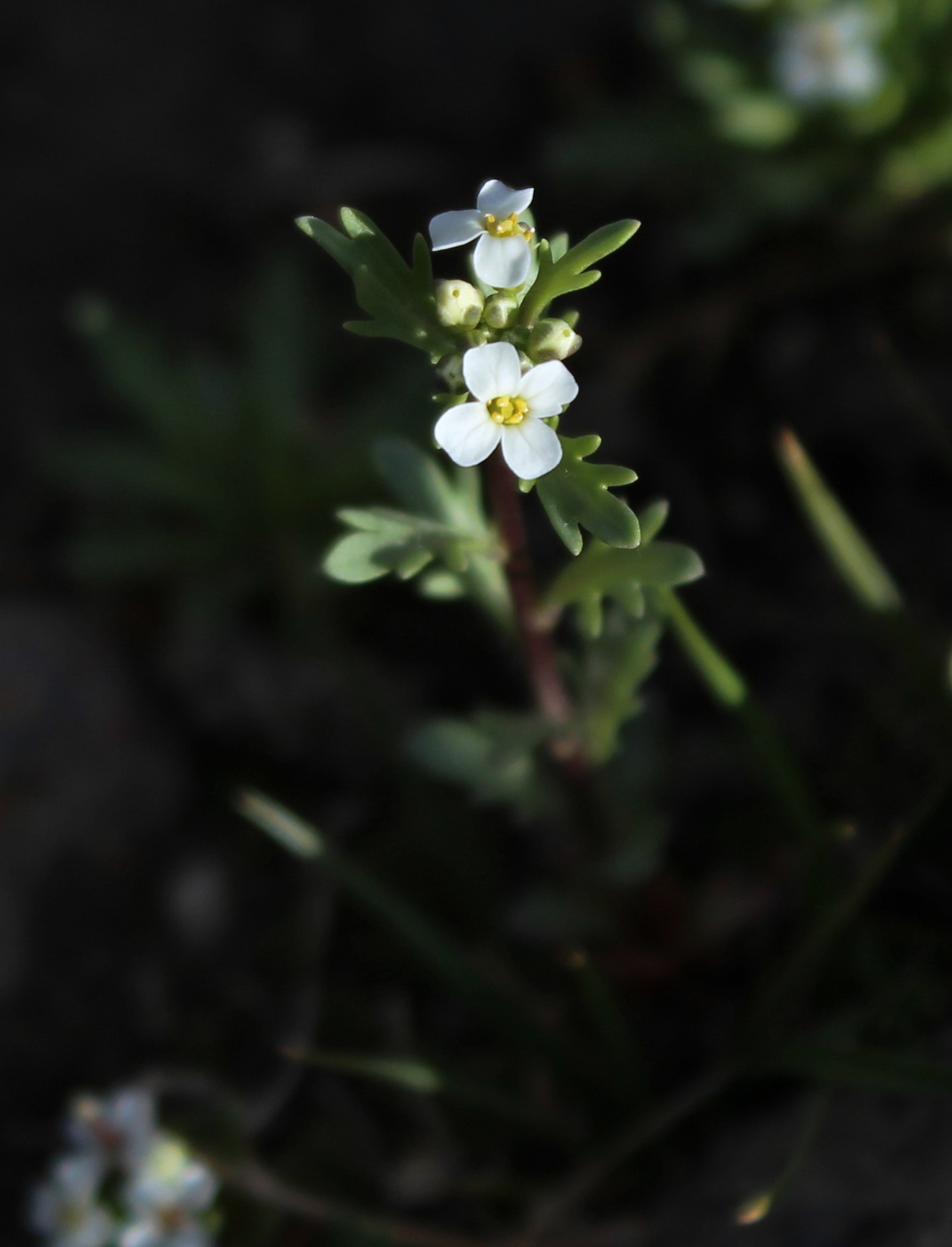
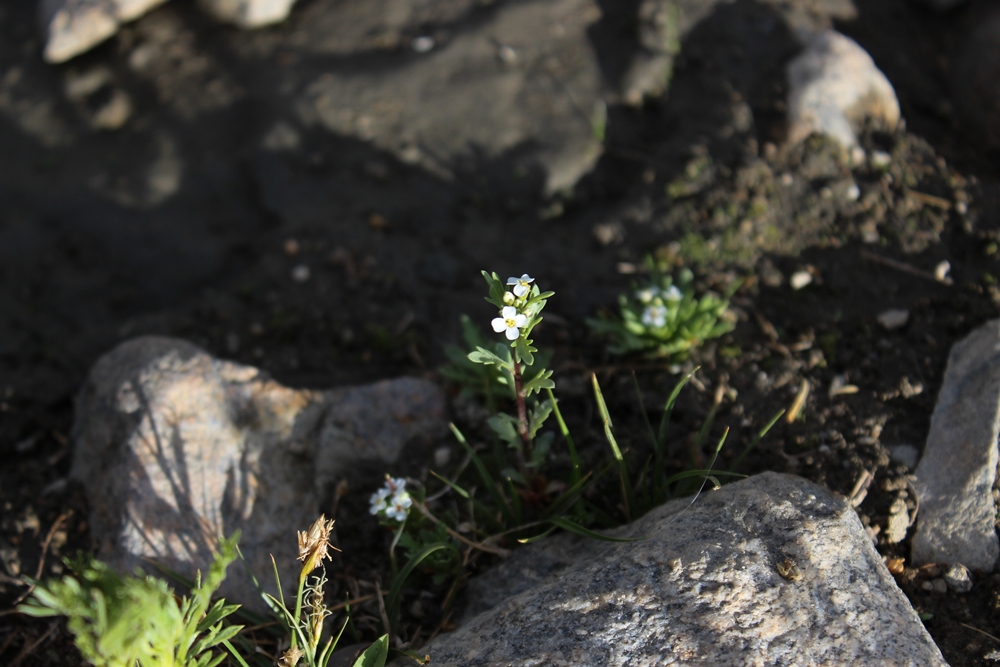
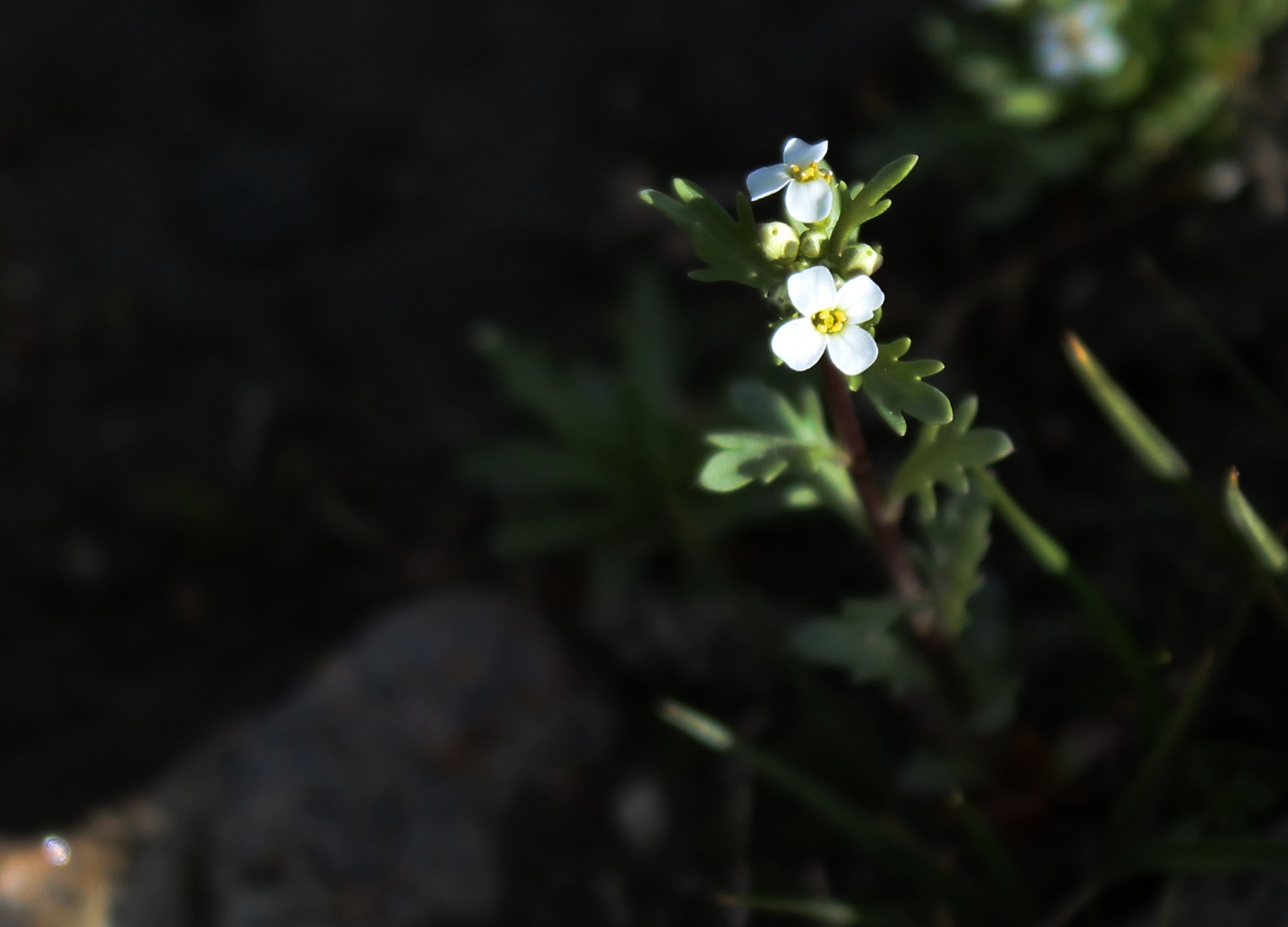
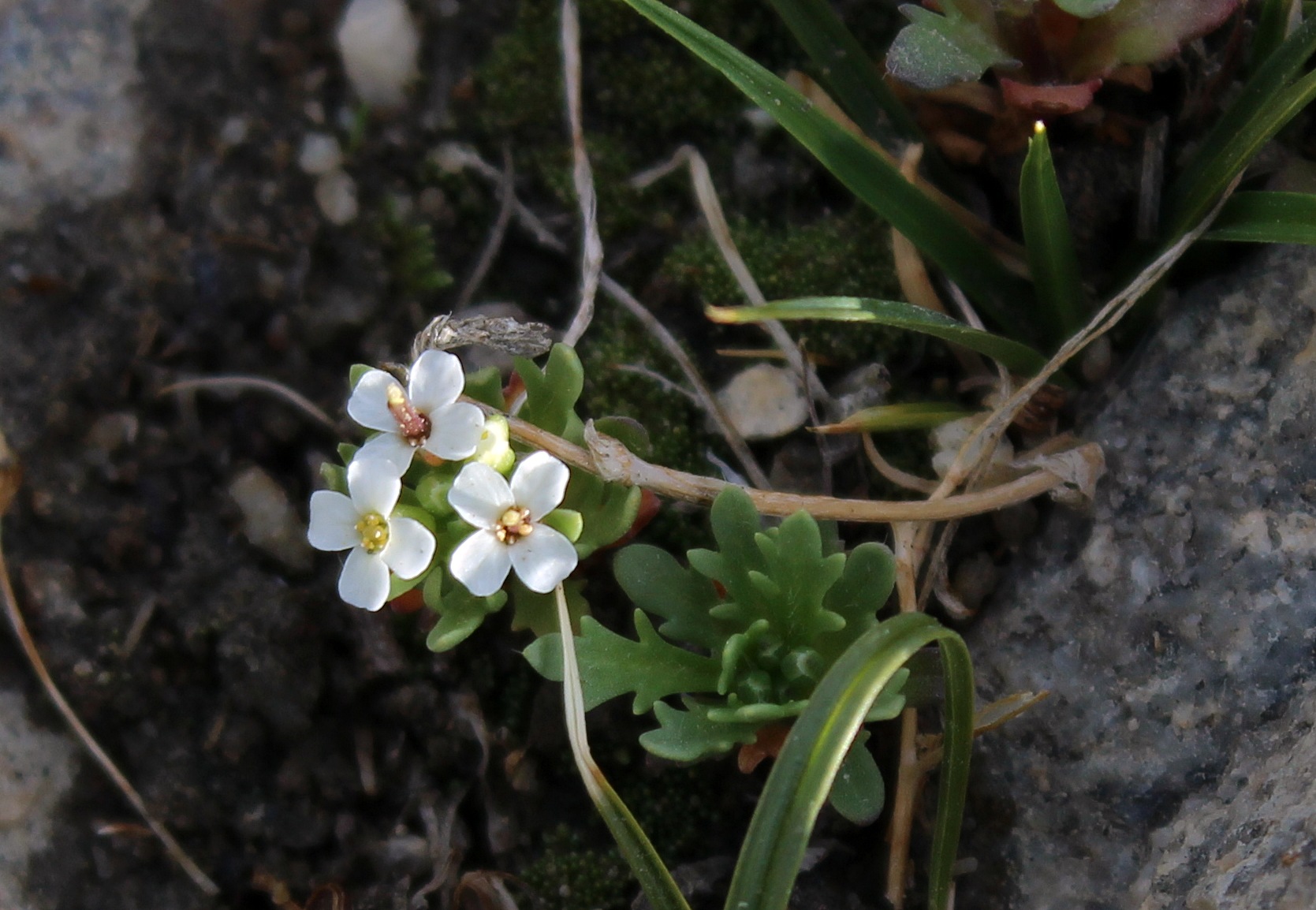
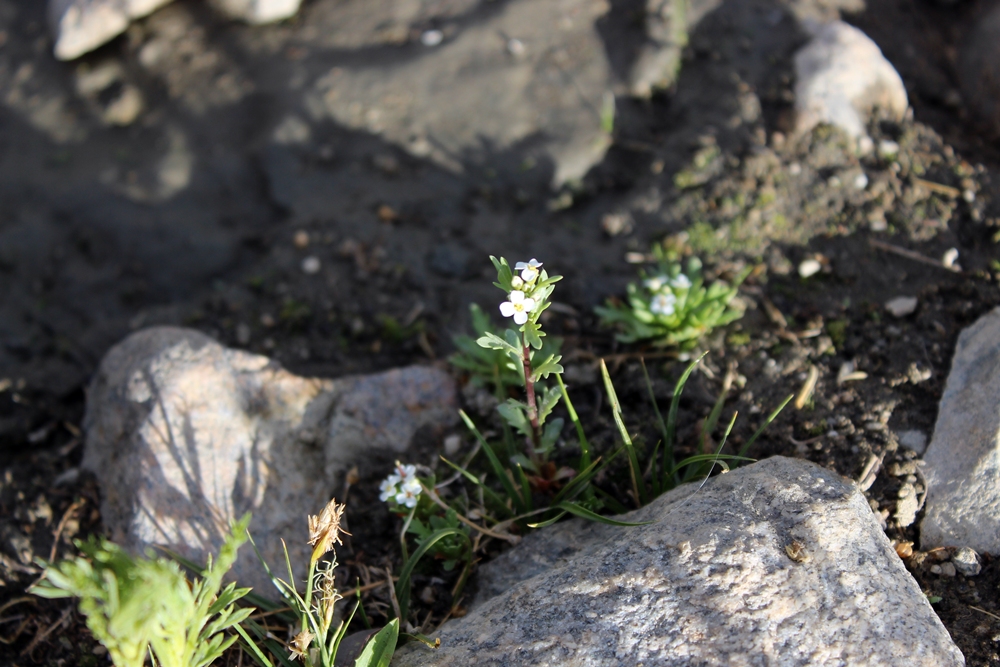
Small herb (around 10cm tall) with white coloured flowers approx. 3 to 4 mm in size.
Location: Near Pangong lake, Ladakh,
Altitude: Approx. 14200ft.
… indicated that this plant could be “Lepidium capitatum Hook. f. & Thomson”…(family: Brassicaceae)..
This plant should not be Lepidium capitatum. According to FOP the flowers of the species are very small, about 1 mm. Also, the petal are slightly shorter than the sepals. … flowers, 3-4 mm across, don’t agree with this. More Lepidium capitatum are borne in dense heads or racemes,
Iberis amara L. ??
To me it looks closer to a Christolea species, maybe Christolea himalayensis or something close
POWO specimen and
http://www.efloras.org/object_page.aspx?object_id=115472&flora_id=5
http://www.efloras.org/object_page.aspx?object_id=11915&flora_id=2
Perennial, 5-15 cm long, spreading or suberect herb, usually pilose with simple or branched white hairs. Radical leaves rosulate, spathulate-obovate, 10-15 mm long, 5-10 mm broad, bluntly 3(-5)-toothed above; cauline leaves spathulate to linear, small, uppermost acting as bracts; all leaves subfleshy, pilose.
A very variable species, showing pilose to almost glabrous habit, exactly the same trend as we find in Christolea crassifolia Camb.
The only problem with Christolea himalayensis is that the flowers are supposed to be lilac or purple. There is also a white flowered species Solms-laubachia albiflora (Syn: Christolea albiflora) which is close to Christolea himalayensis.
Yes, possible as per GBIF specimens (one, two and three).
.
References:
POWO GBIF (High resolution specimens) Flora of China Flora of Pakistan FOP illustration Flowers of India