
|
Antidesma alexiteria L., Sp. Pl. 1027 1753. (syn: Antidesma alexiteria Gaertn. [Invalid]; Antidesma zeylanicum Lam.; Antidesma zeylanicum C.Presl [Illegitimate]);
.
Habit- Trees up to 5 m tall. Trunk & Bark- Bark grey, fissured; blaze pale yellow.
Branches and Branchlets- Branchlets slender, drooping, spreading, subglabrous.
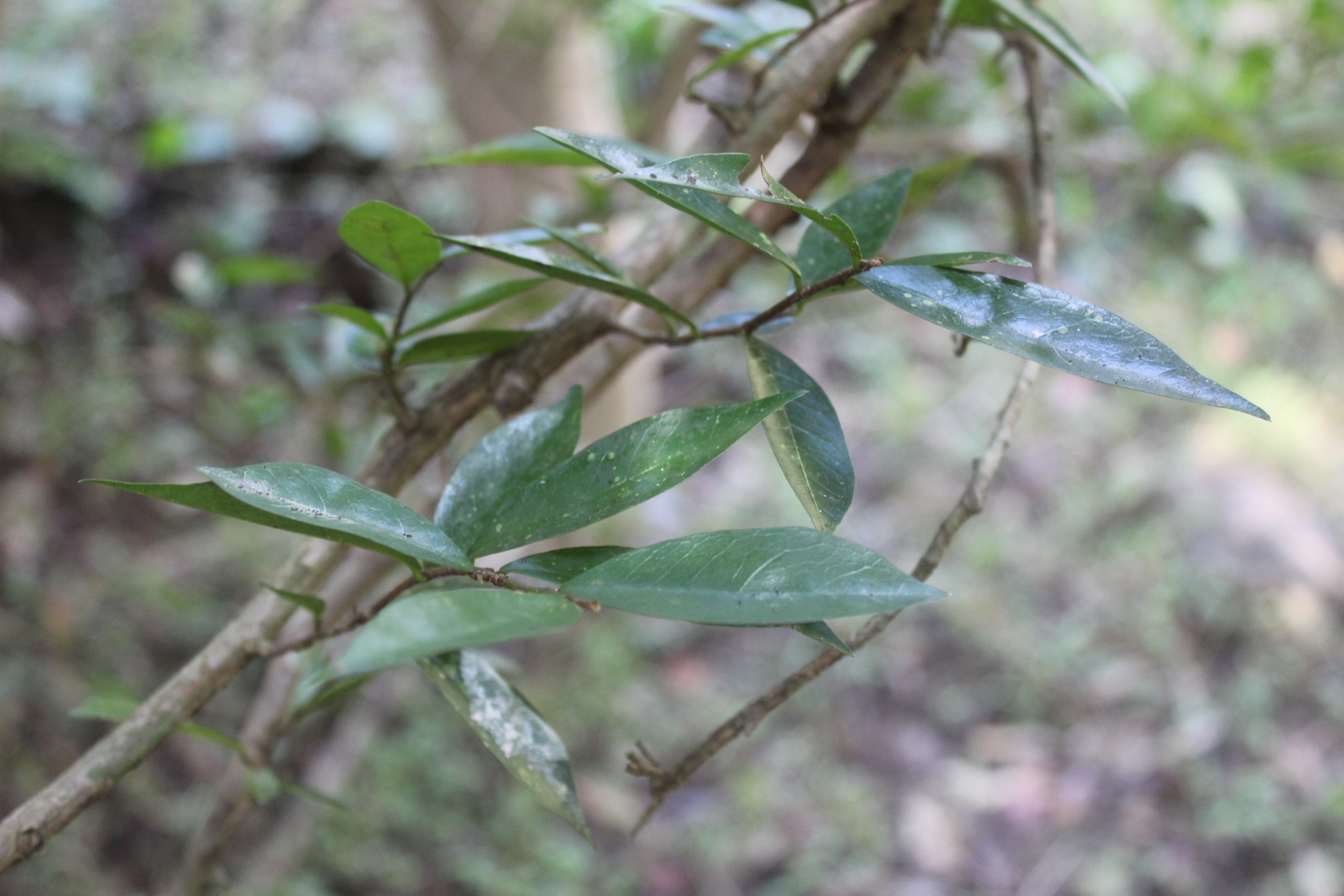
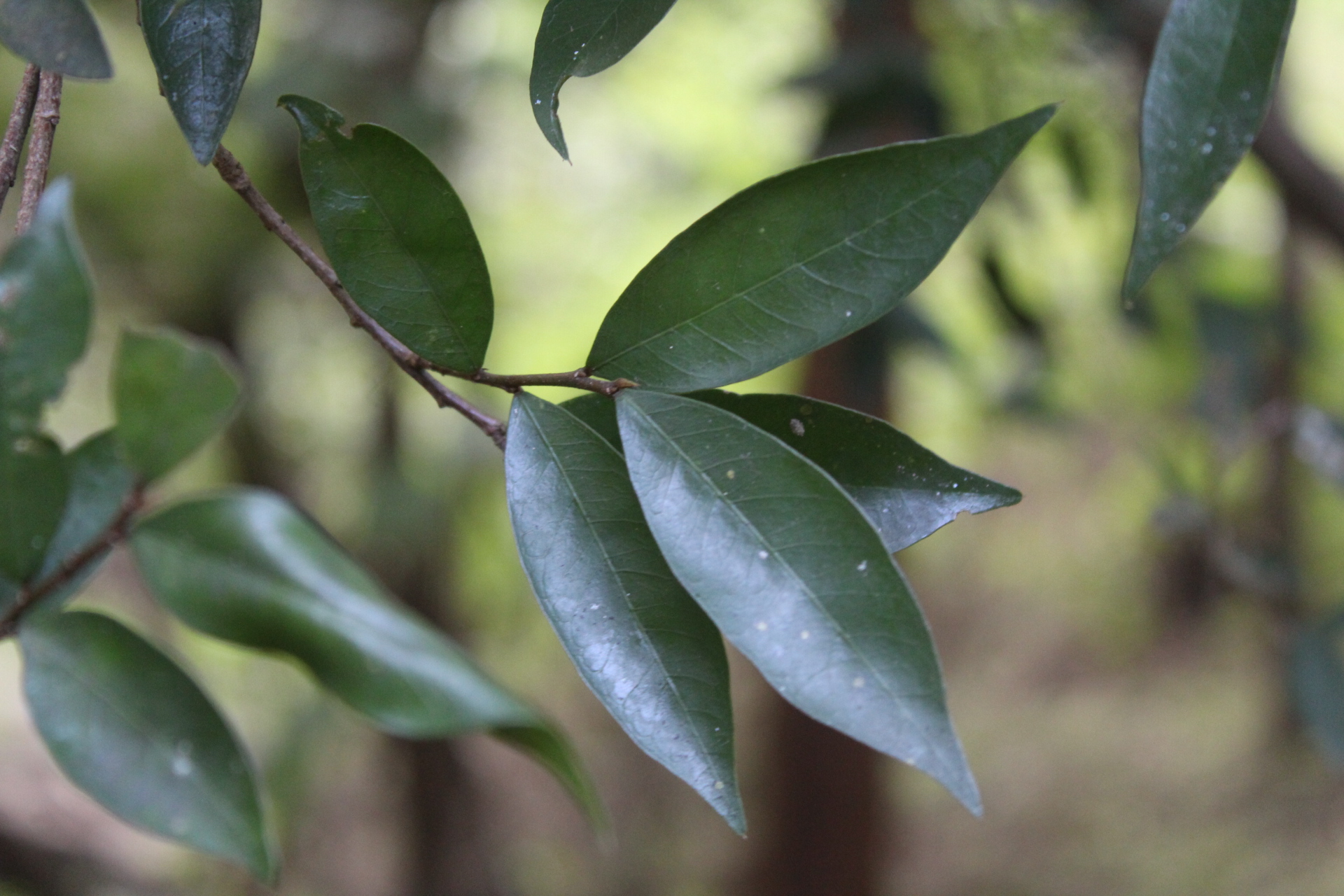
Leaves- Leaves simple, alternate, distichous; stipules small, 0.2 cm long, ovate-triangular, slightly pubescent; petiole 0.15-0.3 cm long, canaliculate, subglabrous; lamina 5-9 x 1.4-2.7 cm, narrow elliptic, apex gradually bluntly acuminate with mucronate tip, base acute to cuneate or slightly oblique, margin entire, chartaceous, midrib flat above; secondary nerves ca. 10 pairs, looped; tertiary nerves reticulate.
Inflorescence / Flower- Inflorescence terminal spikes; Flowers unisexual, dioecious.
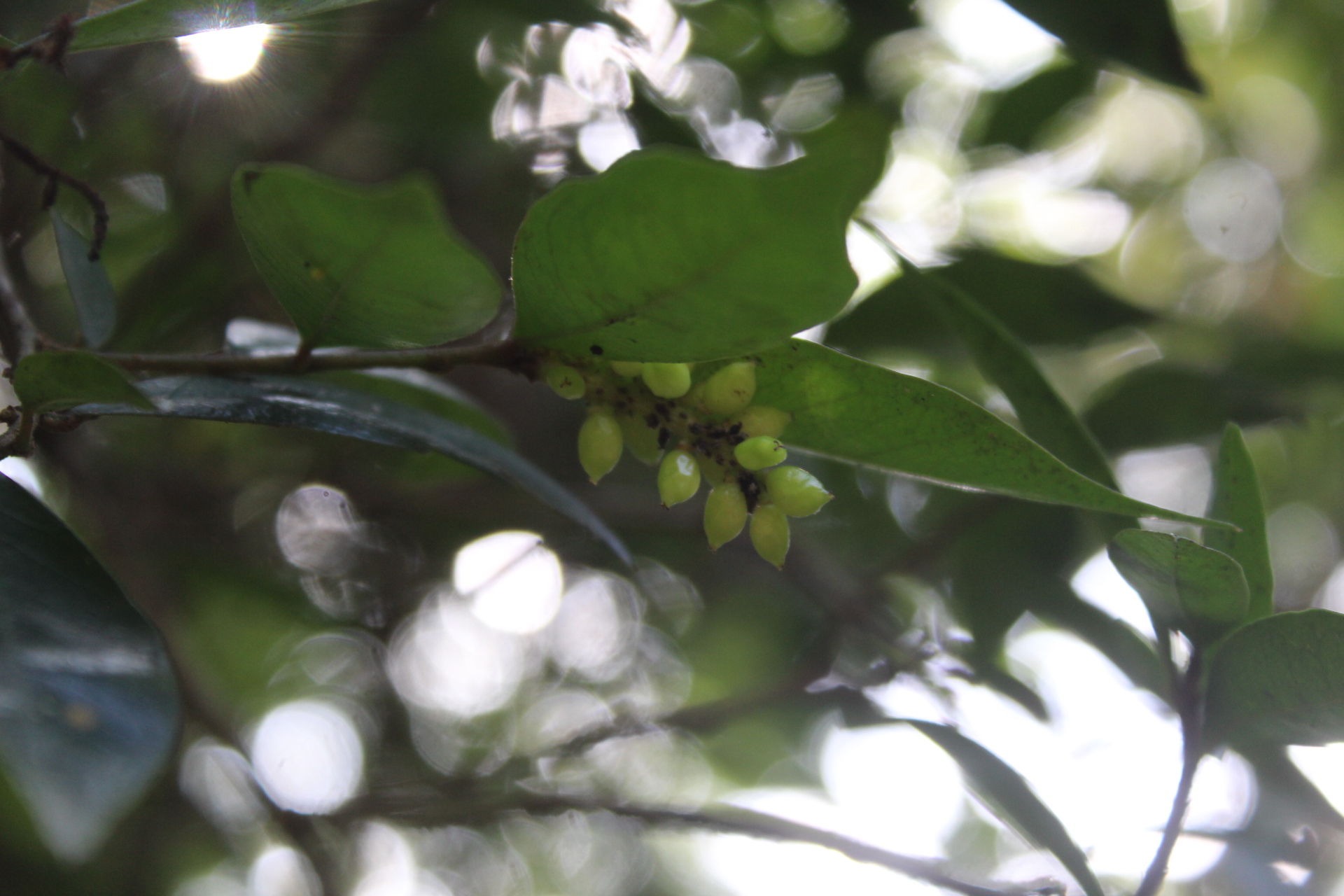
Fruit and Seed- Drupe, red, ovoid, small; 1-seeded.
Understorey trees in evergreen forests, up to 1000 m.
Western Ghats and Sri Lanka; in the Western Ghats- South Sahyadri.
(Attributions- B. R. Ramesh, N. Ayyappan, Pierre Grard, Juliana Prosperi, S. Aravajy, Jean Pierre Pascal, The Biotik Team, French Institute of Pondicherry from India Biodiversity Portal)
.
Small tree from Jawadhu hills to be ID’d : 4 posts by 4 authors. Attachments (3)- around 900 kb each. Antidesma sp., most probably A. alexiteria. I too agree with … Thanks, …, for the id. To me also appears close to images of Antidesma alexiteria at Biotik. .  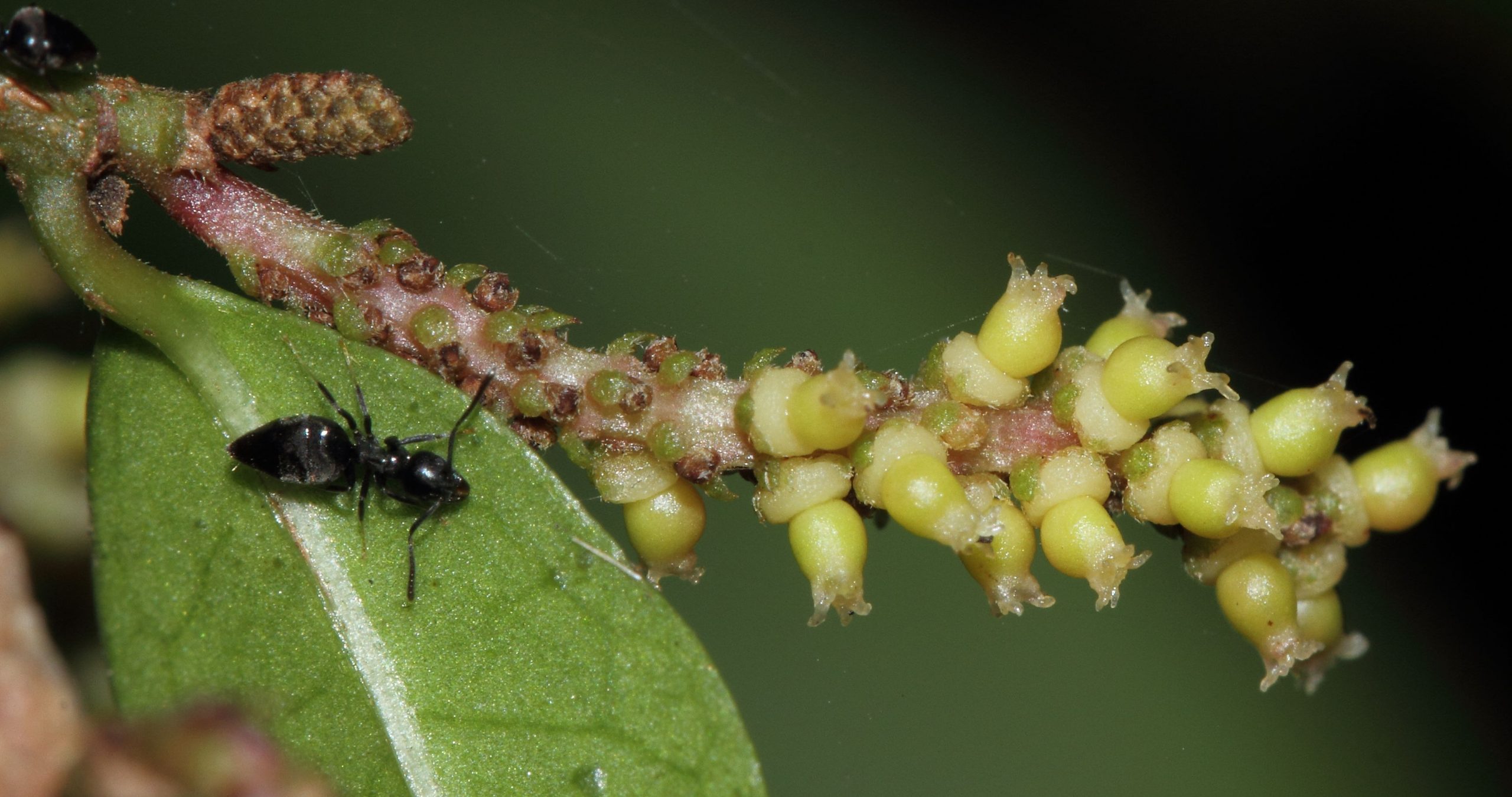 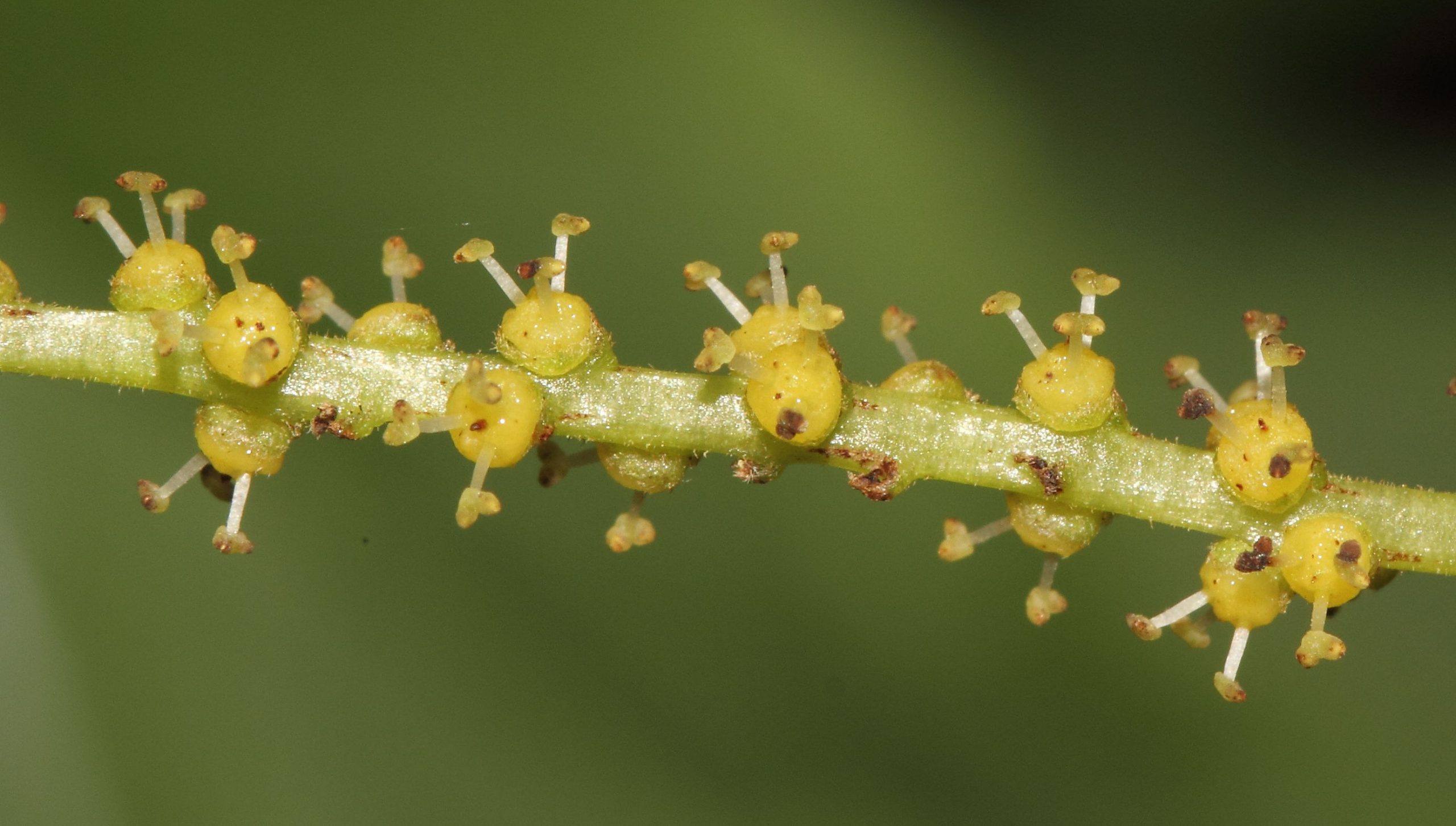 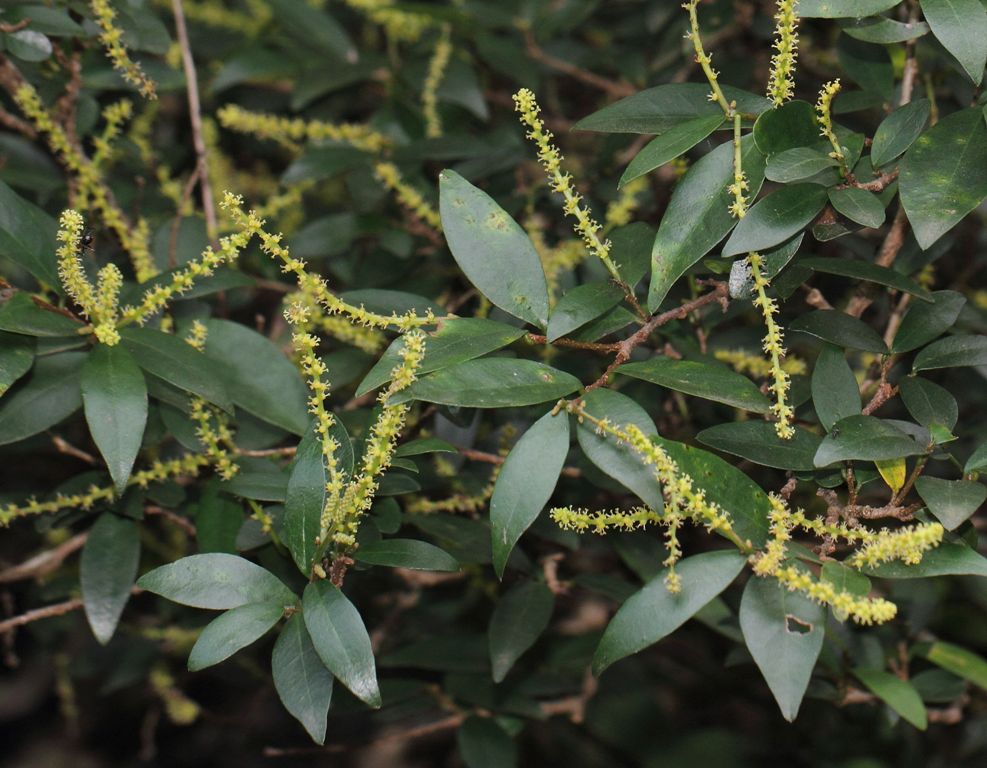 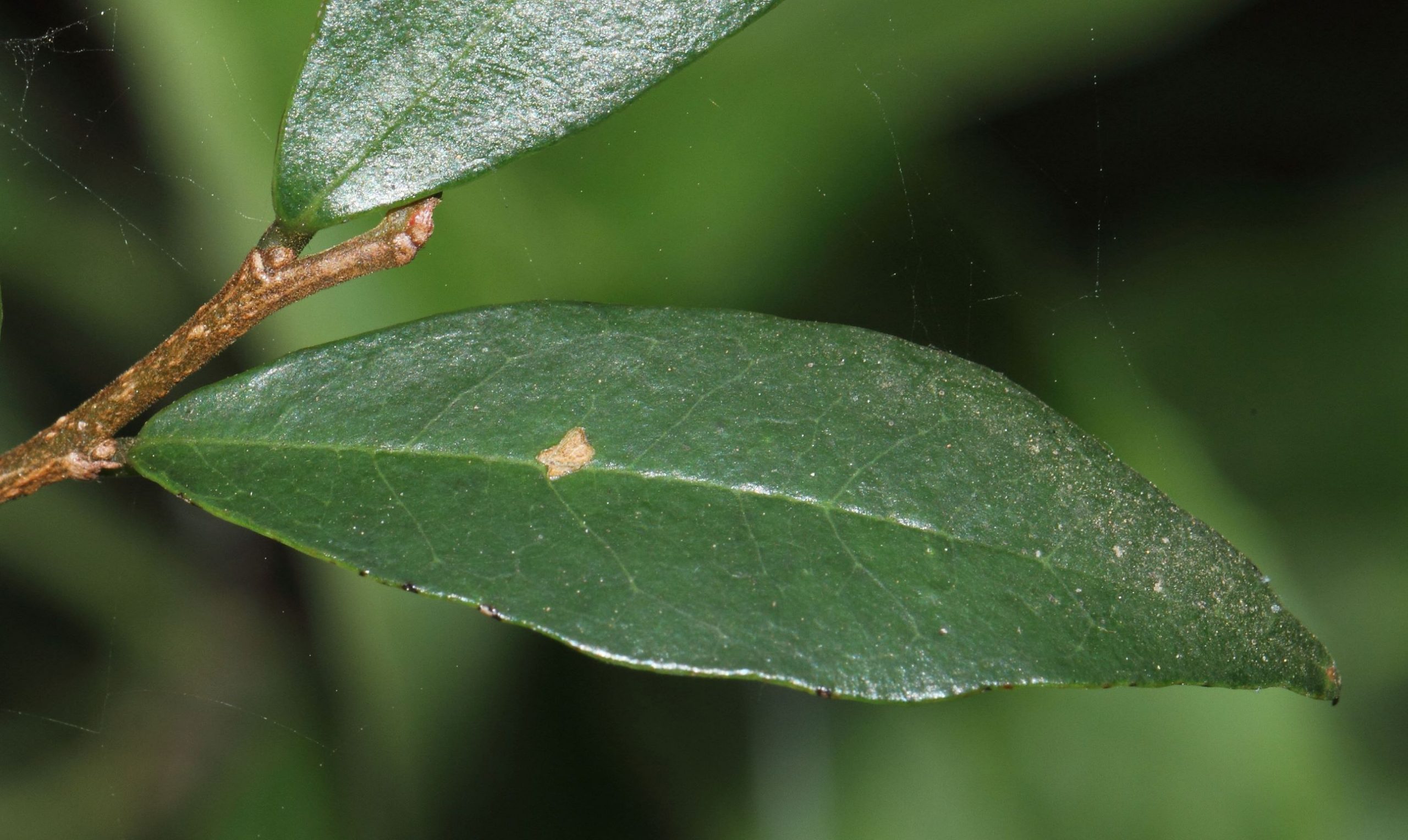 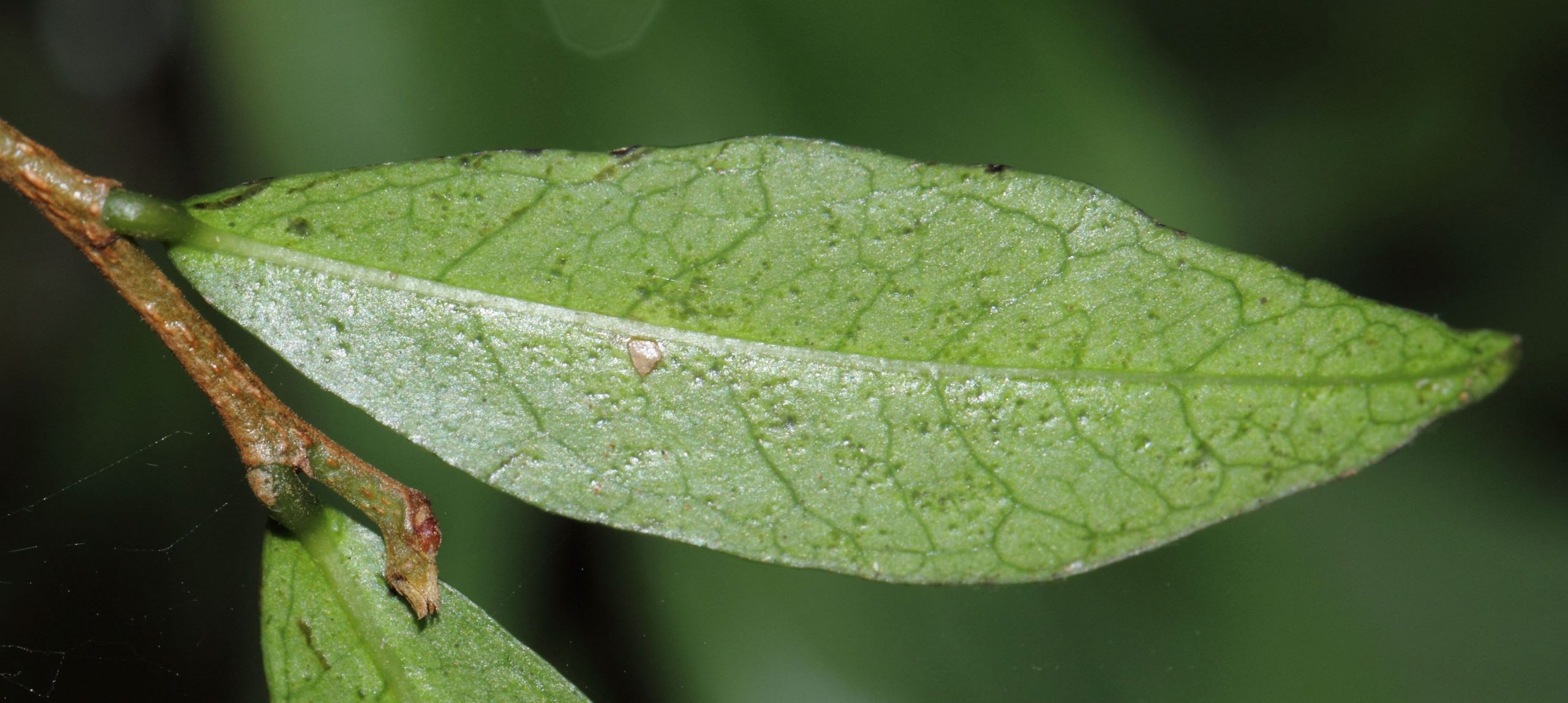 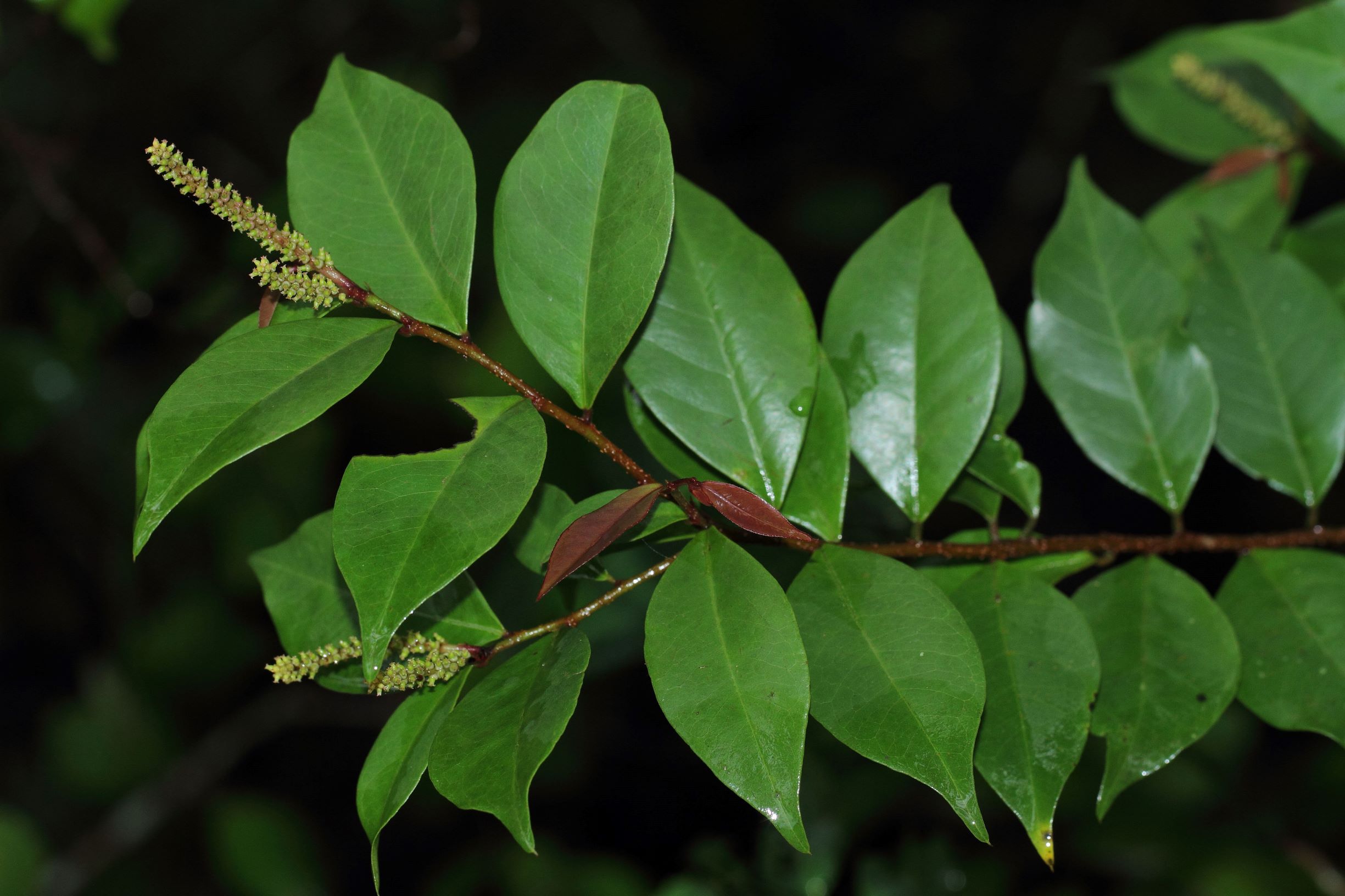 Sharing images of Antidesma alexiteria L. (Phyllanthaceae): 7 images- some high res. Botanical name: Antidesma alexiteria L. (Phyllanthaceae). Images from: Sri Lanka. Photographer: Himesh Jayasinghe. Habit: Shrubs or trees, 1–8 m high. Habitat: Sri Lanka: In lowland forests in wet and dry regions. South India: Fairly common in evergreen forests, between 100–1200 m altitudes. Distribution: India (Kerala and Tamil Nadu), Sri Lanka. .
FOR ID ::
Dicots The Nilgiris :: Jan 31, 2026 · 3:28 PM IST
Kodamulal, about 1747 m asl Any chance for Yes, I too think so, … Many thanks for pointing to the possibility.
I went through all the species listed, but could not reach any specific species.
I will label the observation as Antidesma for now.
Please check Antidesma alexiteria L.
Of all the species distributed in the Nilgiris, the posted plant is closest to Antidesma alexiteria L.
. References: |
Antidesma alexiteria


Updated on April 24, 2026