
|
Quercus palustris Münchh., Hausvater 5: 253 (1770) (syn: Quercus palustris var. heterophylla Cockerell ; Quercus rubra var. dissecta Lam; Quercus rubra var. palustris (Münchh.) Kuntze);
.
S. Ontario to N. Central & E. U.S.A.: Alabama, Arkansas, Connecticut, Delaware, District of Columbia, Illinois, Indiana, Iowa, Kansas, Kentucky, Maryland, Massachusetts, Michigan, Missouri, New Jersey, New York, North Carolina, Ohio, Oklahoma, Ontario, Pennsylvania, Rhode I., Tennessee, Vermont, Virginia, West Virginia, Wisconsin; Introduced into: Austria, Denmark, Germany, Hungary, Italy, Romania as per POWO;
.
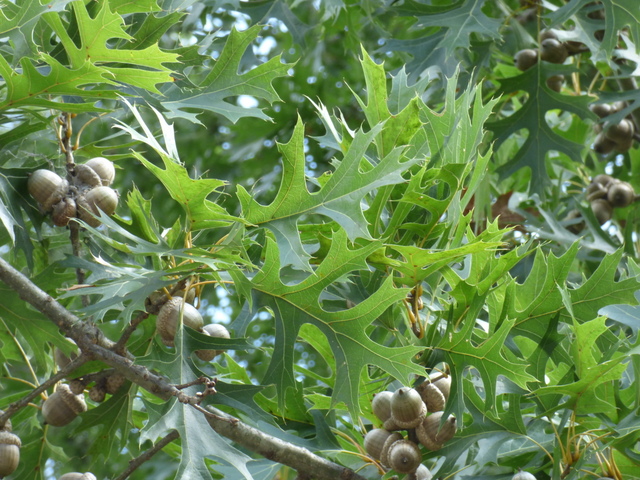
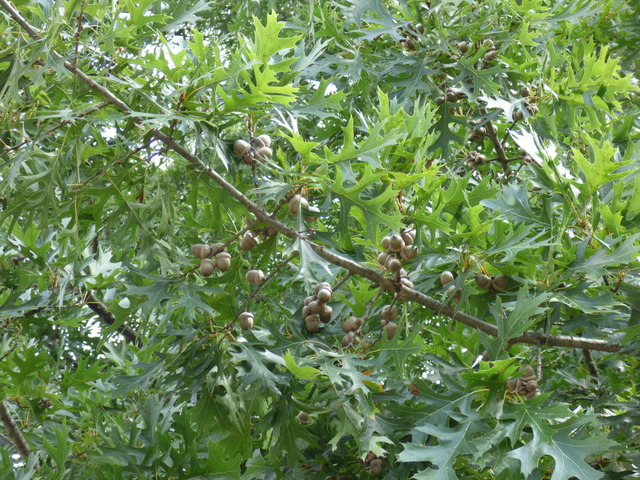
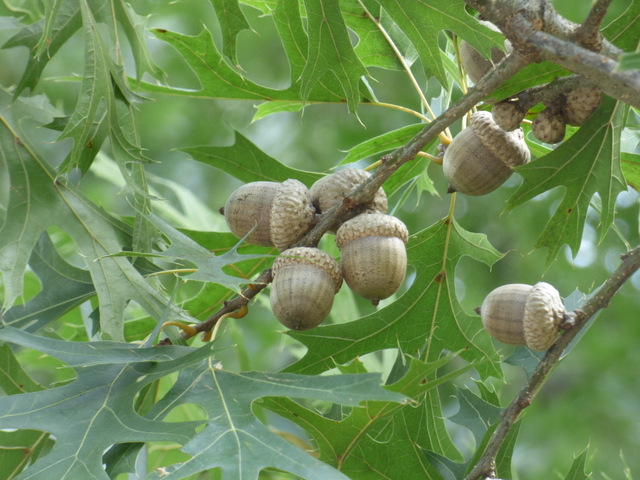
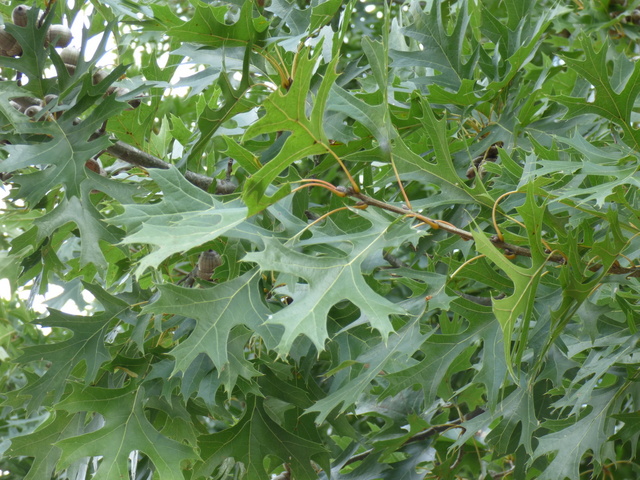
Quercus Species for ID : Atlanta,Georgia : 10JAN19 : AK-9 : 8 posts by 4 authors. Attachments (4) Quercus acerifolia ?? Thanks for suggested id. Hope to get it validated. Please, it is definitely not Quercus acerifolia. More likely a Scarlet Oak Q. coccinea. Here is a PDF field guide to assist you. https://secure.caes.uga.edu/extension/publications/files/pdf/B%20987_10.PDF Thanks … It does look similar. There are two closely related species with differences (Google AI view) as below: Quercus palustris (Pin Oak) and Quercus coccinea (Scarlet Oak) are closely related, deciduous North American red oaks often confused due to similar, deeply lobed leaves. The primary difference is habitat and morphology: Q. palustris thrives in moist/wet soils, features U-shaped leaf sinuses, and retains lower, drooping dead branches (“pins”). Q. coccinea prefers dry, upland sites, has C-shaped sinuses, and cleaner trunks.
Key Differences Between Quercus palustris and Quercus coccinea
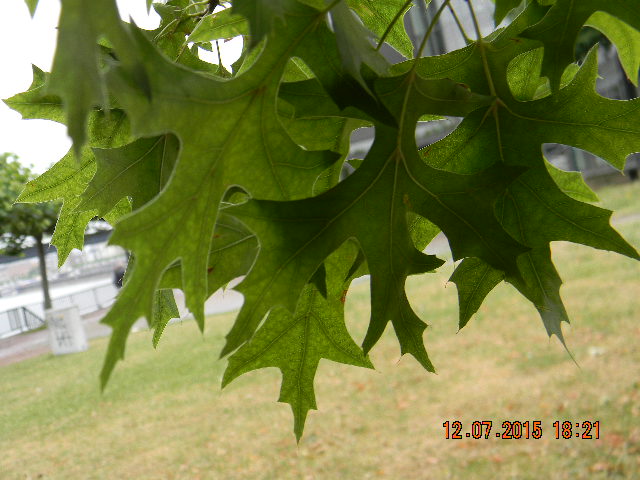
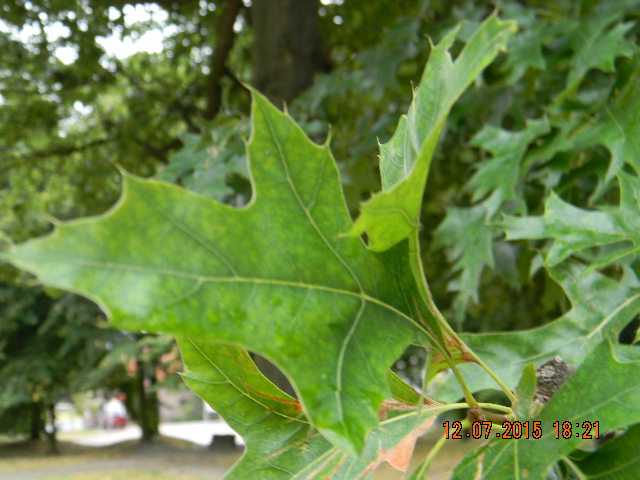
Habitat: Q. palustris (Pin Oak) thrives in floodplains, wet, and poorly-drained soils. Q. coccinea (Scarlet Oak) prefers dry, sandy, or rocky upland sites. Leaf Sinuses: Q. palustris has deep sinuses that form a ‘U’ shape. Q. coccinea has deep sinuses that are more ‘C’ shaped or “closed”. Leaf Underside: Q. palustris has small, conspicuous tufts of pale orange-brown down (hair) in the vein axils. Q. coccinea leaves are generally hairless (glabrous). Branches: Q. palustris is known for having many small, dead, downward-pointing branches that persist on the lower trunk (the “pins”). Q. coccinea typically self-prunes better, lacking these persistent lower branches. Acorns: Q. palustris acorns are smaller (mm) with a very thin, shallow, saucer-shaped cap. Q. coccinea acorns are larger (mm) with a deeper, bowl-shaped cap that covers about half the nut. Buds: Q. palustris winter buds are small, light brown, and generally hairless (glabrous). Q. coccinea buds are covered in reddish-brown hairs on the top half. Growth Form: Q. palustris has a distinct, often narrow pyramidal shape, with upper branches ascending, middle horizontal, and lower descending. So it should be Quercus palustris Münchh.
Quercus rubra L. ?? It is Quercus palustris Münchh. only. Pl. see the differences:
https://bplant.org/compare/172-174 .
Plant for ID-PC-50-30.08.2015 : 7 posts by 3 authors. Attachments (4)
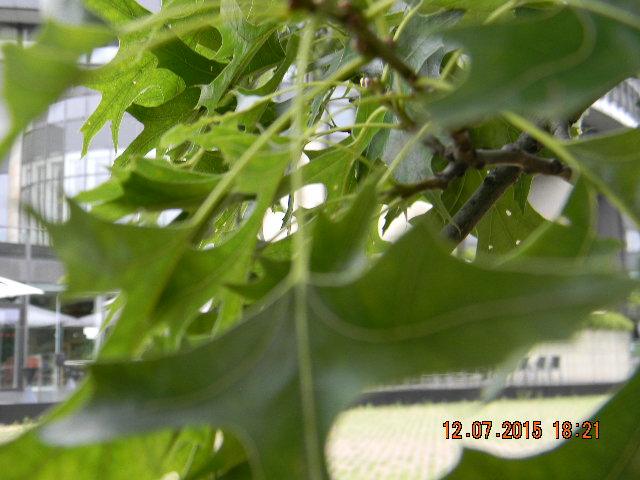
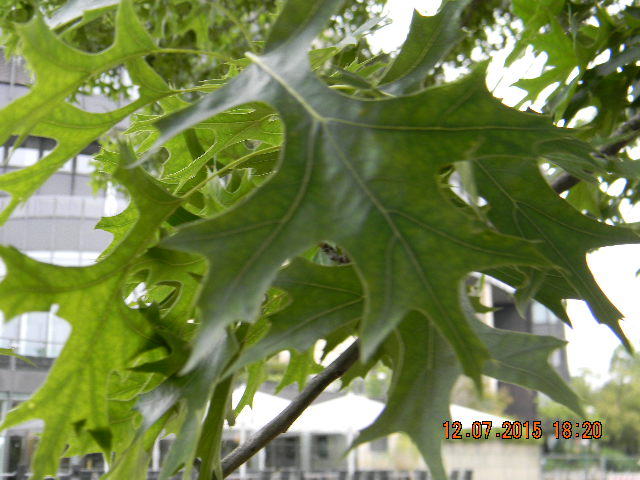
please identify the plant from Duesheldorf (may be the spelling is wrong), Germany. It was raining that day. Is this a tree. Yes, it is a medium size tree. I could not take more pictures because it was raining all the time that day. This is a kind of Oak tree (Quercus sps). Mostly red oak (Q.rubra). Probably Platanus sp Quercus palustris Münchh. |
Quercus palustris Münchh. (USA)

Updated on March 8, 2026