
|
Cascabela thevetia (L.) Lippold, Feddes Repert. 91: 53 1980. (Syn: Cascabela peruviana (Pers.) Raf.; Cerbera linearifolia Stokes; Cerbera peruviana Pers.; Cerbera thevetia L.; Thevetia linearis Raf.; Thevetia neriifolia Juss. ex A.DC.; Thevetia neriifolia var. hirsuta Müll.Arg.; Thevetia neriifolia var. leucantha Müll.Arg.; Thevetia neriifolia var. pubescens Müll.Arg.; Thevetia peruviana (Pers.) K.Schum.; Thevetia peruviana f. aurantiaca H.St.John; Thevetia thevetia (L.) H.Karst.) as per WCSP;
.
Thevetia peruviana (Pers.) K. Schum., H. G. A. Engler & K. A. E. Prantl, Nat. Pflanzenfam. 4(2):159. 1895 (syn: Cascabela thevetia (L.) Lippold; Cerbera peruviana Pers.; Cerbera thevetia L.; Thevetia neriifolia Juss. ex A. DC.) as per GRIN;
.
kas-kuh-BEL-uh — Latinized form of Cascabel, a Spanish word meaning rattle … Dave’s Botanary
thev-VET-ee-uh — named for Andre Thevet, 16th century French monk and plant collector … Dave’s Botanary . commonly known as: lucky nut, Mexican oleander, yellow oleander • Assamese: গছ-কৰবী gos-korobi, হালধীয়া কৰবী halodhia korobi, কনোৰ konor, কনৌৰ konour, কনৰু onoru • Bawm: khum-ba-rang-zah • Bengali: কলকে ফুল kolke phul • Dogri: पीला गनीहरा peela ganeehra, ज़र्द गंडीला zard gandeela • Garo: ceiling bol • Gujarati: પીળી કરેણ pili karen, પીરી કરેણ piri karen • Haryanvi: पीली कनेर peeli kaner • Hindi: पीली कनेर peeli kaner • Kachchhi: પીરી કરેણ piri karen • Kannada: ಕಾಡು ಕಾಸಿಕಣಿಗಲು kaadu kaasikanigalu, ಕರವೀರ karaveera • Konkani: बिटीं biti, हळदुवी halduvi, कण्यां kanya • Malayalam: മഞ്ഞ അരളി manja arali • Manipuri: ꯎꯇꯣꯡꯂꯩ utonglei • Marathi: बिट्टी bitti, पिवळा कण्हेर pivala kanher • Nepali: पहेँलो करवीर pahenlo karaveer • Odia: କନିଅର kaniara • Pahari: पीली कनेर peeli kaner • Punjabi: ਪੀਲੀ ਕਨੇਰ pili kaner • Rajasthani: पीळी कणेर pili kaner • Rangpuri: কালকে kalke • Santali: ᱵᱮᱨᱮᱧᱡᱳ berenjo • Sindhi: زنگي zangi • Tamil: சீமையலரி cimaiyalari, மஞ்சளலரி manjalalari, பொன்னலரி ponnalari • Telugu: పచ్చ గన్నేరు pachha ganneru, పసుపు గొట్టాల గన్నేరు pasupu gottala ganneru, సువర్ణ గన్నేరు suvarna ganneru • Tulu: ಕರವೀರೊ karaveero
Names compiled / updated at https://dineshvalke.blogspot.com/2026/08/cascabela-thevetia-l-lippold.html
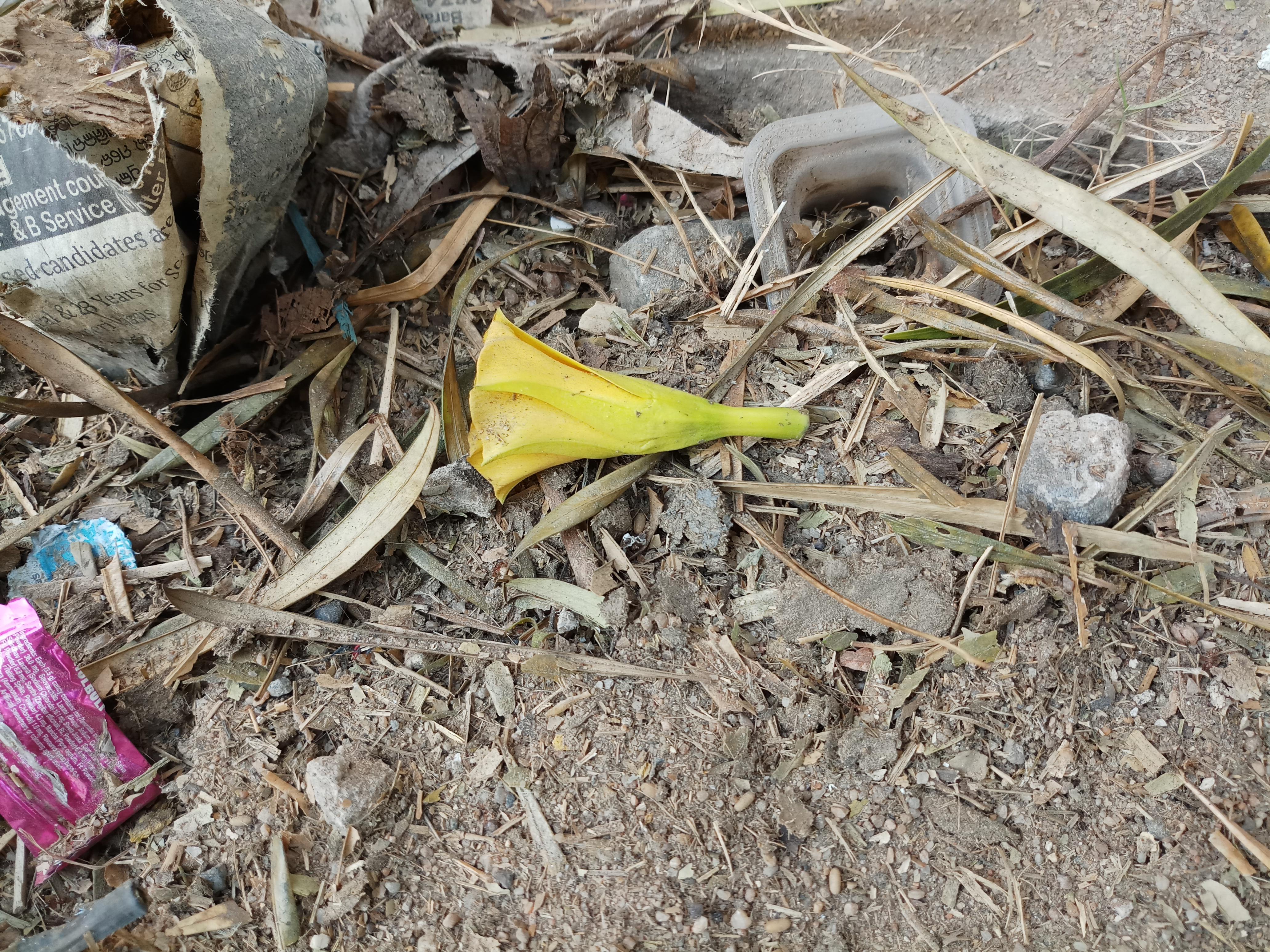
. very poisonous… all parts and sap of cut leaf, cut flower (not so the fallen flower’s sap” but the fallen flower though used in pujas is poisonous… and branch sap… all poisonous… even fatal….; Mexico to S. Trop. America (as per WCSP);
.
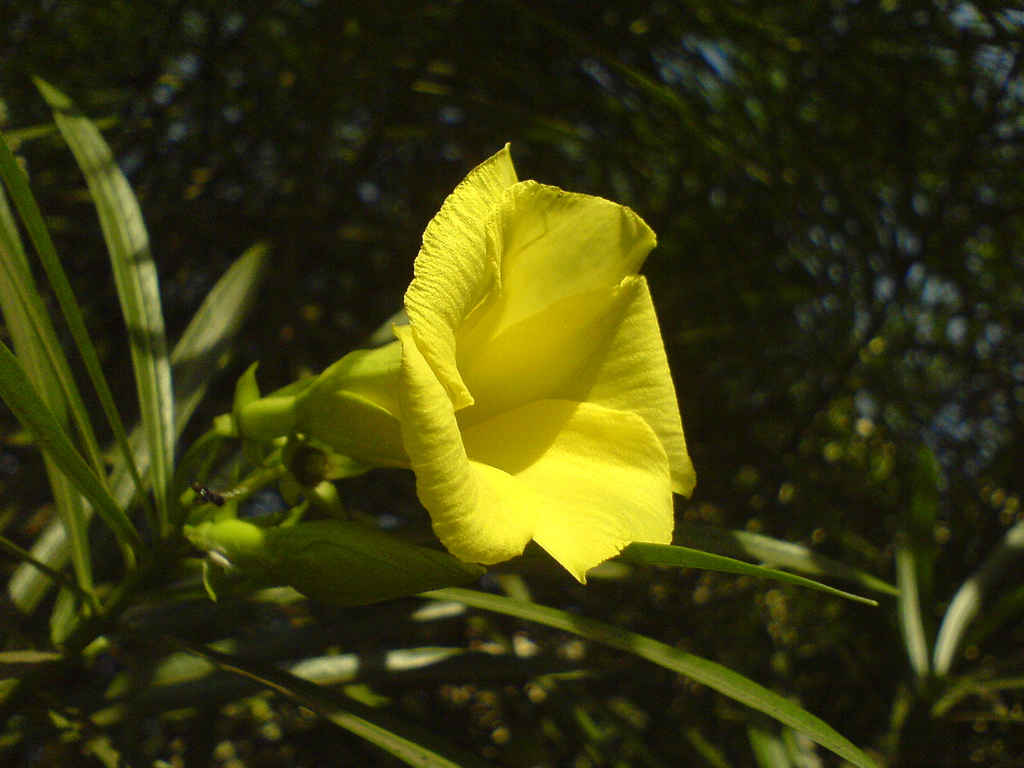
efloraofindia:”21102011MR1’’ Thevetia peruviana; Yellow Oleander; Peeli kaner Pune: Request for validation
?Thevetia peruviana Yellow Oleander, Lucky Nut, peeli kaner
Date/Time-Oct 2011
Location- Place, Altitude, GPS-Pune Kalyani nagar
Habitat- Garden/ Urban/ Wild/ Type-garden
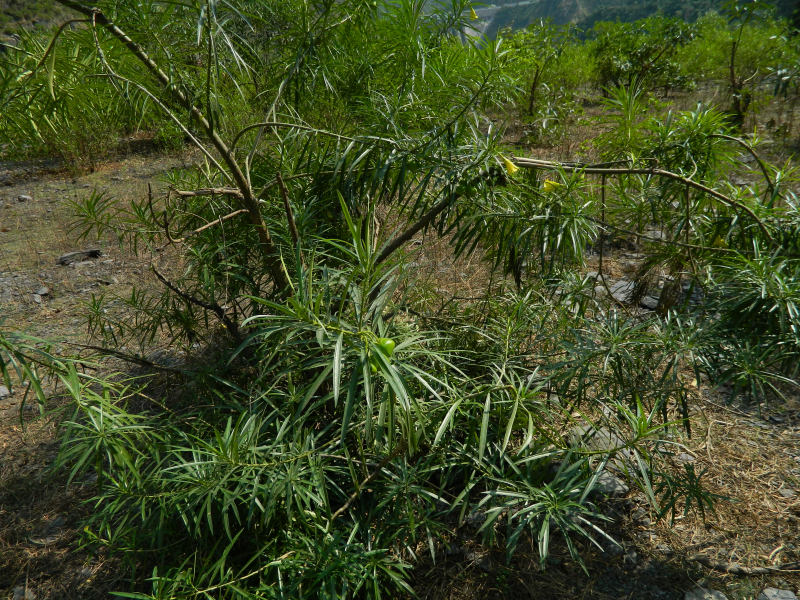
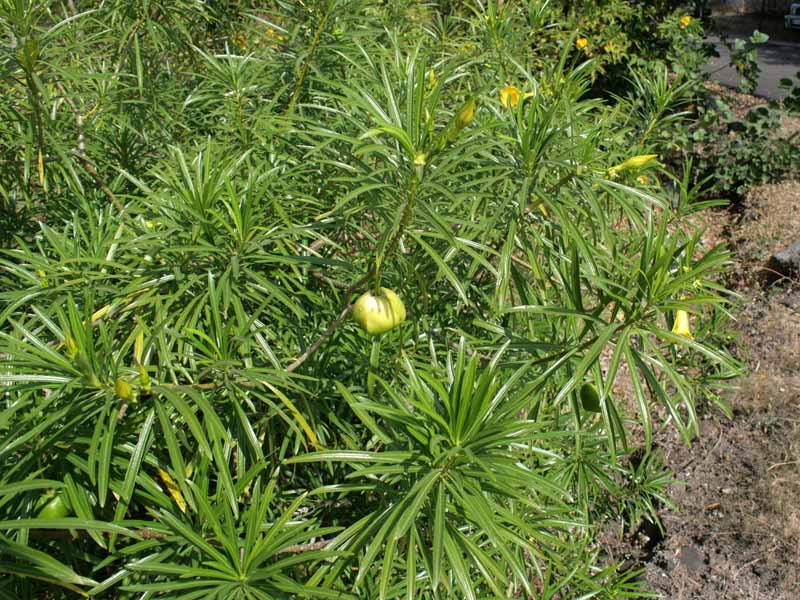
Plant Habit- Tree/ Shrub/ Climber/ Herb- Shrub
Height/Length- about 8 ft
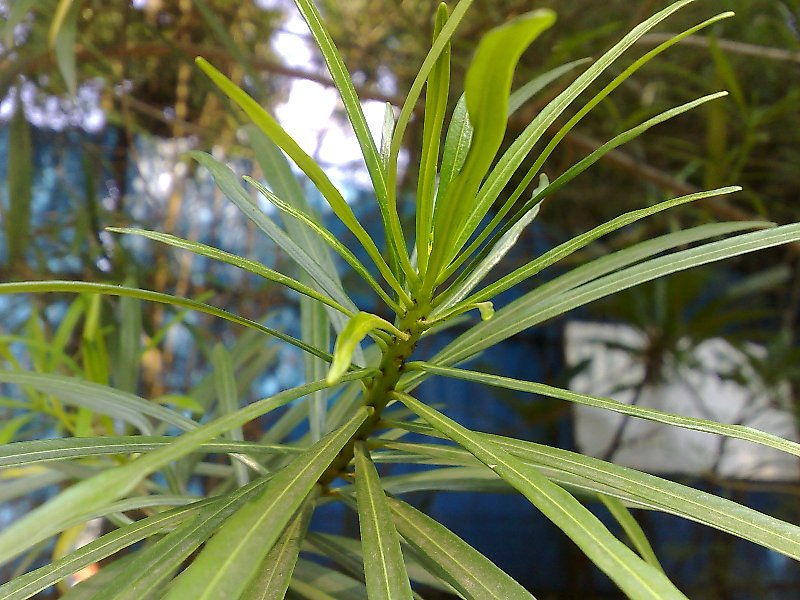
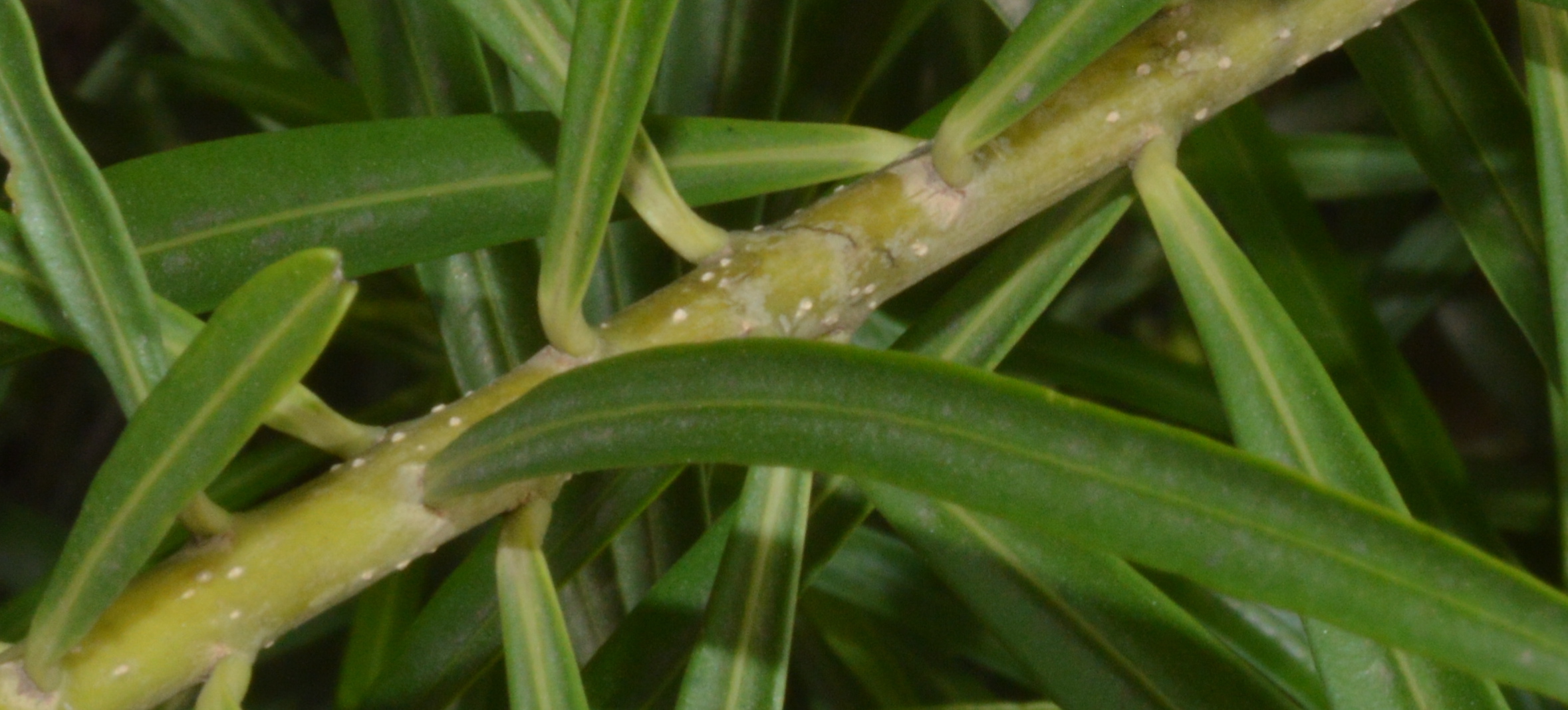
Leaves Type/ Shape/ Size-green narrow
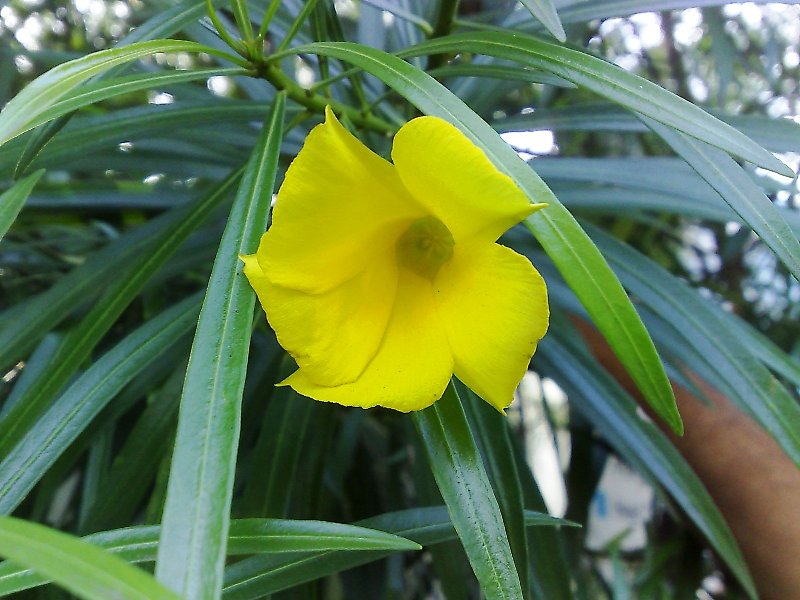
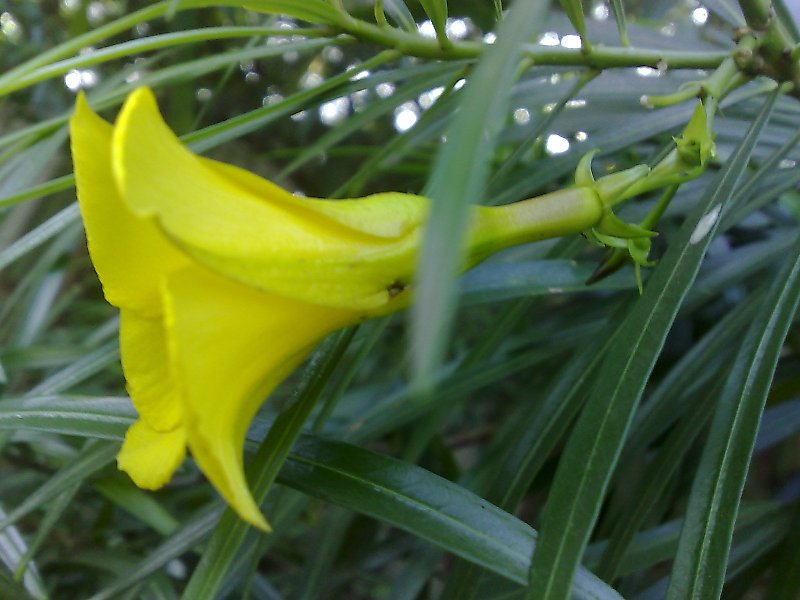
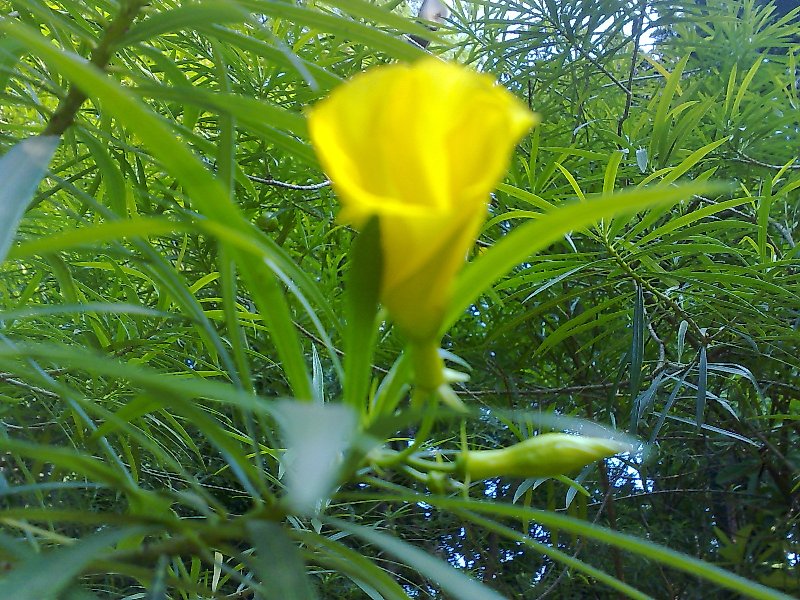
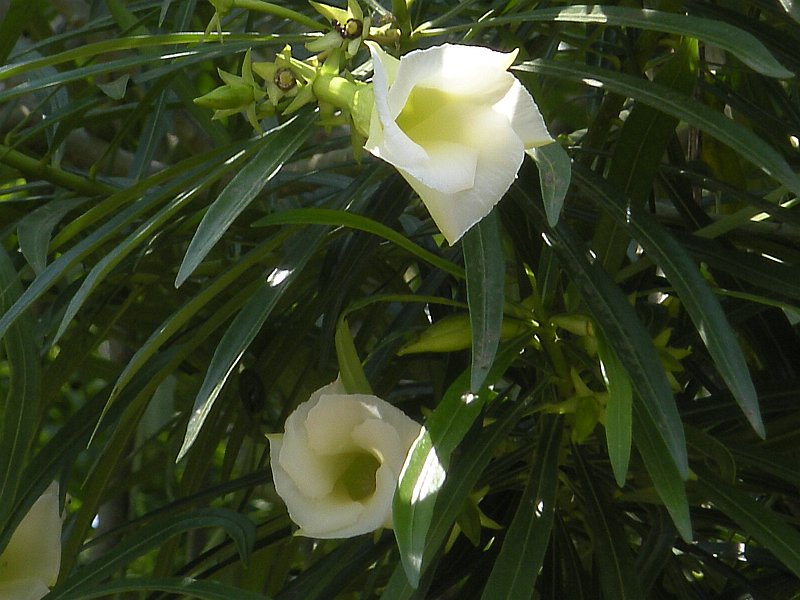
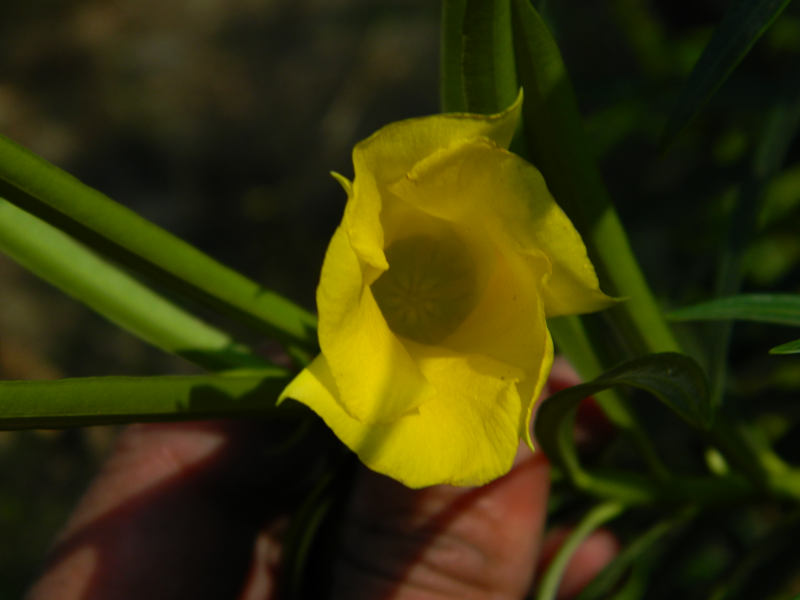
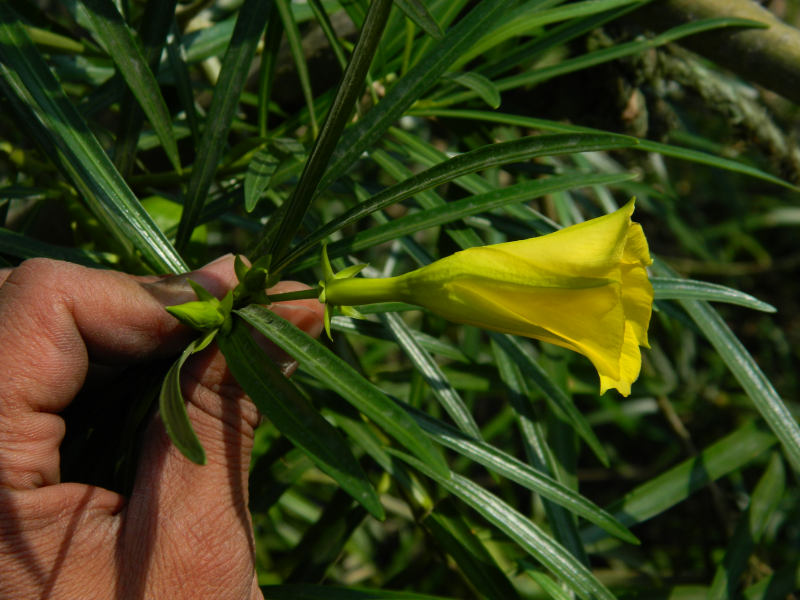
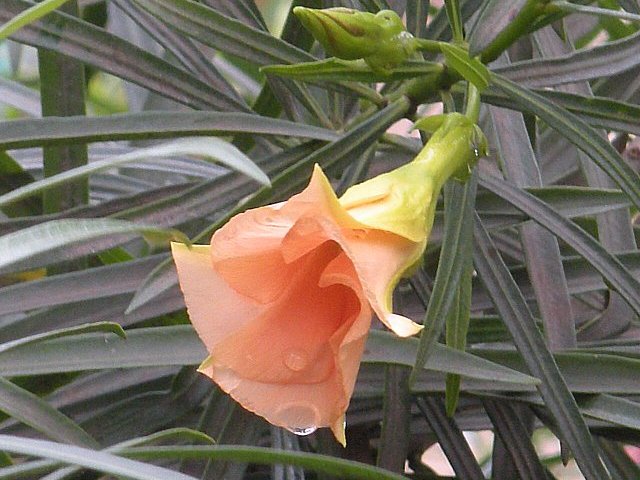
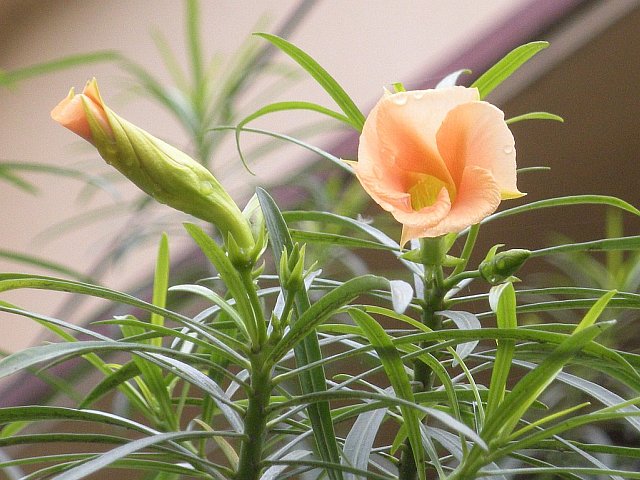
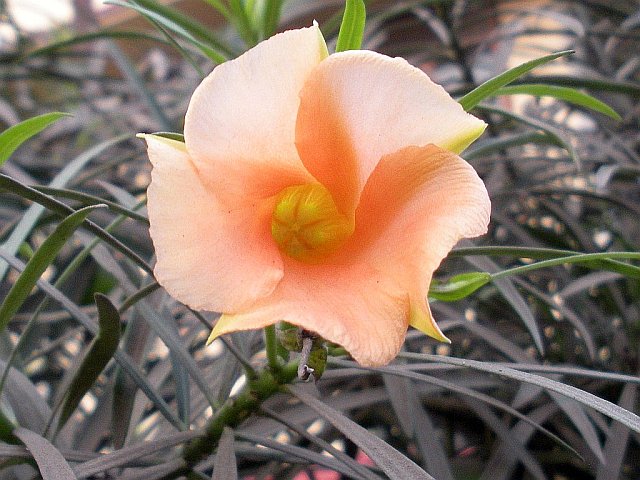
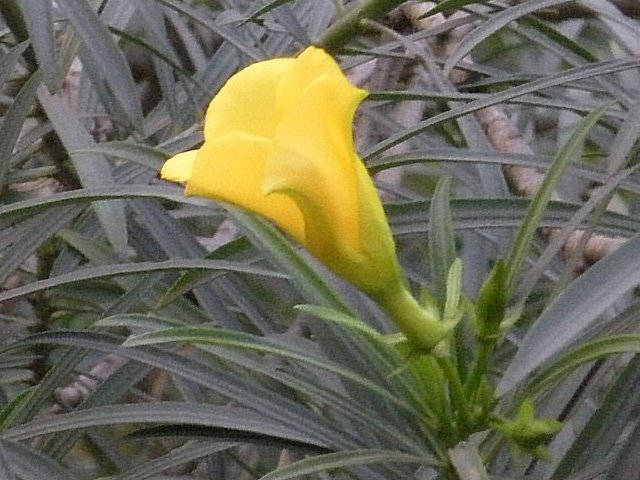
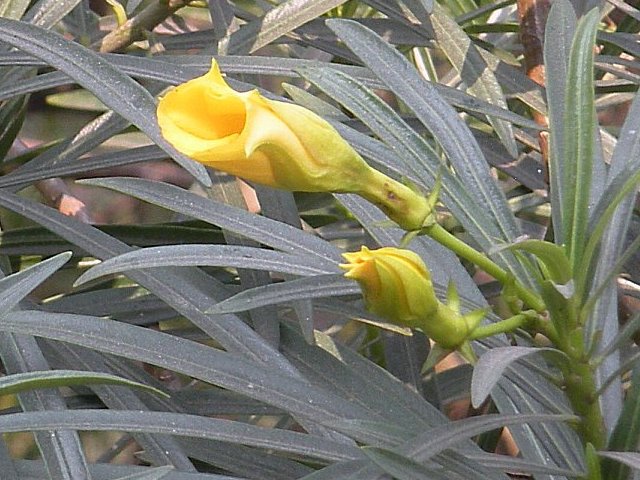
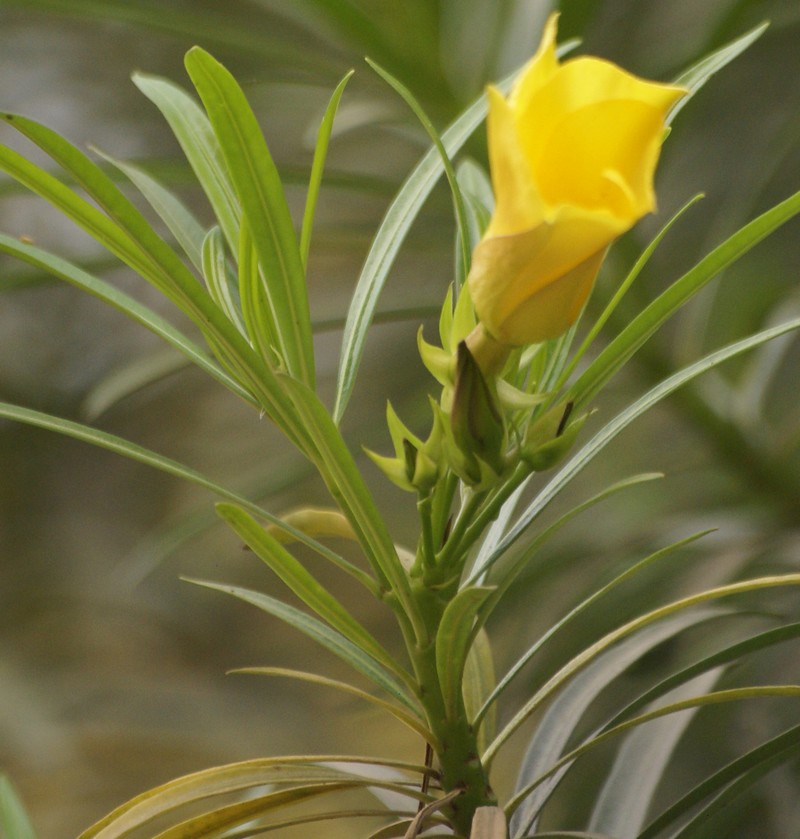
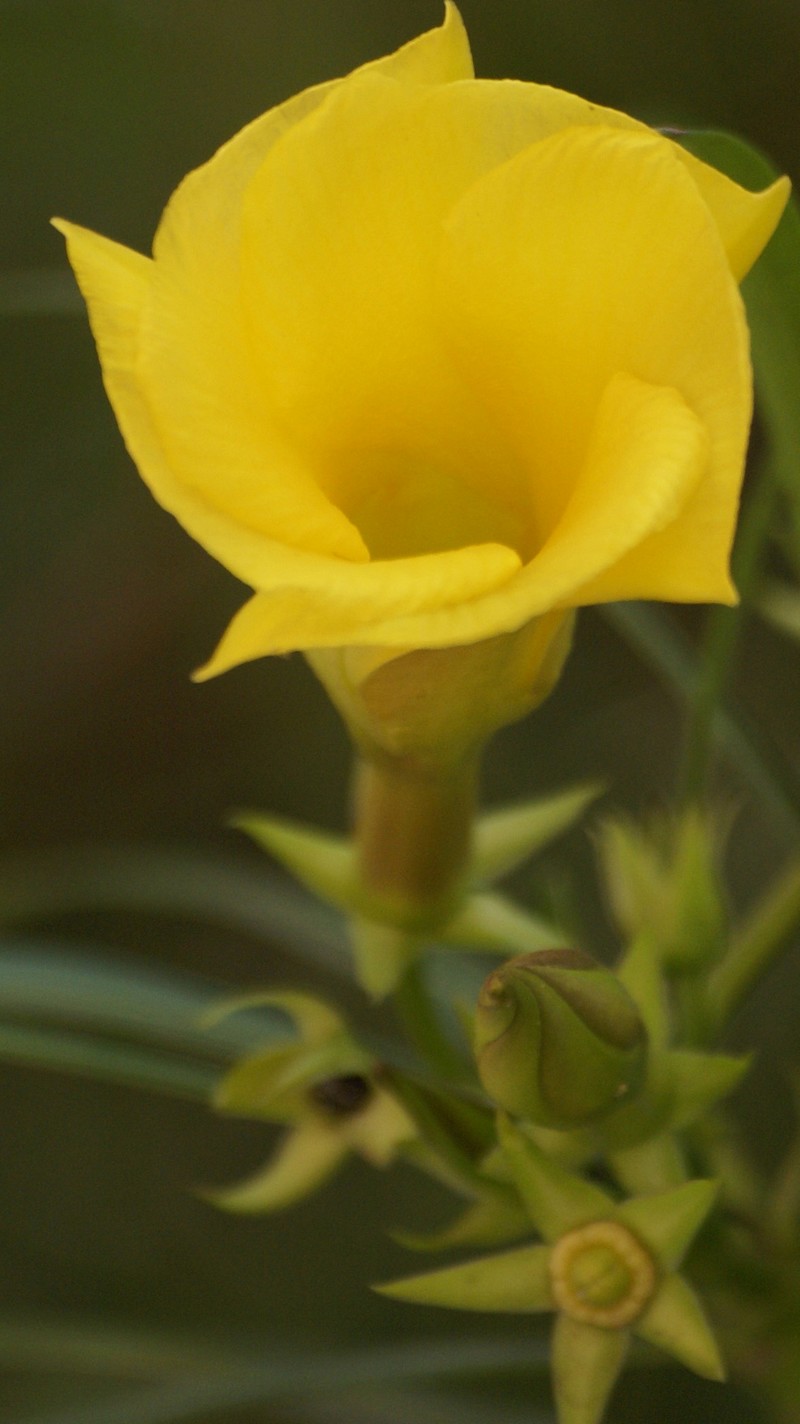
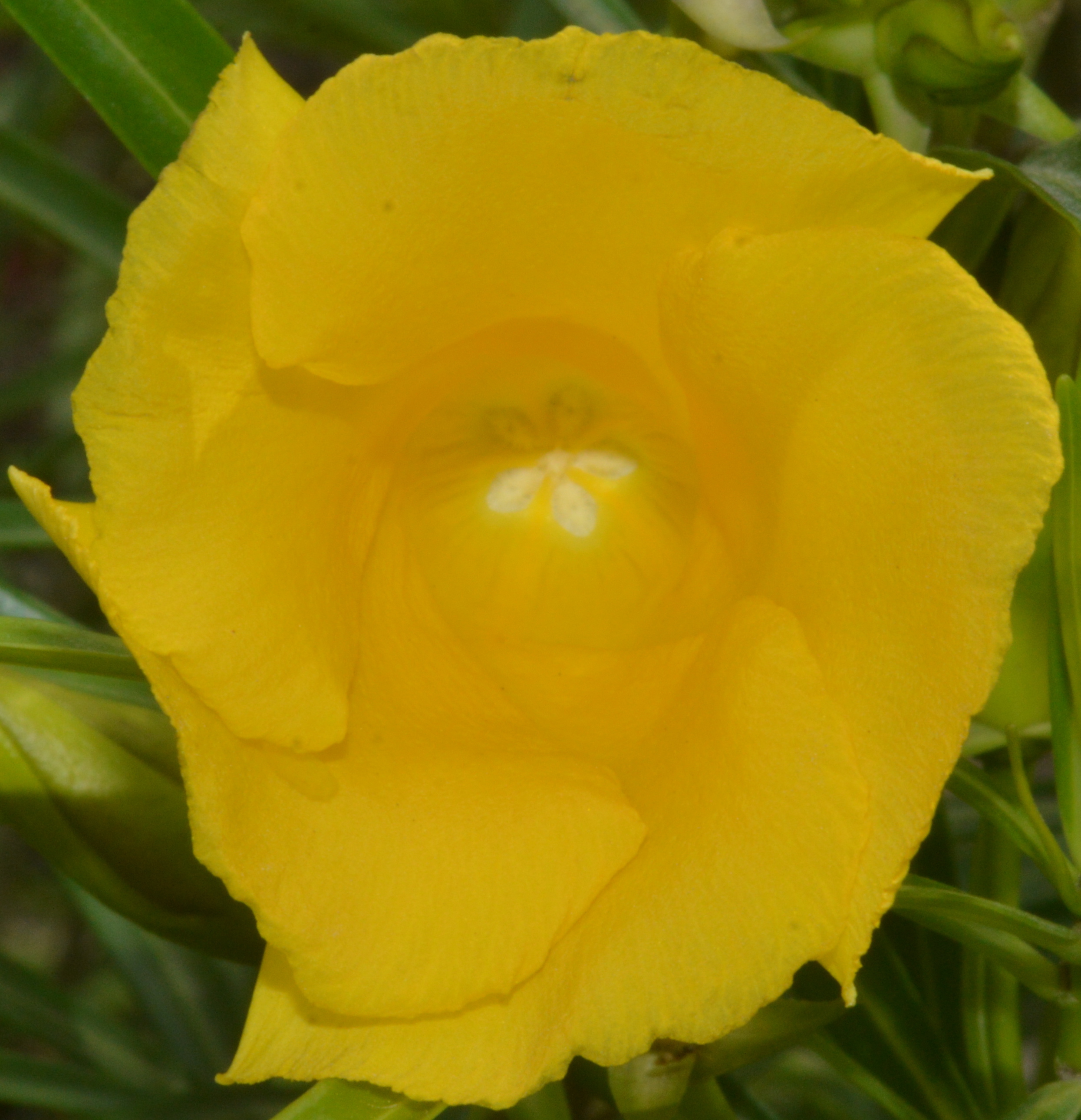
Flowers Size/ Colour/ Calyx/ Bracts-yellow
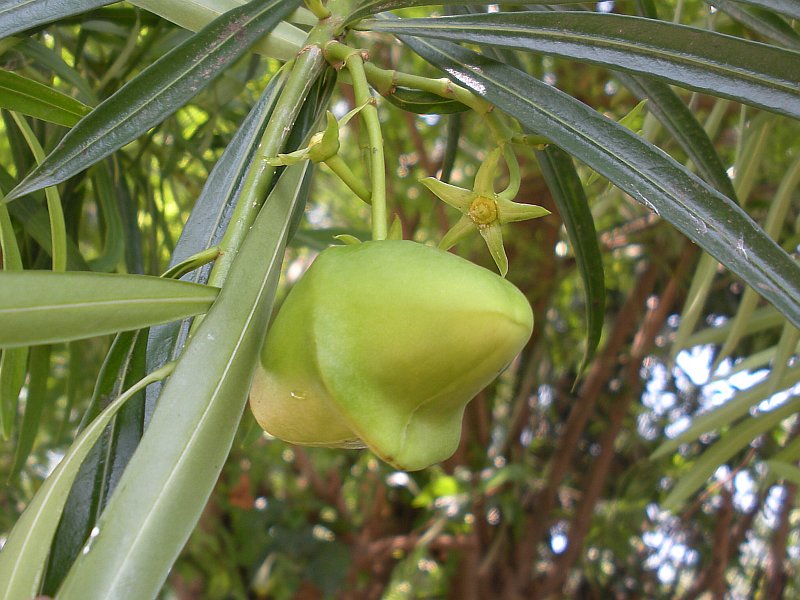
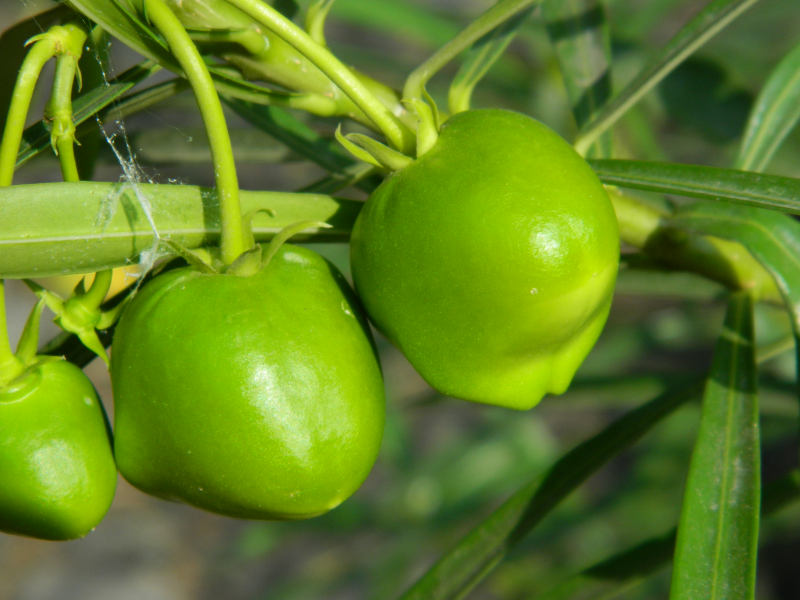
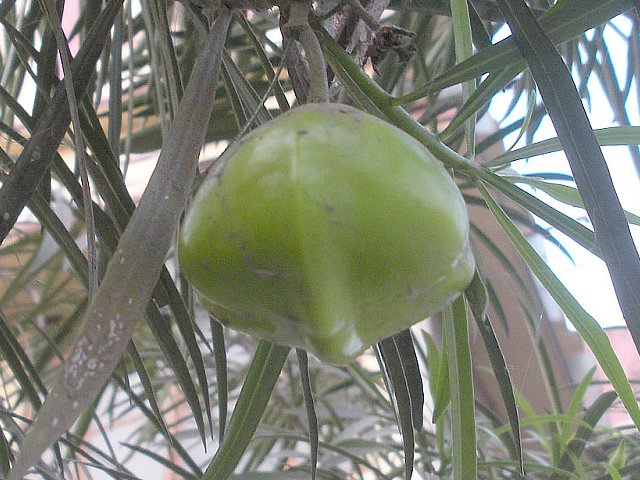
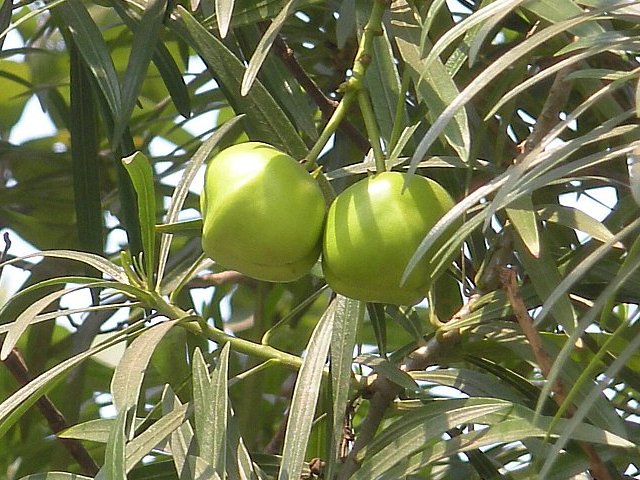
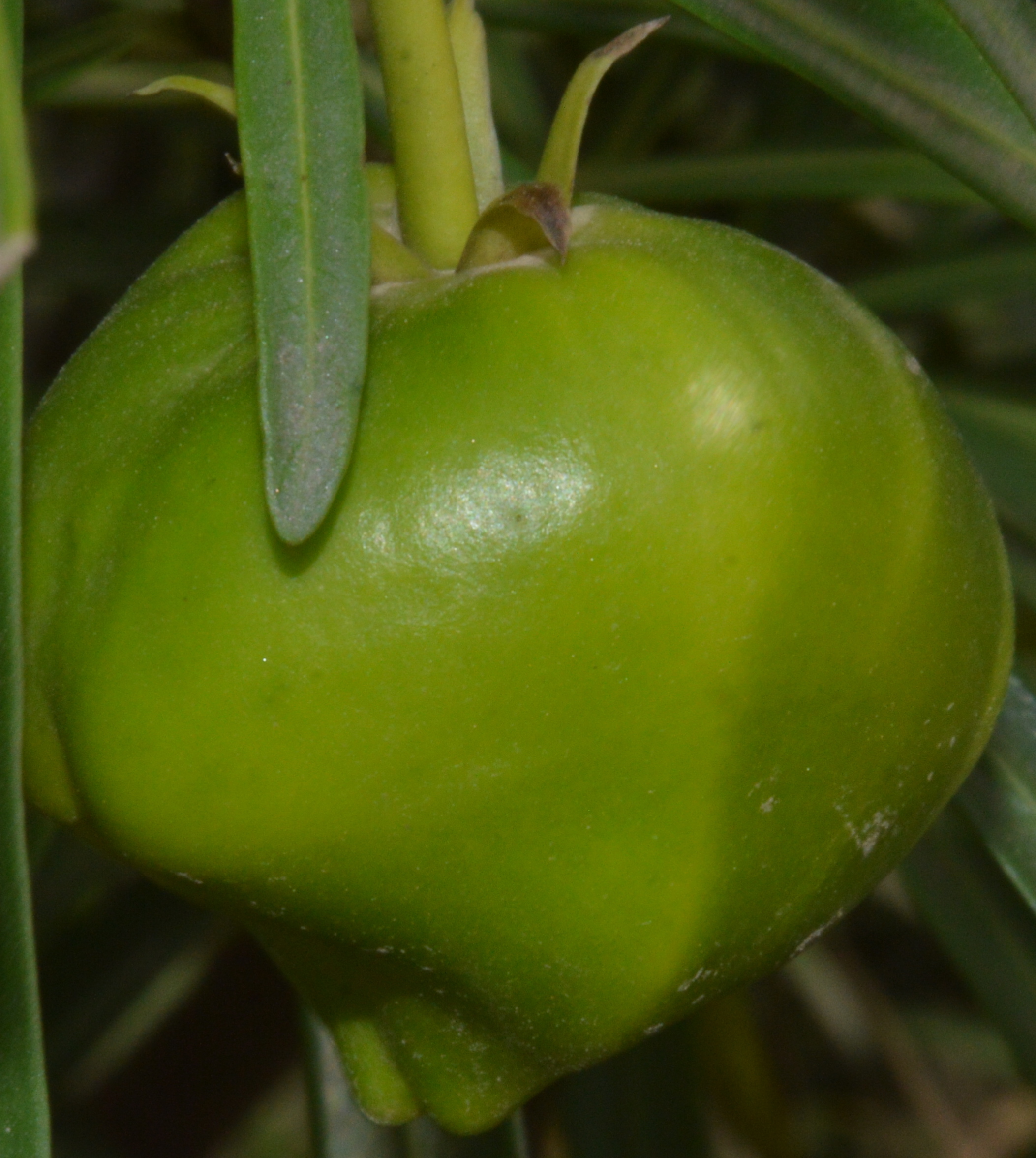
Fruits Type/ Shape/ Size Seeds- green and black
Yes this is Thevetia peruviana but now this plant is called,
Cascabela thevetia (L.) Lippold Feddes Repert. 91: 52 1980.
Synonyms:
Cascabela peruviana (Pers.) Raf. Cerbera linearifolia Stokes Cerbera peruviana Pers. Cerbera thevetia L. Thevetia linearis Raf. Thevetia linearis A. DC. Thevetia neriifolia Juss. ex A.DC. Thevetia neriifolia Juss. ex Steud. Thevetia peruviana (Pers.) K.Schum. Thevetia peruviana (Pers.) Merr. Thevetia peruviana f. aurantiaca H.St.John Thevetia thevetia (L.) H.Karst What does Cascabella mean…
bella = beautiful or some such thing… what is casca… and why casabella?? Bitti in Marathi. I found some interesting info on the net about this plant 1) A PHYLOGENETIC ANALYSIS OF THE CASCABELA–THEVETIA SPECIES COMPLEX (PLUMERIEAE, APOCYNACEAE) BASED ON MORPHOLOGY1
.. This has so many botanical terms that it was tough for me but I thought it would be interesting for all the Botany experts
2) Plants used as Patri for Vinaayaka chavithi
10 Vikataya Namaha: వికటాయ
(Sanskrit) Karaveera patra (Telugu) Genneru
Botanical name: Thevetia neerifolia/ Cascabela thevitia (Family:Apocyanaceae)
A shrub found in siva temples. http://lalithambanlr.blogspot.com/
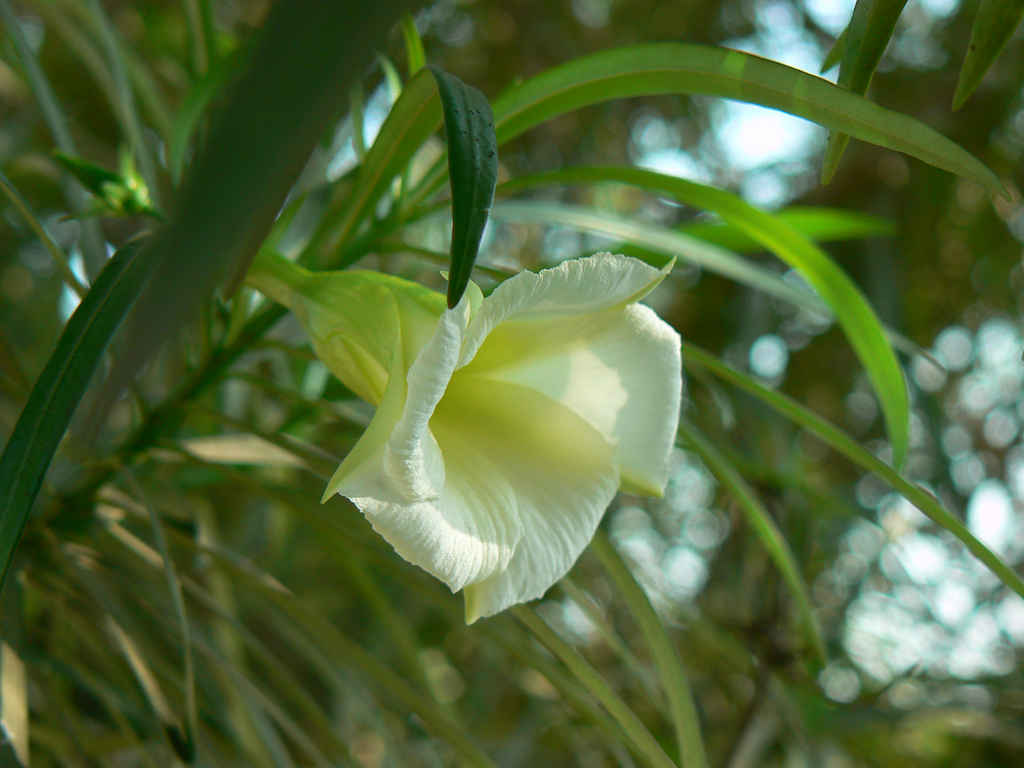
white Thevetia neriifolia from Hooghly: Found this white type of Thevetia neriifolia this morning. Species : Thevetia neriifolia Juss.
Habit & Habitat : garden shrub
Date : 14-04-2012, 11.55 a.m.
Place : Hooghly, WB COMMON BREED. Thank you Sir for confirming, here the yellow one is very common & the T. peruviana .
Flowers from Kalatope id Al161111: A shrub found near the Chamera dam..
Location Kalatope
Altitude 1200 mts Habit shrub Habitat wild Height 5 feet Season October Thevetia neriifolia/Thevetia peruviana it is…
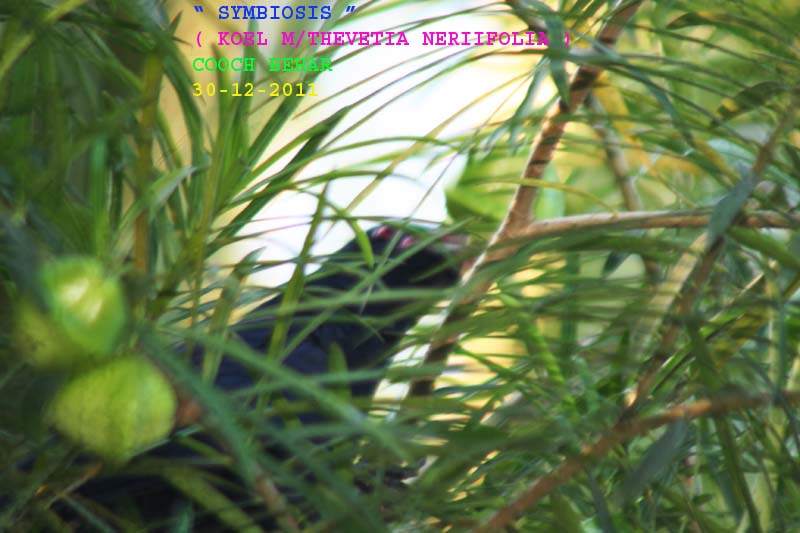
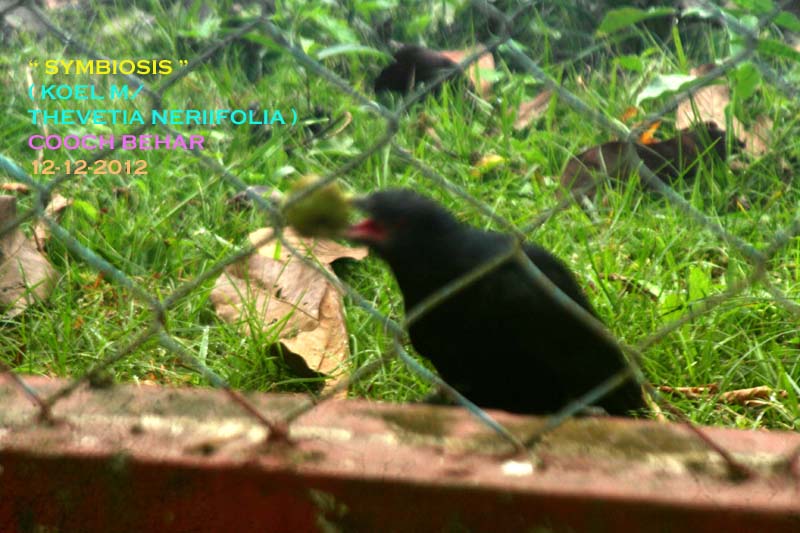
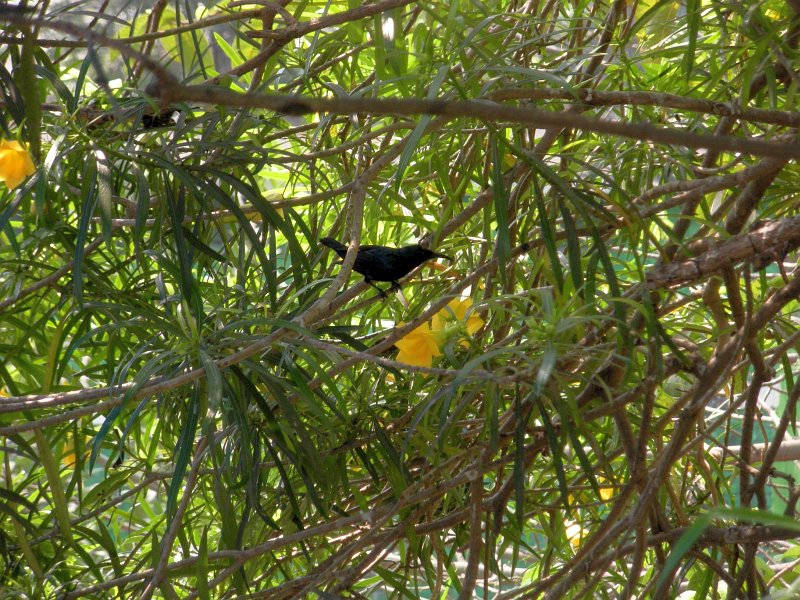
SYMBIOSIS :103: Attaching an image of the103rd member of the series.In this male of a Koel is on the fruit of Thevetia nerifolia.This tree is known as Pila Kaner in Hindi.It is Kolke phul in Bangla. WISH YOU ALL A HAPPY AND MEANINGFUL 2012.
SYMBIOSIS : 280: If Thevetia neriifolia ( LUCKY NUT TREE/ PILE
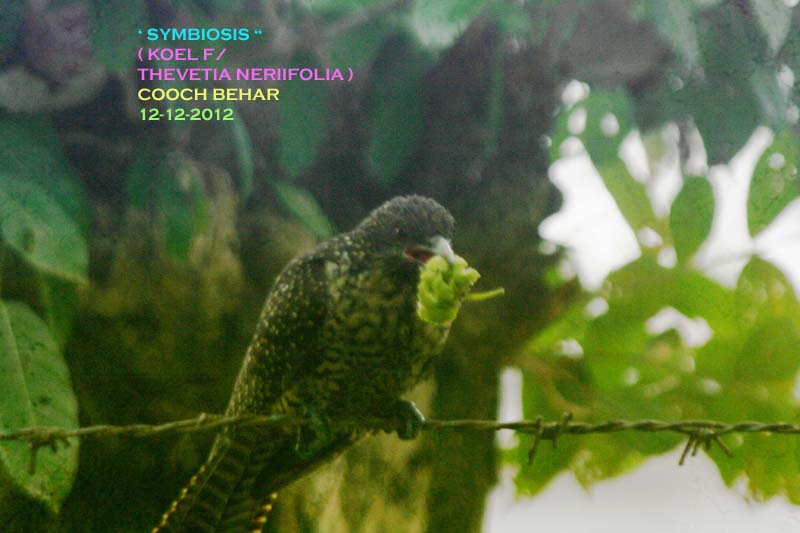
KANER/ KOLKE PHUL ) is available in your area and you have time to observe what happens there in this season you can make interesting observations. I saw a male and a female Koel eating the fruits of this tree, which fell from the tree. Attaching two images of that observation.
Thevetia peruviana (family : Apocynaceae) Hooghly, WB: This is another type of KOLKE-phool which is not that common as of T.neriifolia. I recorded these flowers (fruit also) on 14th February & 16th February, this year. species : Thevetia peruviana (family : Apocynaceae)
ID help : 1) http://en.wikipedia.org/wiki/Thevetia_peruviana
2) Facebook
Thevetia neriifolia (family : Apocynaceae) Hooghly, WB: KOLKE-PHOOL (phool = flower in Bengali) is common garden plant here. Decades ago every house in villages as well as in towns featured this plant, specially because there were dearth of exotic “Asteraceae” species. species : Thevetia neriifolia (family : Apocynaceae)
Date : 15-Feb-2012 & 01-Feb-2012
ID help : “Plant Groups” by H. Mukherji
I regret that picture qualities are not good due to low light at the time of recording. My next target is its seeds. Very nice, good ambition to try and get the seeds to photograph… Thank you Madam for the information. I also heard stories of using those seeds to eliminate someone in older days. I would also like to inform you that I have collected seeds of cockscomb but yet to be photographed.
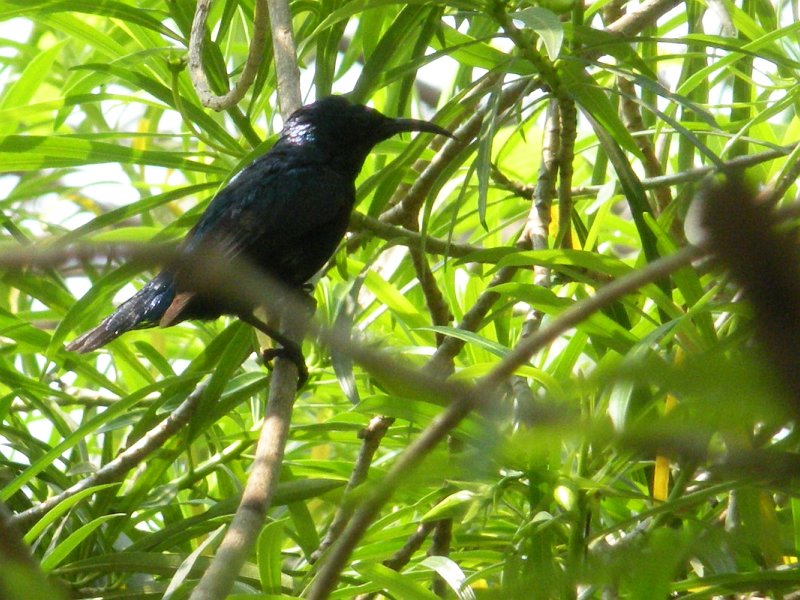
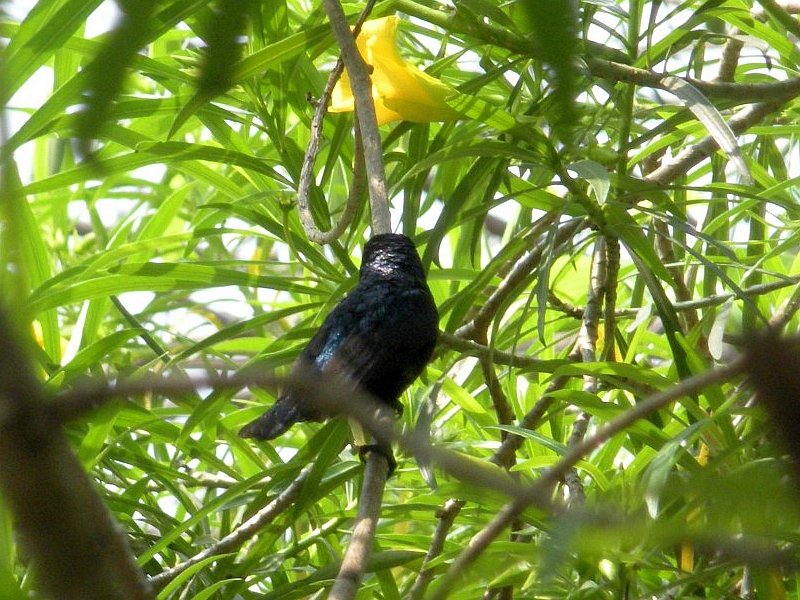
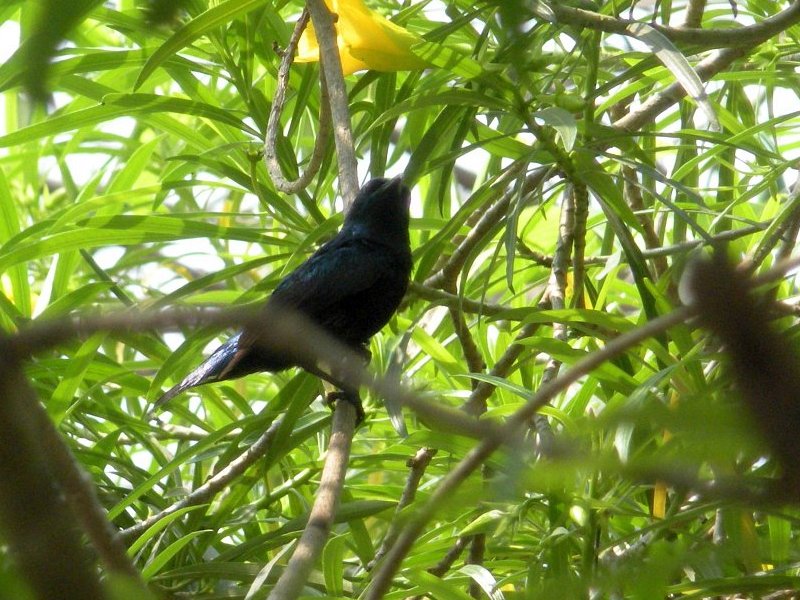
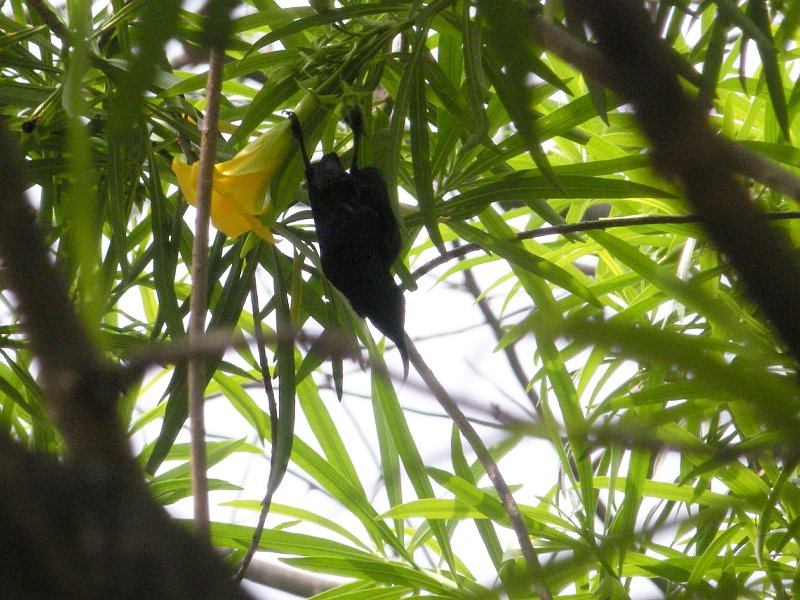
Hooghly : purple sunbird (male) on Cascabela thevetia (L.) Lippold [Thevetia peruviana (Pers.) K. Schum.] : 5 KOLKE (Bengali) and sunbirds are inseparable!
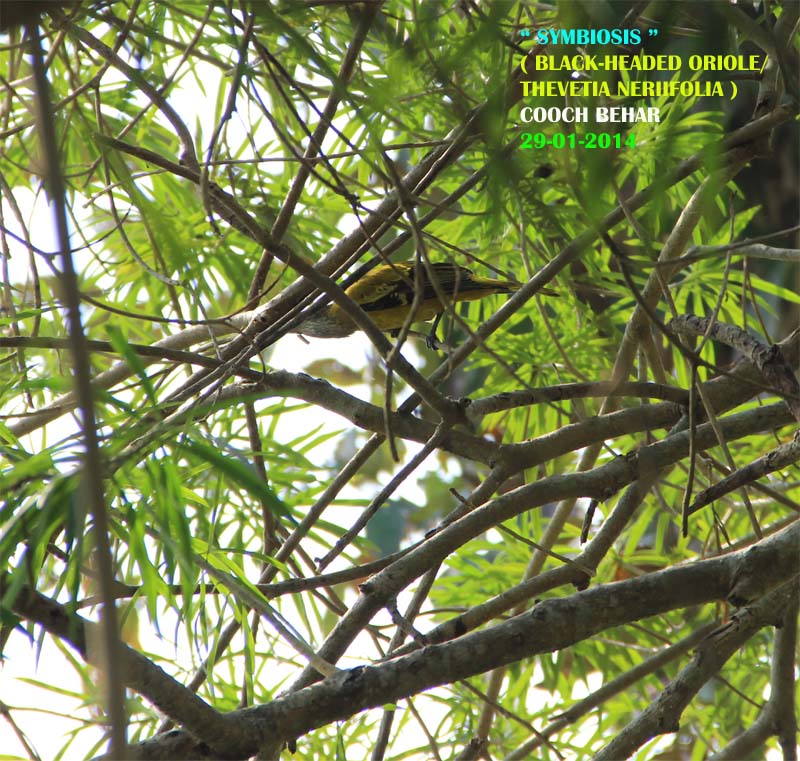
SYMBIOSIS : 499 : 1 post by 1 author. Attachments (1).
Attaching an image of a Black-headed Oriole eating fruit of Thevetia neriifolia.
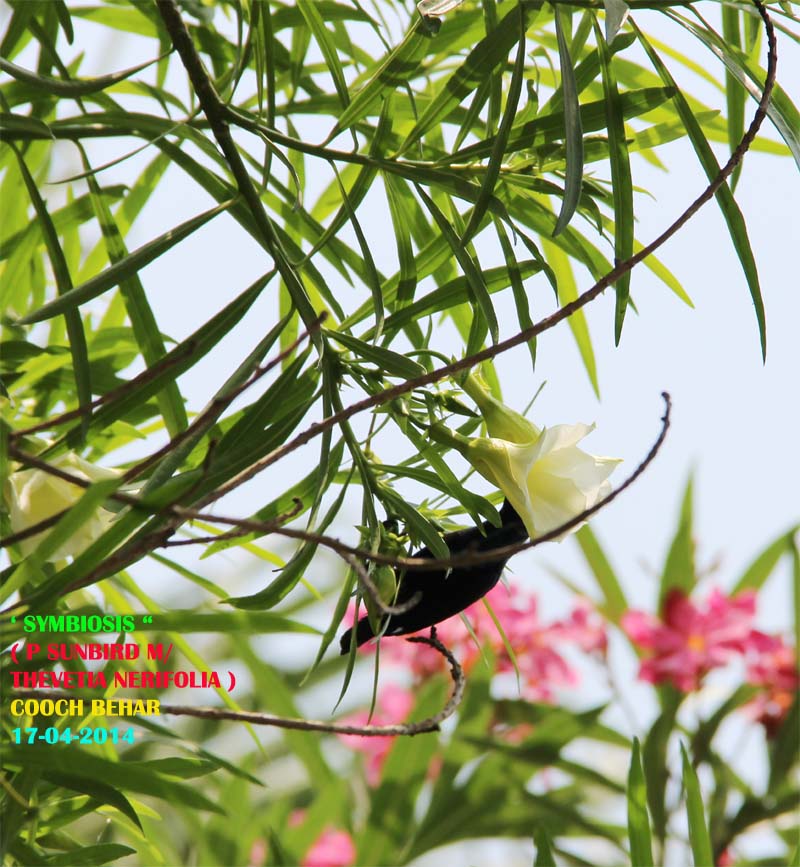
SYMBIOSIS : 571 : 1 post by 1 author. Attachments (1).
Attaching an image of a male Purple Sun-bird on the flowers of Thevetia nerifolia.
Id this flower please : 4 posts by 3 authors. Attachments (2). got this flower near Pandharpur, lake November 2013 Maharashtra Thevetia peruviana Cascabela thevetia (L.) Lippold (= Thevetia peruviana (Pers.) K.Schum, Thevetia neriifolia Juss. ex Steud.), poisonous shrub I don’t think it is desirable to follow Cascabela thevetia.
We know our plant as Thevetia neriifolia Juss. ex Steud; The Plant List considers it as accepted name
It also considers Cascabela thevetia as accepted name
Tropicos on which The Plant List mostly relies considers T. peruviana K. Schum. as accepted name in 4 publications (incl Fl China, one publication in 2014, 2015, 1969) and C. thevetia in only two pubications (1980, 2008)
Identification : 2 posts by 2 authors. Attachments (1)
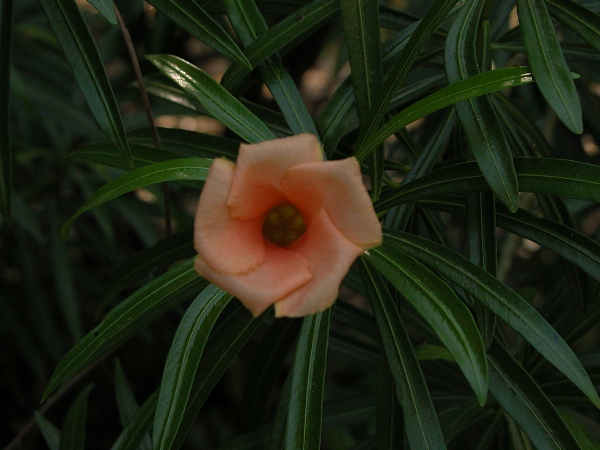
Can you please help me in identifying this flower please. It is a cultivar of Thevetia peruviana, a beautiful but poisonous plant! image files of a plant and its flowers uploaded.
its id please.
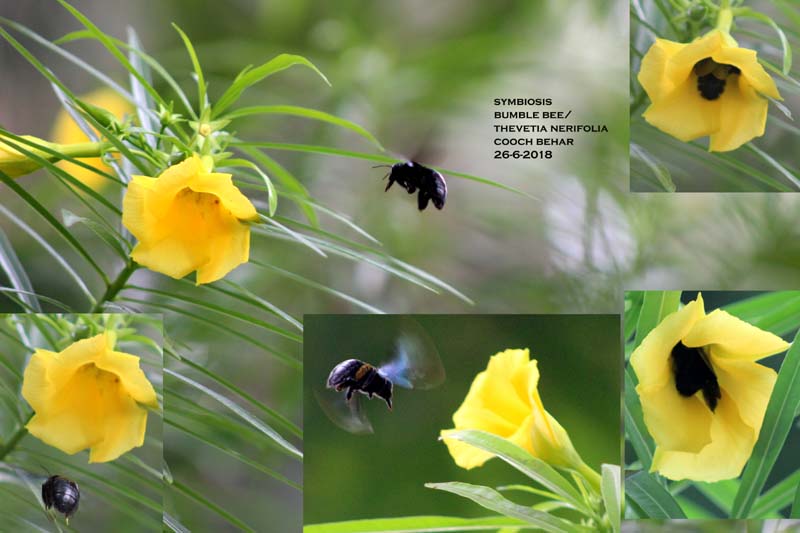
SYMBIOSIS : 1326 : 3 posts by 3 authors. Attachments (1)
Attaching a collage of Bumble bee visiting flowers of Thevetia nerifolia (yellow Oleander).
Thevetia peruviana – efloraofindia | Google Groups Fwd: Oriental White Eye and Yellow Oleander – efloraofindia | Google Groups
Cascabela thevetia (L.) Lippold : 2 posts by 1 author. Attachments (5) – around 1150 kb each.
Location: Chobhar, Kathmandu
Date: 06 September 2019
Elevation: 1401 m.
Habit : Cultivated Attachments (1)- 6 mb. Nepali Nmae : पहेँलो करवीर Pahenlo Karaveer
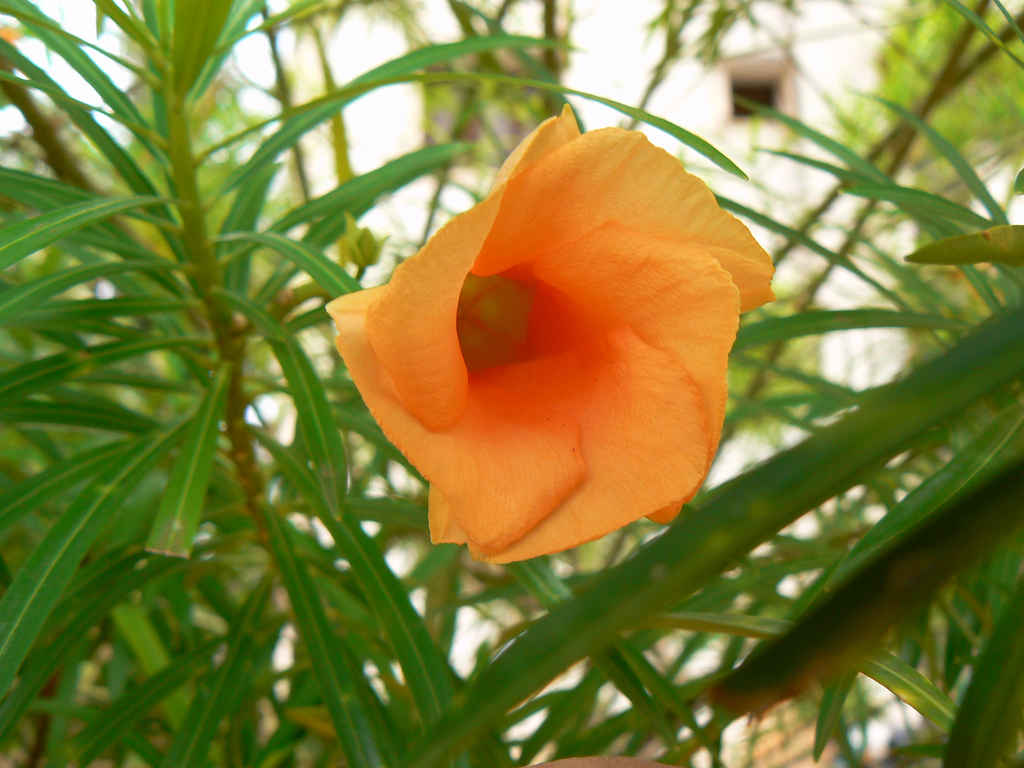
Flower for ID – 120512 – RK – 2: Request ID of this Flower.Called Karaveera in Kannada.The pic has been taken by my friend Usha Ramaiah in Puttur,Karnataka.Found growing in temple compounds v. often & comes in white too. It’s a short tree.Only one picture provided.Pic taken on 28-04-12 at 4pm. It could be a species of Thevetia of Apocynaceae family. Thevetia (बिट्टी ) . Apocynaceae: Thevetia peruviana: 2 high res. images.
Thevetia peruviana from Visakhapatnam district of Andhra Pradesh . Names of Plants in India :: Cascabela thevetia (L.) Lippold: 1 image.
Cascabela thevetia (L.) Lippold kas-kuh-BEL-uh — Latinized form of Cascabel, a Spanish word meaning rattle … Dave’s Botanary
thev-VET-ee-uh — named for Andre Thevet, 16th century French monk and plant collector … Dave’s Botanary commonly known as: lucky nut, Mexican oleander, yellow oleander • Assamese: গছ-কৰবী gos-korobi, হালধীয়া কৰবী halodhia korobi, কনোৰ konor, কনৌৰ konour, কনৰু onoru • Bawm: khum-ba-rang-zah • Bengali: কলকে ফুল kolke phul • Dogri: पीला गनीहरा peela ganeehra, ज़र्द गंडीला zard gandeela • Garo: ceiling bol • Gujarati: પીળી કરેણ pili karen, પીરી કરેણ piri karen • Haryanvi: पीली कनेर peeli kaner • Hindi: पीली कनेर peeli kaner • Kachchhi: પીરી કરેણ piri karen • Kannada: ಕಾಡು ಕಾಸಿಕಣಿಗಲು kaadu kaasikanigalu, ಕರವೀರ karaveera • Konkani: बिटीं biti, हळदुवी halduvi, कण्यां kanya • Malayalam: മഞ്ഞ അരളി manja arali • Manipuri: ꯎꯇꯣꯡꯂꯩ utonglei • Marathi: बिट्टी bitti, पिवळा कण्हेर pivala kanher • Odia: କନିଅର kaniara • Pahari: पीली कनेर peeli kaner • Punjabi: ਪੀਲੀ ਕਨੇਰ pili kaner • Rajasthani: पीळी कणेर pili kaner • Rangpuri: কালকে kalke • Santali: ᱵᱮᱨᱮᱧᱡᱳ berenjo • Sindhi: زنگي zangi • Tamil: சீமையலரி cimaiyalari, மஞ்சளலரி manjalalari, பொன்னலரி ponnalari • Telugu: పచ్చ గన్నేరు pachha ganneru, పసుపు గొట్టాల గన్నేరు pasupu gottala ganneru, సువర్ణ గన్నేరు suvarna ganneru • Tulu: ಕರವೀರೊ karaveero known for / parts made use of: flowers (worship); the whole shrub (natural fencing, greenery); seeds & leaves (natural insecticide); bark & leaves (strictly external used traditional medicine) botanical names: Cascabela thevetia (L.) Lippold … homotypic synonyms: Thevetia neriifolia Juss. ex A.DC. … heterotypic synonyms: Thevetia peruviana (Pers.) K.Schum. … and more at POWO, retrieved August 07, 2026 Bibliography / etymology / notes
Links listed as references in the notes below, may not remain valid permanently. Portals / websites have a tendency to re-organize / revise their content, leading to change in URLs of pages in their site. Some sites may even close down at their own will. The bits about the languages of India mentioned below are merely some bare facts gathered from the internet; just enough to satisfy curiosity about “where” could the listed names be best prevalent in India. All English transliterated names to be taken sensu amplo. ~~~~~ ENGLISH ~~~~~
written and spoken widely, in most parts of India
lucky nut, Mexican oleander, yellow oleander
~~~~~ ASSAMESE ~~~~~
written in: Assamese (অসমীয়া) … spoken in: Assam, Arunachal Pradesh, Meghalaya
গছ-কৰবী gos-korobi, কনোৰ konor, কনৌৰ konour, কনৰু onoru
হালধীয়া কৰবী halodhia korobi
~~~~~ BAWM ~~~~~
written in: Latin … spoken by: Bawm people … spoken in: Mizoram, Tripura, Assam … other names for this language: Bawm Zo, Banjogi
khum-ba-rang-zah
~~~~~ BENGALI ~~~~~
written in: Bengali (বাংলা) … spoken in: West Bengal, Assam, Jharkhand, Tripura, Andaman & Nicobar Islands
কলকে ফুল kolke phul
~~~~~ DOGRI ~~~~~
written in: Devanagari (डोगरी) … spoken in: Jammu & Kashmir … spoken by the Dogras
पीला गनीहरा peela ganeehra, ज़र्द गंडीला zard gandeela
~~~~~ GARO ~~~~~
written in: Roman, Bengali-Assamese, A-Chik Tok’birim … spoken in: Meghalaya, Assam
ceiling bol
~~~~~ GUJARATI ~~~~~
written in: Gujarati (ગુજરાતી) … spoken in: Gujarat, Dadra & Nagar Haveli, Daman & Diu
પીળી કરેણ pili karen
પીરી કરેણ piri karen
FLIP OF THE SYLLABLE or SLIP OF THE TONGUE The variants Pili Karen (પીળી કરેણ) and Piri Karen (પીરી કરેણ) alongside the expected Kaner (કણેર) make perfect linguistic sense when analyzed through the lens of historical sound shifts. The swapping of the middle and final consonants between Ka-ne-r and Ka-re-n is another classic example of metathesis (or Varna-Viparyaya in traditional Indian grammar). Both words descend from the ancient Sanskrit root Karavira (करवीर). As the word traveled orally through the western regions of India, the Prakrit and Apabhramsha dialects split the sound into two pathways: One pathway retained the ‘n’ sound in the middle, leading to the Hindi/Gujarati Kaner (કણેર); the other pathway flipped the syllables, pulling the ‘r’ forward and pushing the ‘n’ to the end, resulting in the highly popular Gujarati variant Karen (કરેણ). … compiled from the web.
The morphing of the word for yellow from Pili (પીળી) to Piri (પીરી) is a famous phonetic shift known in historical linguistics as Rhotacism (specifically, the liquid alternation between the ‘L’ sound and the ‘R’ sound). … compiled from the web.
~~~~~ HARYANVI ~~~~~
written in: Devanagari (हरियाणवी or हरयाणवी) … spoken in: Haryana, Delhi
पीली कनेर peeli kaner (or पीला कनेर peela kaner)
~~~~~ HINDI ~~~~~
written in: Devanagari (हिन्दी) … spoken in: Delhi, Uttar Pradesh, Bihar, Chhattisgarh, Haryana, Jharkhand, Madhya Pradesh, Rajasthan, Uttarakhand
पीली कनेर peeli kaner
~~~~~ KACHCHHI ~~~~~
written in: Gujarati (કચ્છી), Sindhi (ڪڇّي) … spoken in: Kutch region of Gujarat
પીરી કરેણ piri karen
~~~~~ KANNADA ~~~~~
written in: Kannada (ಕನ್ನಡ) … spoken in: Karnataka
ಕಾಡು ಕಾಸಿಕಣಿಗಲು kaadu kaasikanigalu
ಕರವೀರ karaveera
FLIP OF THE SYLLABLE or SLIP OF THE TONGUE A close examination of historical Kannada botanical manuscripts reveals a peculiar phonetic pattern: the vernacular name for this species frequently morphs, shifting between variations such as kanigalu, kanigilu, kanagilu and kanigile. Far from being typographical errors, these variations are prime examples of a linguistic phenomenon known as metathesis (or Varna-Viparyaya in traditional Indian grammatical scholarship). This process is essentially a natural, intergenerational ‘flip of the syllable’ or a ‘slip of the tongue’. When plant names travel through rural communities via oral tradition rather than standardized print dictionaries, the consonants and vowels naturally rearrange over time into configurations that flow more rhythmically within a specific local dialect. … compiled from the web.
~~~~~ KONKANI ~~~~~
written in: Devanagari (कोंकणी) / Kannada (ಕೊಂಕಣಿ) / Malayalam (കൊങ്കണി) / Perso-Arabic (کونکنی) / Romi (Konknni) … spoken in: Goa, Karnataka, Maharashtra, Kerala, Gujarat
बिटीं biti, हळदुवी halduvi
कण्यां kanya
~~~~~ MALAYALAM ~~~~~
written in: Malayalam (മലയാളം) … spoken in: Kerala, Lakshadweep
മഞ്ഞ അരളി manja arali (or മഞ്ഞരളി manjarali)
~~~~~ MANIPURI ~~~~~
written in: Meiteilon (ꯃꯩꯇꯩꯂꯣꯟ), Bengali-Assamese … spoken in: Manipur … other names for this language: Meetei
ꯎꯇꯣꯡꯂꯩ utonglei
~~~~~ MARATHI ~~~~~
written in: Devanagari (मराठी) … spoken in: Maharashtra, Karnataka
बिट्टी bitti
पिवळा कण्हेर pivala kanher (or पिवळी कण्हेर pivali kanher)
~~~~~ ODIA ~~~~~
written in: Odia (ଓଡ଼ିଆ) … spoken in: Odisha, Andaman & Nicobar Islands
କନିଅର kaniara (variants: କଣିଅର kaniara / କନିଆର kaniara / କଣିଅର kaniara / କନିଆରି kaniari / କଣିଆରି kaniari)
~~~~~ PAHARI (or PAHADI) ~~~~~
written in: Devanagari (पहाड़ी), Perso-Arabic (پہاڑی) … variety of languages, dialects and language groups, spoken in Himachal Pradesh, Jammu and Kashmir, Uttarakhand
पीली कनेर peeli kaner
~~~~~ PUNJABI ~~~~~
written in: Gurmukhi (ਪੰਜਾਬੀ) … spoken in: Punjab
ਪੀਲੀ ਕਨੇਰ pili kaner
~~~~~ RAJASTHANI ~~~~~
written in: Devanagari (राजस्थानी) … spoken in: Rajasthan
पीळी कणेर pili kaner
~~~~~ RANGPURI ~~~~~
written in: Bengali-Assamese (রংপুরী, কোচ-ৰাজবংশী, দেশী), Devanagari (रंगपुरी) … spoken in: Bangladesh, north Bengal, lower Assam … other names for this language: Anchalit, Bahe, Deshi, Koch-Rajbongshi
কালকে kalke
~~~~~ SANTALI ~~~~~
written in: Ol Chiki (ᱥᱟᱱᱛᱟᱲᱤ), Bengali (সাঁওতালী), Odia (ସାନ୍ତାଳୀ), Devanagari (सान्ताली), Roman … spoken in: Jharkhand, West Bengal, Odisha
ᱵᱮᱨᱮᱧᱡᱳ berenjo
~~~~~ SINDHI ~~~~~
written in: Perso-Arabic (سِنڌِي), Gujarati (સિંધી), Devanagari (सिन्धी) … spoken in: Gujarat, Maharashtra, Rajasthan
زنگي zangi
~~~~~ TAMIL ~~~~~
written in: Tamil (தமிழ்) … spoken in: Tamil Nadu, Puducherry, Andaman & Nicobar Islands
சீமையலரி cimaiyalari, மஞ்சளலரி manjalalari, பொன்னலரி ponnalari
~~~~~ TELUGU ~~~~~
written in: Telugu ( తెలుగు) … spoken in: Andhra Pradesh, Telangana, Puducherry
పచ్చ గన్నేరు pachha ganneru, పసుపు గొట్టాల గన్నేరు pasupu gottala ganneru, సువర్ణ గన్నేరు suvarna ganneru
~~~~~ TULU ~~~~~
written in: Tigalari (Tulu) was used for writing Vedic texts in Sanskrit, Kannada (ತುಳು), Malayalam (തുളു) … spoken in: Karnataka, north Kerala
ಕರವೀರೊ karaveero
~~~~~ KNOWN DISTRIBUTION in INDIA ~~~~~
throughout (introduced)
MUCH ADO ABOUT NOTHING The inclusion of Sanskrit and Tibetan names for this species in modern online databases appears to be the result of a forced comparison rather than true historical use. Because this plant is commonly called ‘Yellow Oleander’, names belonging to native, red-flowered oleanders seem to have been broadly copied over to this yellow-flowered foreign species without much distinction.
Not every name from every language that exists on the web is included in this compilation. To ensure this page remains reliable and clean, names that appear obviously forced into synonymy have been intentionally left out. This blog focuses strictly on genuine everyday names used by regional communities across India. ~~~~~ Created on: 16:35 07-08-2026 ¦ Last updated: 10:03 10-08-2026 (DD-MM-YYYY) ~~~~~
Names compiled / updated at https://dineshvalke.blogspot.com/2026/08/cascabela-thevetia-l-lippold.html Nepali name added …
commonly known as: lucky nut, Mexican oleander, yellow oleander • Assamese: গছ-কৰবী gos-korobi, হালধীয়া কৰবী halodhia korobi, কনোৰ konor, কনৌৰ konour, কনৰু onoru • Bawm: khum-ba-rang-zah • Bengali: কলকে ফুল kolke phul • Dogri: पीला गनीहरा peela ganeehra, ज़र्द गंडीला zard gandeela • Garo: ceiling bol • Gujarati: પીળી કરેણ pili karen, પીરી કરેણ piri karen • Haryanvi: पीली कनेर peeli kaner • Hindi: पीली कनेर peeli kaner • Kachchhi: પીરી કરેણ piri karen • Kannada: ಕಾಡು ಕಾಸಿಕಣಿಗಲು kaadu kaasikanigalu, ಕರವೀರ karaveera • Konkani: बिटीं biti, हळदुवी halduvi, कण्यां kanya • Malayalam: മഞ്ഞ അരളി manja arali • Manipuri: ꯎꯇꯣꯡꯂꯩ utonglei • Marathi: बिट्टी bitti, पिवळा कण्हेर pivala kanher • Nepali: पहेँलो करवीर pahenlo karaveer • Odia: କନିଅର kaniara • Pahari: पीली कनेर peeli kaner • Punjabi: ਪੀਲੀ ਕਨੇਰ pili kaner • Rajasthani: पीळी कणेर pili kaner • Rangpuri: কালকে kalke • Santali: ᱵᱮᱨᱮᱧᱡᱳ berenjo • Sindhi: زنگي zangi • Tamil: சீமையலரி cimaiyalari, மஞ்சளலரி manjalalari, பொன்னலரி ponnalari • Telugu: పచ్చ గన్నేరు pachha ganneru, పసుపు గొట్టాల గన్నేరు pasupu gottala ganneru, సువర్ణ గన్నేరు suvarna ganneru • Tulu: ಕರವೀರೊ karaveero .
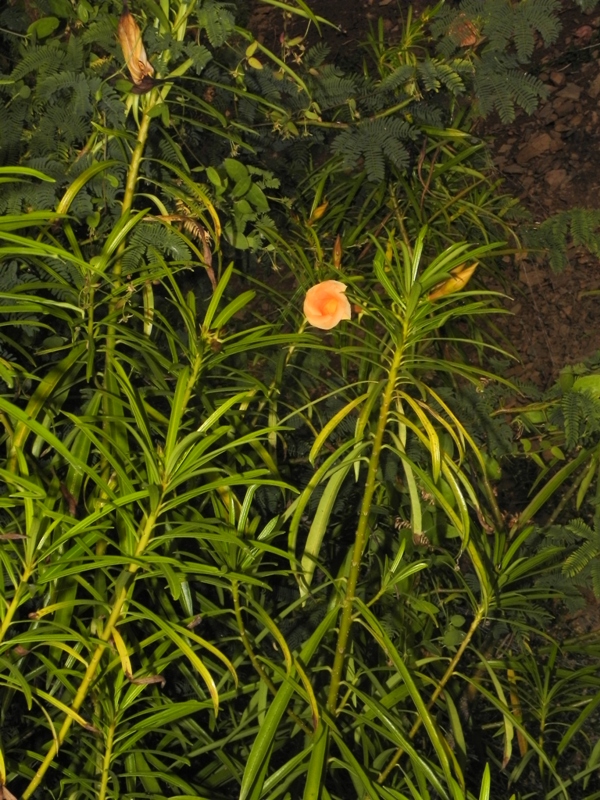
Cascabela thevetia: 1 image.
Family: Apocynaceae
Name: पीला कनेर
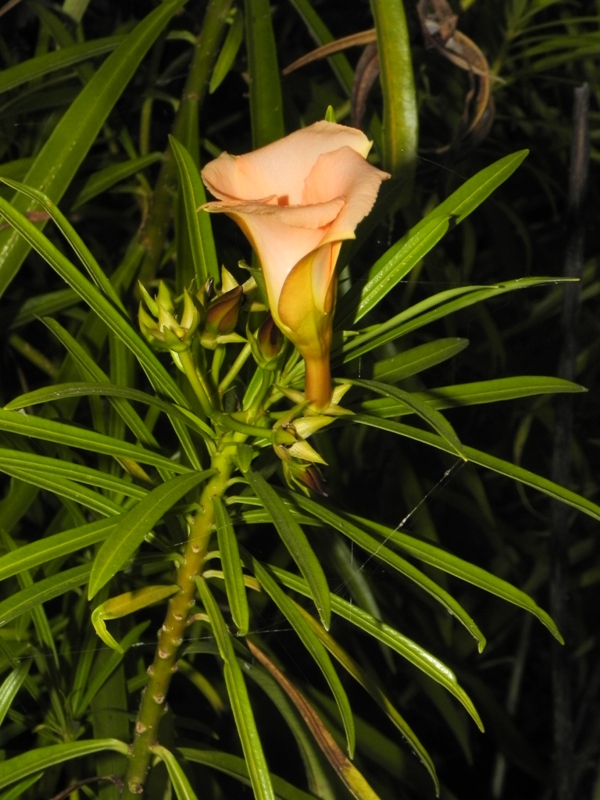
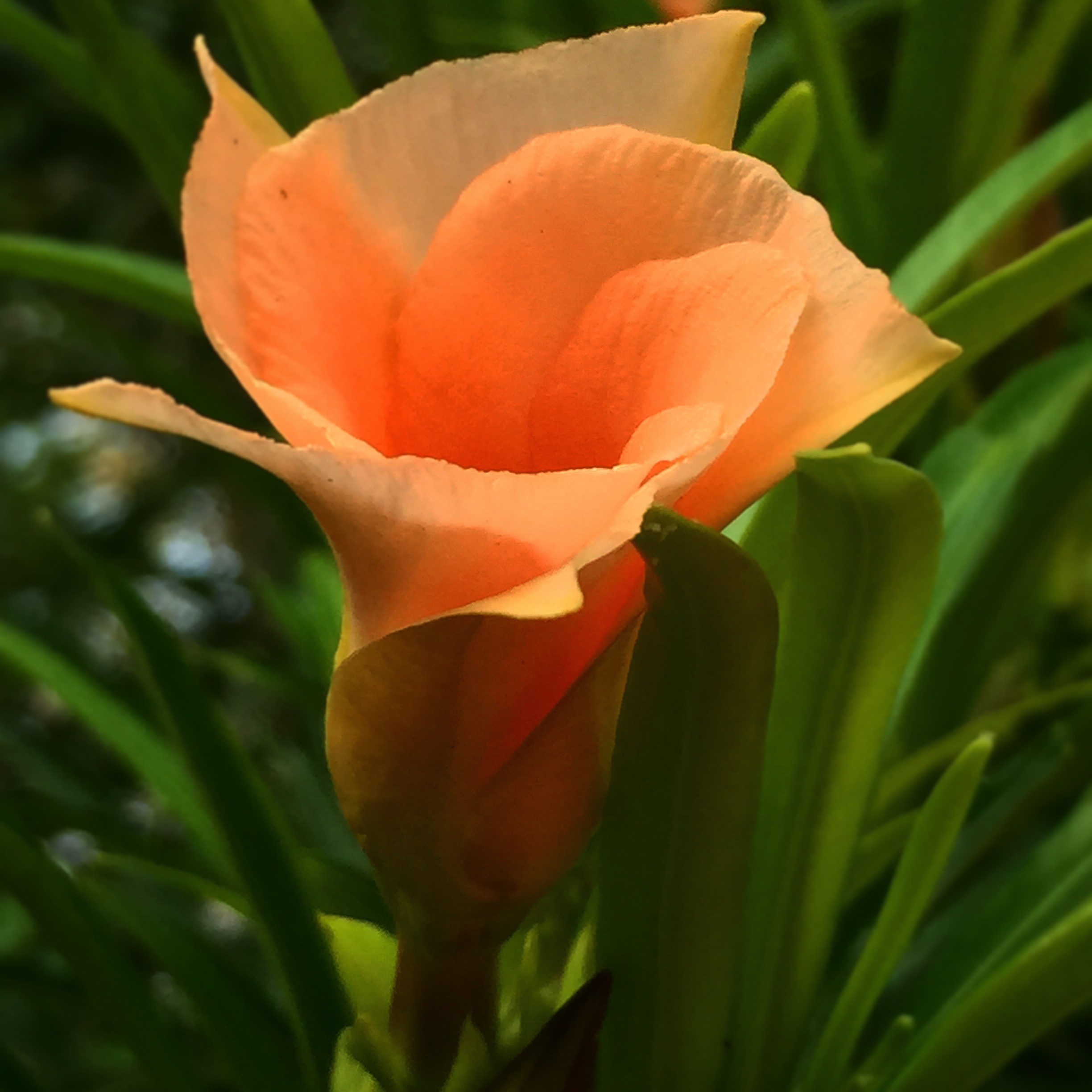
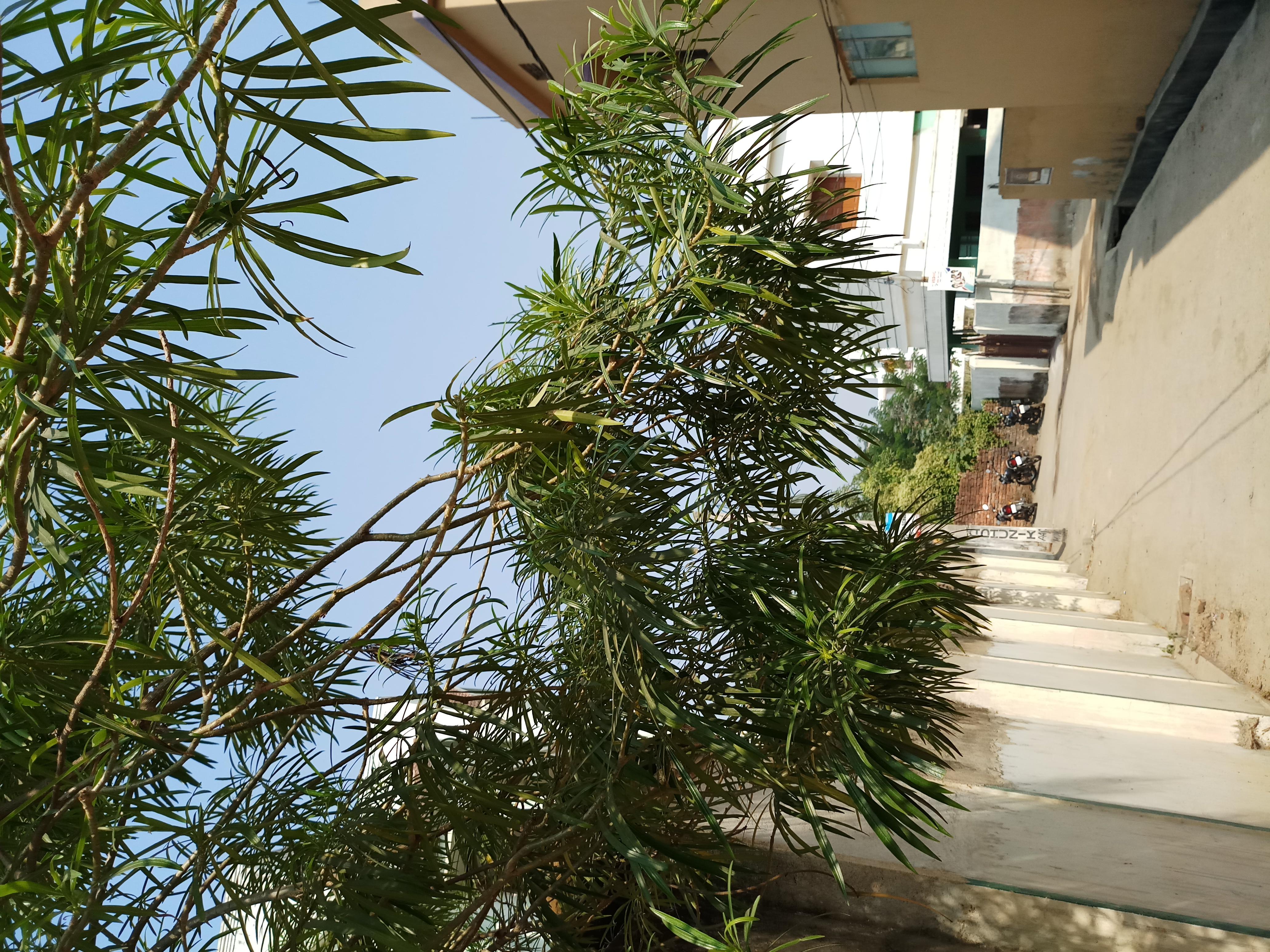
Species: Cascabela thevetia
Date: 09.08.2023
Place: Kaler,Alwar,Rajasthan
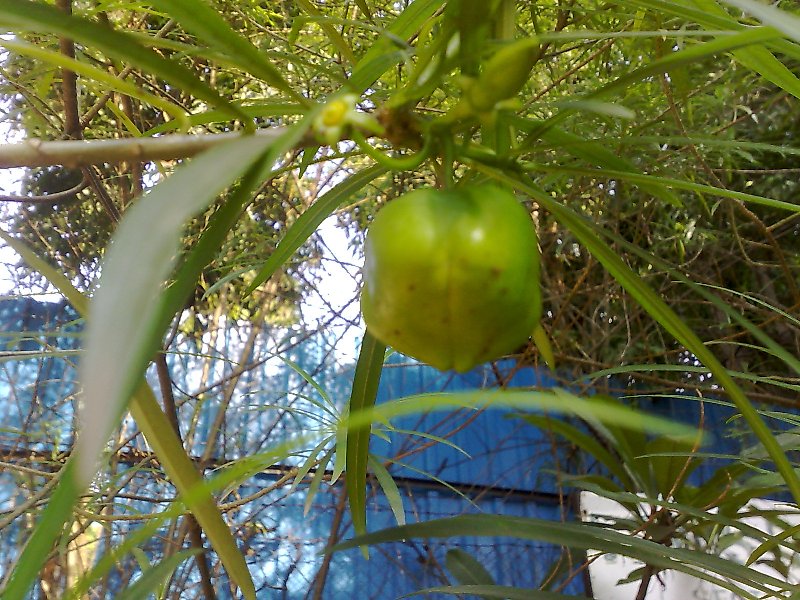
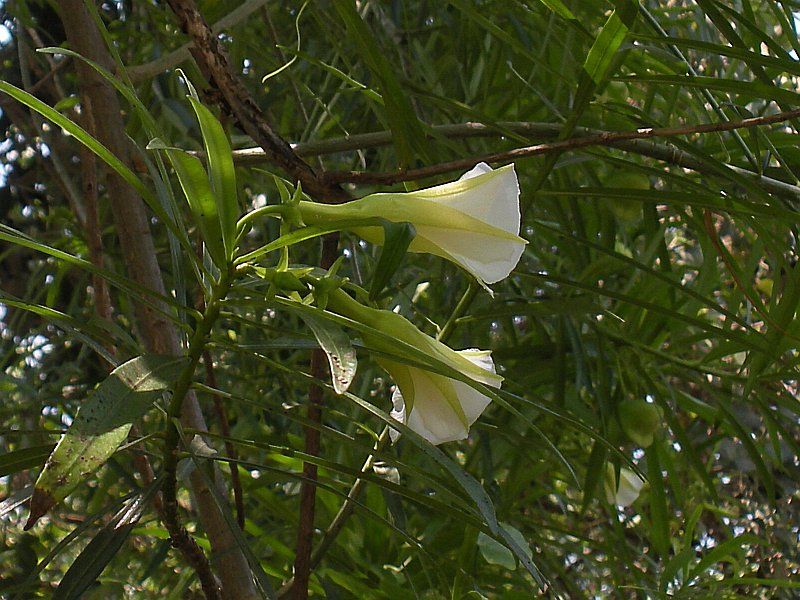
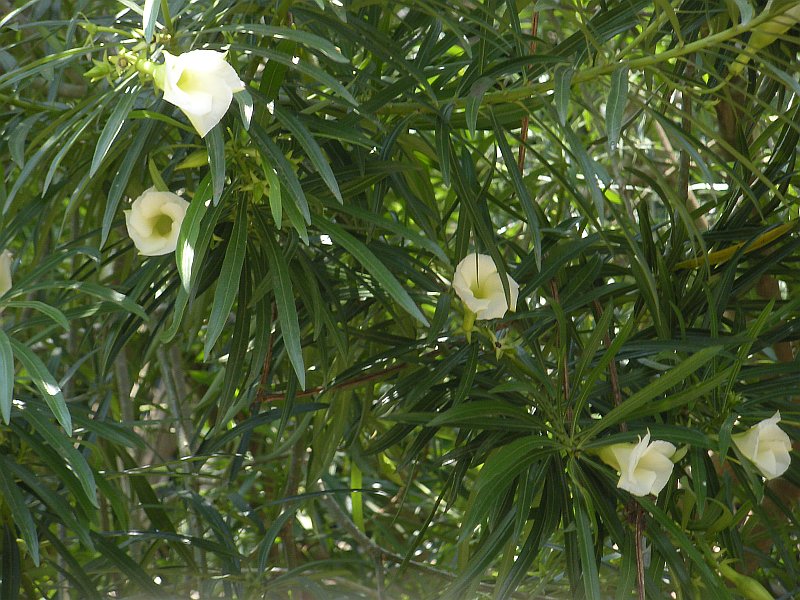
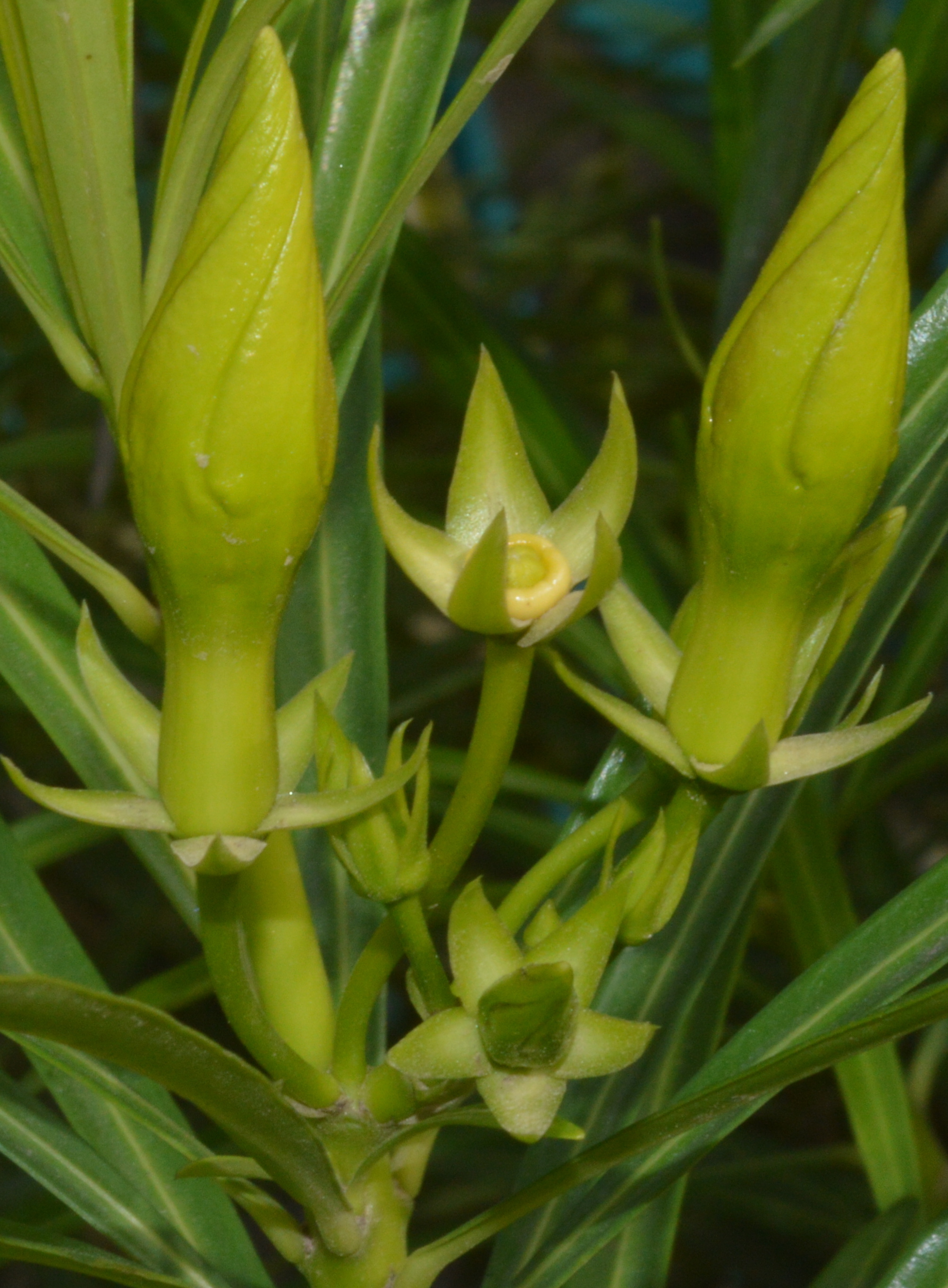
Note: Mexican oleander is a large shrub or a small tree, up to 10 to 20 feet tall with Oleander-like leaves mostly in whorls of three, long and narrow up to 10 inches
. References:
|
Cascabela thevetia

Updated on September 11, 2026