
Adiantum tenerum Sw., Prodr. 135 1788. (syn: Adiantum assimile Link; Adiantum bessoniae Jenm.; Adiantum bessonianum; Adiantum extensum Fée; Adiantum fergusonii T. Moore; Adiantum ghiesbreghtii ; Adiantum glaucophyllum Hook.; Adiantum littorale Jenm.; Adiantum multiforme A. Br.; Adiantum tenerum var. littorale (Jenm.) Domin; Adiantum tenerum var. majus T. Moore; Adiantum tenerum var. minus Kunze; Adiantum tenerum var. obtusissimum Christ; Adiantum trapeziforme var. trapezoides (Fée) Baker; Adiantum trapezoides Fée);
.
Tropical & Subtropical America: Bahamas, Belize, Brazil Northeast, Brazil South, Cayman Is., Colombia, Costa Rica, Cuba, Dominican Republic, El Salvador, Florida, Guatemala, Haiti, Honduras, Jamaica, Leeward Is., Mexico Central, Mexico Gulf, Mexico Northeast, Mexico Southeast, Mexico Southwest, Nicaragua, Puerto Rico, Trinidad-Tobago, Venezuela, Windward Is.; Introduced into: Andaman Is., Hawaii, India, Malaya, Marianas, Philippines, Solomon Is., Sri Lanka, Taiwan as per POWO;
.

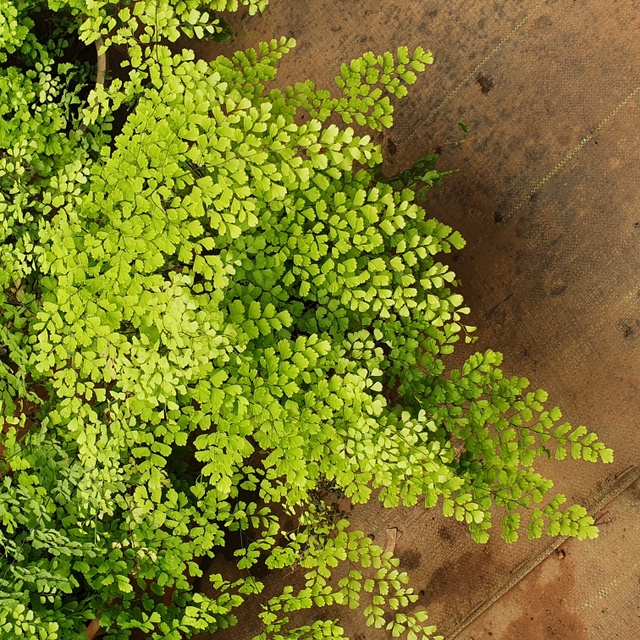
Adiantum Species for ID : Nasik : 07APR21 : AK-08: 2 images.
A cultivated plant seen at a plant nursery in Nasik.
Pl. post high resolution images.
Here they are..
This is Adiantum tenerum (like a big A. capillus-veneris, but more rectangular segments). Commonly cultivated and fairly commonly adventive in south India, and Sri Lanka etc. Native to S. and C. America.
.
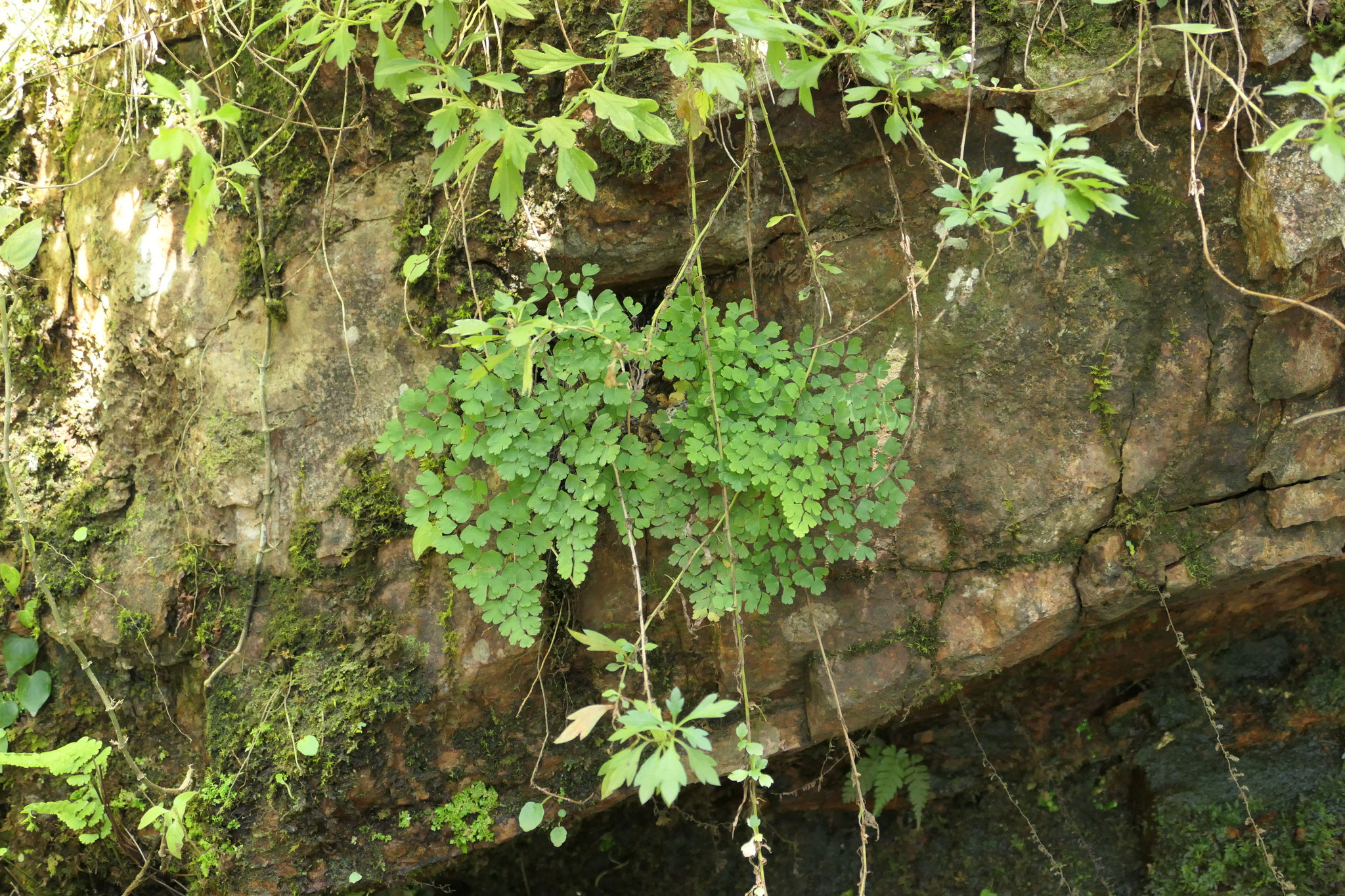
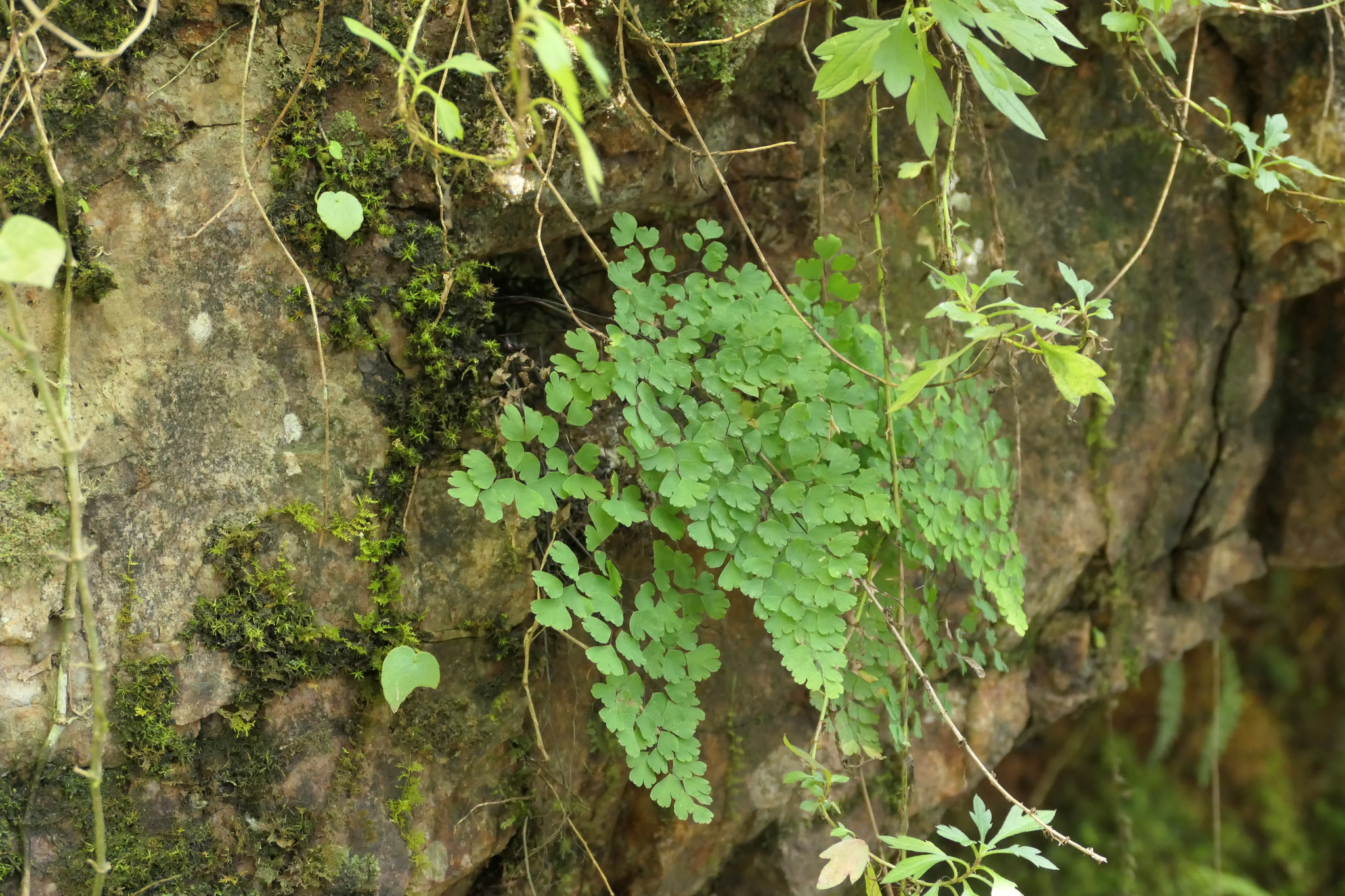
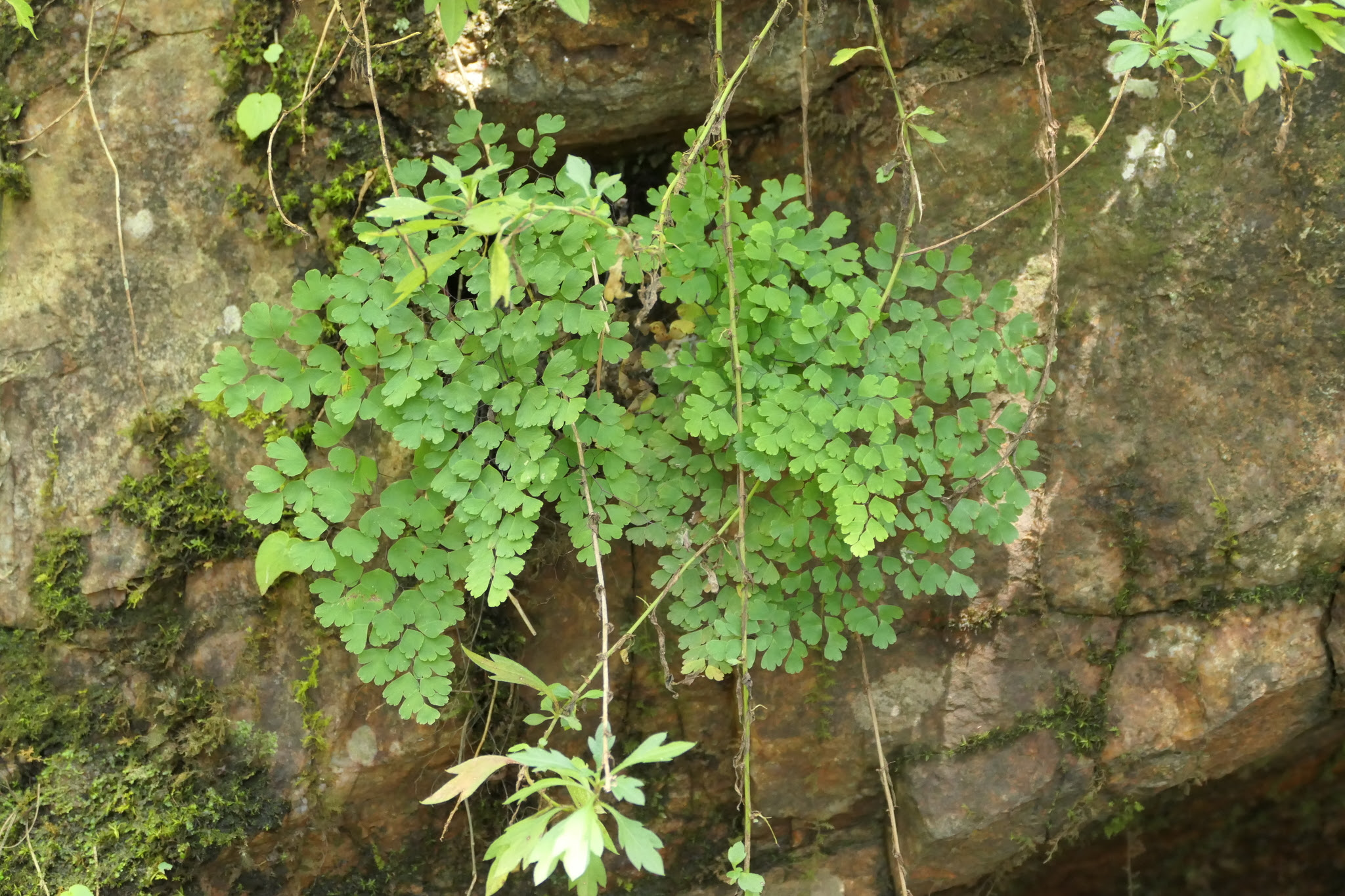
FOR VALIDATION :: ¿ Adiantum sp. ? :: The Nilgiris :: Jan 31, 2026 · 11:50 AM IST: 3 images.
¿ Adiantum sp. ?
Kodamulal, about 1807 m asl
Hope Adiantum raddianum
I think it’s probably A. tenerum, commonly adventive in India, especially in the South, and with characteristic, rather rectangular segments. If so, where the stalk joins a segment there is no short black extension along the bases of the segment. So you’ll need to send a close up of one or two segment-bases so we can see that.
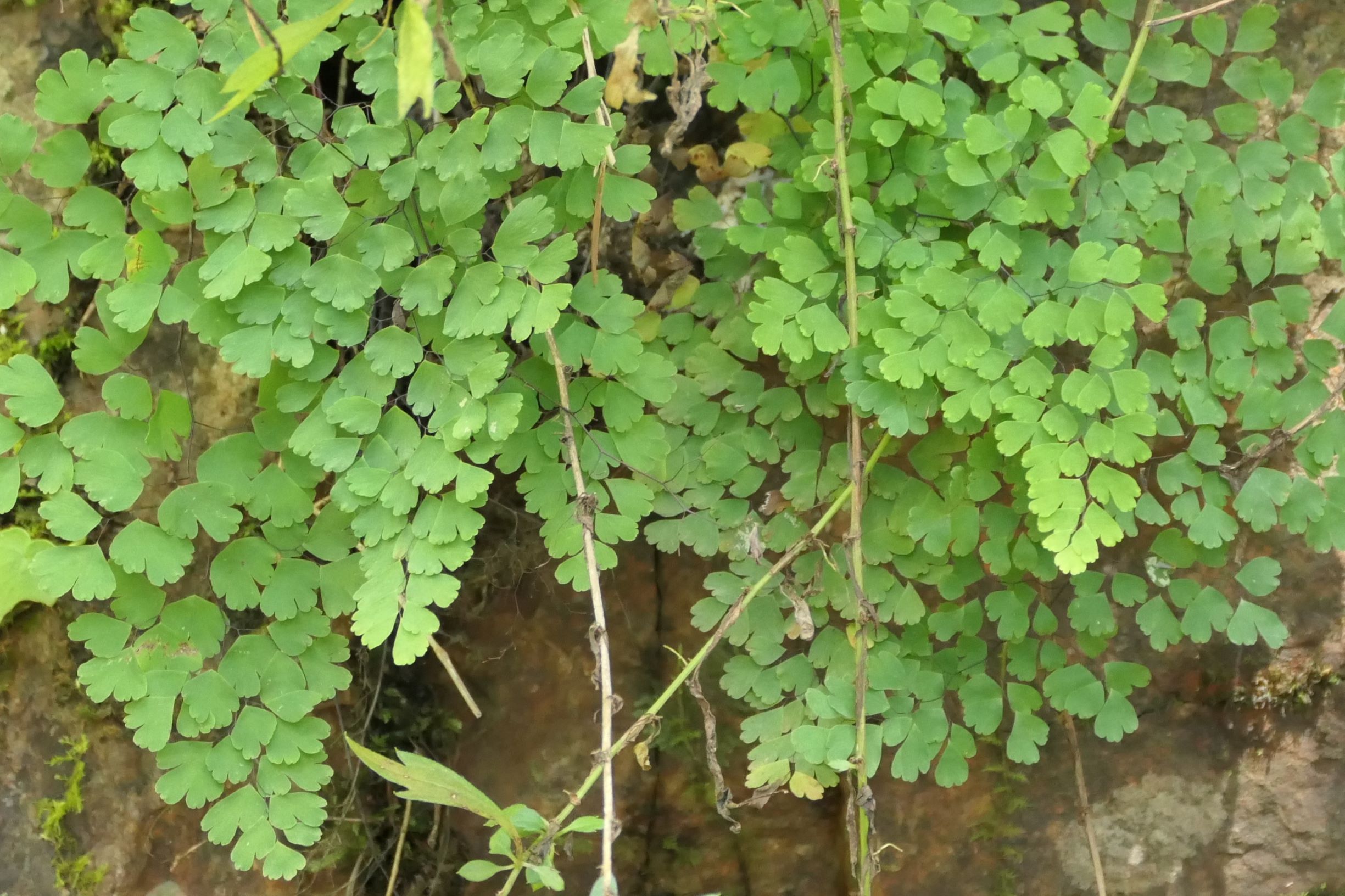
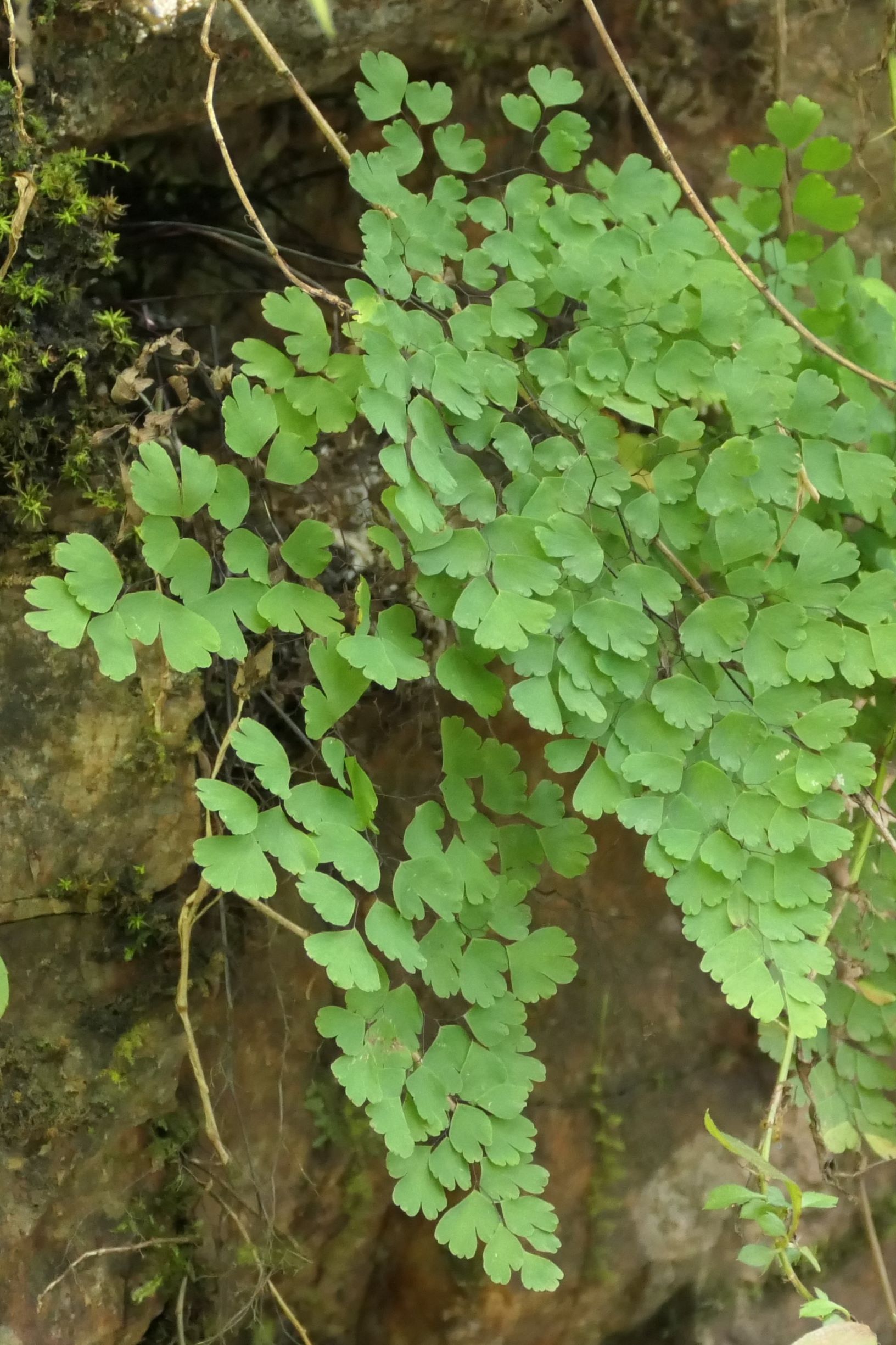
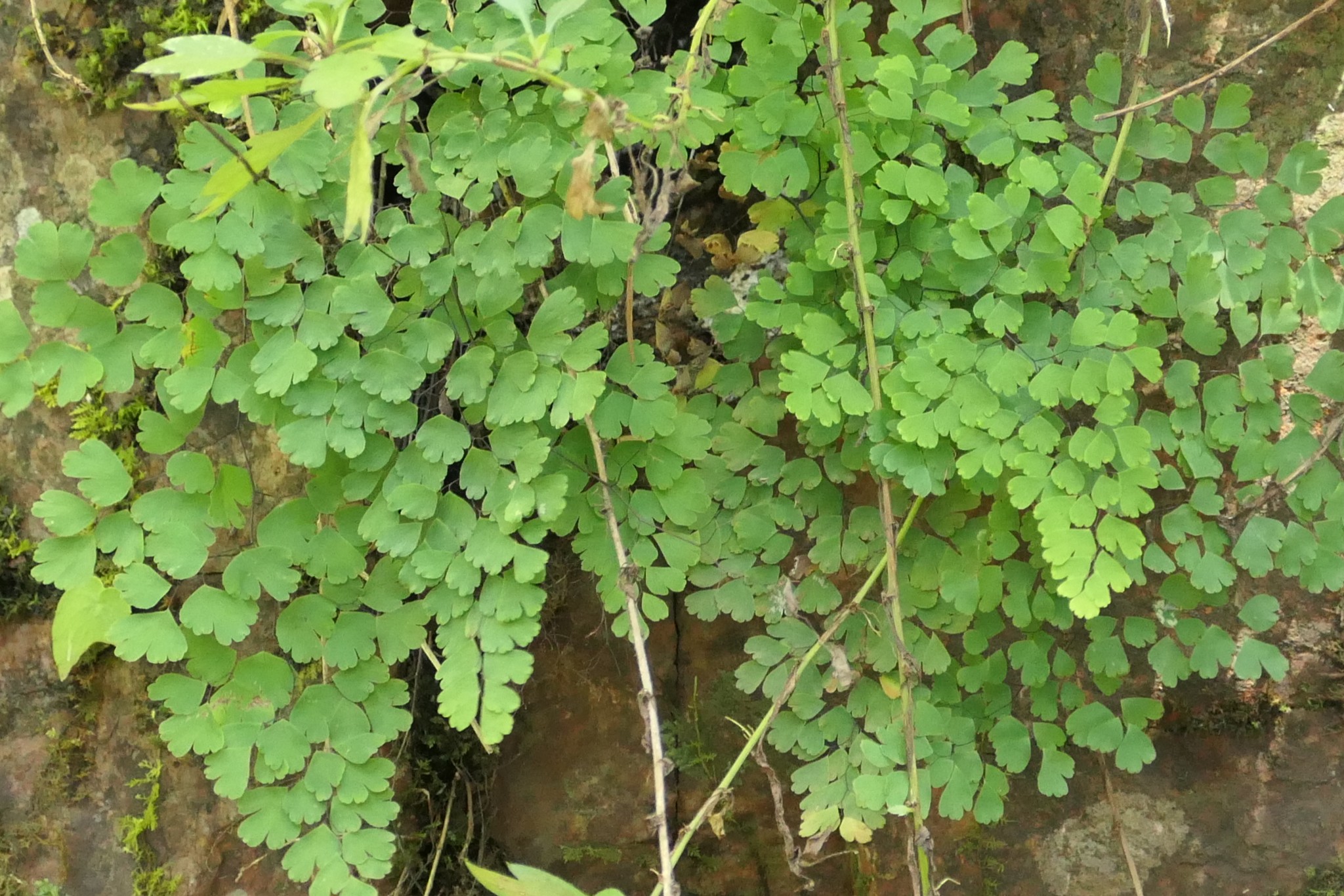
I am hoping that the attached cropped photos will be of some help.
3 images.
Well I can’t see the shape etc. of an individual frond among the mass – and it needs a close-up of a segment base as well. But it is pretty clear it is Ad. tenerum. I think I would have mentioned this species in volume 1 of my Annotated Checklist of Indian Subcontinent Pteridophytes (2016).
.
References:
POWO Catalogue of Life The Plant List Ver.1.1 Tropicos IPNI