
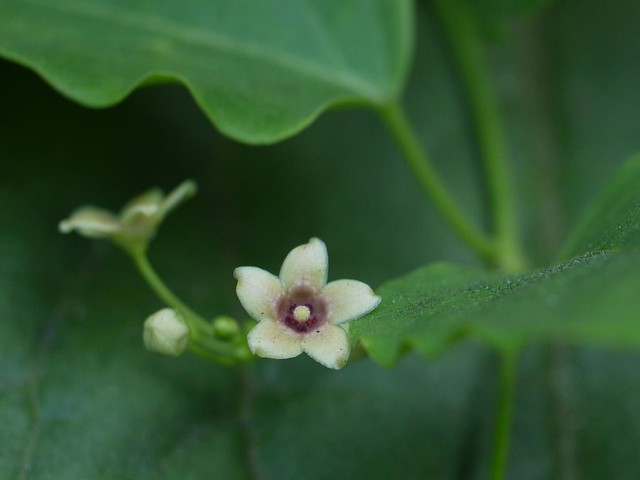
Tylophora pauciflora Wight & Arn., Contr. Bot. India 49 1834. (Syn: Cynanchum bracteatum Thunb.; Cynanchum flavens Thunb.; Tylophora parviflora Wight [Spelling variant]); . vin-kee-TOKS-ih-kum — Latin: vinco (to conquer); toxicum (poison), referring to its supposed ability to provide an antidote to snakebites … Dave’s Botanary brak-tee-AY-tum or brak-tee-AH-toom — having prominent bracts … compiled from the web . commonly known as: few-flowered swallow-wort . . Slender twiners; stem long-twining, glabrous. Leaves opposite, 3.5-7 x 2-4 cm, ovate, truncate or very shallowly cordate at the base, acute and apiculate at the apex, very thin, glabrous on both sides; petiole 1-2.5 cm long. Cymes laxly and dichasially branched, rather few-flowered, glabrous, shorter to longer than the leaves, with a peduncle usually exceeding the petioles. Calyx-lobes 1.5-2 mm long, broadly ovate, glabrous. Corolla greenish white with the centre dark purplish-brown; 0.6-0.7 cm in diameter, the lobes longer than the radius of the united portion. Corona lobes globose, cuspidate at apex. Follicle cylindric, c. 5 cm long. Flowering and fruiting: June-August Shola forests Southern Western Ghats (Endemic) Attributions- Dr. N Sasidharan (Dr. B P Pal Fellow), Kerala Forest Research Institute, Peechi) .
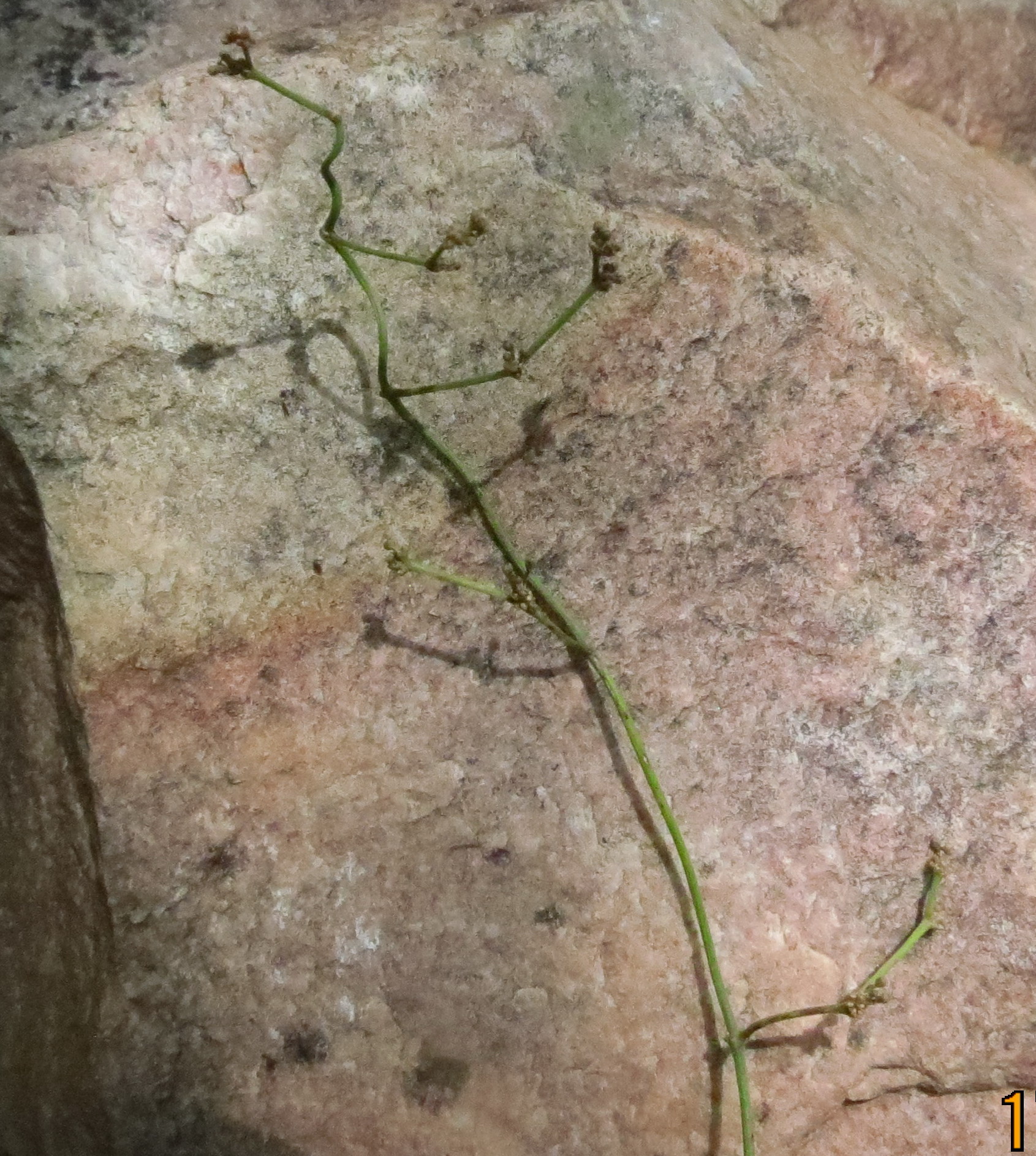
identification of twiner requested : Attachments (4). 5 posts by 3 authors. Thia is a slender twiner found in E.ghats, in small buds stage. The inflorescence is a umbel, from one umbel another arise in scorpioid way, the umbels arise terminally and axillary, they are arranged laxily. the plant is puberulous. probably a member of Asclepiadaceae. leaves 2-3×1-1.5cm, Pease help me in identification of the plant Interesting! It somewhat resembles Tylophora capparidifolia (?) and Pentatropis spiralis (?). A picture of flower and/or fruit should help. It may be Tylophora pauciflora. You may be right, … Thank you,
Agumbe Ghat :: Asclepiad FOR ID :: DVJAN08 : 6 posts by 3 authors. 4 images. Agumbe Ghat (part of Someshwara Wildlife Sanctuary) … Dakshina Kannada, Karnataka Date: 28 DEC 2014 … Altitude: about 600 m asl at crest, about 250 m asl at foothill Please identify this asclepiad. Flower could be just about 8 – 9 mm across. Aspects are better illustrated by … in his post … ANJAN13/13. And his observation: Exudate is not milky, but watery. … Asclepiad FOR ID … (family: Apocynaceae) Please check the discussion in Anurag Ji’s post and give your view. Yes …, will put cropped version of one of my posted photos, here as well as in … post – perhaps it may help in understanding the central structure, though the crop of original is not much good quality … 1 image. pasting the cropped photo once again – not sure whether visible in thread above … 1 image. Thank you … I very much would like to hear from South…and … Further feedback in another thread The posted plant must be Tylophora pauciflora Wight & Arn. … now treated as synonym of Vincetoxicum bracteatum (Thunb.) Meve & Liede Many thanks to … – he had suggested this ID in first place in Anurag’s post. I have posted this observation in iNaturalist, where my friend Siddarth Machado has same thought about the ID.    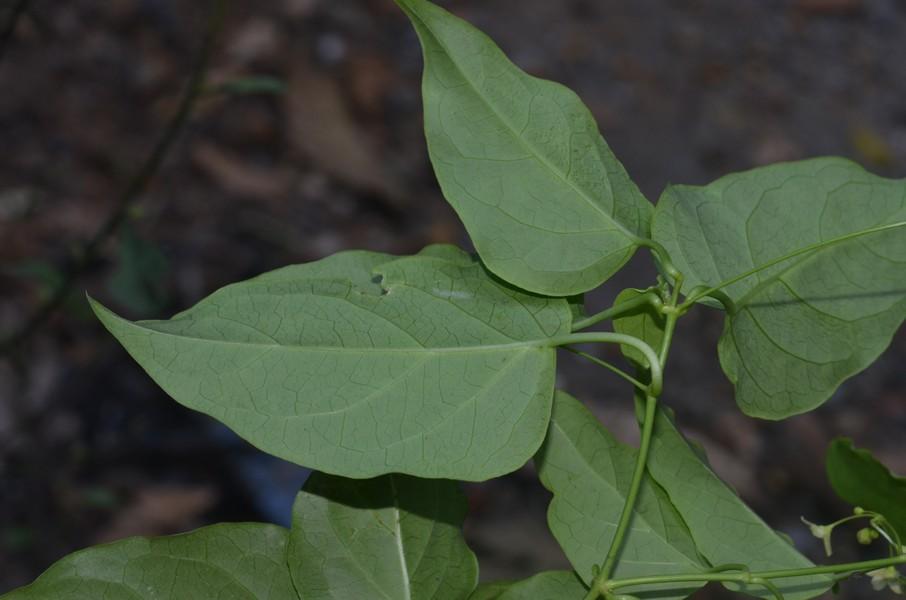   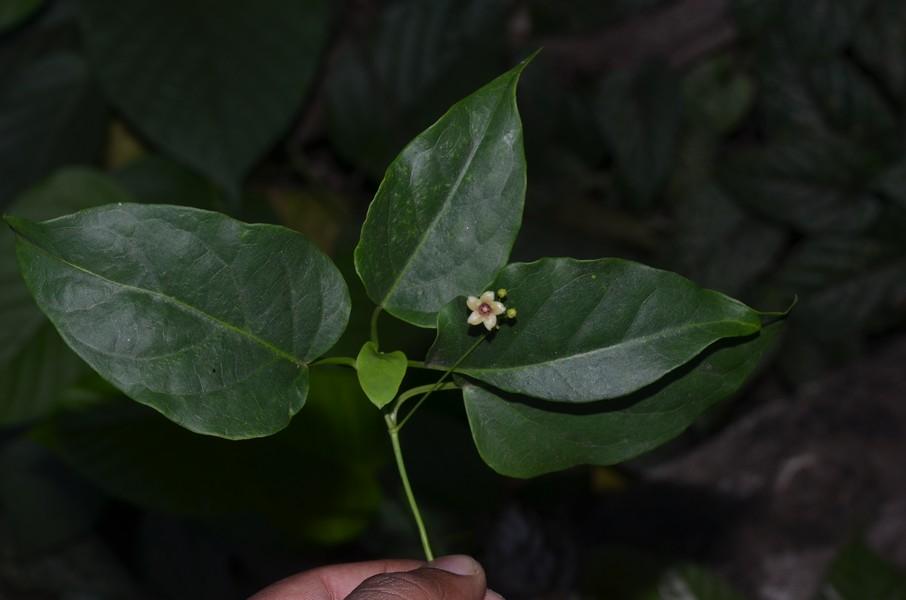  ANJAN13/13 Asclepiad/Apocynad vine for identification : 19 posts by 6 authors. Attachments (8) Date: 28th December 2014 Tylophora? Tylophora species in eFloraofindia (with details/ keys from published papers/ regional floras/ FRLHT/ FOI/ Biotik/ efloras/ books etc., where ever available) The plant uploaded seems to Tylophora indica This is very complicated as can be seen that the thread remains unanswered even when we have a number of very strong members from South who would leave no stone unturned to try to identify it. Also there are members who rely on their experience more than they rely on literatures! Three KEW herbarium is all I could find, besides the Icones illustration; FBI is of little help, check with your regional flora literature for any probability.
Thank you I looked it up sir and I agree with your identification. The distribution shows it as being found in Shimoga district in which this place is located. As for the other genera+ species which could also be similar, in particular the Heterostemma tanjorense has a much smaller peduncle while the Kew herbarium links that you provided show the length of the peduncle to be similar to the climber I have photographed. Yes, …, these are the points based on which I suggested the ID – Thanks … for deep diving … I would go with Tylophora pauciflora. Not sure whether the embedded image is visible; therefore pasting once again here … 1 image. …, yes. I too was thinking along those lines.. I have attached some more photos. Thank you. I thank you very much …, for your wonderful detail uploads. I can only say in college we had to dissect and show nerves of even cockroach or earthworm. Those were much easier than these botany things! Thank you too sir. I wish I could either agree or disagree. Unfortunately for us, all dissections are banned and if conducted, must be done so secretly.. Yes, …, I have read about this ban in newspaper. I wonder how many colleges do have the facility of computer simulation technology to facilitate its students practice their dissecting skills. True, sir. How many colleges can afford it even. Thanks … All for the love of nature and flora of our country !! Yes, I agree, and after all these years of no lab-work I have forgot everything! . Tylophora pauciflora Wight & Arn.: . Names of Plants in India :: Vincetoxicum bracteatum (Thunb.) Meve & Liede: 1 image. vin-kee-TOKS-ih-kum — Latin: vinco (to conquer); toxicum (poison), referring to its supposed ability to provide an antidote to snakebites … Dave’s Botanary brak-tee-AY-tum or brak-tee-AH-toom — having prominent bracts … compiled from the web commonly known as: few-flowered swallow-wort known for / parts made use of: the leaves, the roots … compiled from the web botanical names: Vincetoxicum bracteatum (Thunb.) Meve & Liede … homotypic synonyms: Cynanchum bracteatum Thunb. … heterotypic synonyms: Tylophora parviflora Wight • Tylophora pauciflora Wight & Arn. … and more at POWO, retrieved October 30, 2026 Bibliography / etymology / notes Links listed as references in the notes below, may not remain valid permanently. Portals / websites have a tendency to re-organize / revise their content, leading to change in URLs of pages in their site. Some sites may even close down at their own will. The bits about the languages of India mentioned below are merely some bare facts gathered from the internet; just enough to satisfy curiosity about “where” could the listed names be best prevalent in India. All English transliterated names to be taken sensu amplo. ~~~~~ ENGLISH ~~~~~ written and spoken widely, in most parts of India few-flowered swallow-wort
VERNACULAR OBSCURITY Vincetoxicum bracteatum is an exceptionally obscure, under-documented species. Because it was only recently moved to the genus Vincetoxicum in 2018, most historical Indian field data and regional records list it under its older synonyms — most notably Tylophora pauciflora Wight & Arn. Even under its older names, finding standardized, hyper-local vernacular names across Indian states is challenging because the plant is rarely referenced in mainstream ethnobotanical texts. … compiled from the web. ~~~~~ KNOWN DISTRIBUTION in INDIA ~~~~~ Andhra Pradesh, Karnataka, Kerala, Odisha, Tamil Nadu, West Bengal; non-endemic to India, known to be distributed outside India.
~~~~~ Created on: 13:14 30-10-2026 ¦ Last updated: 16:13 30-10-2026 (DD-MM-YYYY) ~~~~~ Names compiled / updated at https://dineshvalke.blogspot.com/2026/10/vincetoxicum-bracteatum-thunb-meve-liede.html
. References: |
Tylophora pauciflora





Updated on November 9, 2026