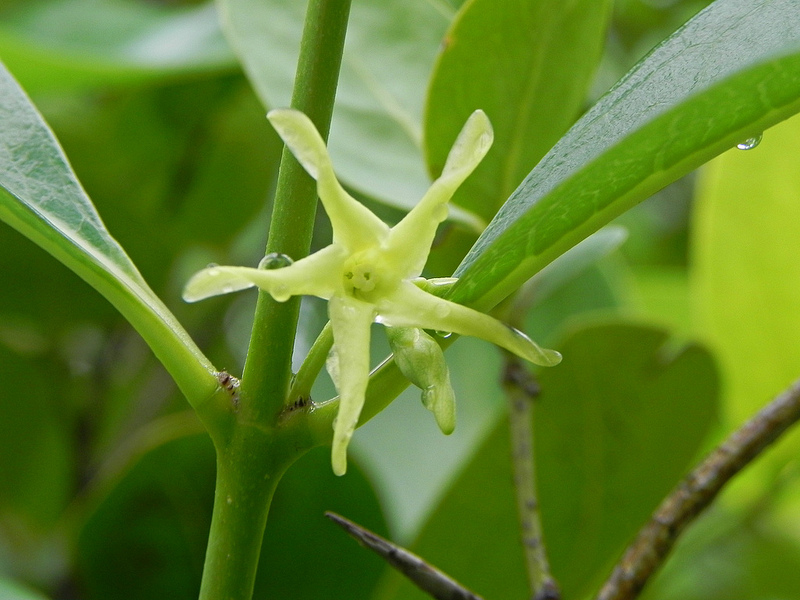
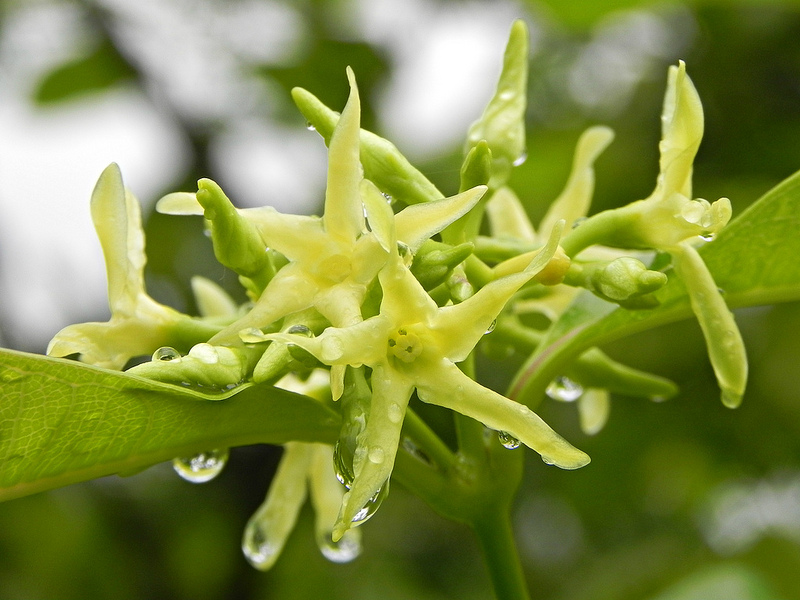
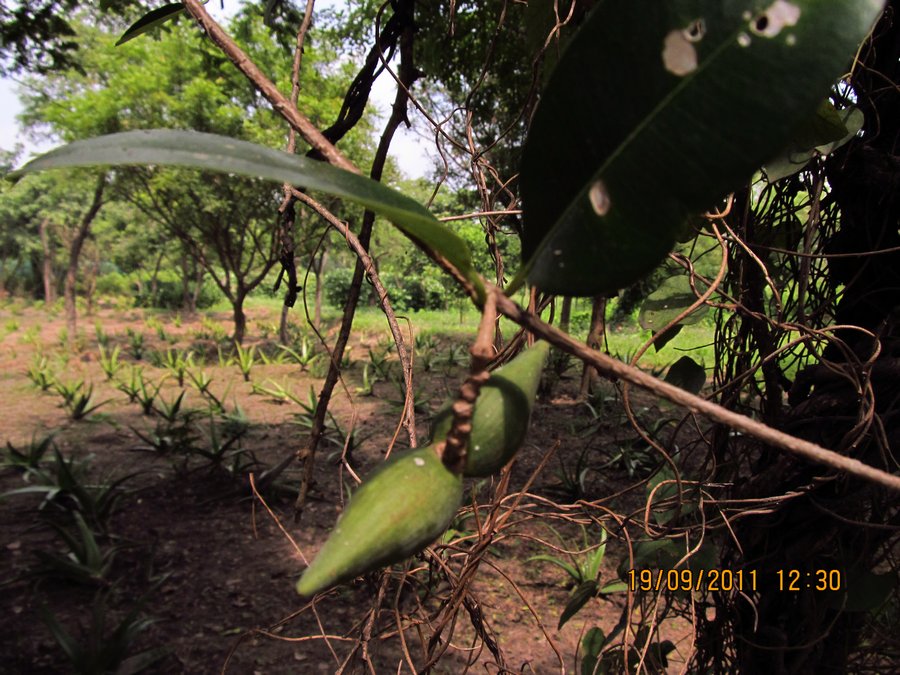
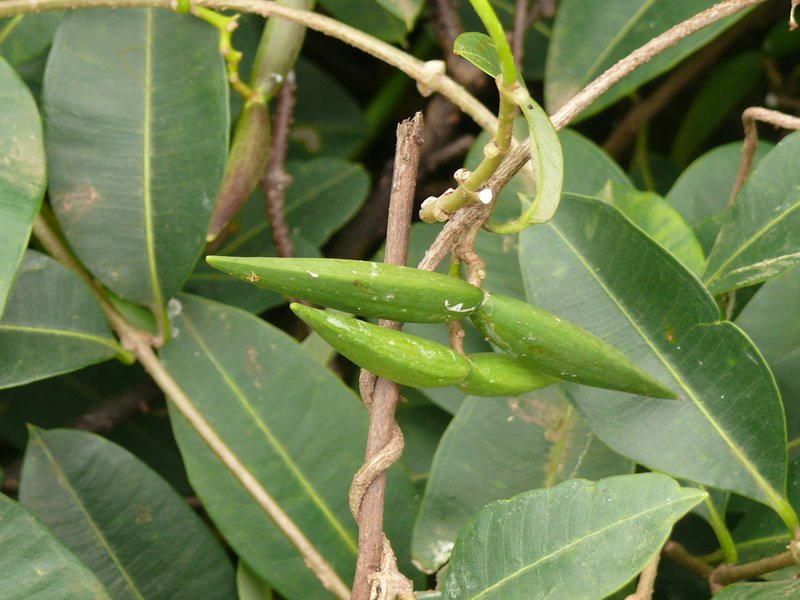
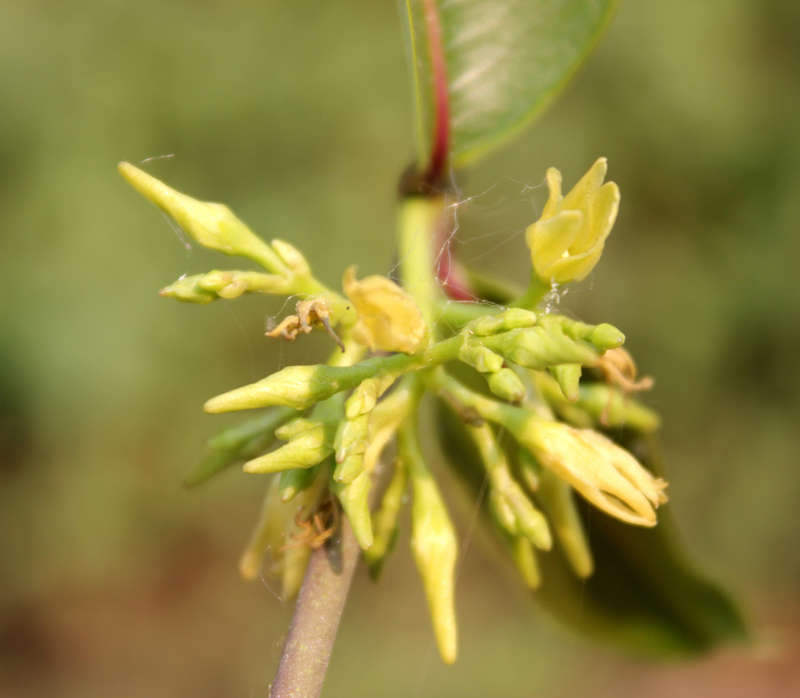
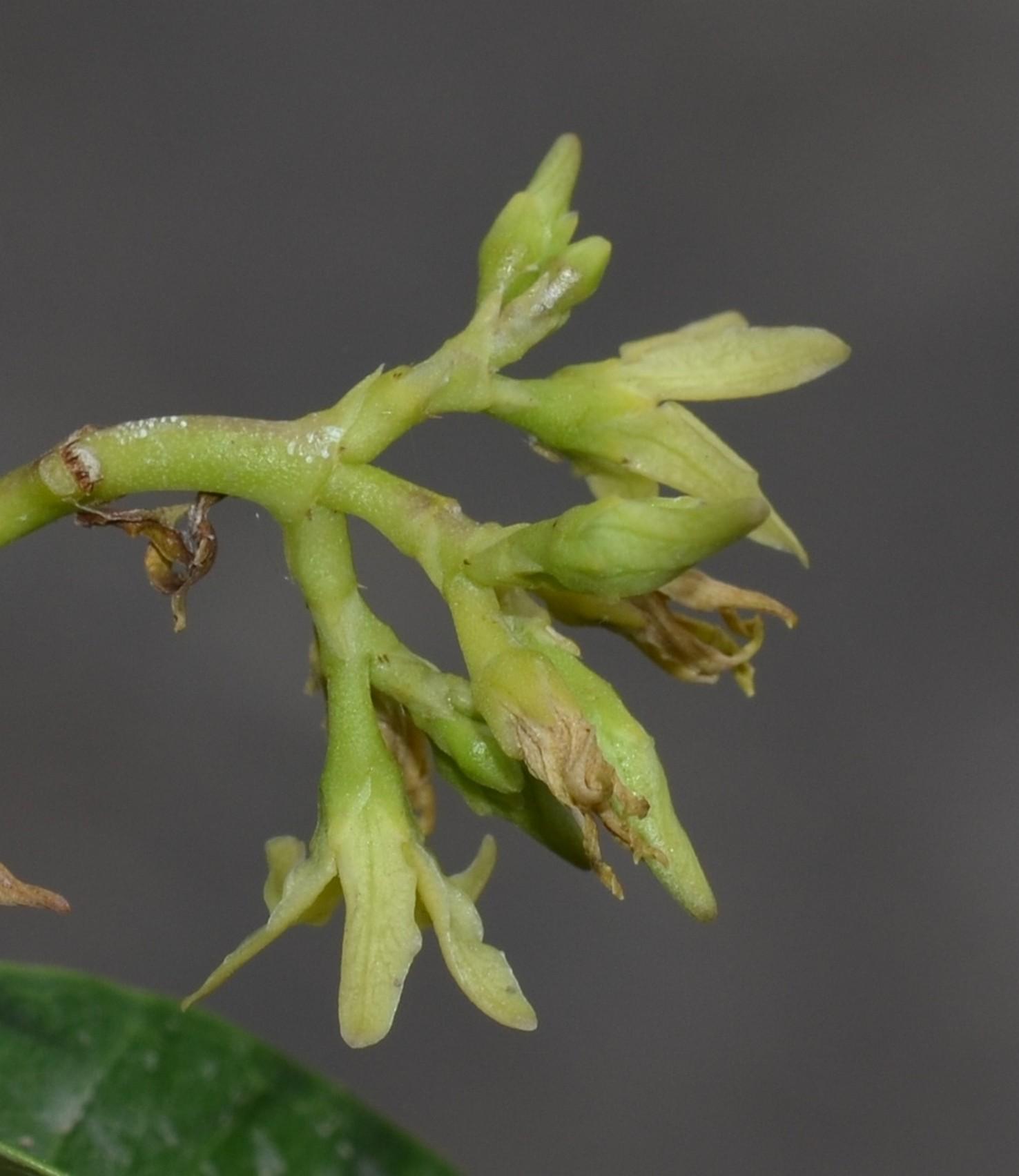
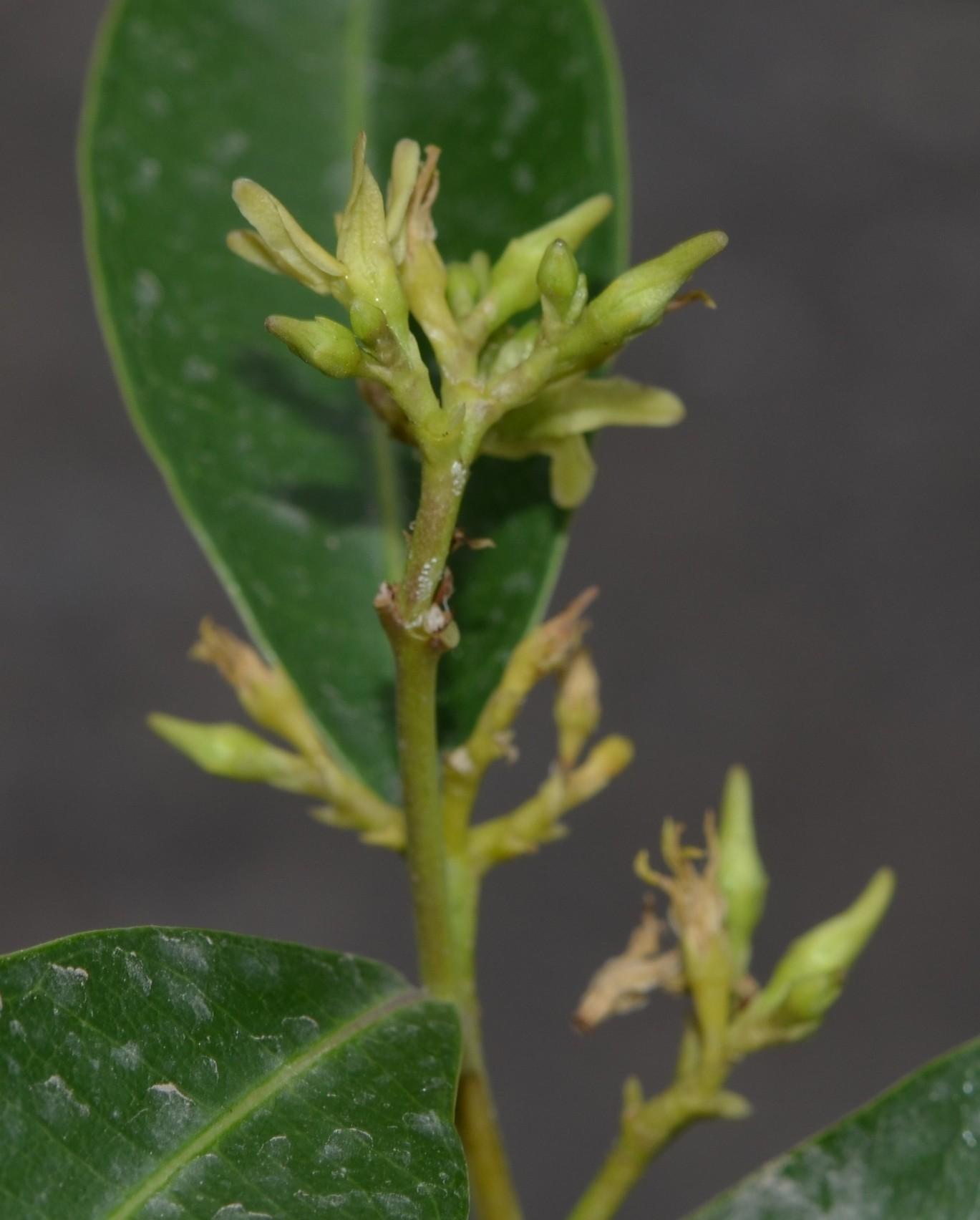
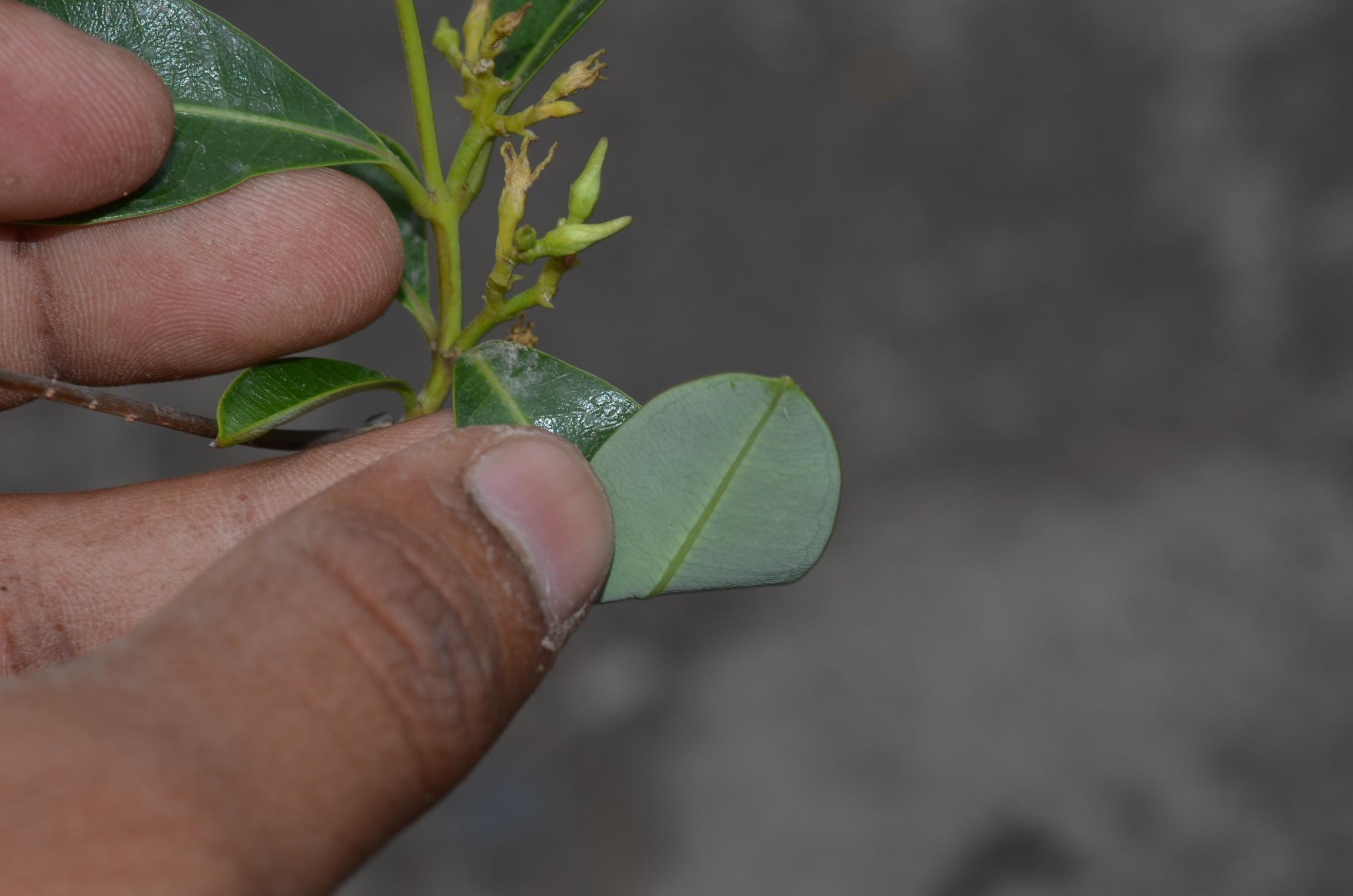
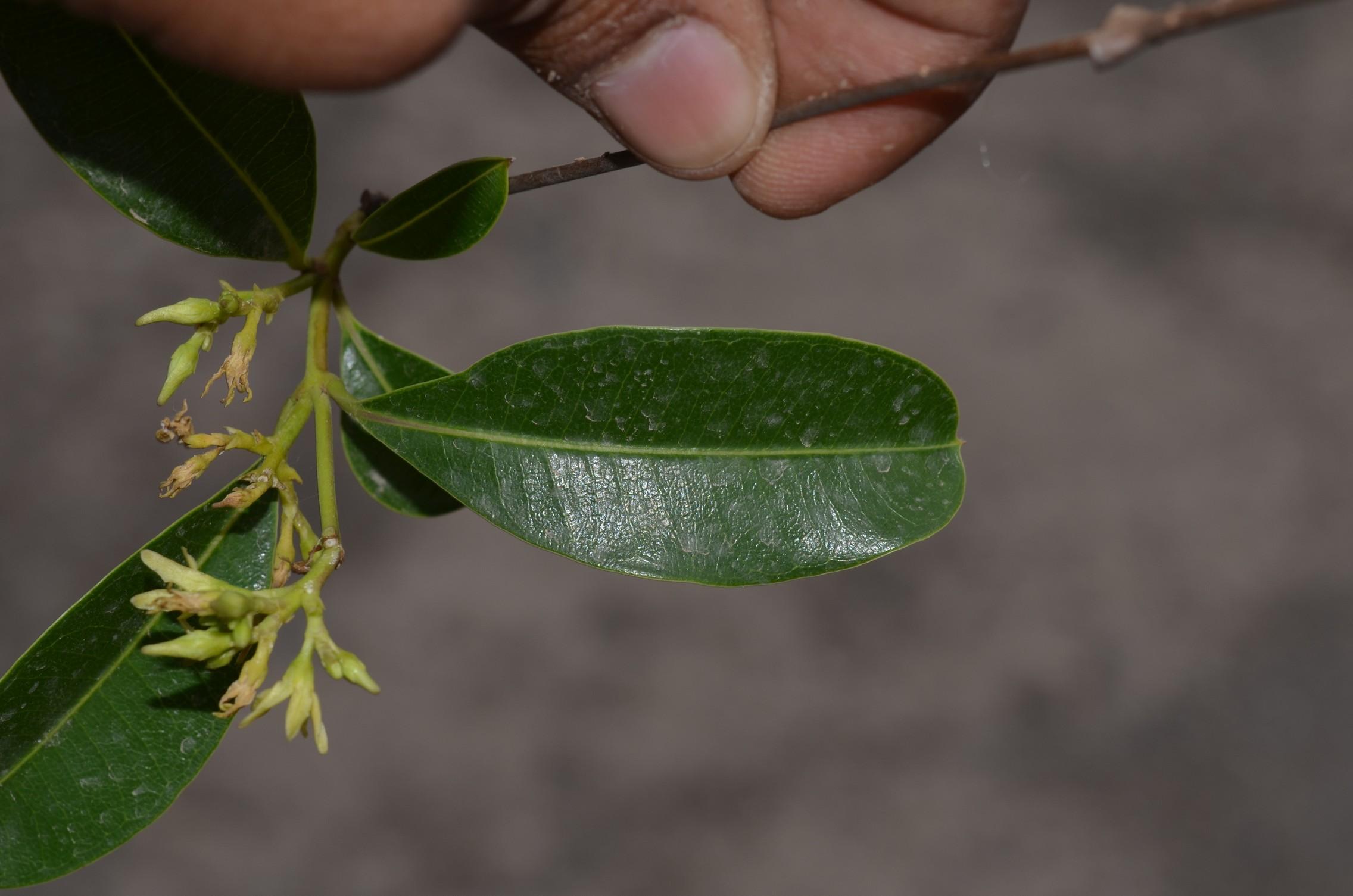
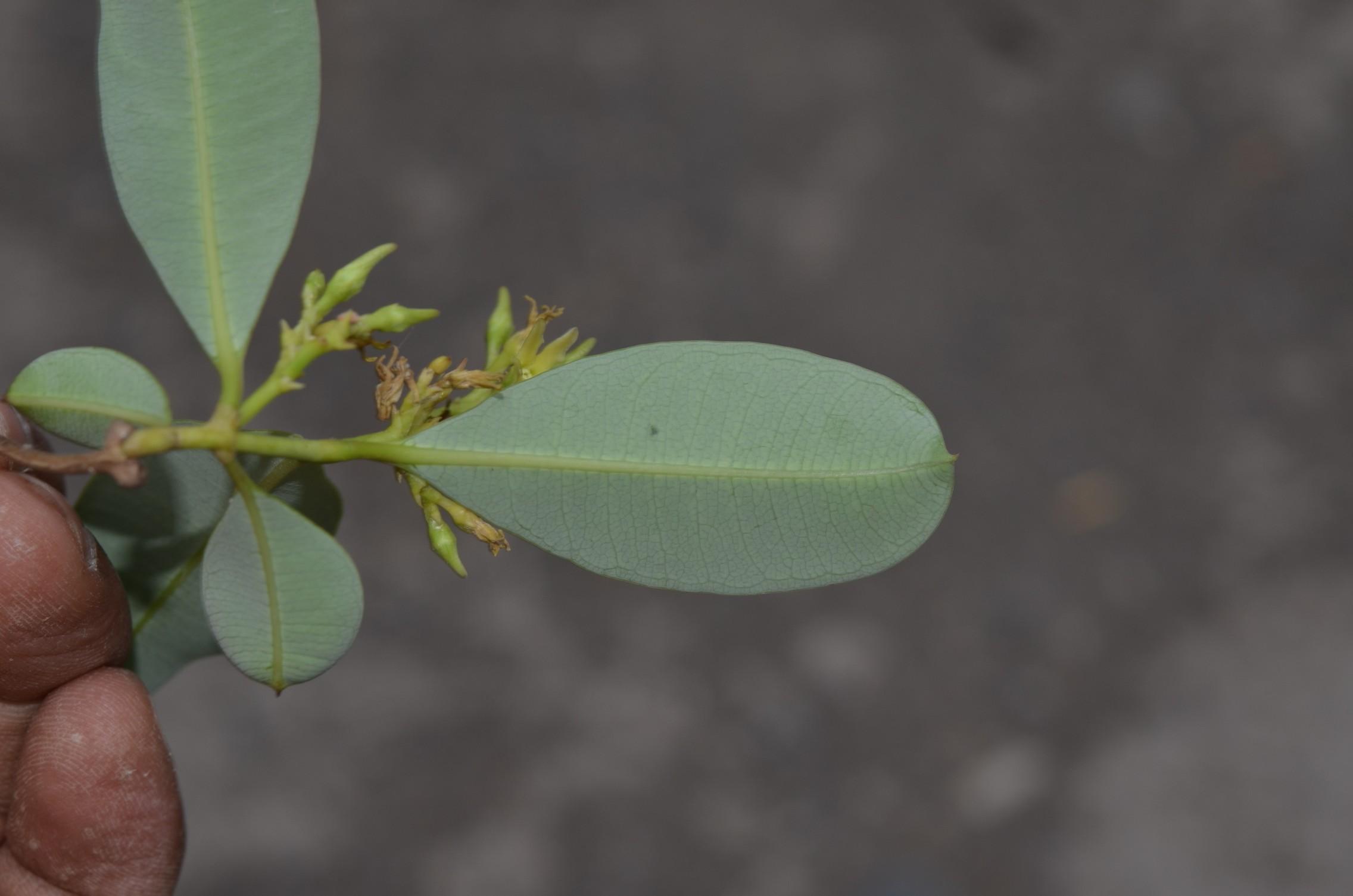
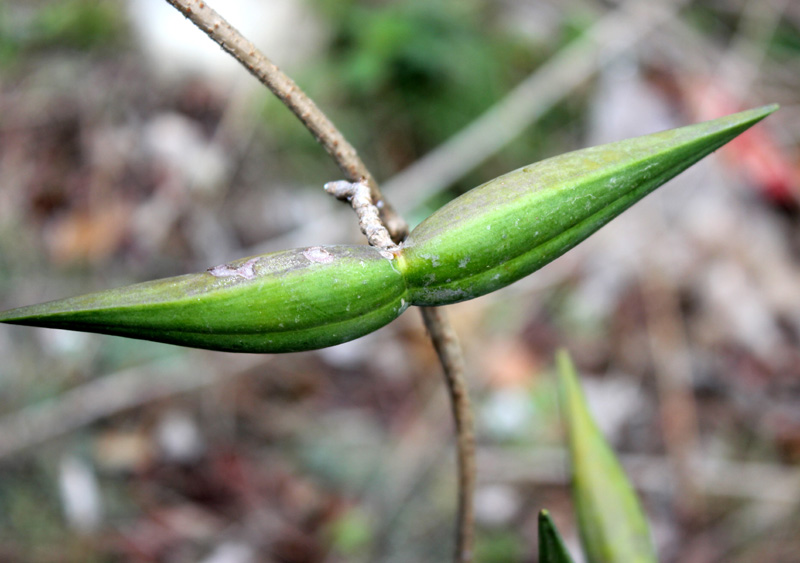
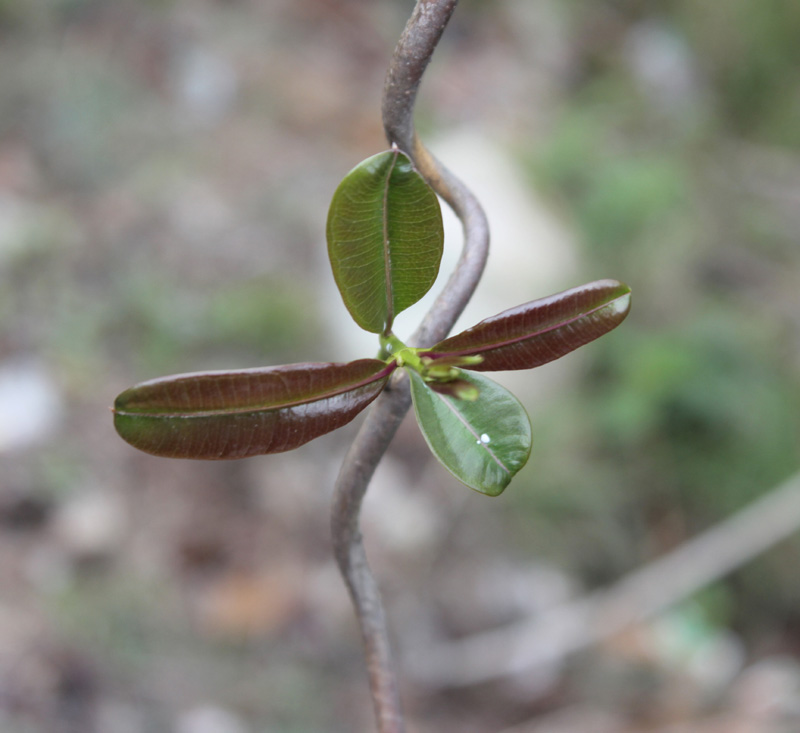
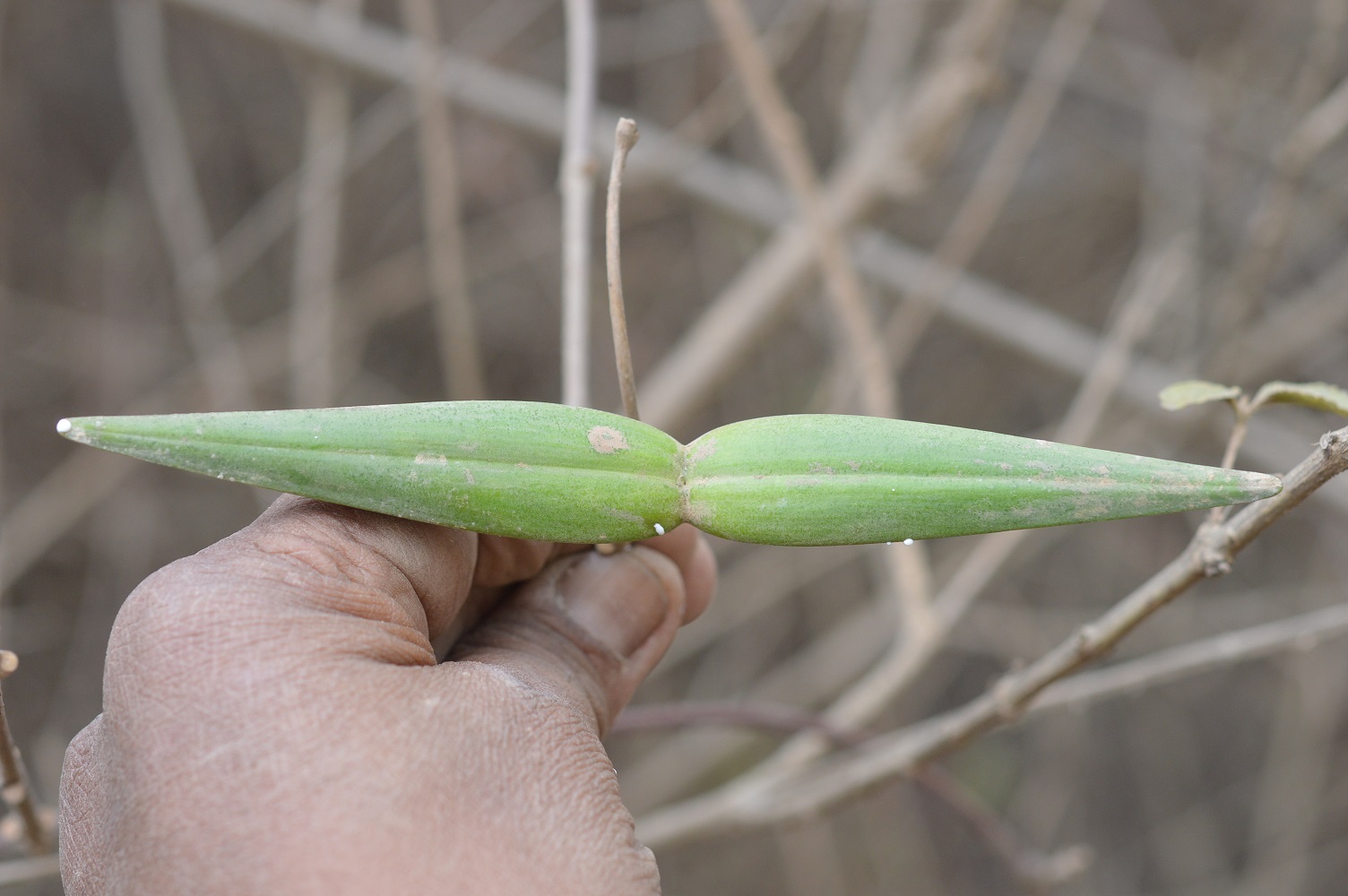
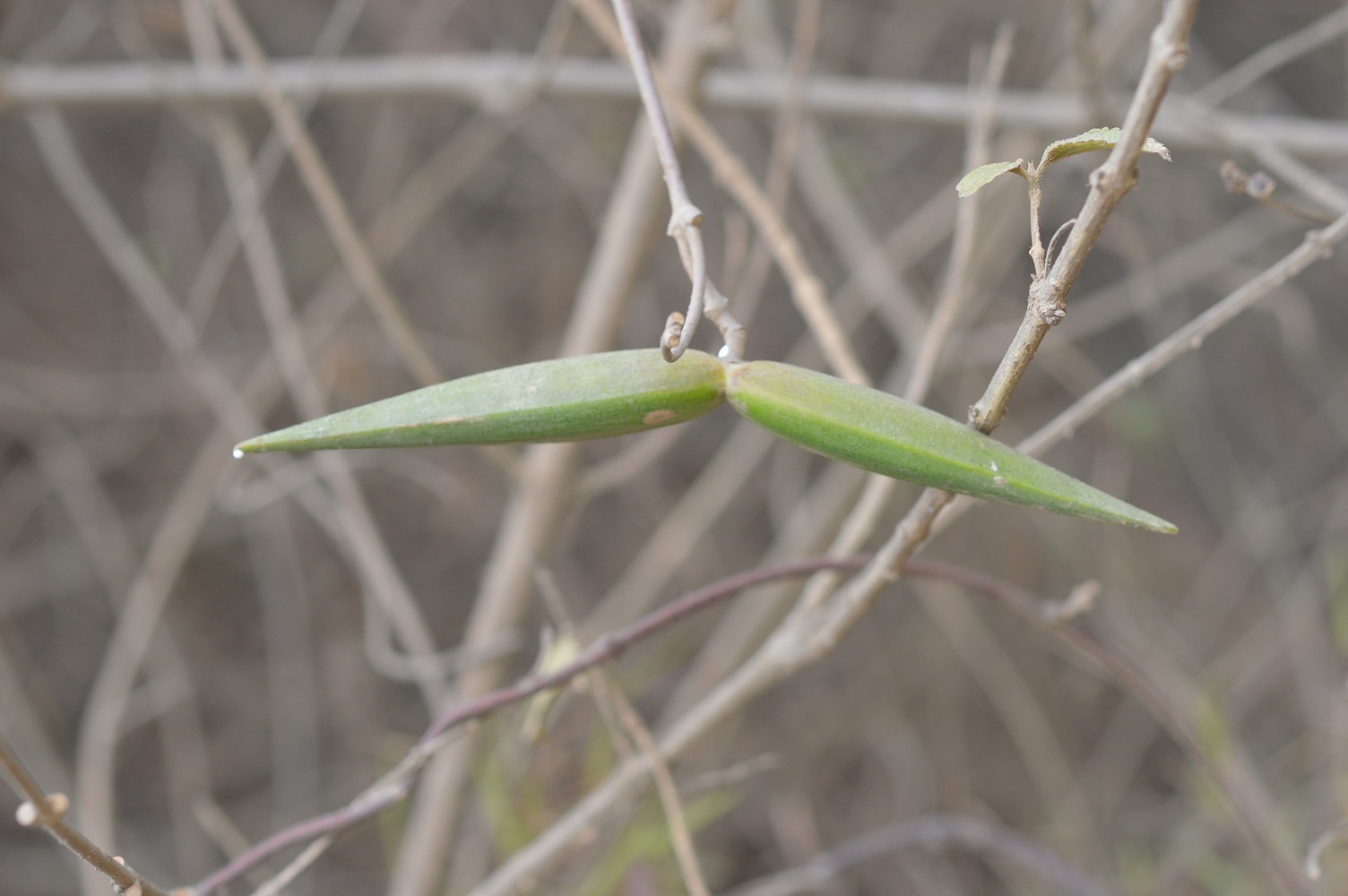
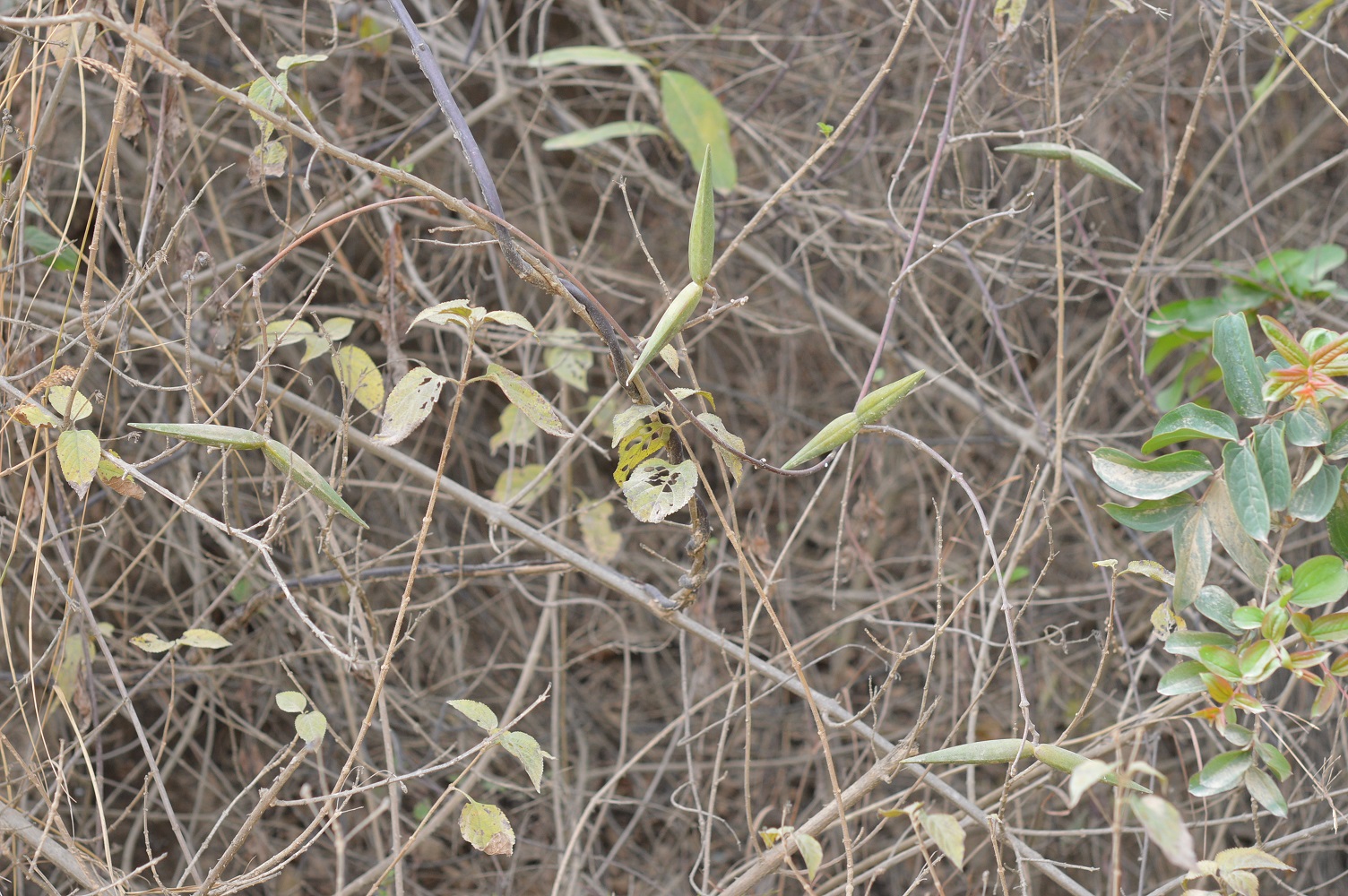
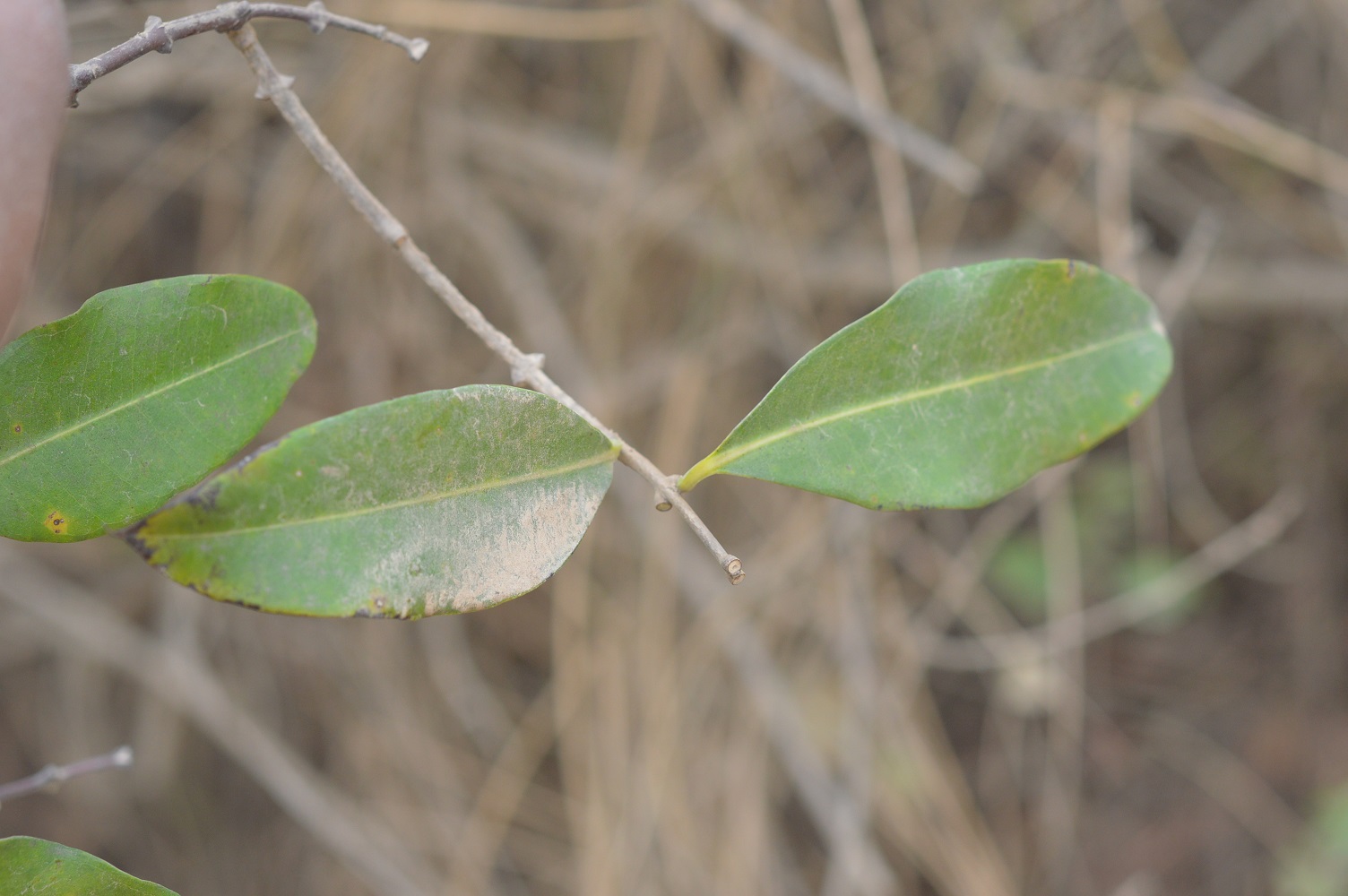
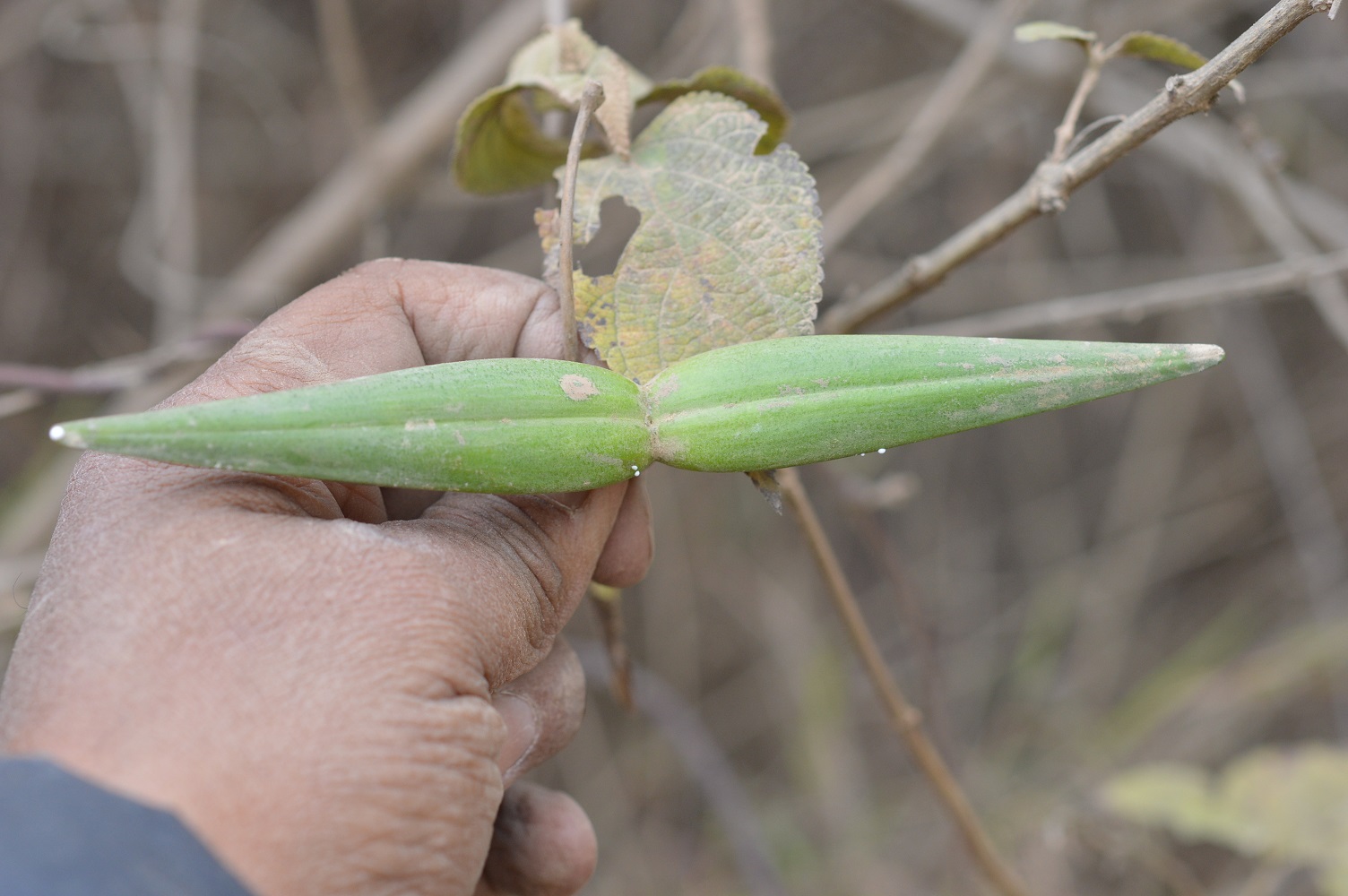
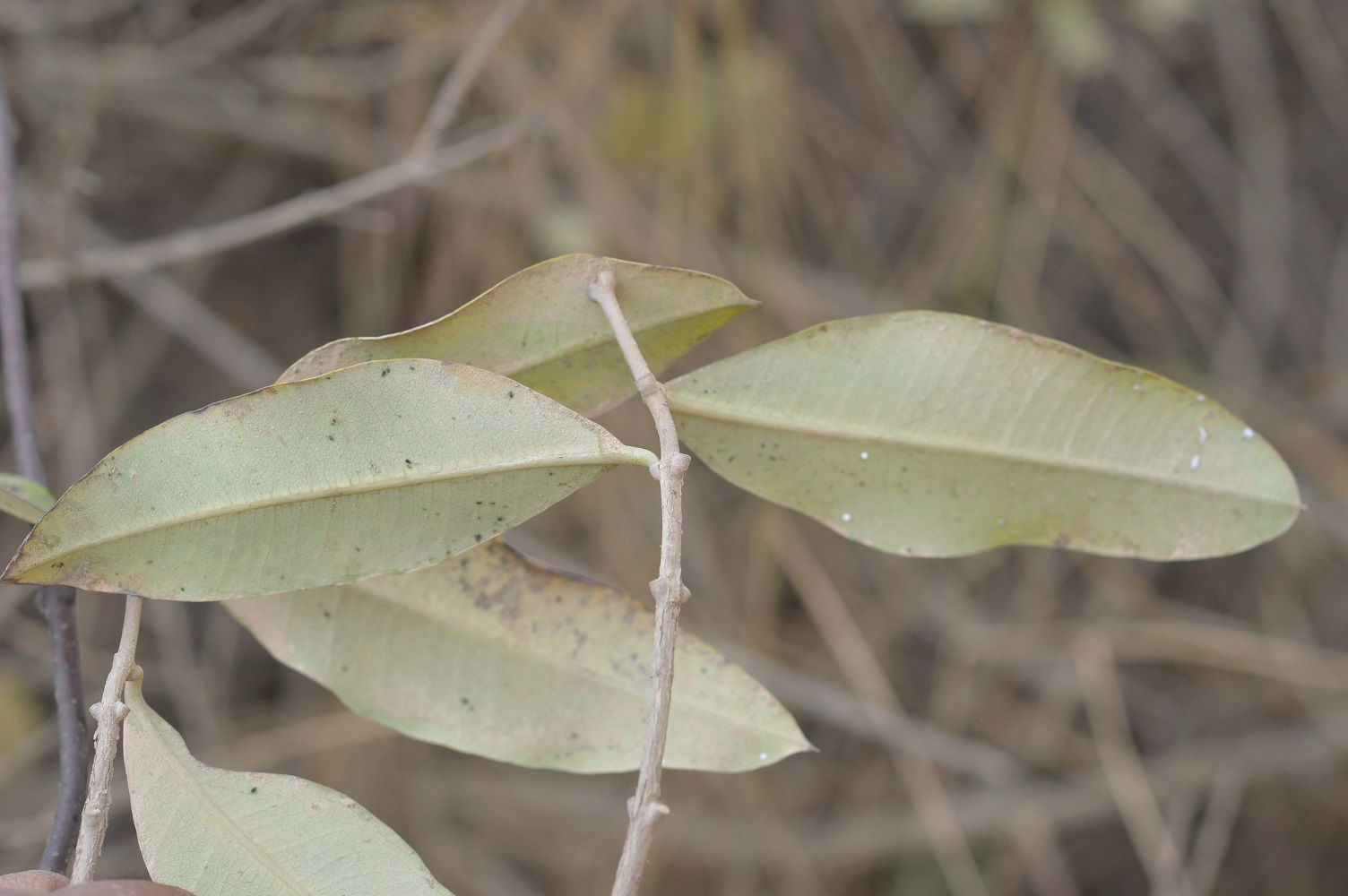
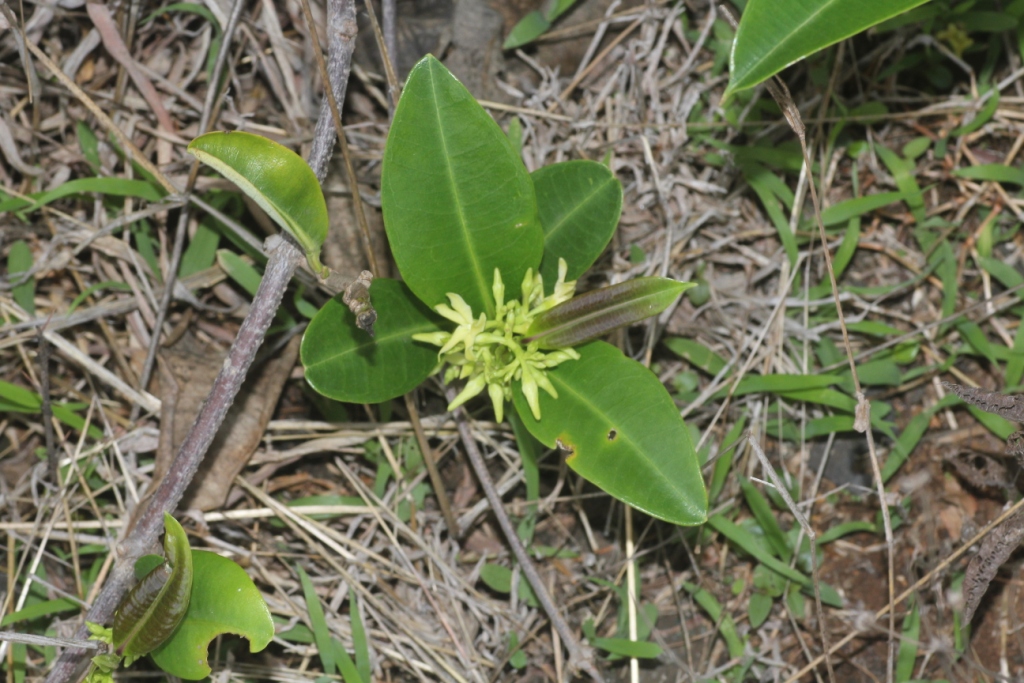
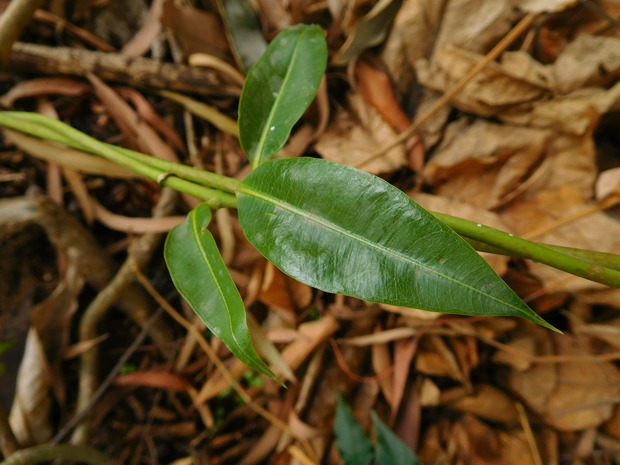
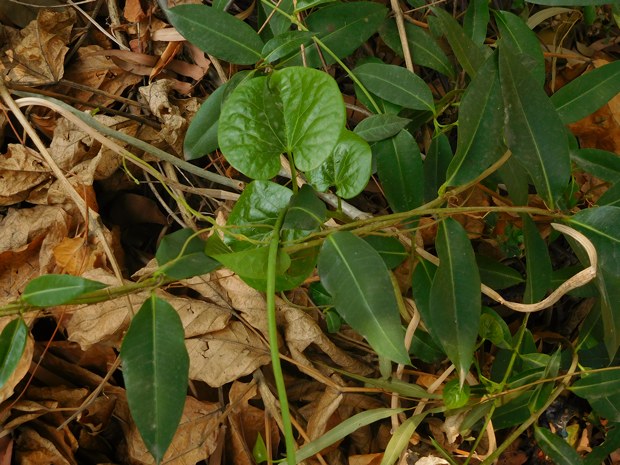
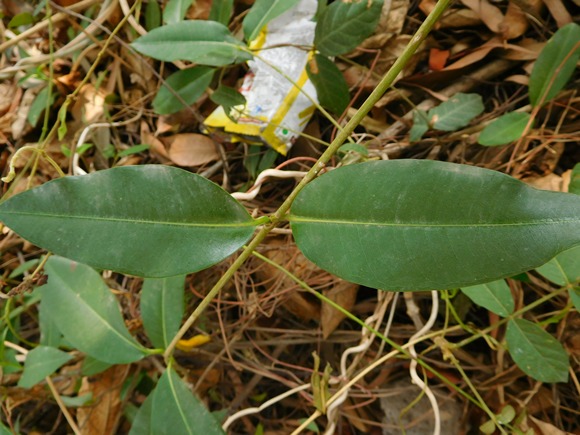
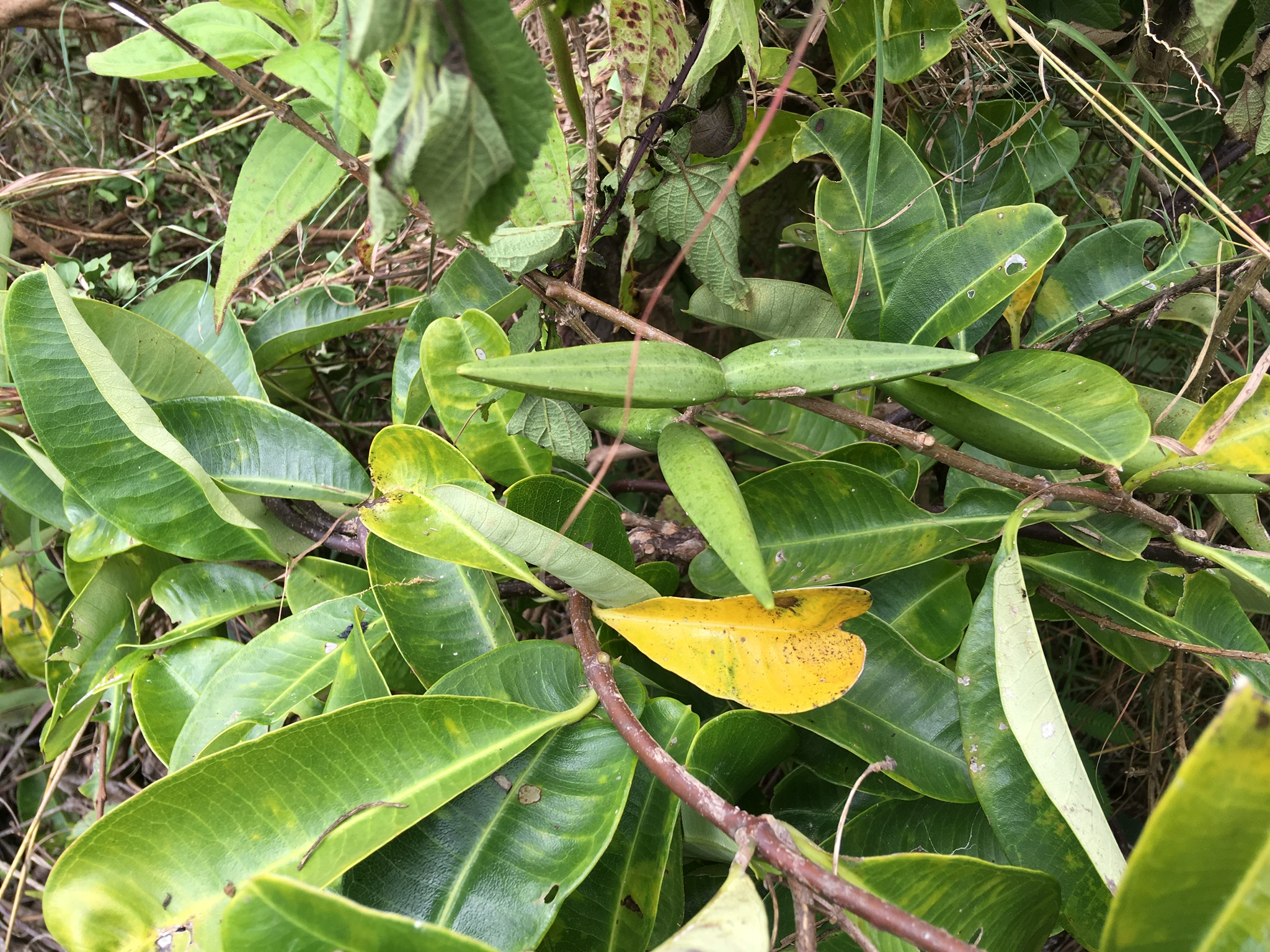
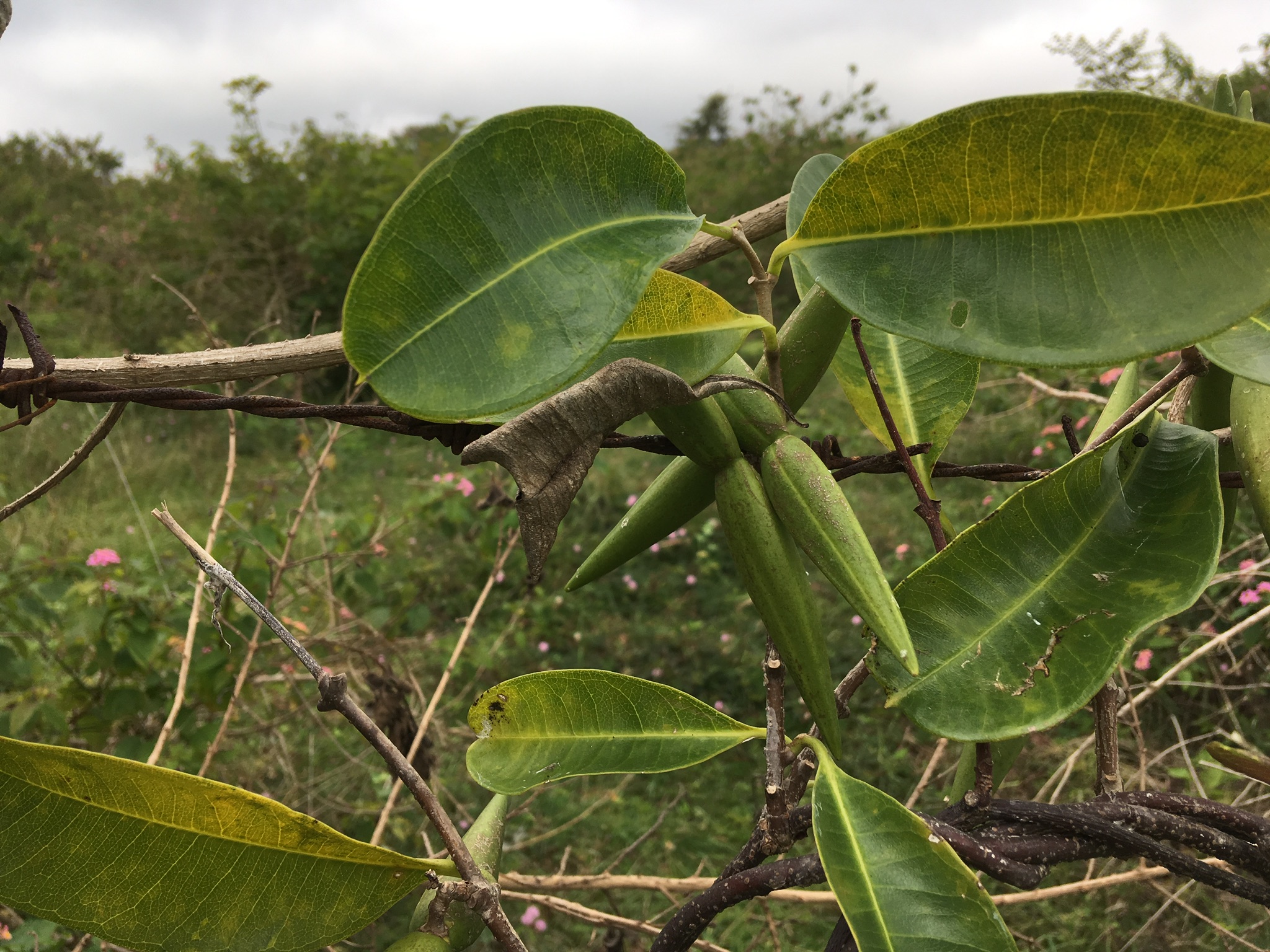
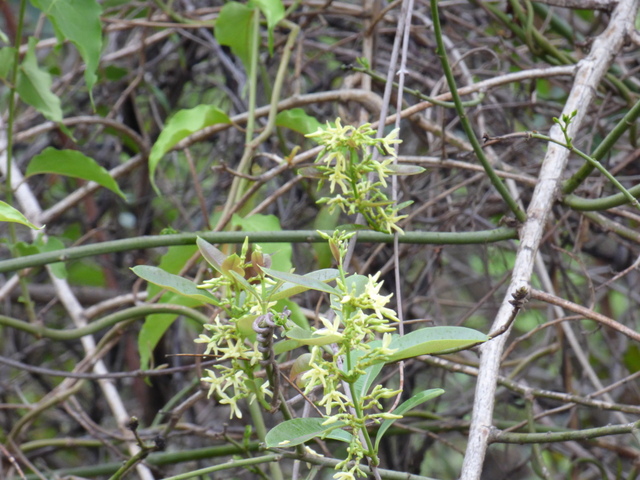
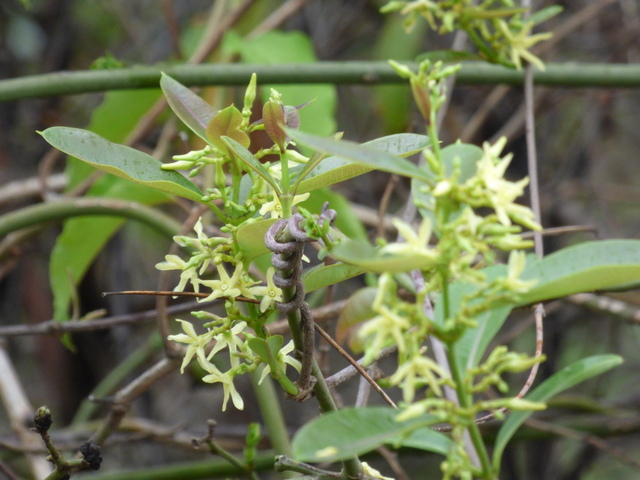
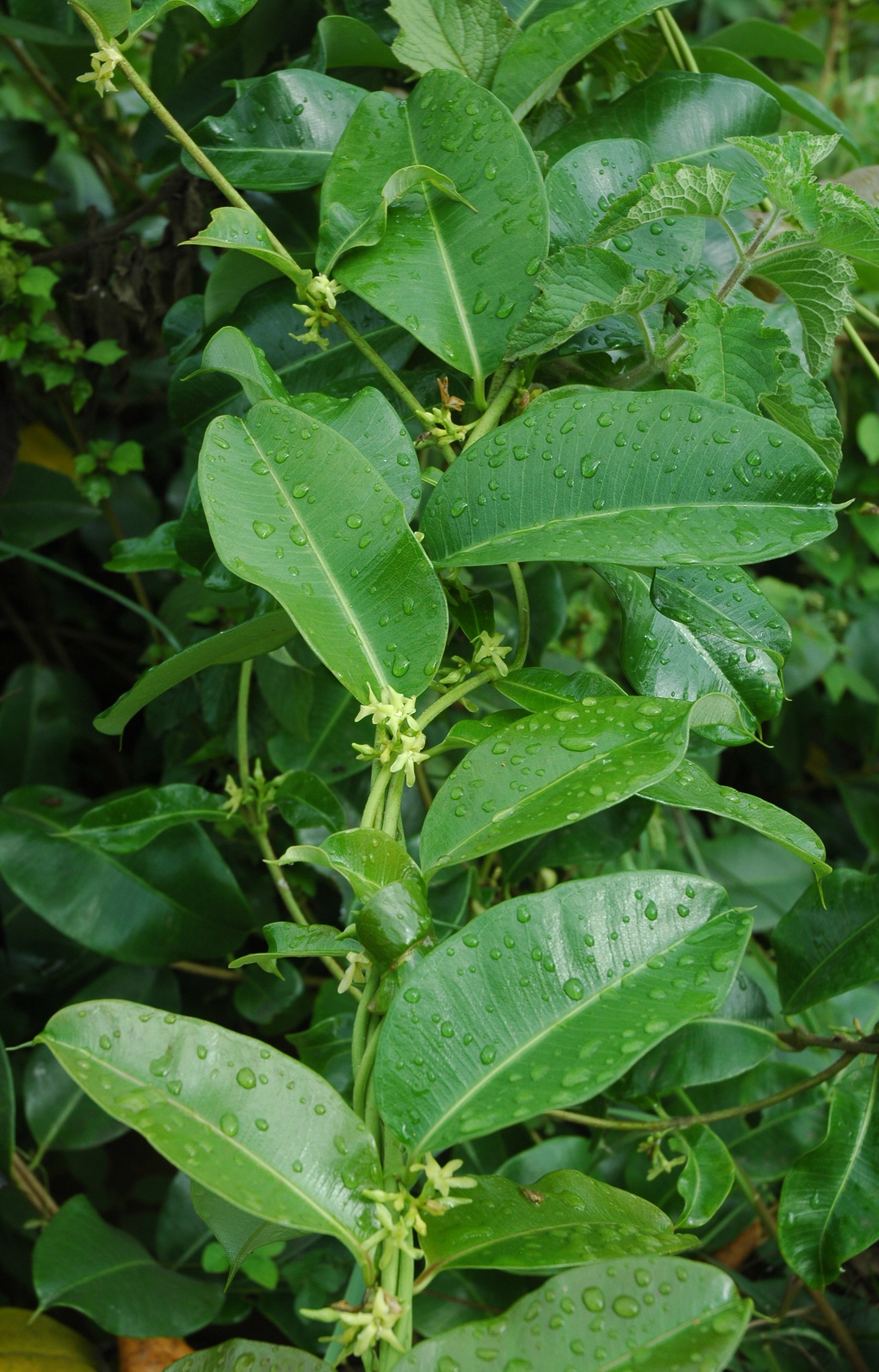
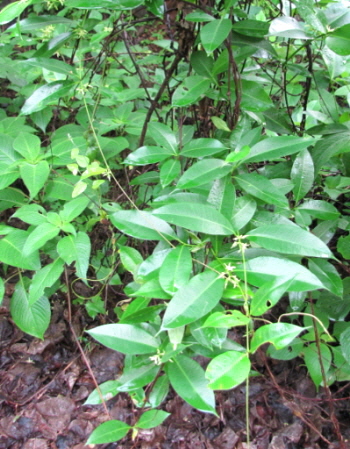
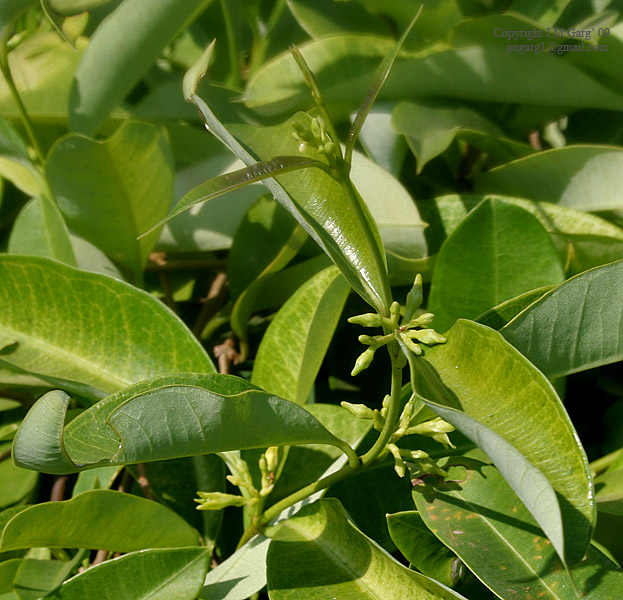
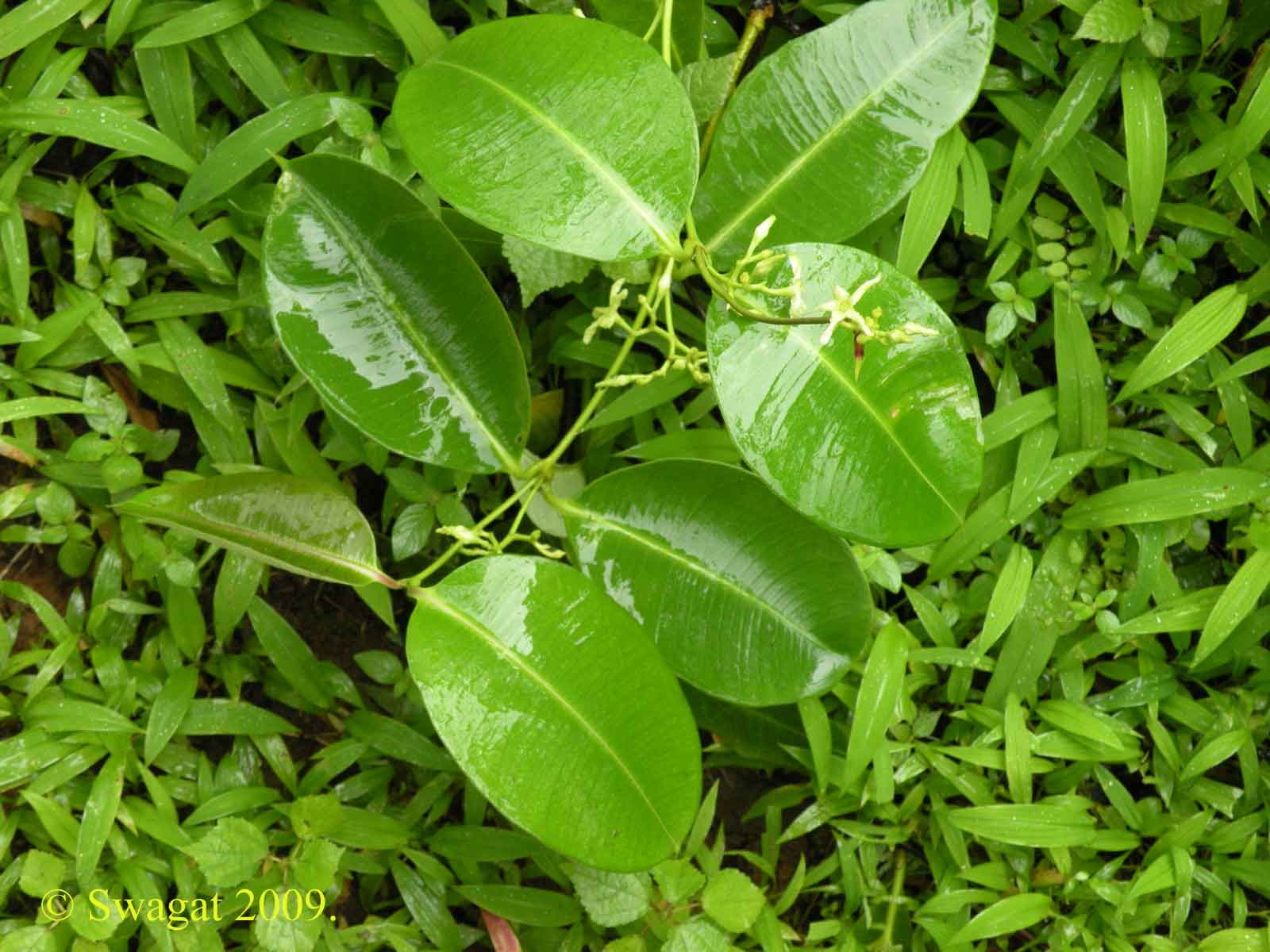
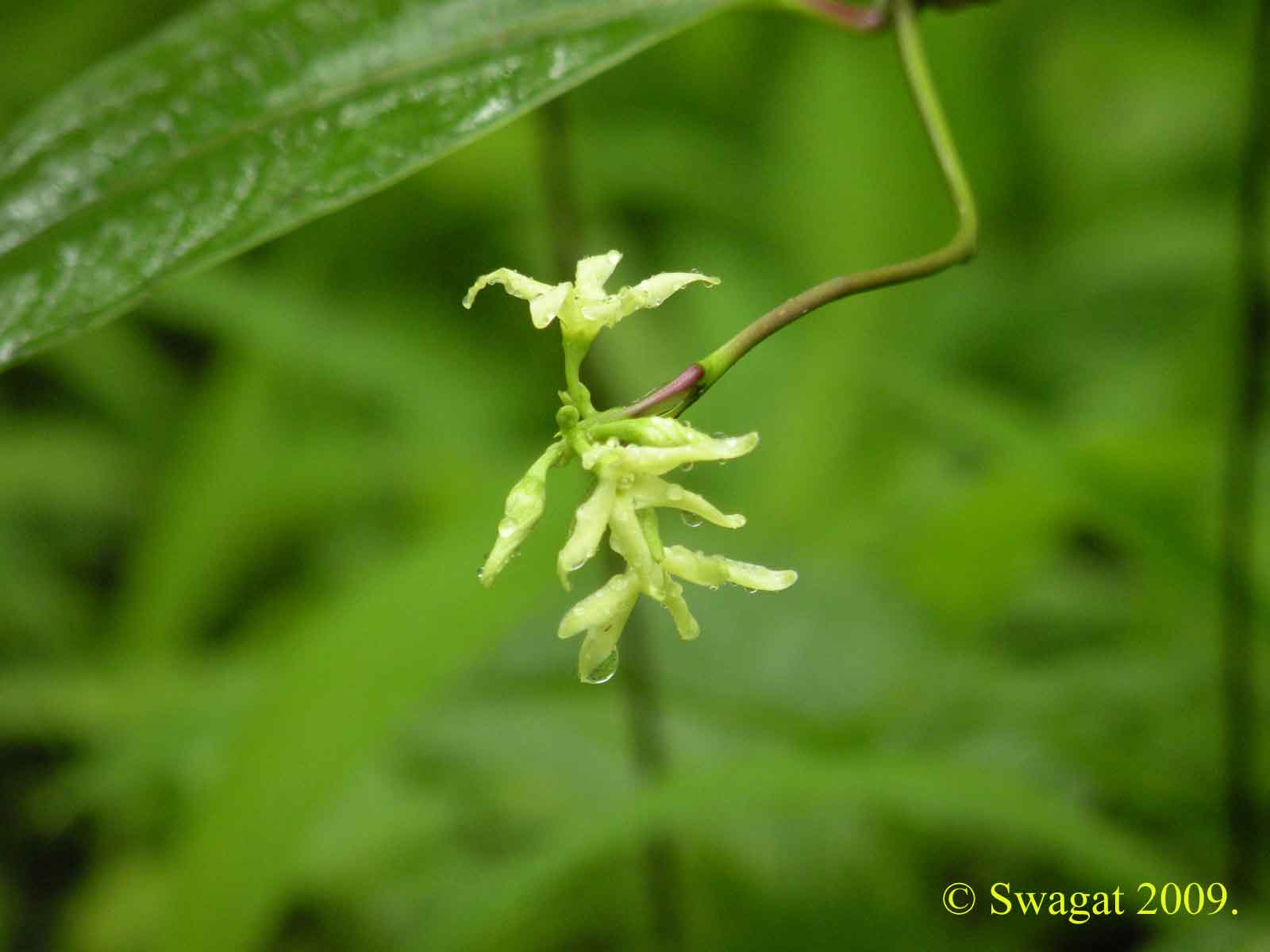
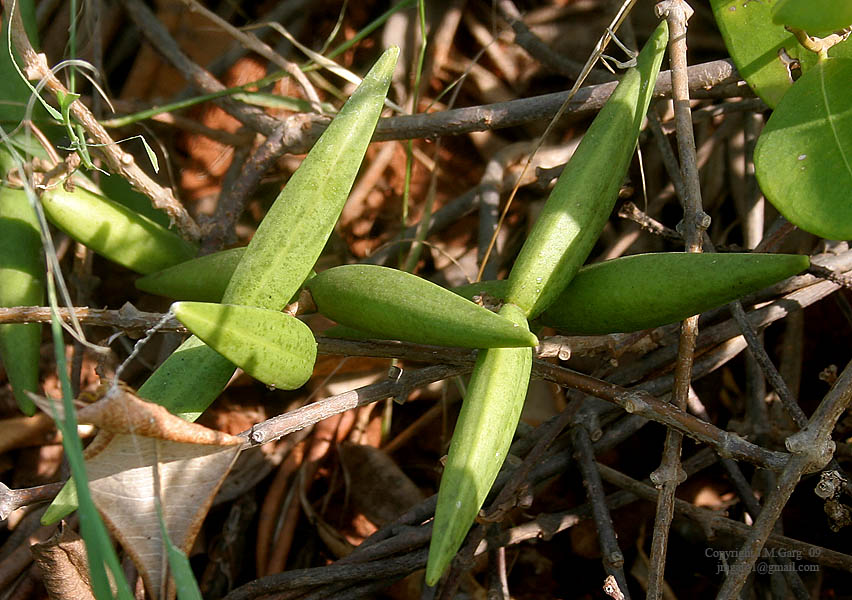
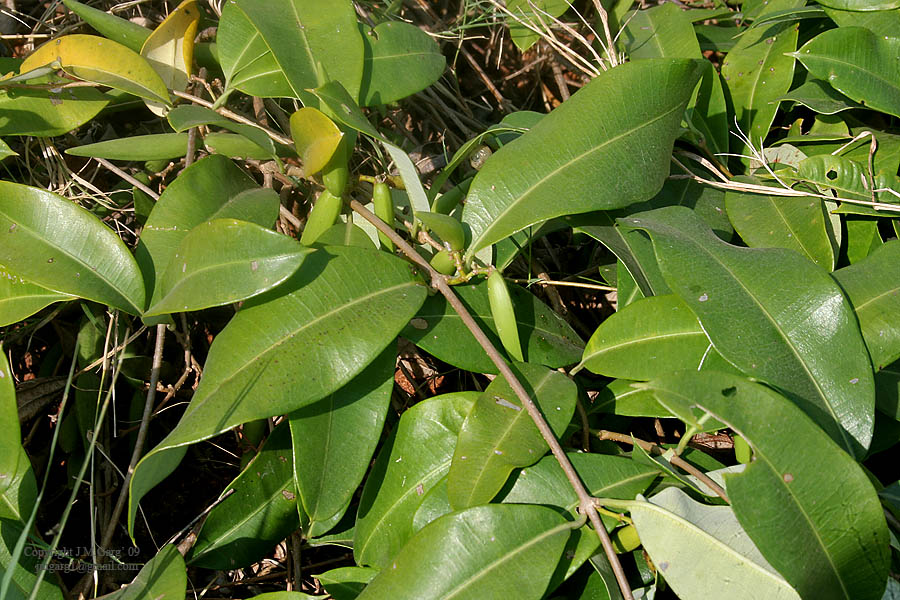
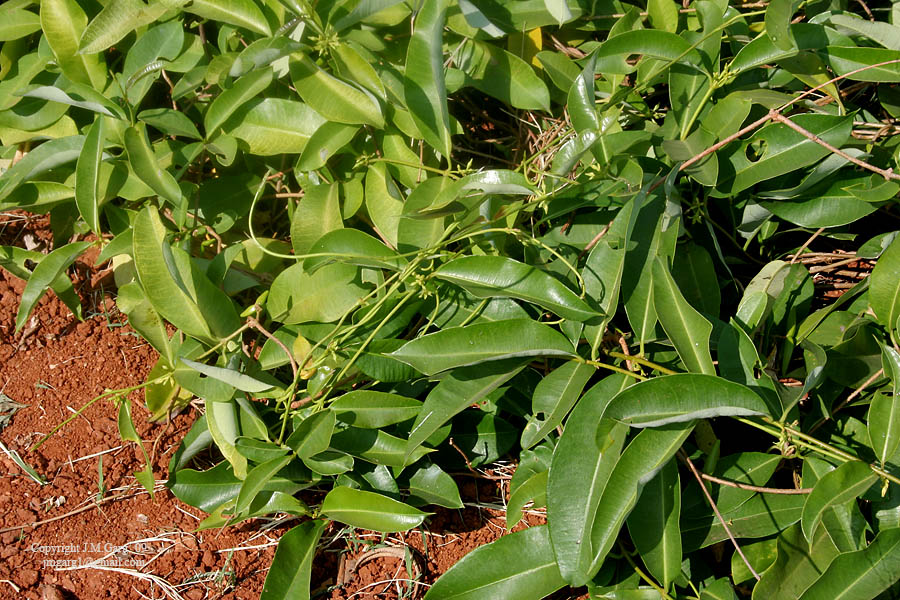
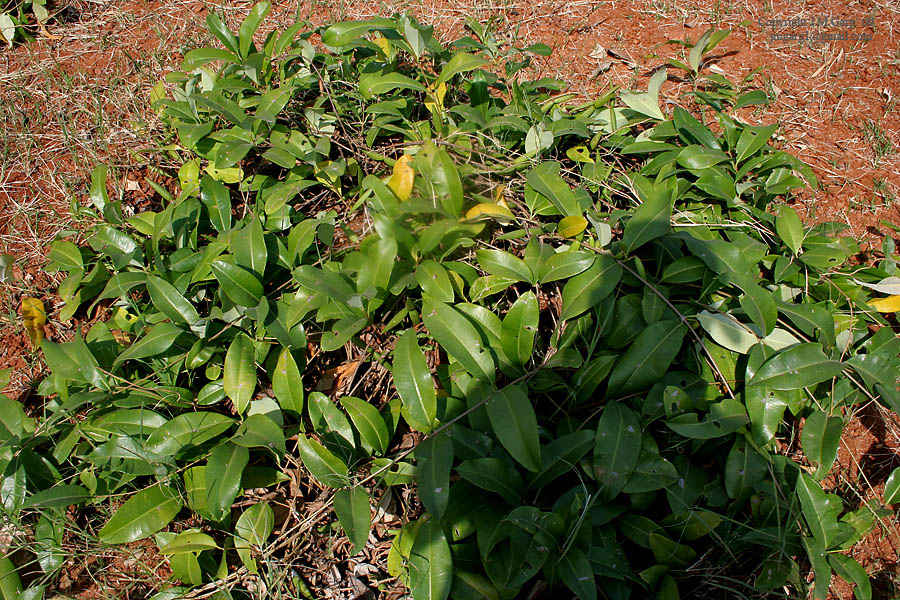
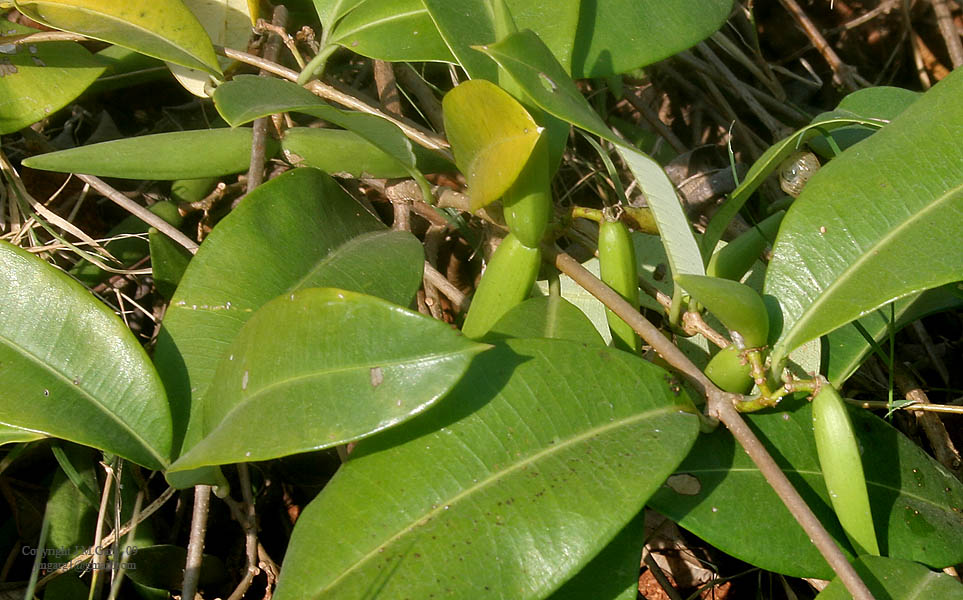
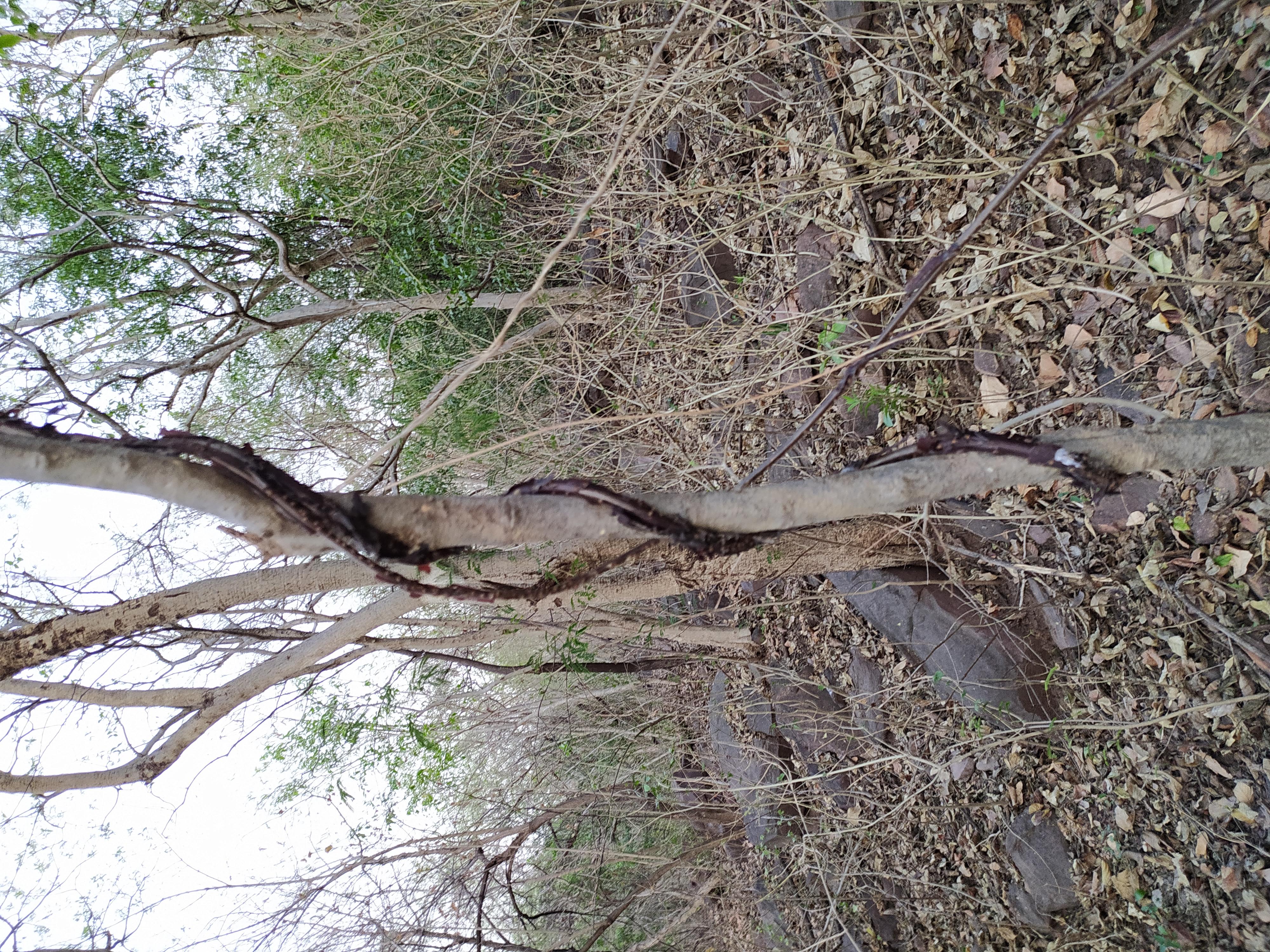
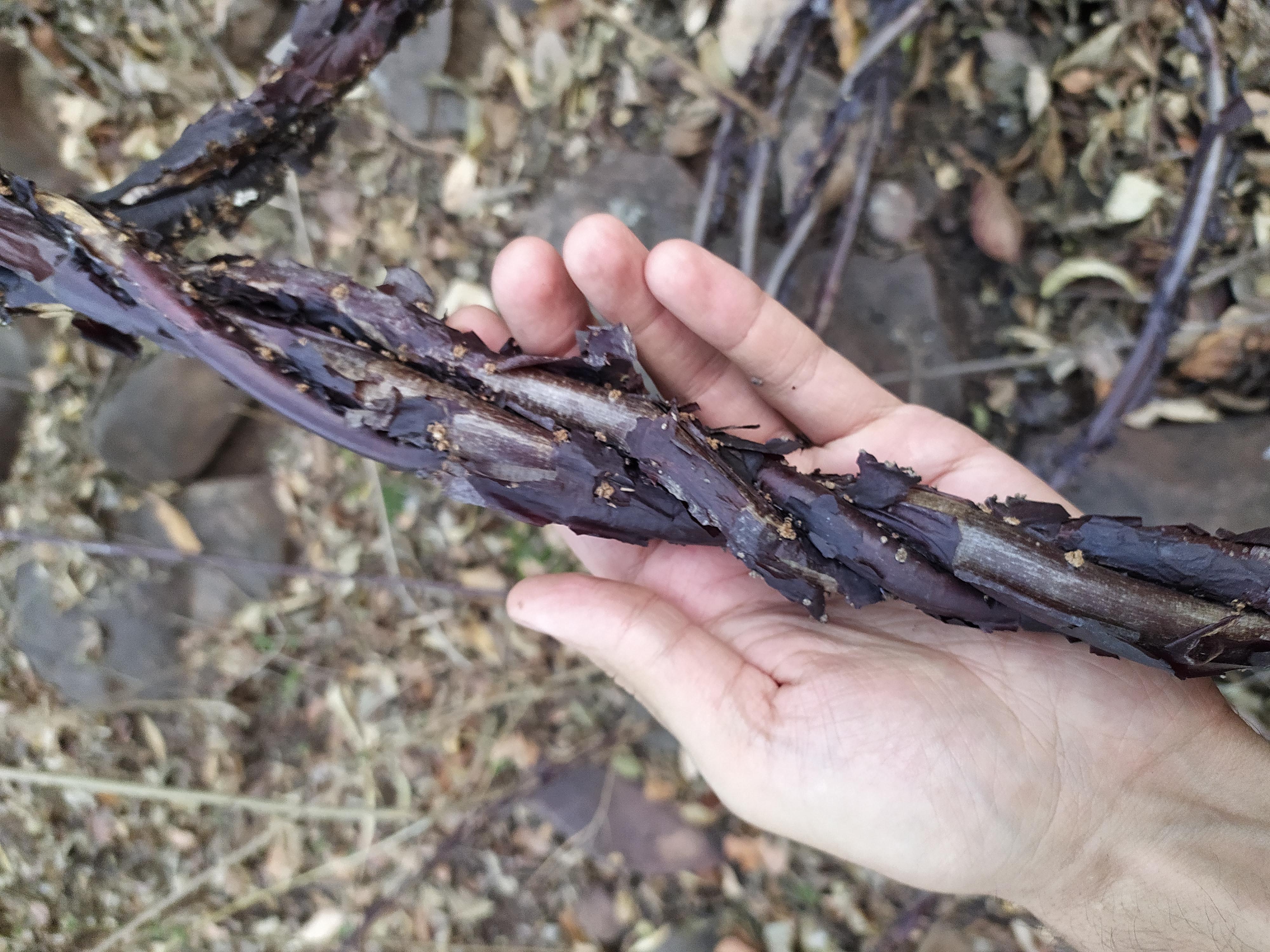
Cryptolepis buchananii

Cryptolepis buchananii Schultes in Roemer & Schultes, Syst. Veg. 4: 409 1819. (Syn. Chonemorpha reticulata G. Don; Cryptolepis dubia (Burm. fil.) M.R.Almeida; Cryptolepis reticulata Wall.; Echites cuspidata Heyne ex Hook. fil.; Echites reticulata Roth; Nerium reticulatum Roxb.; Periploca dubia Burm. fil.; Periploca viridiflora Kostel.; Trachelospermum cavaleriei H. Léveille) as per Catalogue of Life;
.
commonly known as: Indian sarsaparilla, wax-leaved climber • Angika: मटका दूधिया लतरा matka dudhiya latra • Bengali: হরজোড়া লতা harjora lata, কৃষ্ণ অনন্তমূল krishna anantamul • Bhili: दूधीबेल dudhibel, गेंडासिंगी gendasingi, नागबेल nagbel, सेता कावळी seta kawali • Dogri: काली तरेणी kali tareni • Garhwali: दूधीबेल dudhi-bel, मेडासिंगी meda-singhi • Gujarati: કાળીવેલ kalivel, કાવળી kavali • Hadauti: मेड़ासिंगी medasingi • Haryanvi: दुधी dudhi • Hindi: दूधीबेल dudhibel, काला बेल kala bel, करंटा karanta, नागबेल nagbel • Kannada: ಹಾಲು ಬಳ್ಳಿ halu balli, ಕರೆ ಬಳ್ಳಿ kare balli, ಮೆಟಗುಳಿ ಹಂಬು metaguli hambu, ಮೆಟ್ಲ ಹಂಬು metla hambu • Konkani: दुधवेल dudhvel, कावळी kavali • Kumaoni: दूधीबेल dudhi-bel • Malayalam: കളിപ്പാൽവള്ളി kalipaalvalli, കാട്ടുപാൽവള്ളി kattupaalvalli, കിളിപ്പാൽവള്ളി kilippaalvalli, പാൽവള്ളി paalvalli • Malvani: वाकांडी vakandi • Marathi: दुधवेल dudhvel, कावळी kavali • Mizo: thei-kel-ki-suak • Nagpuri: दूधला लार dudhla lar, मेढा-सिंगी medha-singhi, वैश-लक्ष्मण vaish-lakashman • Nepali: दुधे dudhe, गाइसिङ्गे gaaisinge, कोइले घुरियो koile ghuriyo, कालो सरिवा kaalo sariwaa, कृष्ण सरिवा krishna sariwaa • Odia: ଦୁଧି ନଈ dudhi nai, ଗୋପକାହ୍ନୁ gopakaanhu • Pahari: चीकबेल cheekbel, दूधली dudhli, करंटा karanta • Rajasthani: करमाटा की बेल karmata-ki-bel • Sanskrit: कृष्णसारिवा krishnasariva • Santali: ᱩᱛᱨᱤ ᱫᱩᱫᱷᱤ utri dudhi • Tamil: மாட்டாங் கொடி maattaang kodi, பால் கொடி paal kodi • Telugu: అడవి పాలతీగ adavi paalatige, రోకలిపాల rokalipaala, రైతుపాల rythupaala
Names compiled / updated at https://dineshvalke.blogspot.com/2026/08/cryptolepis-buchananii-rbr-ex-roem.html
.
krip-toh-LEP-is — Greek: kryptos (hidden, concealed, secret); lepis (scale); refers to a scale-like structure located inside the flower’s corolla tube … compiled from the web
byoo-kah-NAN-ee-eye — named for Francis Buchanan-Hamilton [↗], Scottish surgeon, surveyor and botanist who made significant contributions as a geographer and zoologist while living in India. … compiled from the web.
.
China (Guangdong, Guangxi, Guizhou, Yunnan), India (throughout), Jammu & Kashmir (Kashmir, Poonch), Laos, Nepal, Pakistan (Pakistani Punjab), Pakistani Kashmir (Mirpur), Thailand, Vietnam, Andaman Isl. (Middle Andaman Isl., South Andaman Isl.), Myanmar [Burma] (Bago, Mandalay, Yangon), Bhutan, Sikkim, Sri Lanka as per Catalogue of Life;
,

/wp-content/uploads/2020/10/DSCN8800Sm.JPG
/wp-content/uploads/2020/10/DSCN8798Sm.JPG
/wp-content/uploads/2020/10/DSCN8797Sm.JPG
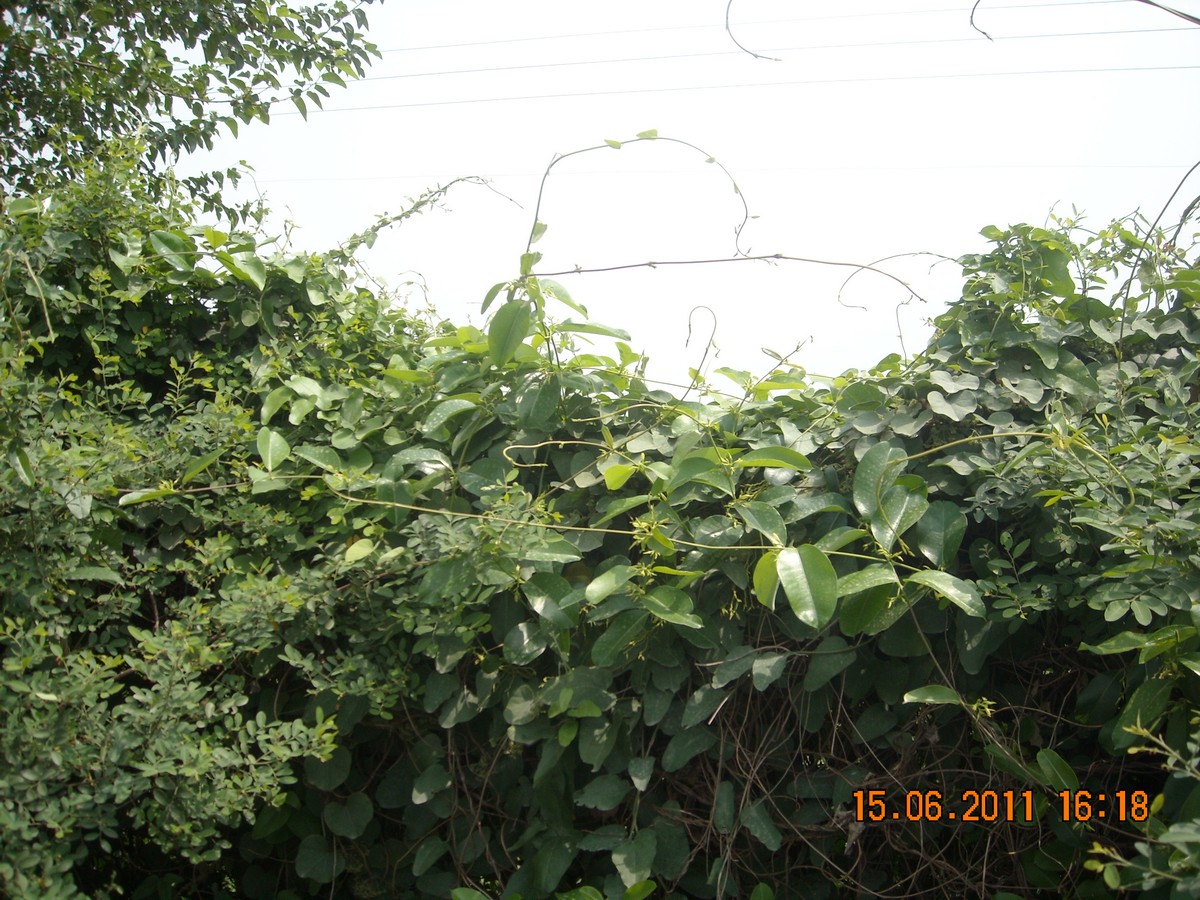
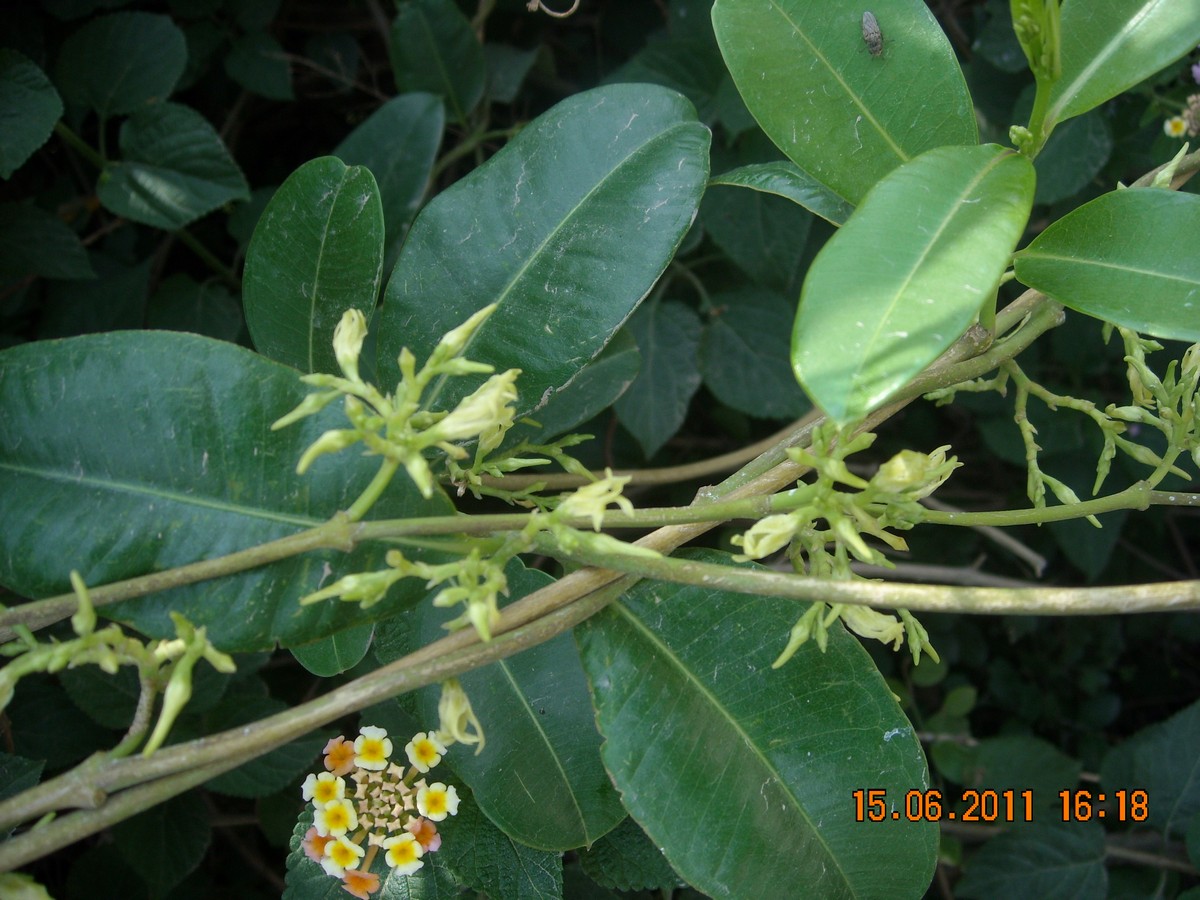
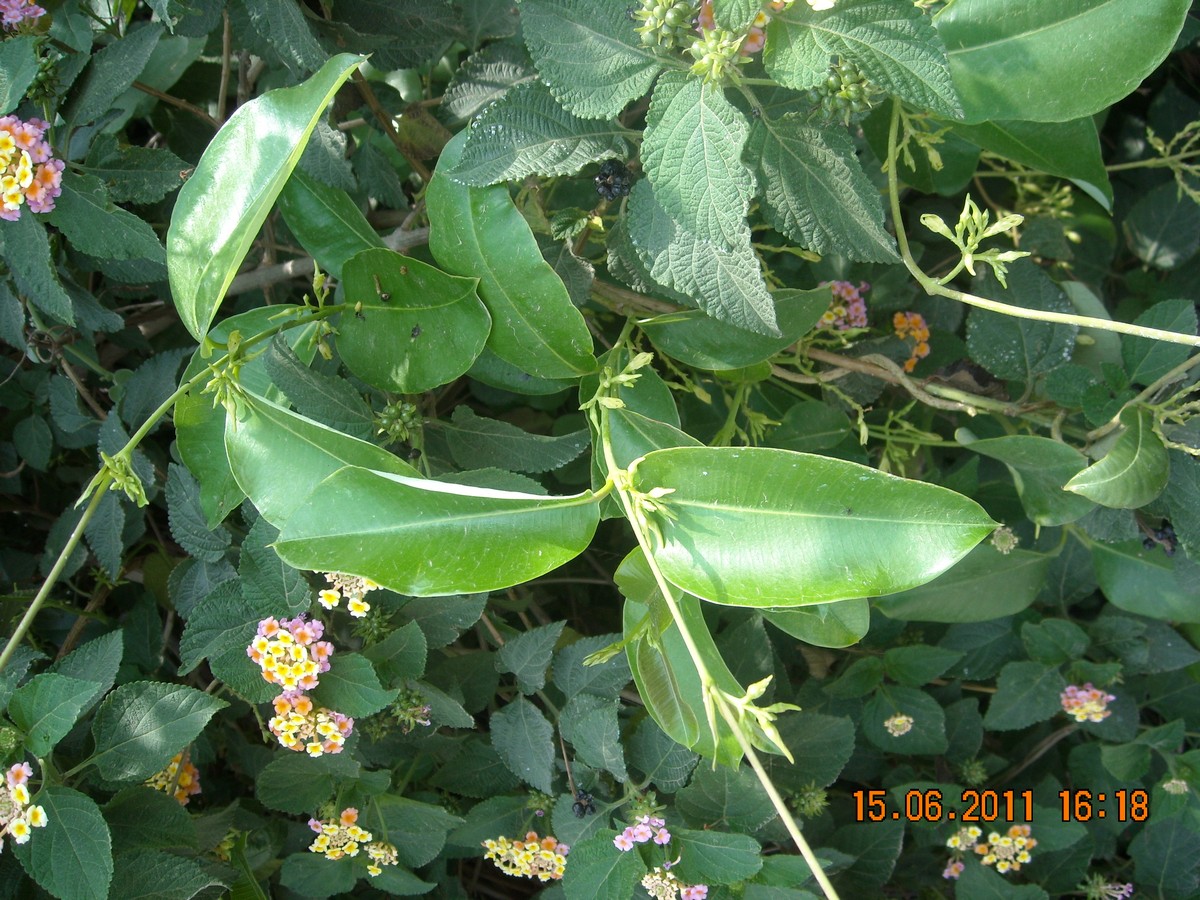
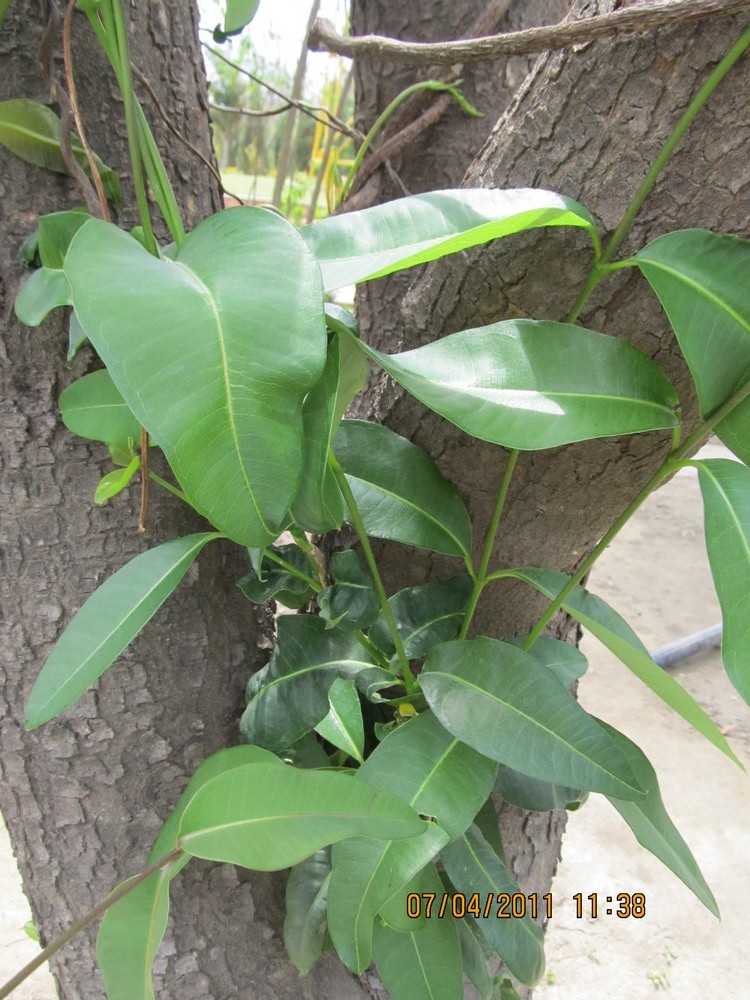
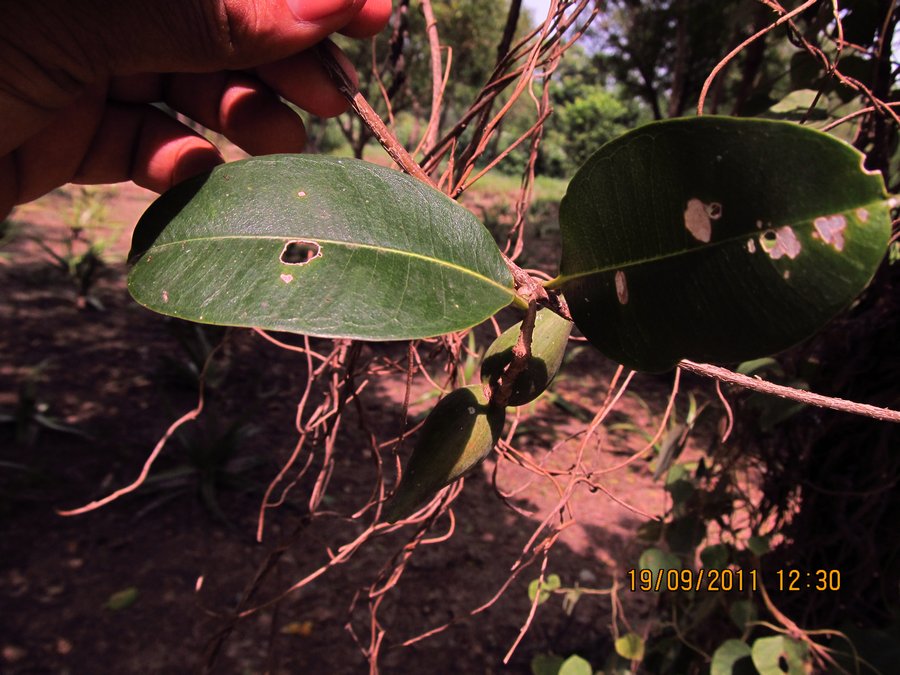
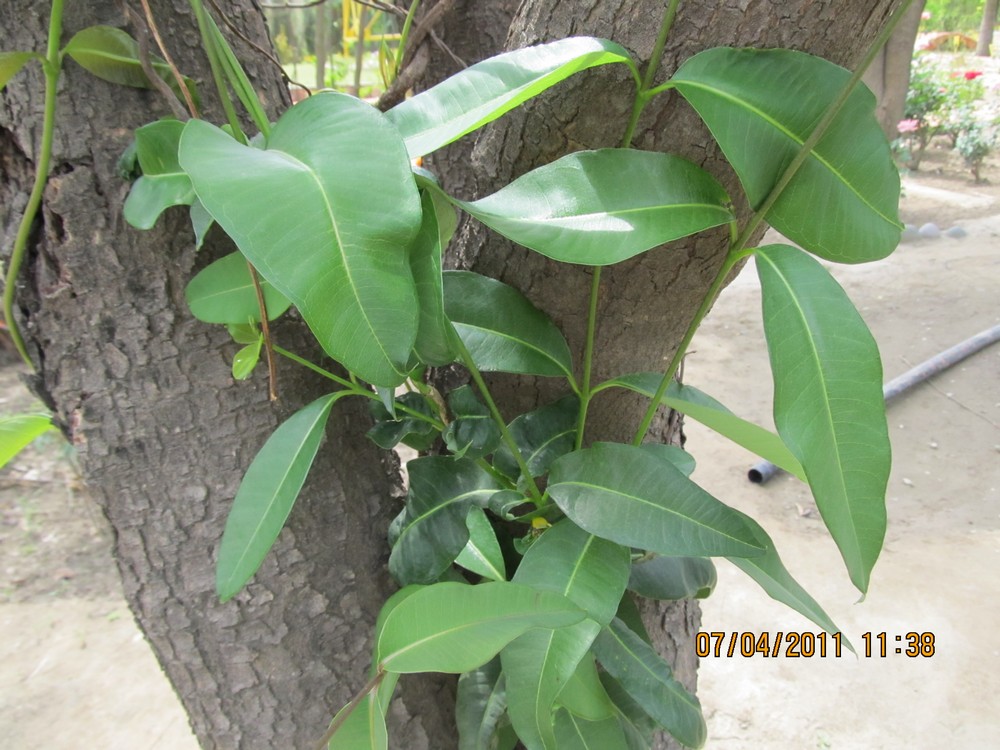
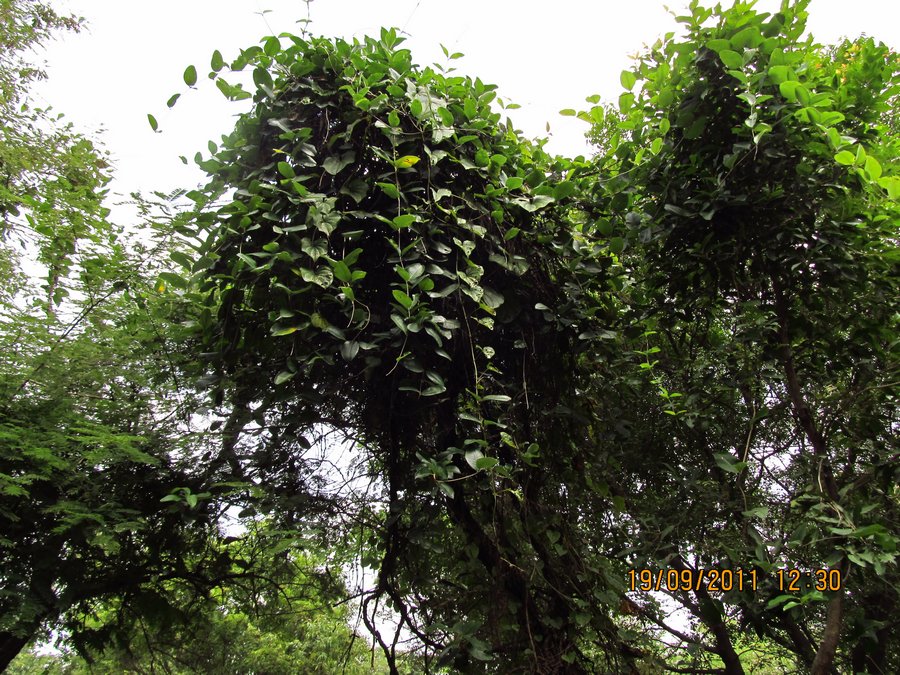
flora of Haryana- ID of a Apocynaceae Climber:
Pls id this climber from herbal Park Yamuna nagar
Hope Cryptolepis sp
From Karnal GT Road Side area, 15-6-11

Yes, it is Cryptolepis buchananii.


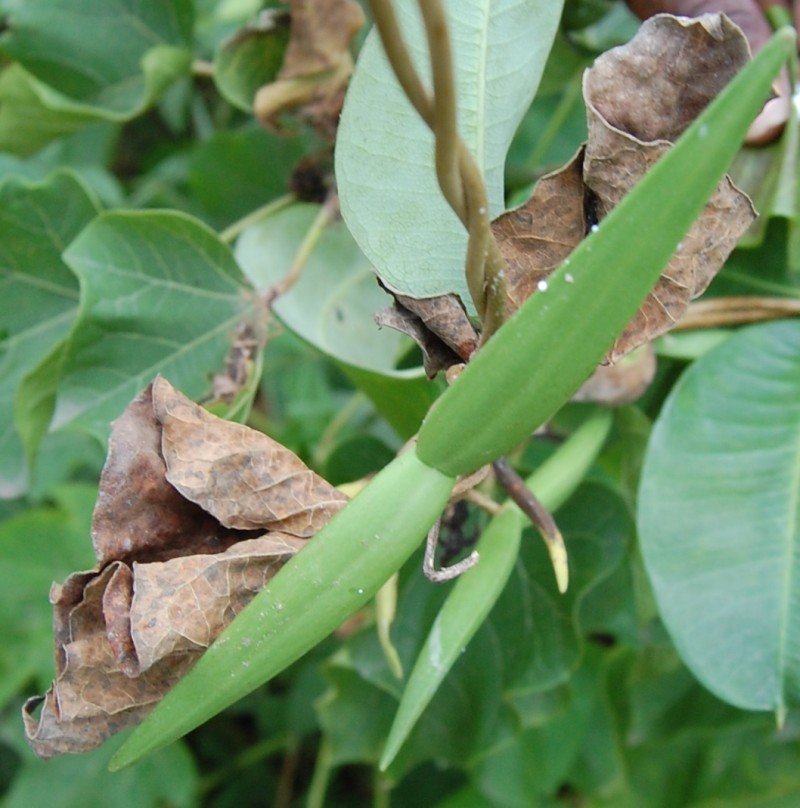
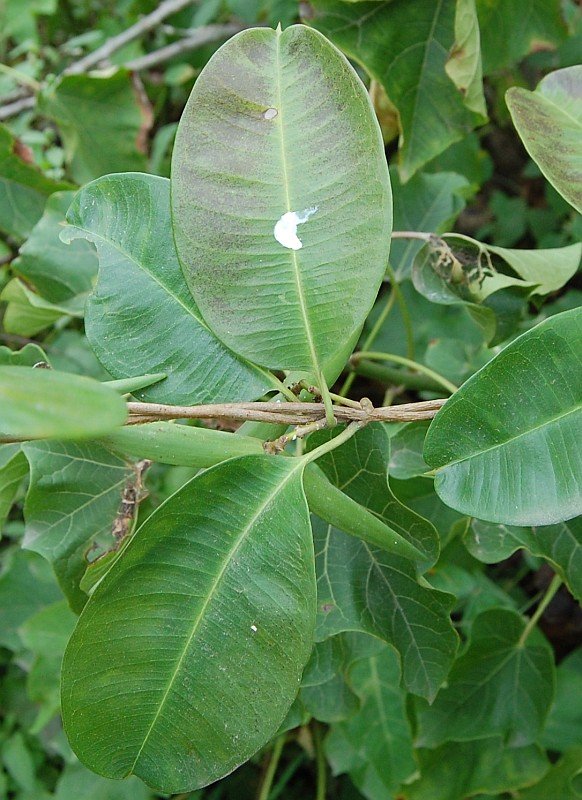
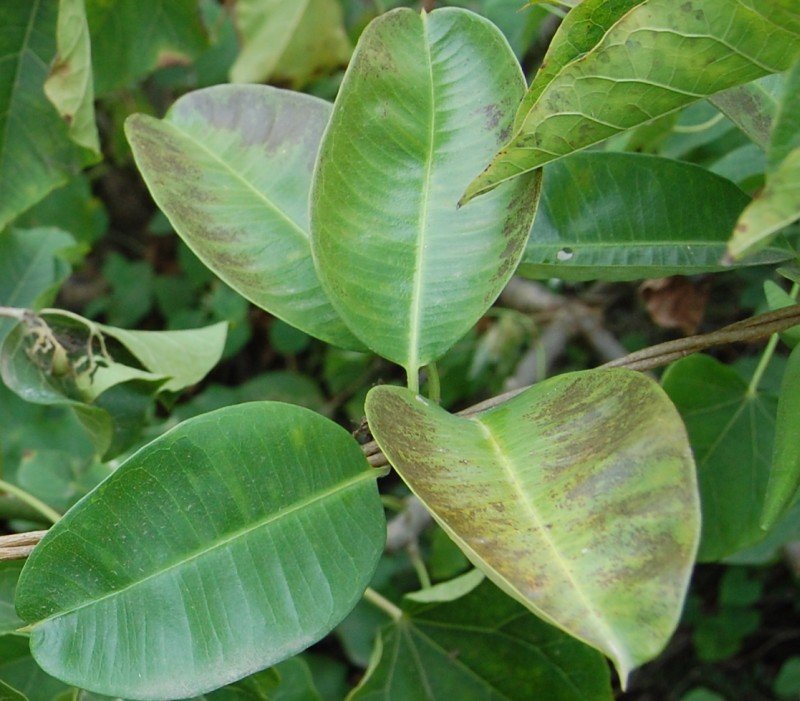
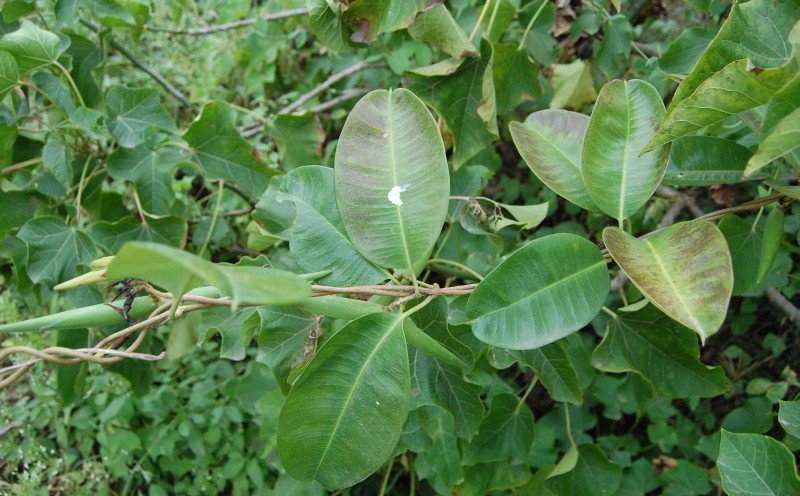
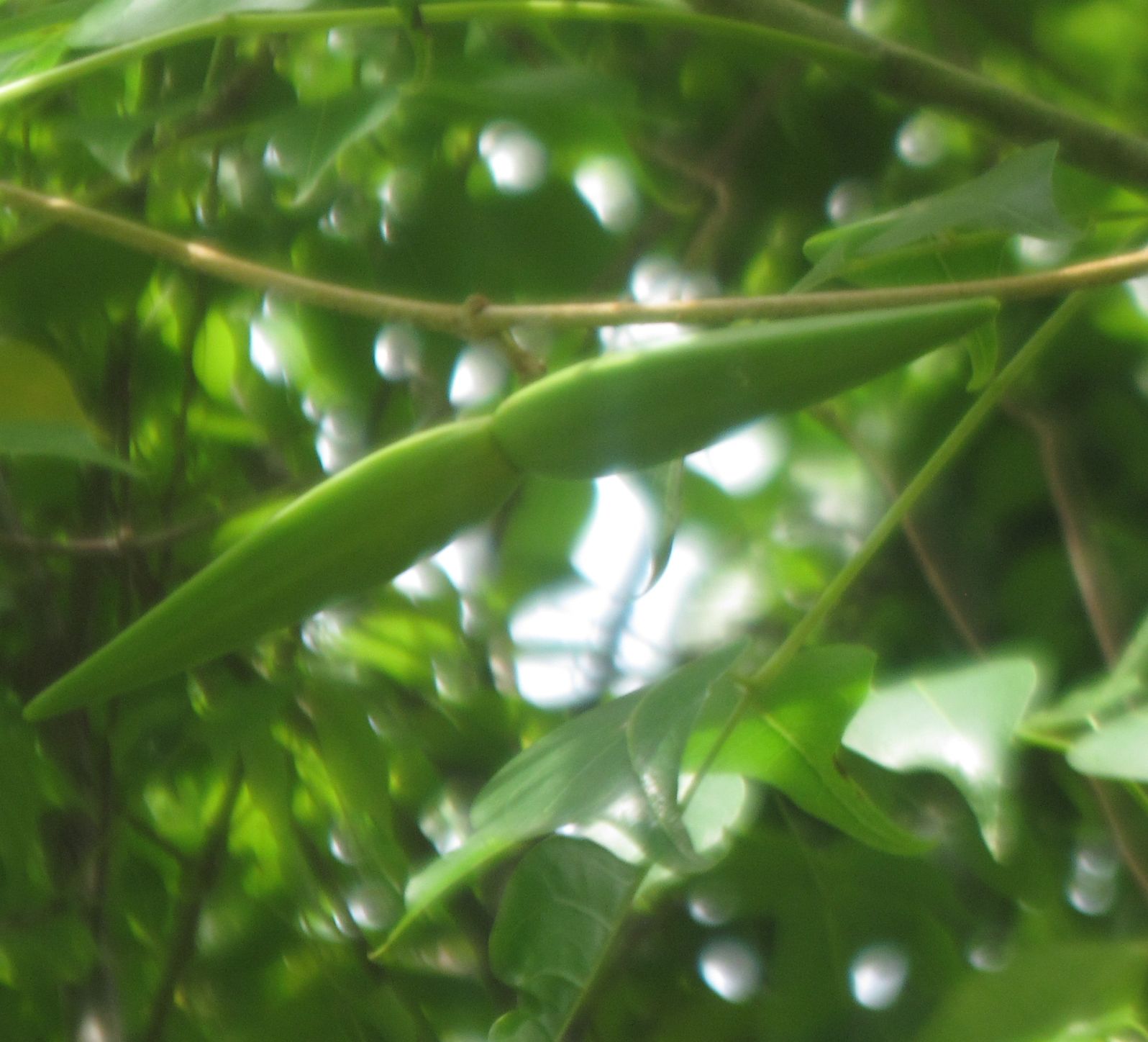
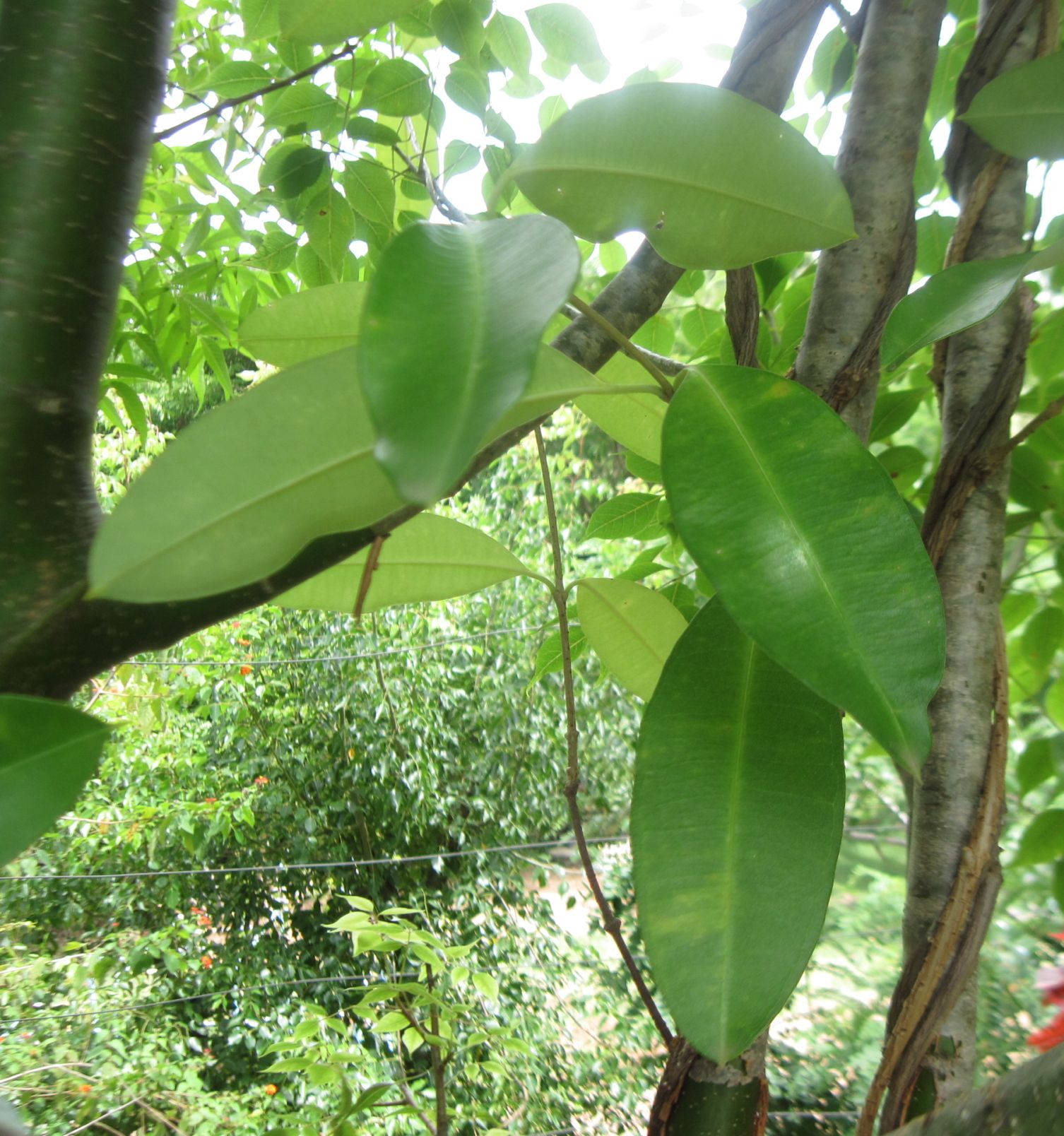
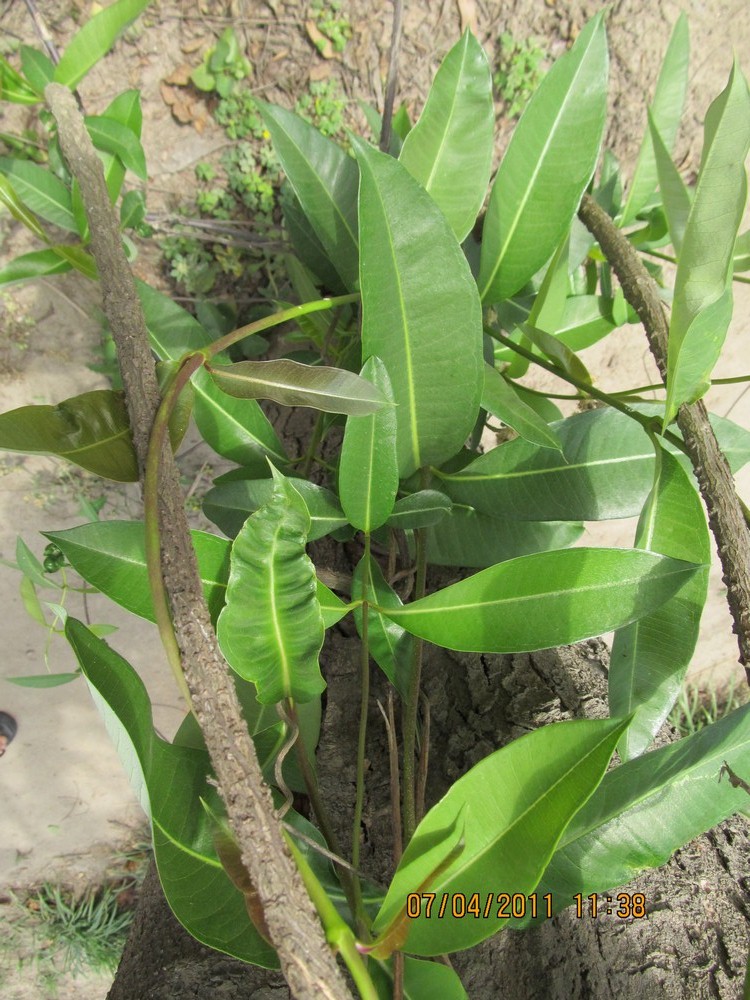
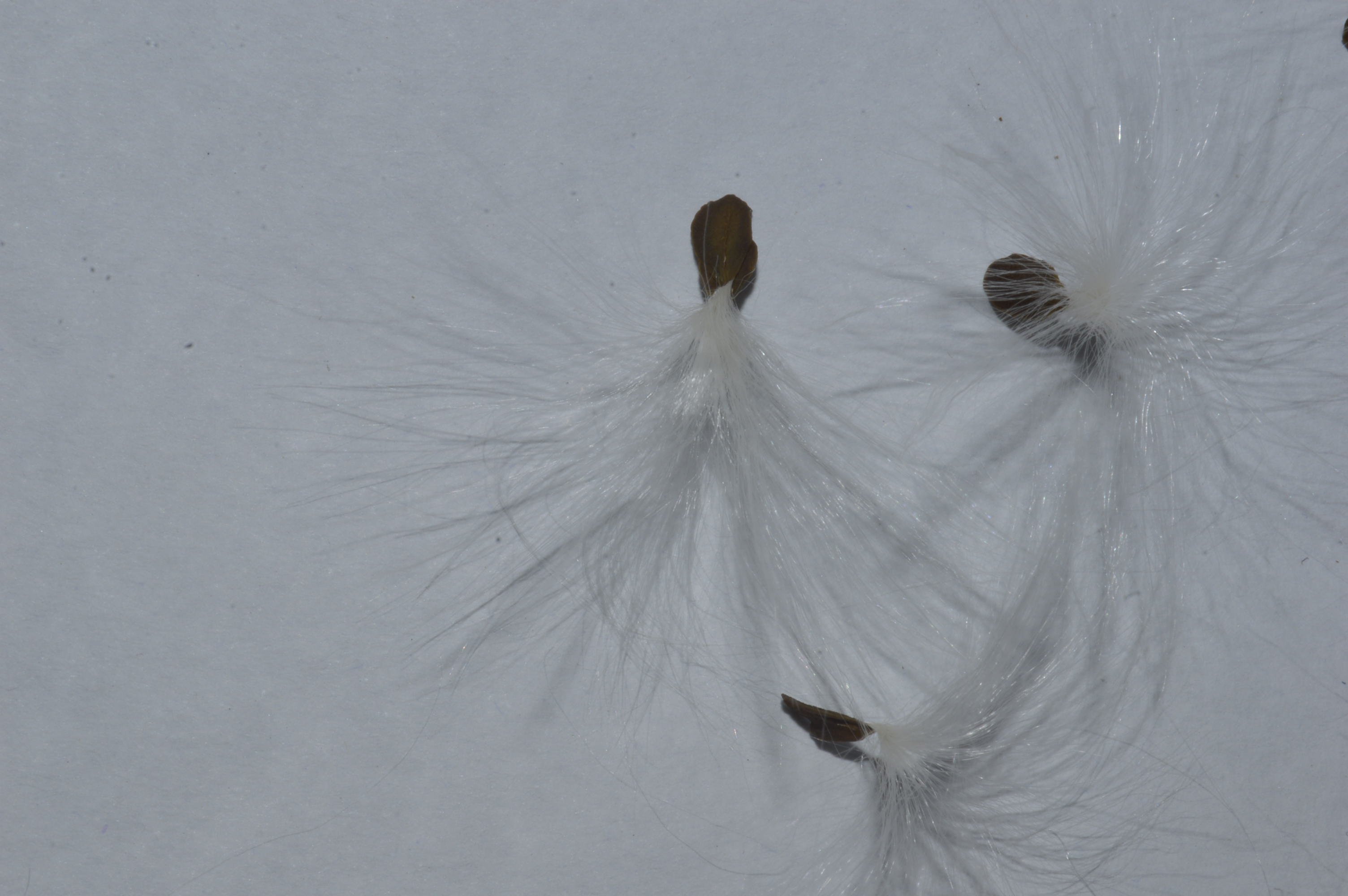
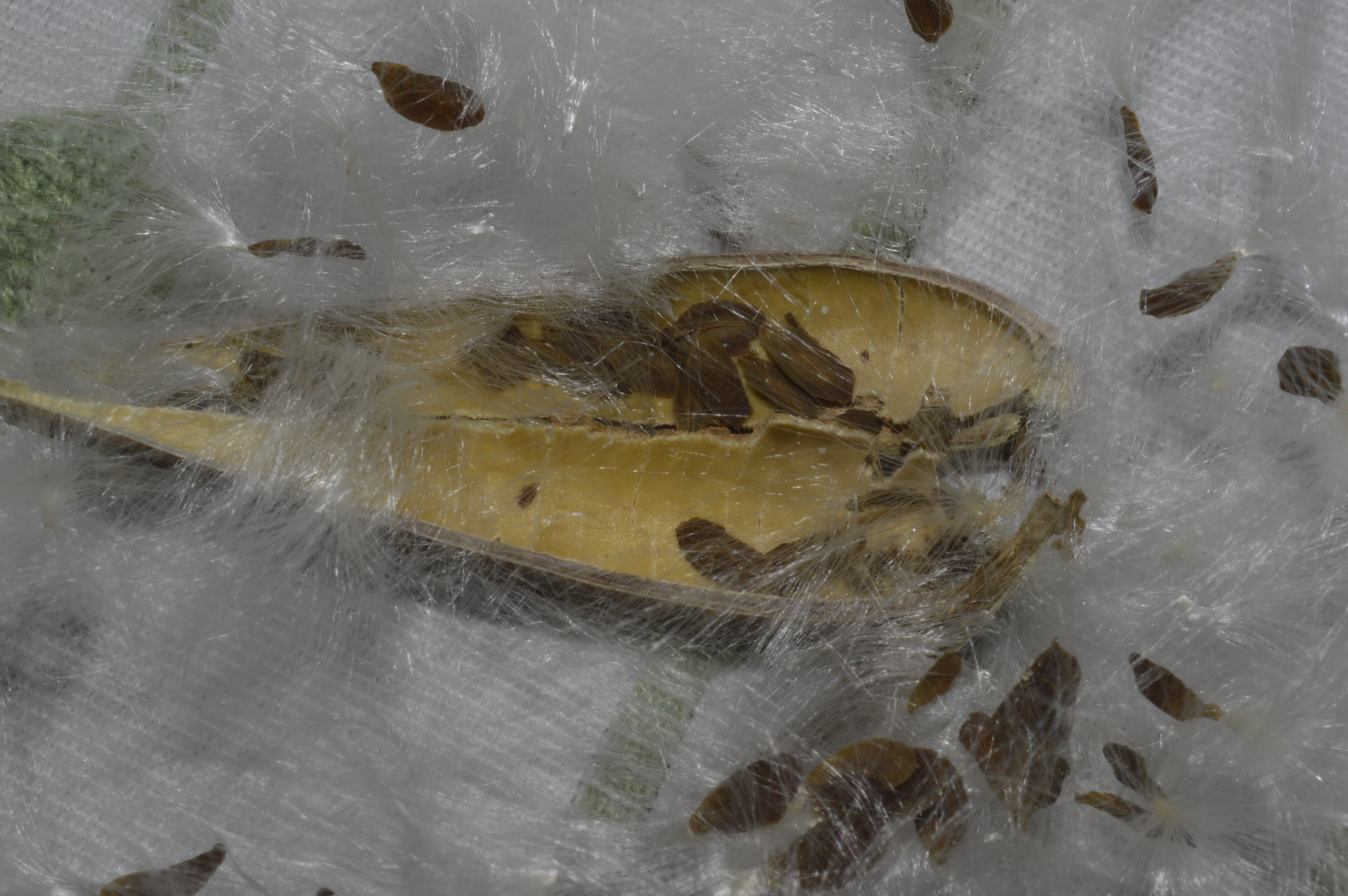
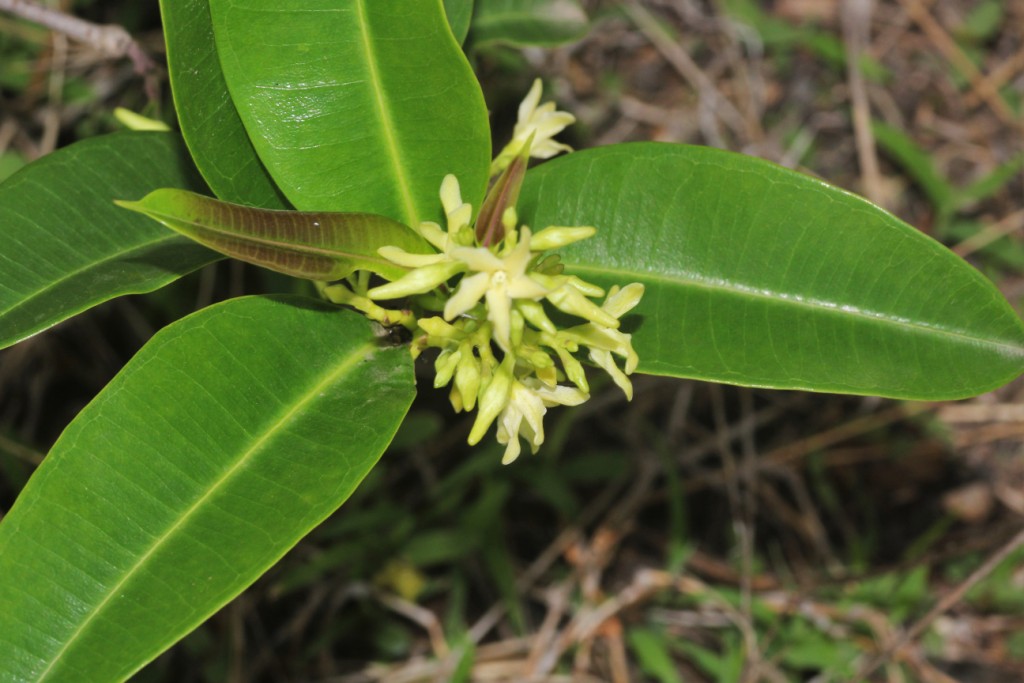
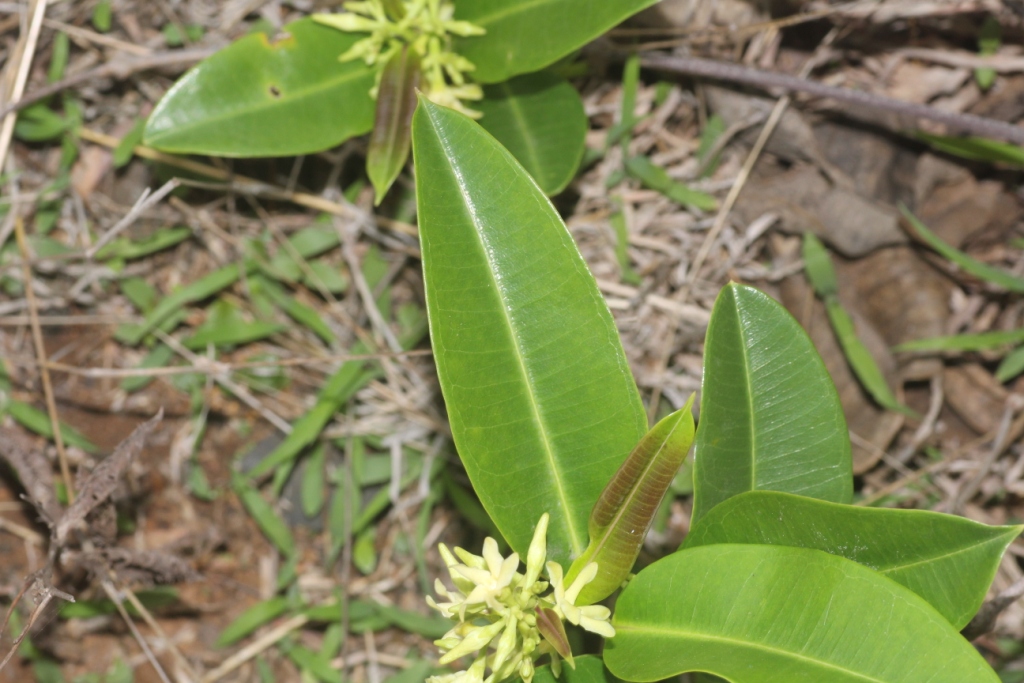
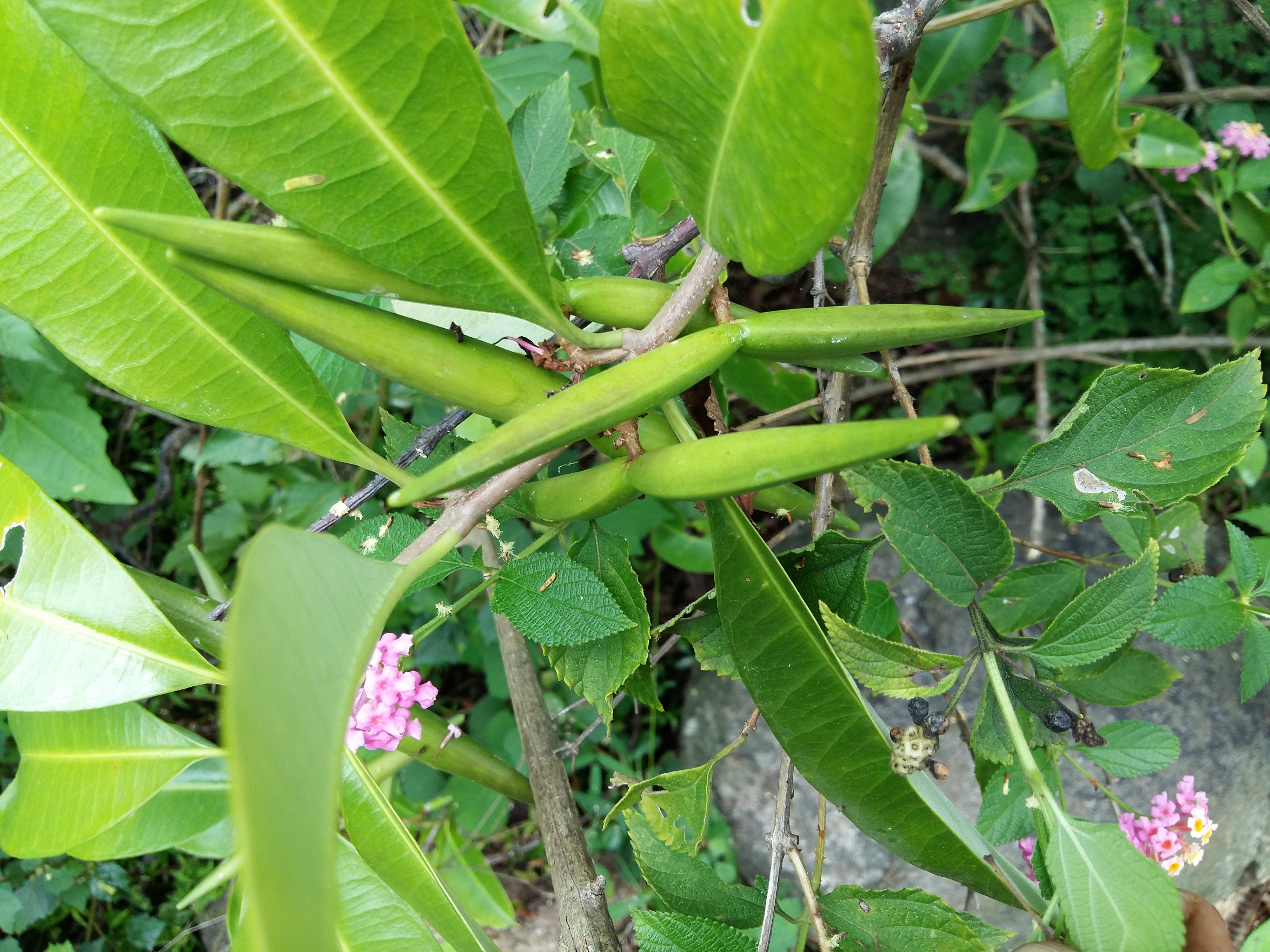
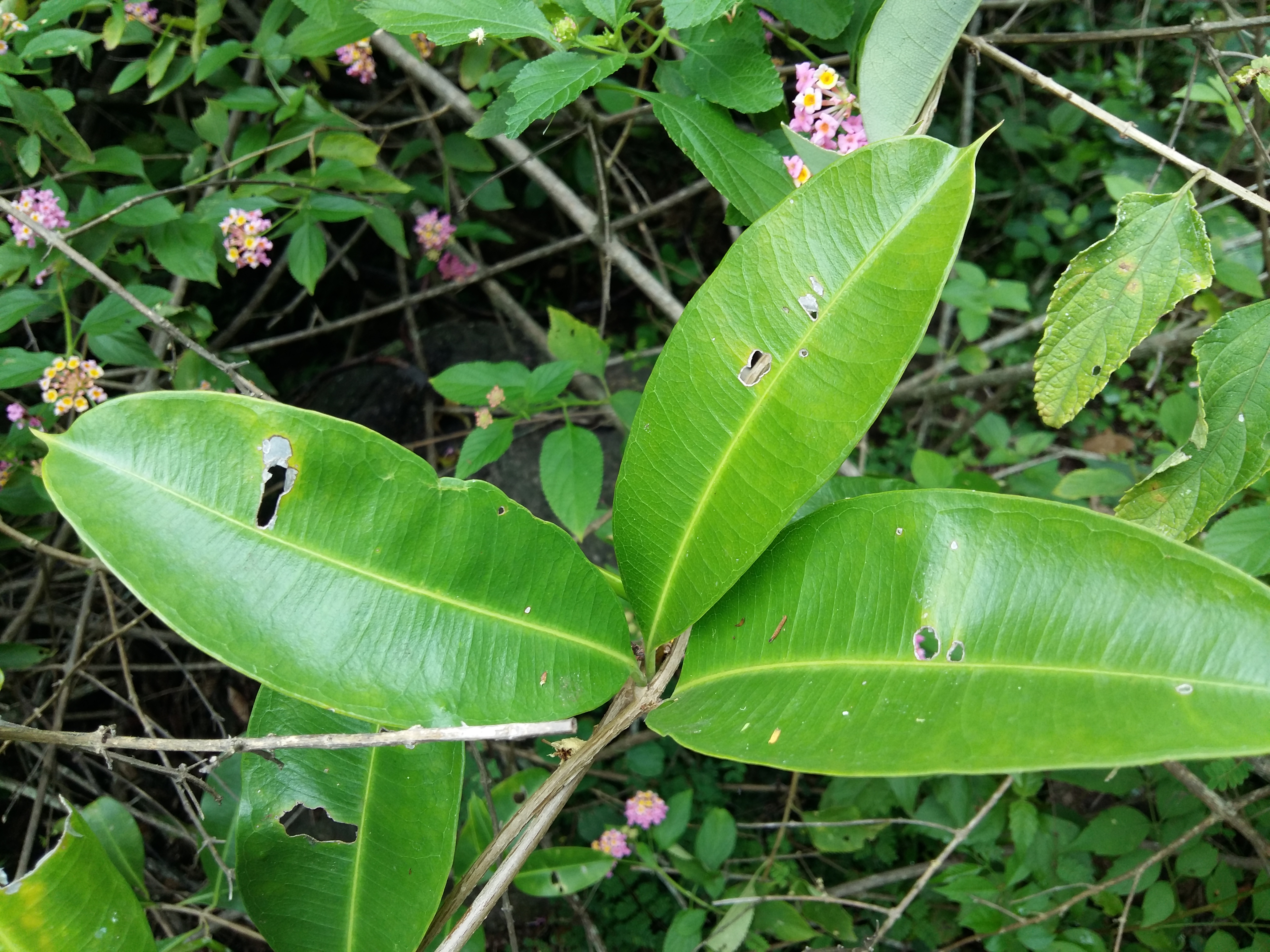
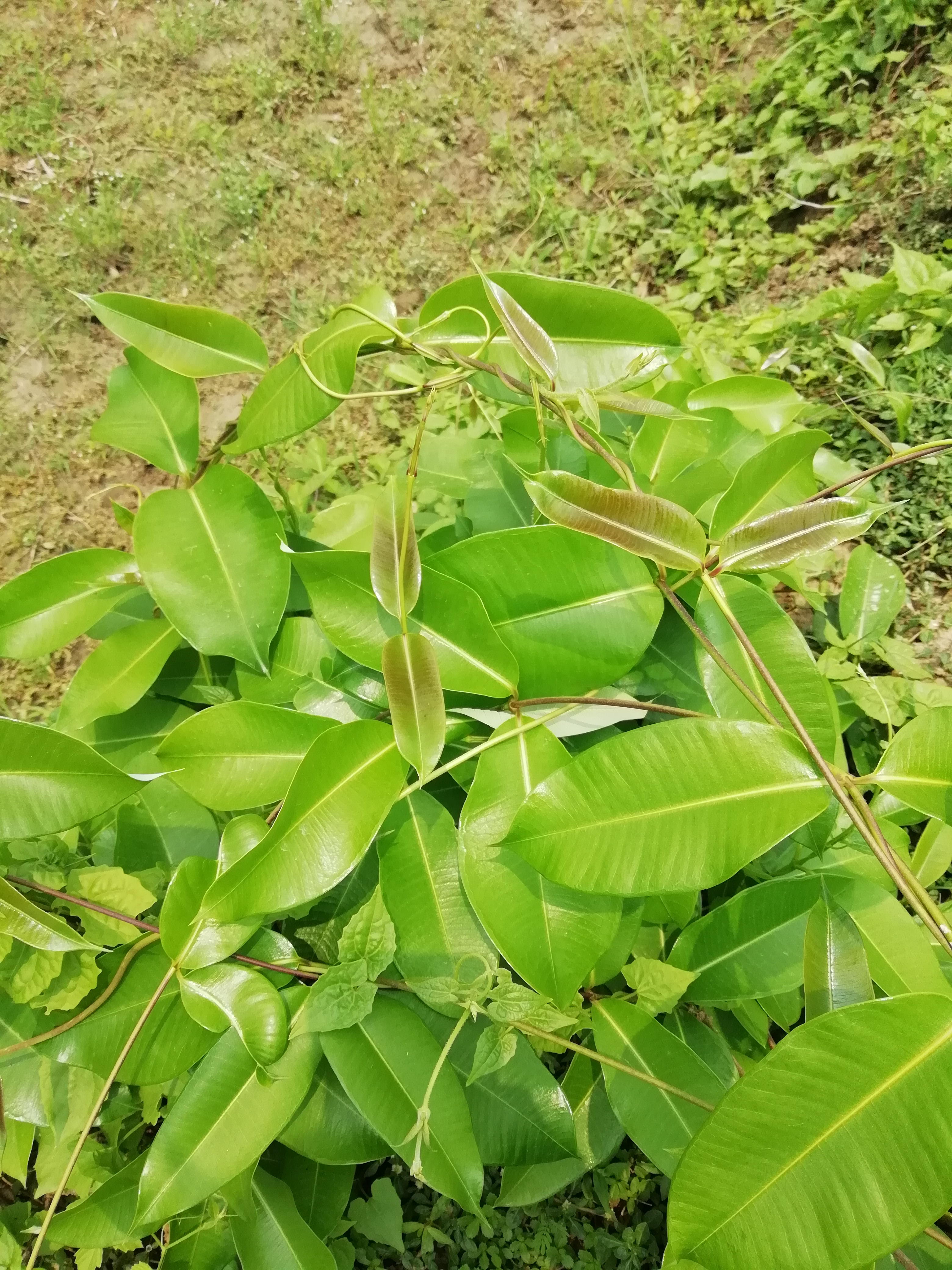
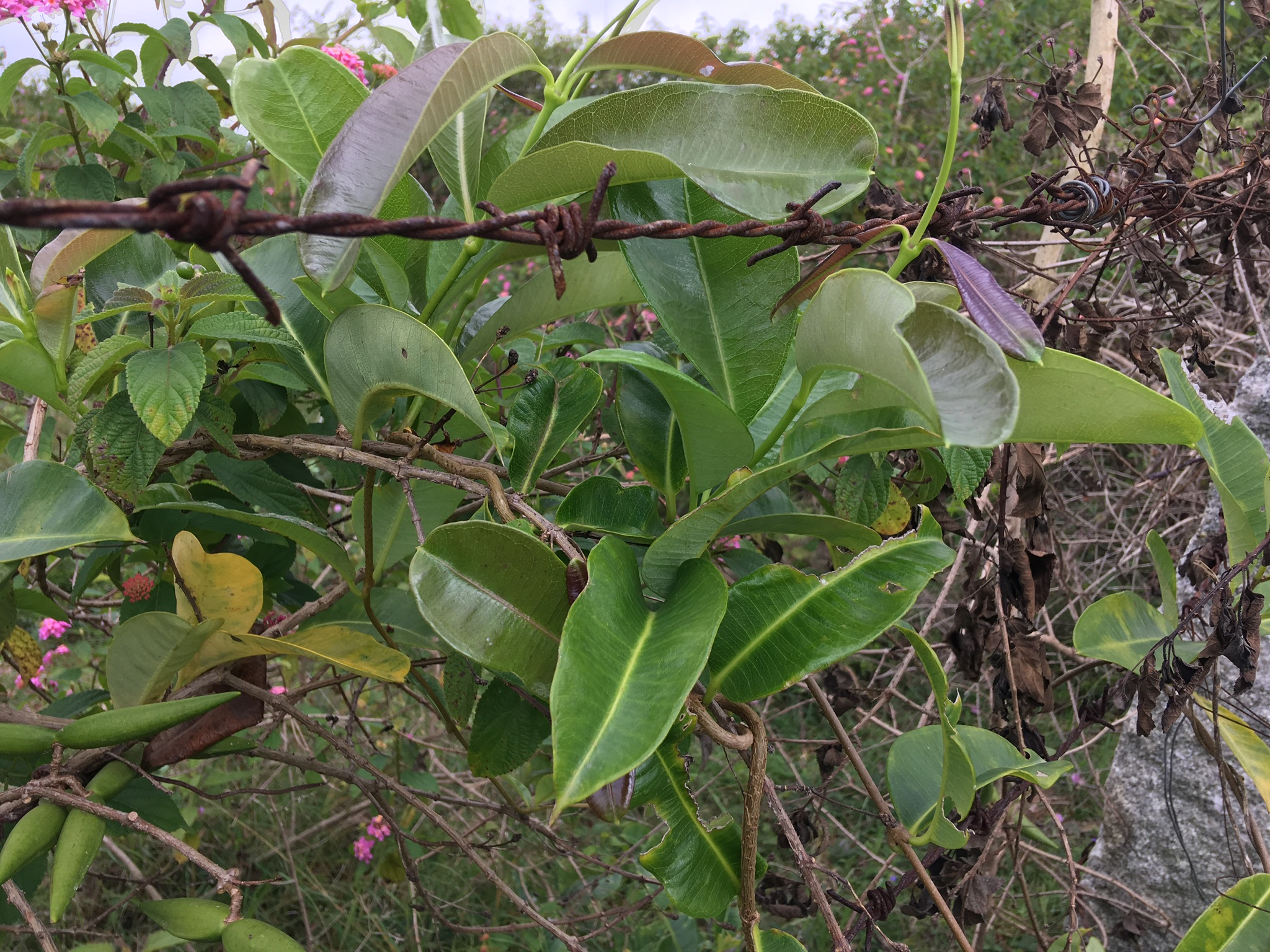
/wp-content/uploads/2020/10/DSC_5751%20Fruit.jpg/wp-content/uploads/2020/10/DSC_5752%20Leaf2.jpg/wp-content/uploads/2020/10/DSC_5752%20Leaf1.jpg/wp-content/uploads/2020/10/DSC_5752%20Plant.jpg

Climber ID | 15Sep2011AR01 from Chunchankatte:
Date/Time-24 Jul 2011
Location- Place, Altitude, GPS- Chunchankatte, Mysore Dist
Habitat- Garden/ Urban/ Wild/ Type-Wild, Bottom – Hill rock.
Plant Habit- Tree/ Shrub/ Climber/ Herb-Climber
Height/Length-approx – No data
Leaves Type/ Shape/ Size- Shape – Elliptic, Acute, 12cms approx , ~Horizontal nerves
Inflorescence Type/ Size-
Flowers Size/ Colour/ Calyx/ Bracts-Not present
Fruits Type/ Shape/ Size Seeds- Milky, 9cms approx


This is the Wax-leaved Climber [Cryptolepis buchanani]. My photographs taken at my farm at Shahapur for comparison.


Yes I agree with … that this is Cryptolepis buchananii (please note the spelling) the new name of this species is Cryptolepis dubia (Burm.f.) M.R.Almeida of Apocynaceae family.


.. is correct. It is Cryptolepis buchananii of Asclepiadaceae (new name Cryptolepis dubia as provided by …)


Thank you … As rightly pointed out by you, Dr.Almeida in his ‘Flora of Maharashtra’ Vol. 3A, has changed the name to Crytolepis dubia [but he also spells the old name as C.buchanani – which is anyway much of a muchness now].


My contribution


/wp-content/uploads/2020/10/IMG_0759.JPG
/wp-content/uploads/2020/10/IMG_0758.JPG
efloraindia: 210911 BRS 37:
Pl. find the attached file contain photos for id. request.
Date/Time-Location- July, 2011, NBNP Garden
Place, Altitude, GPS- Thuvaipathy Village Anaikatii P.O, Coimbatore Dist.
Habitat- Garden
Plant Habit-  Climber
Seed pod length 3- 4 inch.

Seems like Cryptolepis buchananii Roem. & Schult. which is now known as Cryptolepis dubia (Burm.f.) M.R.Almeida.


Thanks … for helping in identification of climber we had photographed from Morni in April. I hope it is the same. I am uploading here for confirmation.


I am doubtful about whether the second picture belongs to C. dubia. I think the venation and the leaf shape (especially leaf base) is not that of Cryptolepis dubia.


I was doubtful about the second picture only and I think the leaves in the third picture belongs to C. dubia


Thanks again I saw the photographs and found that out of 10 photographs I had 4 belonged to second photograph. Could it be Vallaris solanacea?  


… not confident about it being Vallaris solanacea, … … but quite a good possibility … the leaves look close to those in my photostream.


Leaves in the second picture do look like that of Vallaris solanacea.


/wp-content/uploads/2020/10/Hemidesmus%20indicus%20-5-.JPG/wp-content/uploads/2020/10/Hemidesmus%20indicus%20-4-.JPG/wp-content/uploads/2020/10/Hemidesmus%20indicus%20-3-.JPG/wp-content/uploads/2020/10/Hemidesmus%20indicus%20-6-.JPG/wp-content/uploads/2020/10/Hemidesmus%20indicus%20-1-.JPG/wp-content/uploads/2020/10/Hemidesmus%20indicus%20-2-.JPG

Flora of Haryana: Hemidesmus indicus from TDL Herbal Park Yamunanagar Haryana:
Hemidesmus indicus from TDL Herbal Park Yamunanagar Haryana


your plant looks like Cryptolepis buchnani


Agree with ….. This is the Wax-leaved Climber [Crytolepis buchanani]. [Suspicion arose after perusing the first photograph – C.buchanani is a shrubby climber and generally does not climb to such heights]. My photographs of both for comparison are available in the archives of this group.


/wp-content/uploads/2020/10/Wax%20Leaved%20Climber%20pods-Nasik-P1140539.JPG

Cryptolepis buchananii pods : 080112 : AK:
Sharing a picture of Wax leaved Climber pods as it is commonly known as.
Picture taken at Nasik.
Kindly confirm id.


Yes … Cryptolepis buchananii


/wp-content/uploads/2020/10/DuEsThOkEKE7Qr7OjYE3vPqoyNNZR6ZeissMrDLouEr4Qf5yNfeuazr8470nZudbtmpgwXPtfKEOac00DnDu4eufBF15xuPmRI5qZU41W5D9-w5000-h5000.jpg
/wp-content/uploads/2020/10/mXcrje4-SmlY7WJnlv5q5Ud4KWJABqwfKFRmeH1h-nLCB3fns7XjE5TYCKglK9n7uNSxR5Q2FUBsf0ABqAFdfrWAVMKcJm1PW5kIh8LiiclF-w5000-h5000.jpg
/wp-content/uploads/2020/10/C4nBoues7jWI8180NJlAy8KGjq-xxHJFkYgP5RF2mls6k6VLh5ZGH8QCgvz9X8S4qR7ZkB9Wm-YxuvOBKhIksh-Hz2D9RTCKjcyvYSAgzdAb-w5000-h5000.jpg
VoF Week :: DV :: 30 JUL 12 – 0143 :: Cryptolepis dubia syn. Cryptolepis buchananii along NH58 near Tangani:
Cryptolepis dubia (Burm.f.) M.R.Almeida
syn. Cryptolepis buchananii L. … (family: Oxalidaceae)

30 JUL 12
NH58 near Tangani, about 4500 ft


I think Cryptolepis buchananii 


Yes …, many thanks. At The Plants List, Cryptolepis buchananii is put as synonym of Cryptolepis dubia.
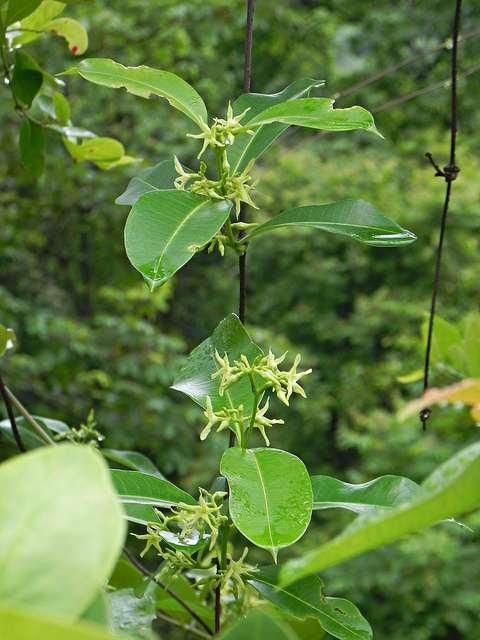


/wp-content/uploads/2020/10/Cryptolepis%20dubia%203-9.jpg/wp-content/uploads/2020/10/Crytolepis%20dubia%201-6.jpg/wp-content/uploads/2020/10/Cryptolepis%20dubia%202-0.jpg
Bhimashnakar report :  Attachments (3). 3 posts by 3 authors.
Visited Bhimashanakr on 30 june 2013 got some flowers.
…………………..
2) Cryptolepis dubia

Good find. I was not knowing that the correct name of the Cryptolepis is C. dubia. and C. buchananii which I was knowing is a synonym.
I also happened to see it in flowering near Manchar/ Rajgurunagar today (6.7.13) by roadside.


/wp-content/uploads/2020/10/Cryptolepis%20buchananii3.jpg
/wp-content/uploads/2020/10/Cryptolepis%20buchananii2.jpg
/wp-content/uploads/2020/10/Cryptolepis%20buchananii1.jpg

Cryptolepis dubia (Burm.f.) M.R.Almeida. Syn. Cryptolepis buchananii : Attachments (3). 1 post by 1 author.
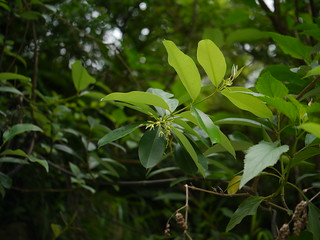
Cryptolepis dubia (Burm.f.) M.R.Almeida.
Apocyanaceae.
Gregariouly flowering on the outskirts of Pune spotted on last Sunday. Jul 2013.
A question.
While I was searching earlier postings of the same plant. I found one post by … as Cryptolepis grandiflora. What is the difference between the two?


/wp-content/uploads/2020/10/Asclepediaceae%20-4--5.JPG/wp-content/uploads/2020/10/Asclepediaceae%20-2--0.JPG/wp-content/uploads/2020/10/Asclepediaceae.JPG/wp-content/uploads/2020/10/Asclepediaceae%20-3--6.JPG/wp-content/uploads/2020/10/Asclepediaceae%20-1--2.JPG
Megamalai :: Asclepediaceae for identification :: 271113MK002 : Attachments (5).  4 posts by 3 authors.
Please help me in identifying this twiner found in the disturbed sites of a semi-evergreen forest patch. Also found near streams and river.
Alt.: 700 – 800 m asl
Place: Vellimalai RF, Theni, TN
Date: 04 Oct 2013

It should be Cryptolepis buchananii.


… looks like Cryptolepis buchanani


Many thanks … for the identification.


/wp-content/uploads/2020/10/IMG_4202.JPG
/wp-content/uploads/2020/10/IMG_4204.JPG
/wp-content/uploads/2020/10/IMG_4207.JPG
/wp-content/uploads/2020/10/IMG_4201.JPG
/wp-content/uploads/2020/10/IMG_4200-6.JPG
/wp-content/uploads/2020/10/IMG_4208.JPG
/wp-content/uploads/2020/10/IMG_4206.JPG
Requesting to please ID this climber captured near Devgad, Maharashtra in May 2014.
It is called ‘vaakaandi’ in Marathi.
Locally, the latex of this climber is applied on cuts and wounds as a cleansing agent and antiseptic.
Is this Cryptolepis dubia/Cryptolepis buchananii?

Apocynaceae member I think


Affirmative -this is Cryptolepis dubia , synonym: C.buchananii
Please have a look at the venation pattern on leaves. It is characteristic.  

Can’t remember replying to this mail. … beat me to it. Anyway, my photographs of this are available at these links :
Google Groups
Google Groups


/wp-content/uploads/2020/10/Dubia-woody-climber-Agastamuni-IMG_1094-Uttarakhand-2.jpg
/wp-content/uploads/2020/10/Dubia-woody-climber-Agastamuni-IMG_1079-Uttarakhand-1.jpg
Woody liana for ID from Uttarakhand-GSDEC12 : 5 posts by 4 authors. Attachments (2).
Kindly help in ID of this woody liana with yellow flowers, photographed from near Agastamuni on May 30, 2013.

It reminds me of Cryptolepis buchananii of Asclepiadaceae.
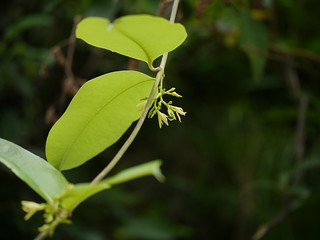
Wax Leaved Climber.

You may be right … Let us wait for confirmation.


Yes Sir. It is C.buchananii.


Sir, it (Cryptolepis buchnani) is quite common in Himachal Pradesh, up to 1500m. Flowering occurs in June-July.


Cryptolepis buchnani
Oh….. seems to have wide coverage…from western ghats to Himalayas……


Beautiful upload. It is Cryptolepis buchnanii


/wp-content/uploads/2020/10/Cryptolepis%20buchananii%205.jpg/wp-content/uploads/2020/10/Cryptolepis%20buchananii%204.jpg/wp-content/uploads/2020/10/Cryptolepis%20buchananii%203.jpg/wp-content/uploads/2020/10/Cryptolepis%20buchananii%201.jpg/wp-content/uploads/2020/10/Cryptolepis%20buchananii%202.jpg/wp-content/uploads/2020/10/Cryptolepis%20buchananii%206.jpg

Family: Apocynaceae
Date: 24th May 2015
Place: Renuka Ji, Himachal Pradesh
Habit: Climber


Very nice


/wp-content/uploads/2020/10/120720153648.jpg
/wp-content/uploads/2020/10/120720153647_-.jpg
Talegaon Dabhade Pune
July 2015
Requesting to please identify this wild creeper/climber with thin cream colored flowers. no fruits were seen. the pixz were taken from a distance as it was difficult to go closer.

Picture is not conclusive. If I have to guess- Cryptolepis buchnanii (Asclepiadaceae).


Agree with Cryptolepis buchnanii
the venation pattern is distinct.


/wp-content/uploads/2020/10/Dubia-Asclepiadaceae%20climber-near%20Ranikhet-IMG_0929-Uttarakhand-2.jpg
/wp-content/uploads/2020/10/Dubia-Asclepiadaceae%20climber-near%20Ranikhet-IMG_0930-Uttarakhand-1.jpg
/wp-content/uploads/2020/10/Dubia-Asclepiadaceae%20climber-near%20Ranikhet-IMG_0932-Uttarakhand-3.jpg
Asclepiadaceae Climber for ID from Ranikhet, Uttarakhand-GSMAY2016/13 : 3 posts by 2 authors. Attachments (3)
Kindly help with the ID of this woody climber photographed from near Ranikhet, Uttarakhand on April 14, 2012.

Cryptolepis dubia (=C.buchanani) to me.


/wp-content/uploads/2020/10/DSC_0258-9-3.JPG
/wp-content/uploads/2020/10/DSC_0259-3.JPG
/wp-content/uploads/2020/10/DSC_0256-0-3.JPG
/wp-content/uploads/2020/10/DSC_0254-2-2.JPG
/wp-content/uploads/2020/10/DSC_0257-9.JPG
/wp-content/uploads/2020/10/DSC_0255-2-7.JPG
SK443 22 MAR-2017:ID : 13 posts by 2 authors. Attachments (6)
Location : Pharpingl, Nepal
Date : 20 March 2017
Altitude : 4800 ft.
Is this Decalepis hamiltonii Wight & Arn. (accepted name)  ??
I guess there is a slight difference in the shape of seed pods and it is not
listed in Nepal

Pl. Check comparative images in efi site at genera and family page.


I checked all but could not close in into the particular one. nay be Decalepis hamiltonii Wight & Arn. but difficult without flowers. 


Wild or cultivated ? I think close to images at Cryptolepis dubia (Burm.f.) M.R.Almeida 

Doubtful ID. Not able to arrive at a decision seeing these photos.  Any more pictures ?


I have all images.
I guess I have to wait till the flowering season .


It is wild !


Looks like Cryptolepis buchanani. But other characters need to be checked before confirmation. Any additional photos of vegetative or flowering state pl.?

Thanks, … It is a syn. of Cryptolepis dubia (Burm.f.) M.R.Almeida 


Thank you all !

Cryptolepis buchananii Schultes in Roemer & Schultes (accepted name )
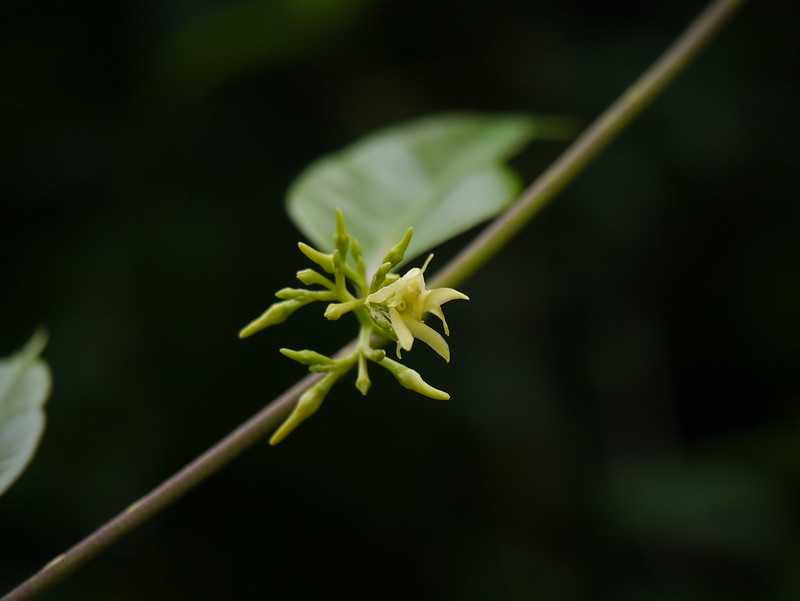
Cryptolepis dubia (Burm. fil.) M.R.Almeida (synonym)
Nepali Names : दुधे Dudhe / गाइसिङ्गे Gaaisinge / कोइले घुरियो Koile Ghuriyo /कालो सरिवा Kaalo Sariwaa  /कृष्ण सरिवा Krishna Sariwaa

Location: Chobhar, Nepal
Altitude: 4600 ft.
Date: 18 July 2017
I guess it is correct ID. Please validate ID.

Very good presentation of pictures showing all aspects of floral and vegetative characters which helps ID. One can emulate!


Location: Chobhar, Nepal
Altitude: 4600 ft.
Date: 15 December 2017
Is ID correct?

I also think these are closer to images at Cryptolepis buchananii
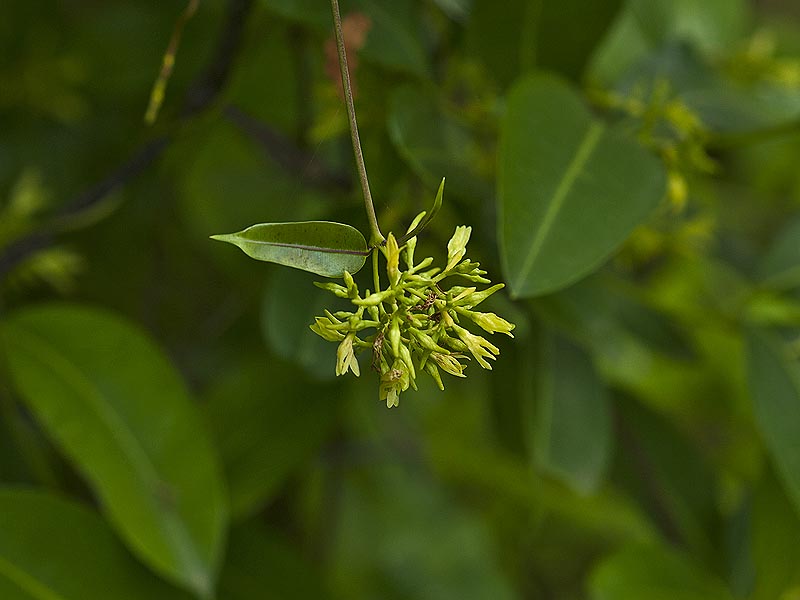

/wp-content/uploads/2020/10/_DSC0183-2.JPG
Images of Seeds!
Attachments (4)


/wp-content/uploads/2020/10/IMG_3529.JPG-foi.JPG
/wp-content/uploads/2020/10/IMG_3531.JPG-foi.JPG
identification no 290517sn1 : 4 posts by 3 authors. Attachments (3)
your help in identifying this small sapling with yellow flowers
date/time:aug.16
location:aambyvalley rd.,lonavala,pune
habitat:wild
plant habit:?
height:2-3 ft max

Some Apocynaceae member.


This is the Wax-leaved climber [Cryptolepis dubia]. Please check this link


/wp-content/uploads/2020/10/IMG_3530.JPG-foi.JPG
identification no 290517sn1 : 5 posts by 4 authors. Attachments (3)
your help in identifying this small sapling with yellow flowers
date/time:aug.16
location:aambyvalley rd.,lonavala,pune
habitat:wild
plant habit:?
height:2-3 ft max

Some Apocynaceae member.


This is the Wax-leaved climber [Cryptolepis dubia]. Please check this link


/wp-content/uploads/2020/10/m_DSCN1257.jpg
/wp-content/uploads/2020/10/m_DSCN1258.jpg
/wp-content/uploads/2020/10/m_DSCN1252.jpg
Climber I’d from Chandigarh : 4 posts by 3 authors. Attachments (3)
Habit- A climber with woody stem wrapped around each other having long lanceolated leaves
Habitat-wild
Photographed at Chandigarh
September 2016

Pl. Check comparative images at Apocyanaceae page in efi site.


Seems a Cryptolepis sp., probably C. buchanani


/wp-content/uploads/2020/10/20170901_131023.jpg
/wp-content/uploads/2020/10/20170901_131043.jpg
01092017BHAR3 : 3 posts by 3 authors. Attachments (2)
Found in Yelagiri hills of Eastern ghats.

This could be Cryptolepsis dubia..


.


Plant against bone fracture : 6 posts by 3 authors.
a few days back, someone told me about a plant named Garud ghas/ gangesi/ gingodi, whose roots are used if there is a bone fracture. its roots (supposedly light yellow coloured) are powdered and given orally twice or thrice daily. its known to hasten the bone formation.
Can anyone please guide me about the name of this plant. its NOT Cissus quadrangularis as told by him.
according to me it can be Cryptolepis buchananii  but i am not sure. Cryptolepis is used against bone fracture but its whole plant &/or roots are used as topical ointment and not ingested.
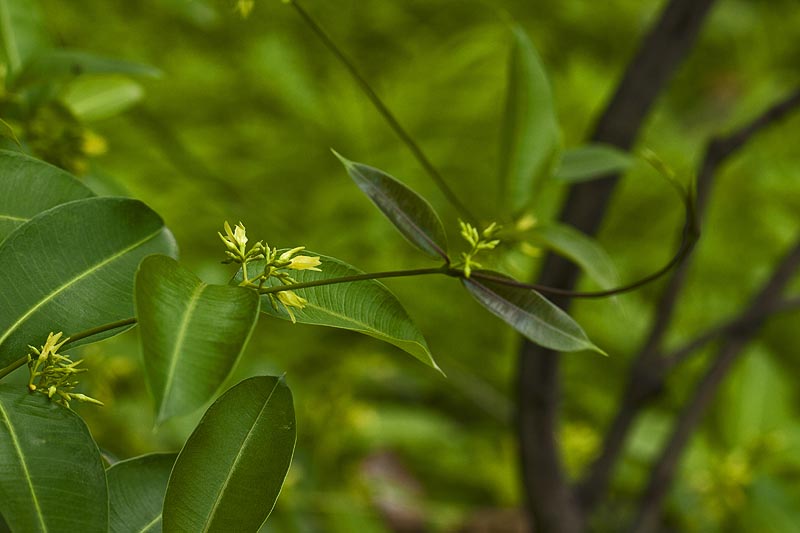
the report is from Madhya Pradesh.

There are many plants recorded to be in use for healing fractured bones. In practice, in my opinion, it is always better to take advise of orthopaedic surgeon.


I agree with you … but I am no professing here about the use of this particular plant against bone fracture I am concerned about the identity of this plant as plants like these can guide us to important leads for novel pharmaceutical molecules. What do you have to say ?


Nothing to say for this noble cause.


/wp-content/uploads/2020/10/IMG_20180518_122802.jpg
Wild woody climber id from BD_sm1523 : 5 posts by 3 authors. Attachments (1)
Picture taken : May, 2018
Habitat:  Rod side
Location: Rajshahi, Bangladesh

… the Indian sarsaparilla, Cryptolepis buchanani of Asclepiadaceae


/wp-content/uploads/2020/10/0AEC6D9F-2240-40B7-83A5-654C9277FDC0.jpeg
/wp-content/uploads/2020/10/E2A88218-C55E-429A-BC7E-017371ED1D57.jpeg
/wp-content/uploads/2020/10/49C1371D-19E7-4862-96B5-546D299BE4CB.jpeg
Cryptolepis buchananii Schultes : 2 posts by 2 authors. Attachments (3) – 1 Mb each.
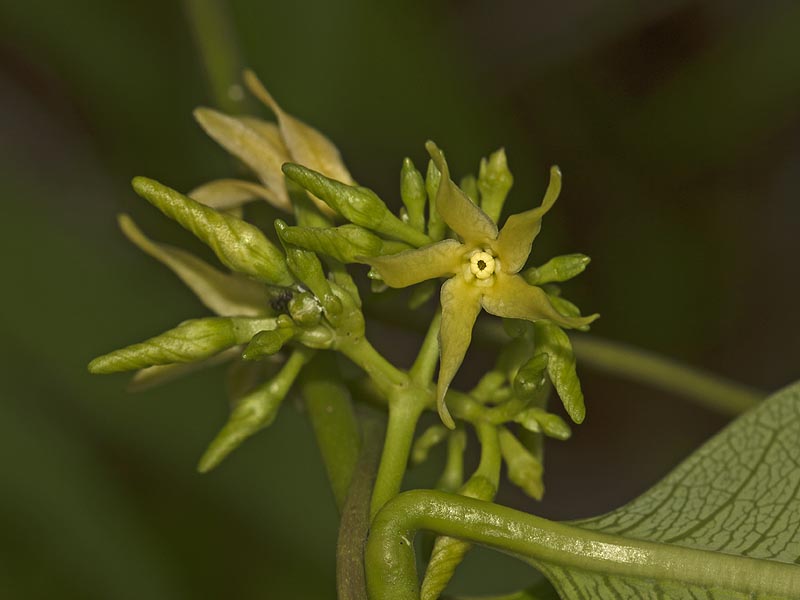
For ID. Date: 06/09/18
Location : Jawalagiri (near Hosur)
Altitude   : 997 ASL
Habitat.   : wild
No flowers were present.

could be Cryptostegia grandiflora Rubber vine Asclepiadaceae 


Thanks, …, Certainly from Apocyanaceae
https://sites.google.com/site/efloraofindia/species/a—l/a/apocynaceae
Pl. check … If not OK, than you can check comparative images at the above link.


I think more closer to images at Cryptolepis buchananii Schultes in Roemer & Schultes compared to those at Cryptostegia grandiflora
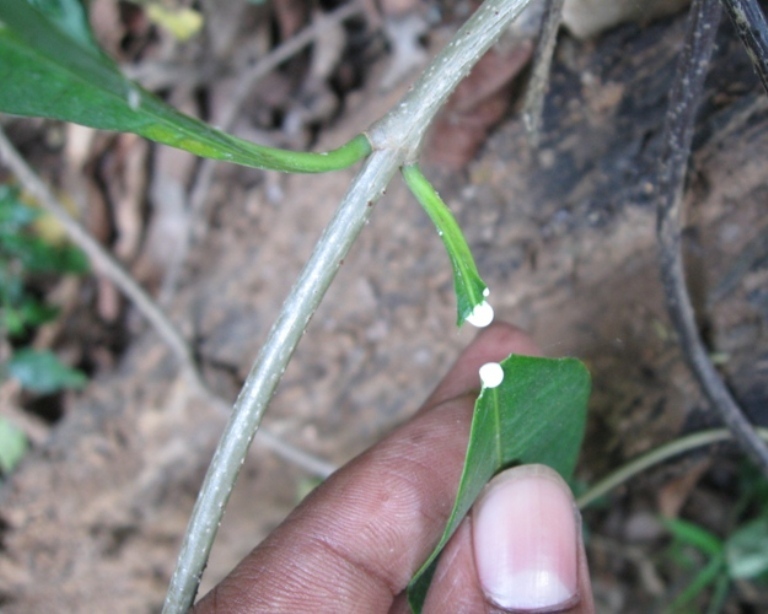


/wp-content/uploads/2020/10/P1330084.JPG
/wp-content/uploads/2020/10/P1330083.JPG
Wild Climber for ID : Lonavala : 08JUL19 : AK-18 : 7 posts by 4 authors. Attachments (2)
Wild climber seen in Karla, Lonavala in the third week of June

Pictures are blurred …


Cryptolepis sp. Apocynaceae.


This was due to rainy weather and low light.

Thanks for the id.
Could be Cryptolepis buchananii?
I have seen it before in the same area.

To me also appears close to images of Cryptolepis buchananii Schultes in Roemer & Schultes as per keys at Flora of China
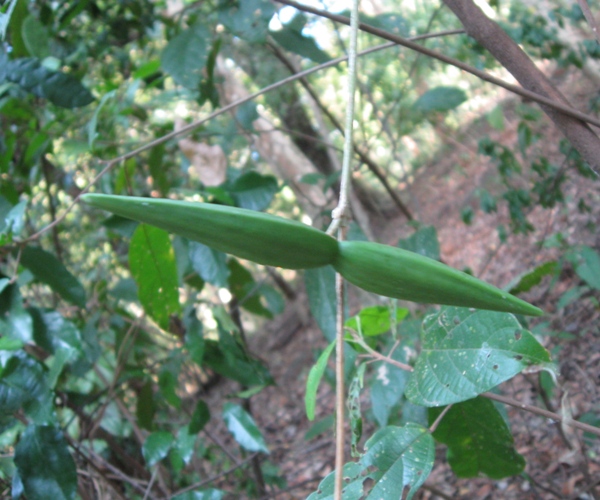

/wp-content/uploads/2020/10/DSC_2222.JPG/wp-content/uploads/2020/10/Cryptolepis%20buchanani%20perrenial%20twiner.JPG/wp-content/uploads/2020/10/Cryptolepis%20buchananii%20-Indian%20sarsaparilla-%20I%20IMG_3220.jpg/wp-content/uploads/2020/10/Cryptolepis%20buchanani%20twiner.JPG/wp-content/uploads/2020/10/Cryptolepis%20buchanani%20-%20Kavli.jpg/wp-content/uploads/2020/10/2618297906_741ef876cb_b.jpg/wp-content/uploads/2020/10/Cryptolepis%20buchnani-e-.jpg/wp-content/uploads/2020/10/260709-Swagat-Karnala-1-B.jpg/wp-content/uploads/2020/10/260709-Swagat-Karnala-1-A.jpg/wp-content/uploads/2020/10/Cryptolepis%20buchananii%20-Indian%20sarsaparilla-%20I%20IMG_3229.jpg/wp-content/uploads/2020/10/Cryptolepis%20buchananii%20-Indian%20sarsaparilla-%20I%20IMG_3227.jpg/wp-content/uploads/2020/10/Cryptolepis%20buchananii%20-Indian%20sarsaparilla-%20I%20IMG_3218.jpg/wp-content/uploads/2020/10/Cryptolepis%20buchananii%20-Indian%20sarsaparilla-%20I%20IMG_3230.jpg/wp-content/uploads/2020/10/Cryptolepis%20buchananii%20-Indian%20sarsaparilla-%20I2%20IMG_3227.jpg

21st July, 2009: CEC Land, South Gate, Sanjay Gandhi National Park, Mumbai; at Karnala Bird Sanctuary, Mumbai-Goa highway, Maharashtra- 26th Jully 2009; On 31/10/09 at Herbal Garden, on the outskirts of Hyderabad, A.P.; in Mumbai on 29 June ’10; Vetal tekdi Pune- June’10; Matheran hills; 17.07. 2010: Yelahanka, North Bangalore; Tungareshwar Wildlife Sanctuary; Mumbai on 29 June ’10;

.


Asclepiadaceae: 5 images.
Kindly tell me the name of species found in Salem Tamilnadu

Cryptolepis buchananii Schult. ex Roem. & Schult.
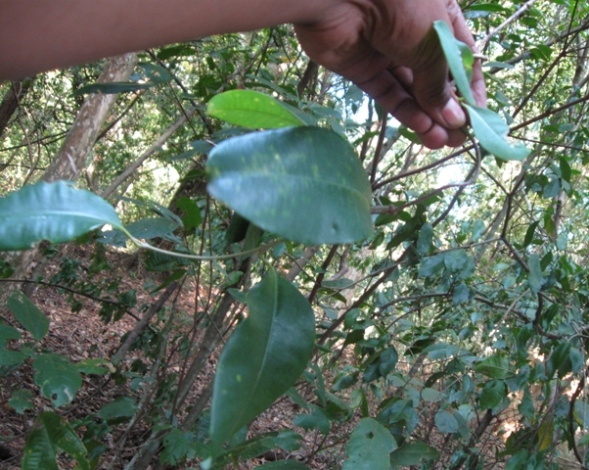

I agree with …


.


Cryptolepis buchananii Roem. & Schult.: 2 very high res. images.
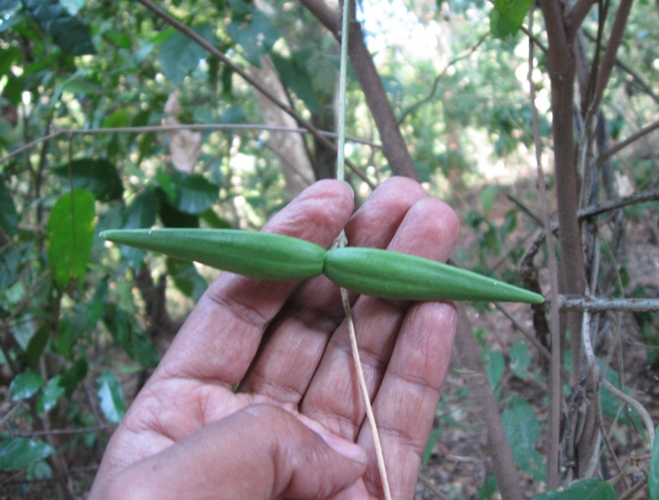
Location: Surkhet, West Nepal
Altitude: 866 m.
Date: 12 June 2021
Habit : Wild

.


Botanical name: Cryptolepis buchananii: 1 high res. image.
Habit: Climber

Habitat: near Agricultural field
Date: 19-03-2022
Location: Rajouri, j and k


/wp-content/uploads/2020/10/IMG_20200421_184029.jpg
/wp-content/uploads/2020/10/IMG_20200421_183930.jpg
Need help with this id : 3 posts by 3 authors. Attachments (2)
Please help with id’ing this liana.

Crypteostegia grandiflora


It may also be Cryptolepis dubia as per discussions at Need ID: vine with milky lates


Better try to collect leaves or old fruits around this liana,


It seems to be Cryptolepis dubia with the characteristic stem and typical habitat.


.


Need ID: vine with milky lates: 3 high res. images.
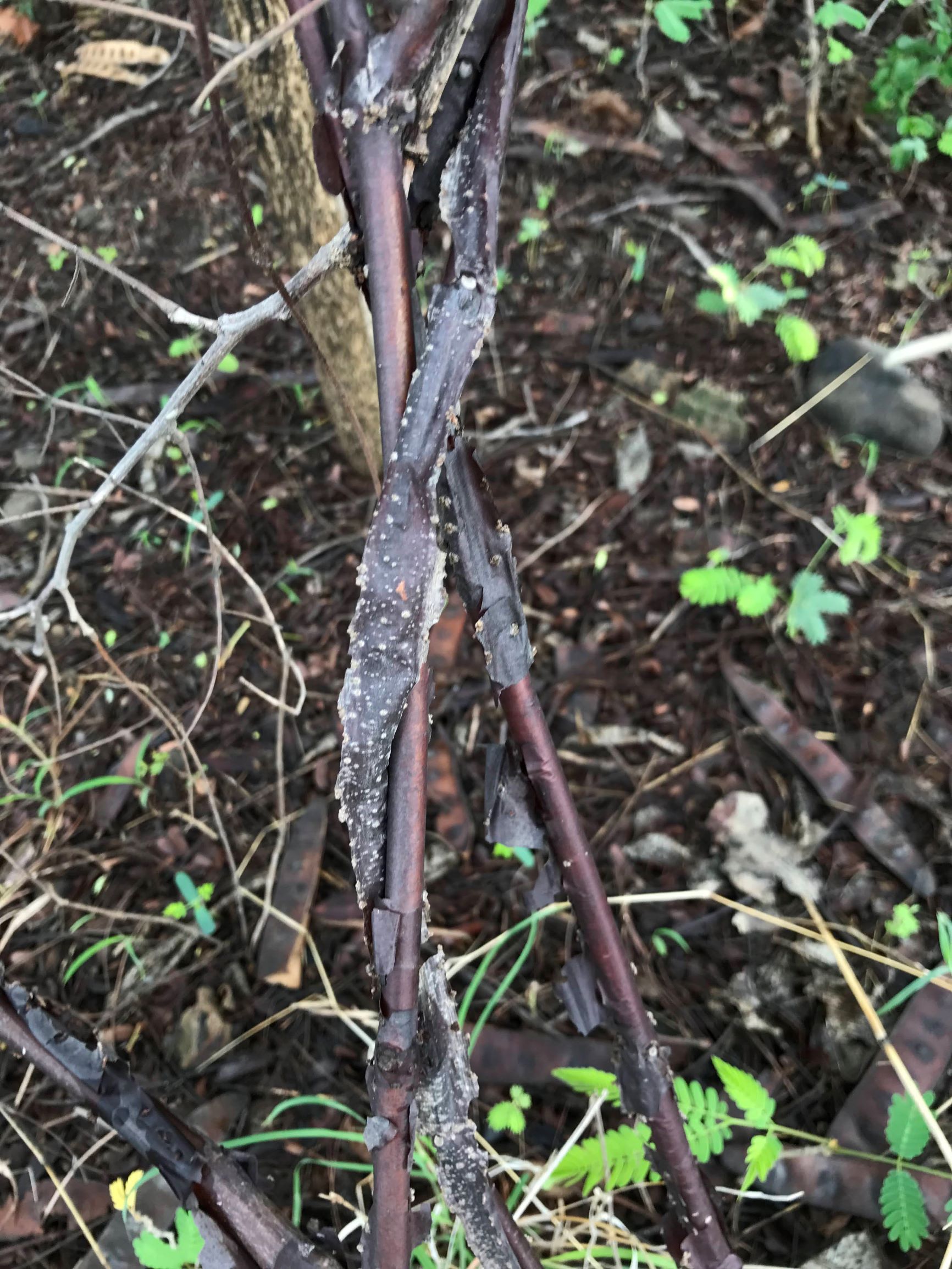
Has a strange purplish film on its stem

Bhopal
Black soil
4/7/2022

Pl. check https://efloraofindia.com/2011/01/22/apocynaceae/


Cryptostegia grandiflora,


I concur with …


I think it is Cryptolepis dubia


I  agree with …


.


Cryptolepis buchananii Schult. ex Roem. & Schult.: 8 very high res. images.
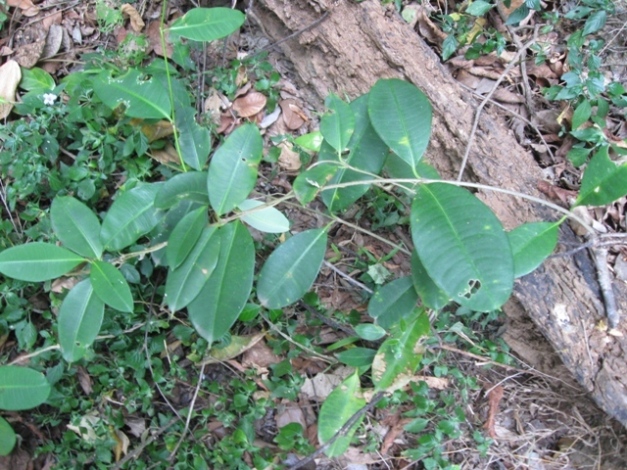
Location: Palpa Deurali, Palpa, Nepal 
Date: 30 May 2023
Elevation: 838 m.
Habit : Wild

.


270825PKD2: Regarding Identification of the sp. collected from Ganjam Odisha on August 2025: 4 high res. images.


Cryptolepis buchananii R.Br. ex Roem. & Schult.
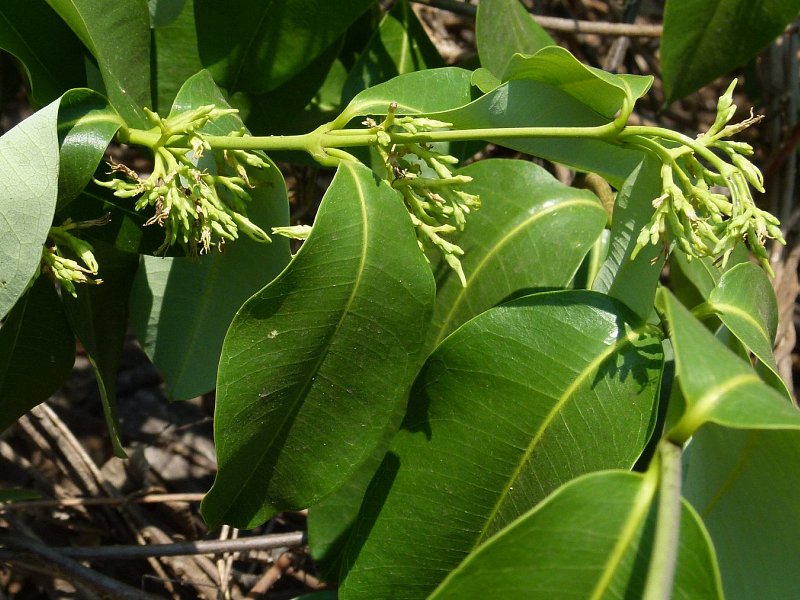

.


03102025PKD1: Id pls collected from Kandhamal, Odisha on Oct 2025: 5 high res. images.


Cryptolepis buchananii Roem. & Schult.
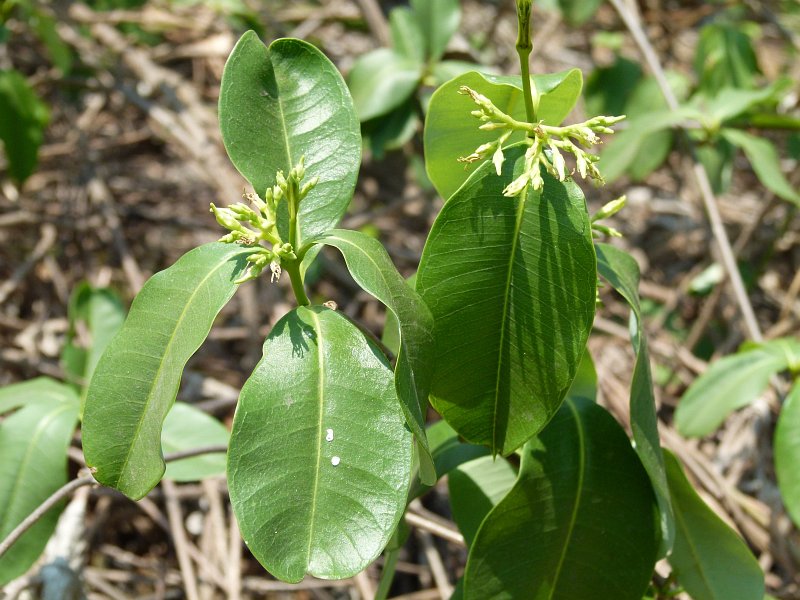

.


Species for identification: 3 images.

please help in the identification of species. Pictures are attached.
Location: Tanda forest, Haldwani, Uttarakhand; Elevation: ~300 m
It seems like a climber and found inside a Teak mixed forest.

Pl. check:
https://efloraofindia.com/efi/cryptolepis-buchananii/


.


190526pkd2: Id pls collected from Khurda Odisha on May 2026: 3 high res. images.


Cryptolepis buchananii Schult. ex Roem. & Schult.
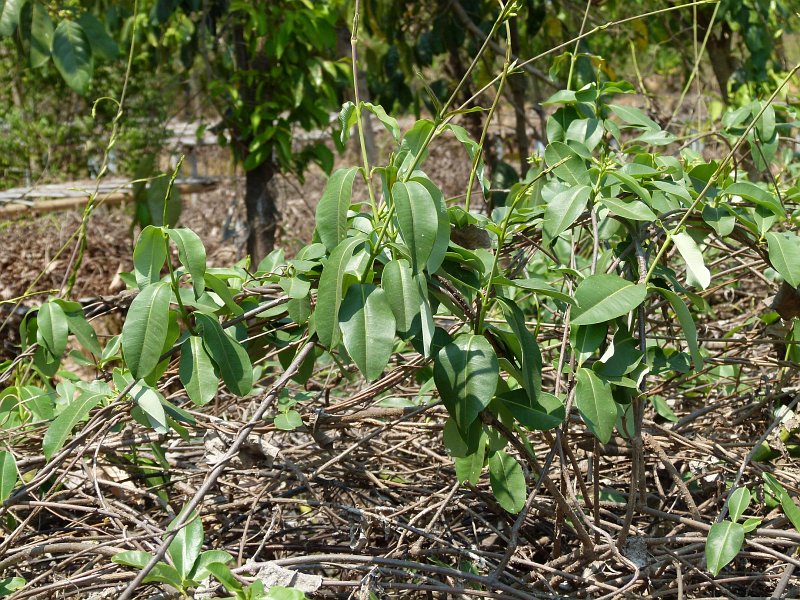

.


220726pkd2: Id pls collected from Gajapati Odisha on July 2026: 2 high res. images.


Cryptolepis buchananii R.Br. ex Roem. & Schult.


,


SMP:: VOF 3 :: Cryptolepis for ID: 1 image.
Cryptolepis for ID on way to Auli Govindghat


Cryptolepis buchanan


.


Names of Plants in India :: Cryptolepis buchananii R.Br. ex Roem. & Schult.: 1 image.
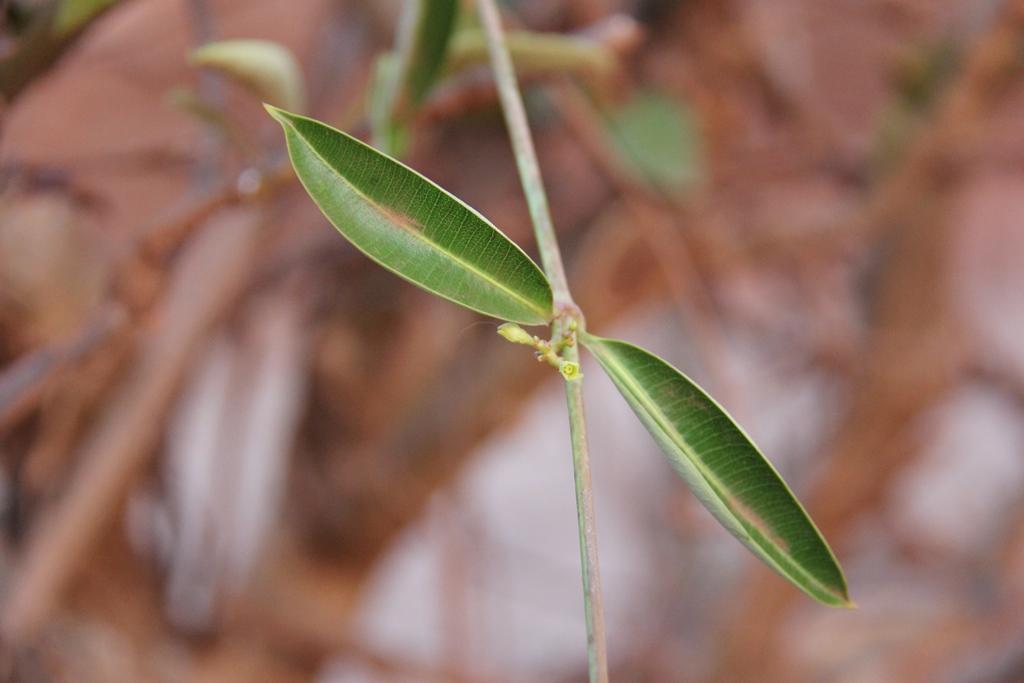
Cryptolepis buchananii R.Br. ex Roem. & Schult.
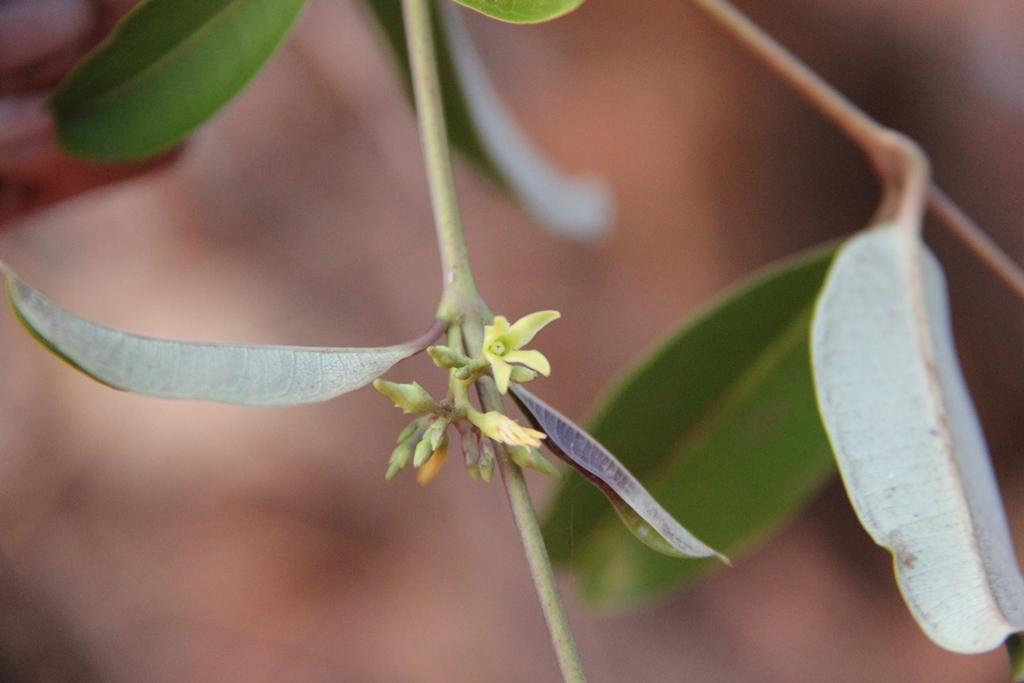
krip-toh-LEP-is — Greek: kryptos (hidden, concealed, secret); lepis (scale); refers to a scale-like structure located inside the flower’s corolla tube … compiled from the web

byoo-kah-NAN-ee-eye — named for Francis Buchanan-Hamilton [↗], Scottish surgeon, surveyor and botanist who made significant contributions as a geographer and zoologist while living in India. … compiled from the web.

commonly known as: Indian sarsaparilla, wax-leaved climber • Angika: मटका दूधिया लतरा matka dudhiya latra • Bengali: হরজোড়া লতা harjora lata, কৃষ্ণ অনন্তমূল krishna anantamul • Bhili: दूधीबेल dudhibel, गेंडासिंगी gendasingi, नागबेल nagbel, सेता कावळी seta kawali • Dogri: काली तरेणी kali tareni • Garhwali: दूधीबेल dudhi-bel, मेडासिंगी meda-singhi • Gujarati: કાળીવેલ kalivel, કાવળી kavali • Hadauti: मेड़ासिंगी medasingi • Haryanvi: दुधी dudhi • Hindi: दूधीबेल dudhibel, काला बेल kala bel, करंटा karanta, नागबेल nagbel • Kannada: ಹಾಲು ಬಳ್ಳಿ halu balli, ಕರೆ ಬಳ್ಳಿ kare balli, ಮೆಟಗುಳಿ ಹಂಬು metaguli hambu, ಮೆಟ್ಲ ಹಂಬು metla hambu • Konkani: दुधवेल dudhvel, कावळी kavali • Kumaoni: दूधीबेल dudhi-bel • Malayalam: കളിപ്പാൽവള്ളി kalipaalvalli, കാട്ടുപാൽവള്ളി kattupaalvalli, കിളിപ്പാൽവള്ളി kilippaalvalli, പാൽവള്ളി paalvalli • Marathi: दुधवेल dudhvel, कावळी kavali • Mizo: thei-kel-ki-suak • Nagpuri: दूधला लार dudhla lar, मेढा-सिंगी medha-singhi, वैश-लक्ष्मण vaish-lakashman • Nepali: दुधे dudhe, गाइसिङ्गे gaaisinge, कोइले घुरियो koile ghuriyo, कालो सरिवा kaalo sariwaa, कृष्ण सरिवा krishna sariwaa • Odia: ଦୁଧି ନଈ dudhi nai, ଗୋପକାହ୍ନୁ gopakaanhu • Pahari: चीकबेल cheekbel, दूधली dudhli, करंटा karanta • Rajasthani: करमाटा की बेल karmata-ki-bel • Sanskrit: कृष्णसारिवा krishnasariva • Santali: ᱩᱛᱨᱤ ᱫᱩᱫᱷᱤ utri dudhi • Tamil: மாட்டாங் கொடி maattaang kodi, பால் கொடி paal kodi • Telugu: అడవి పాలతీగ adavi paalatige, రోకలిపాల rokalipaala, రైతుపాల rythupaala

known for / parts made use of: the root, stem, leaves (medicinal), stem (fibre, cordage), the milky latex or the exudate (potent localized remedy) … compiled from the web.

botanical namesCryptolepis buchananii R.Br. ex Roem. & Schult. … heterotypic synonymsCryptolepis dubia (Burm.f.) M.R.Almeida • Cryptolepis reticulata (Roth) Reider • Periploca dubia Burm.f. … and more at POWO, retrieved August 19, 2026
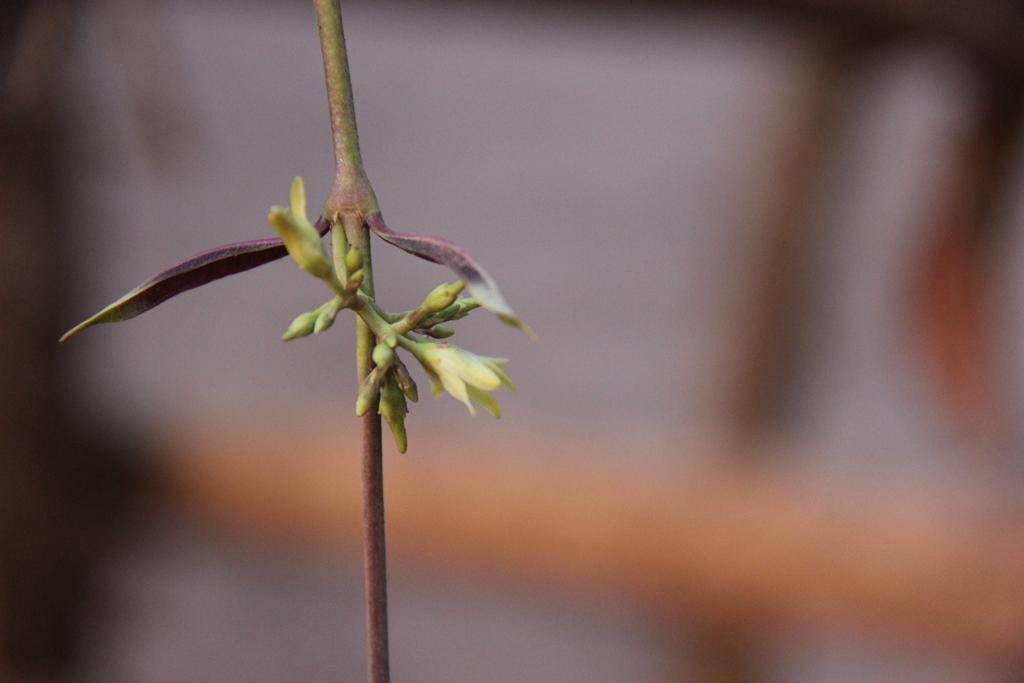
Bibliography / etymology / notes
Links listed as references in the notes below, may not remain valid permanently. Portals / websites have a tendency to re-organize / revise their content, leading to change in URLs of pages in their site. Some sites may even close down at their own will. The bits about the languages of India mentioned below are merely some bare facts gathered from the internet; just enough to satisfy curiosity about “where” could the listed names be best prevalent in India. All English transliterated names to be taken sensu amplo.
~~~~~ ENGLISH ~~~~~
written and spoken widely, in most parts of India
Indian sarsaparilla, wax-leaved climber
  • Flowers of India … (accessed: August 19, 2026)
  • Indian sarsaparilla — A historical commercial trade name arising from colonial-era pharmacology. British physicians in the 19th century utilized the root systems of both Hemidesmus indicus and Cryptolepis buchananii as highly effective domestic substitutes for the Central American Smilax (The True Sarsaparilla), combining them under a single western trade moniker. … compiled from the web.
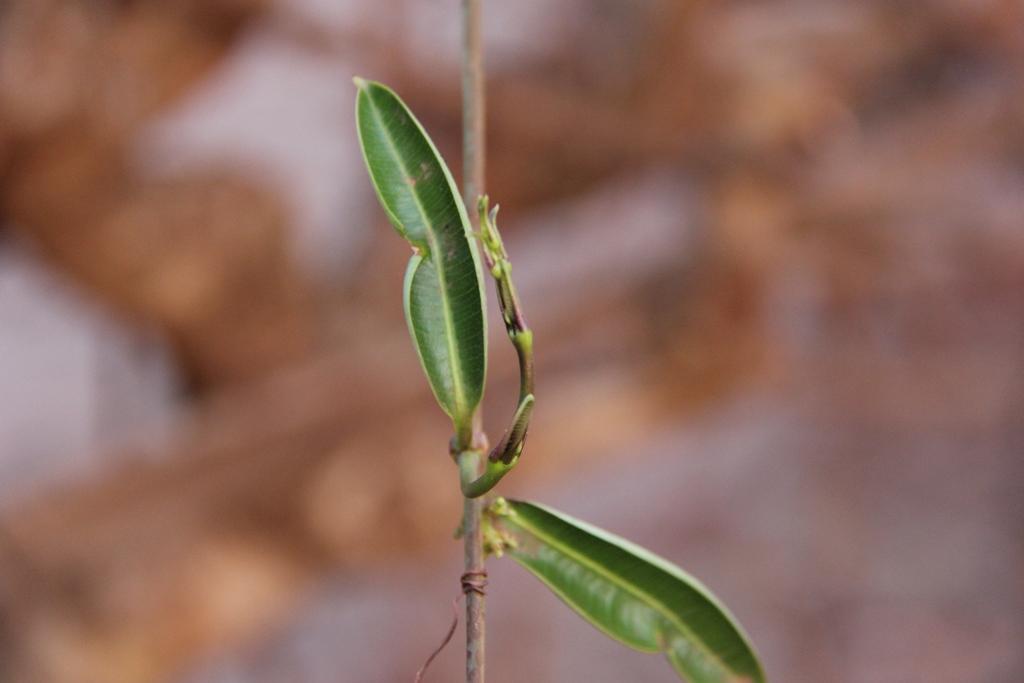
  • Wax-leaved climber — A highly accurate morphological name referencing the plant’s distinctive, leathery foliage. The upper surface of the leaves features a thick, glossy cuticle layer that reflects sunlight brilliantly, giving the vine a distinctively polished, wax-coated appearance in the field. … compiled from the web.
~~~~~ ANGIKA ~~~~~
written in: historically Anga Lipi, later Kaithi, presently Devanagari (अंगिका) … spoken in: Bihar, Jharkhand … other names for this language: Anga, Angikar, Chhika-Chhiki
मटका दूधिया लतरा matka dudhiya latra
  • Floristic Diversity of Banka – बिहार वानिकी विकास निगम लिमिटेड (Bihar Forestry Development Corporation Limited) … (downloaded: December 31, 2023)
  • Floristic Diversity of Rohtas – बिहार वानिकी विकास निगम लिमिटेड (Bihar Forestry Development Corporation Limited) … (downloaded: December 31, 2023)
  • Floristic Diversity of Jamui – बिहार वानिकी विकास निगम लिमिटेड (Bihar Forestry Development Corporation Limited) … (downloaded: December 31, 2023)
  • Floristic Diversity of Munger – बिहार वानिकी विकास निगम लिमिटेड (Bihar Forestry Development Corporation Limited) … (downloaded: December 31, 2023)
  • Floristic Diversity of Udaipur – बिहार वानिकी विकास निगम लिमिटेड (Bihar Forestry Development Corporation Limited) … (downloaded: December 31, 2023)
  • Floristic Diversity of West Champaran – बिहार वानिकी विकास निगम लिमिटेड (Bihar Forestry Development Corporation Limited) … (downloaded: December 31, 2023)
  • मटका दूधिया लतरा (Matka dudhiya latra) — A hyper-localized descriptive name heavily rooted in the Angika dialect of southeastern Bihar. The compound phrase captures every major element of the plant’s profile: latra defines it as a climbing vine, dudhiya denotes its heavy flow of milky latex, and matka (earthen pot) visually references the wide, curving, horizontal shape of its mature twin seed pods. … compiled from the web.
~~~~~ BENGALI ~~~~~
written in: Bengali (বাংলা) … spoken in: West Bengal, Assam, Jharkhand, Tripura, Andaman & Nicobar Islands
হরজোড়া লতা harjora lata, কৃষ্ণ অনন্তমূল krishna anantamul
  • Mallick J K. 2020. An annotated checklist of Dicotyledonus Angiosperms in Darjeeling Himalayas and foothills, West Bengal, India. J New Biol Rep 9(2): 94- 208. … (downloaded: Feb 9, 2022)
  • হরজোড়া লতা (Harjora lata) — A regional name meaning “the bone-joining vine”, documented in the Darjeeling Himalayan and Assamese floristic checklists. While Harjora most commonly designates the bone-like Cissus quadrangularis, it is applied as a therapeutic shared name for Cryptolepis buchananii due to its extensive traditional use by foothill communities to heal fractures and reset bones. … compiled from the web.
  • কৃষ্ণ অনন্তমূল (Krishna anantamul) — A descriptive regional name translating literally to “the black endless root”. Documented in floristic checklists of the Darjeeling foothills and plains, it functions as a precise Bengali counterpart to the Sanskrit Krishna Sariva, denoting the intensely dark matte-black bark of the mature vine. … compiled from the web.
~~~~~ BHILI ~~~~~
written in: Devanagari (भीली), Gujarati (ભીલી) … spoken in: Dadra and Nagar Haveli and Daman and Diu, Madhya Pradesh, Gujarat, Rajasthan, Maharashtra
दूधीबेल dudhibel, गेंडासिंगी gendasingi, नागबेल nagbel
  • Banswara – Forest Department – Rajasthan Government … (downloaded: Sep 5, 2020)
  • दूधीबेल (Dudhibel) — The standard regional variant of the universal “milk vine” identifier, noting the immediate, heavy flow of white sap from broken stems. … compiled from the web.
  • नागबेल (Nagbel) — A habit-based name meaning “snake vine”, capturing the climber’s tightly coiling and twisting growth pattern through forest trees. … compiled from the web.
  • गेंडासिंगी (Gendasingi) — A unique, history-rich pastoral name translating to “the rhinoceros-horn vine”. Documented in Banswara forest registries, it captures a distinct visual marker: the climber’s stout, woody, and intensely rugged twin seed pods perfectly mimic the thick, fibrous texture and curvature of a rhinoceros horn. … compiled from the web.
सेता कावळी seta kawali
  • Nigwal, Mekusingh (2011) – Status of tribal agriculture in Dhar district, M P – Chapter 4 :: Shodhganga :: a reservoir of Indian theses @ INFLIBNET
  • Seta Kawali” (सेता कावळी) — the prefix “Seta” (सेता) is a localized tribal term meaning “wild” or “uncultivated”; “Kawali” (कावळी or कावली) — a Marathi term meaning “crow-black” colour. As the climber matures, its slender green stems shed their outer layer and develop a deeply fissured, cracked, intensely dark matte-black bark. The name translates to “The Wild, Matte-Black Vine”. … compiled from the web.
~~~~~ DOGRI ~~~~~
written in: Devanagari (डोगरी) … spoken in: Jammu & Kashmir … spoken by the Dogras
काली तरेणी kali tareni
  • Bhatia, Harpreet & Sharma, Yash & Manhas, Rajesh & Kumar, Kewal. (2013). Ethnomedicinal plants used by the villagers of district Udhampur, J&K, India. – Journal of ethnopharmacology. 151. 10.1016/j.jep.2013.12.017. … (downloaded: July 27, 2026)
  • Sumeet Gairola, Jyotsana Sharma, Yashbir Singh Bedi – A cross-cultural analysis of Jammu, Kashmir and Ladakh (India) medicinal plant use – Journal of Ethnopharmacology, Volume 155, Issue 2, 2014, Pages 925-986, ISSN 0378-8741 … (downloaded: Jan 29, 2022)
  • Bamber, Charles James – Plants of the Punjab : a descriptive key to the flora of the Punjab, North-west Frontier Province, and Kashmir, the names of plants listed in this book are a mix of Punjabi, Hindi and Urdu … (downloaded: Jan 7, 2023)
  • काली तरेणी (Kali Tareni) — An authentic Dogri name translating literally to “the black savior-vine”. Formally documented in ethnobotanical surveys of District Udhampur, the prefix Kali denotes the climber’s dark, mature bark, while Tareni (“savior”) reflects its high therapeutic importance in local folklore as a vital remedy used to reset fractured bones and heal deep structural injuries. … compiled from the web.
~~~~~ GARHWALI ~~~~~
written in: Devanagari (गढ़वळि) … spoken in: Uttarakhand
दूधीबेल dudhi-bel, मेडासिंगी meda-singhi (or मेढ़ासिंगी meda-singhi)
  • Gairola, Sumeet & Sharma, C & Rana, C. & Ghildiyal, S.K. & Suyal, Sarvesh. (2010). Phytodiversity (Angiosperms and Gymnosperms) in Mandal-Chopta Forest of Garhwal Himalaya, Uttarakhand, India. Nature and Science. 8. 1-17. … (downloaded: Sep 9, 2023)
  • दूधीबेल (Dudhi-Bel) — A foundational local name translating to “the milk vine”, utilized by hillside communities to note the heavy, immediate flow of white sap from broken stems. … compiled from the web.
  • मेडासिंगी (Meda-singhi) — A highly descriptive pastoral name meaning “the ram-horn vine”. Documented in high-altitude forest surveys, it captures a brilliant visual trait: referencing how the climber’s long, curved, horizontally twin-paired seed pods look exactly like the horns of a mountain ram. … compiled from the web.
~~~~~ GUJARATI ~~~~~
written in: Gujarati (ગુજરાતી) … spoken in: GujaratDadra & Nagar HaveliDaman & Diu
કાળીવેલ kalivel, કાવળી kavali
  • વનસ્પતીઓ ના ગુજરાતી તથા બોટનીકલ નામ ની યાદી :: સંકલન કર્તા વૈધ શ્રી કે,જે,ઝાલા … (downloaded: 19 Jan 2026)
  • કાળીવેલ (Kalivel) — A literal vernacular name translating to “the black vine”. It serves as a direct regional equivalent to the Sanskrit Krishna Sariva, denoting the intensely dark color of the mature root system and vine bark. … compiled from the web.
  • કાવળી (Kavali) — A border-forest name adopted from the Marathi word for “crow-black” colour. Vetted by regional Ayurvedic directories, it references how the vine’s mature stems shed their outer layer to reveal a deeply cracked, matte-black bark. … compiled from the web.
~~~~~ HADAUTI ~~~~~
written in: Devanagari (हाड़ौती or हाड़ोती) … spoken in: Hadoti region (s-e Rajasthan), neighbouring areas of Madhya Pradesh … other names for this language: Harauti or Hadoti
मेड़ासिंगी medasingi
  • Bundi – Forest Department – Rajasthan Government … (downloaded: Sep 21, 2020)
  • मेड़ासिंगी (Medasingi) — An authenticated regional name documented by the Bundi Forest Department. This pastoral name translates literally to “the ram-horn vine”. It captures a brilliant visual identification marker, referencing how the climber’s unique, long, twin-paired seed pods grow horizontally opposite each other, perfectly mimicking the shape of a ram’s horns. … compiled from the web.
~~~~~ HARYANVI ~~~~~
written in: Devanagari (हरियाणवी or हरयाणवी) … spoken in: Haryana, Delhi
दुधी dudhi
  • Haryana Forest Flora – A Comprehensive Database of Ligneous Plants of Haryana (India) … (accessed: August 21, 2026)
  • Bamber, Charles James – Plants of the Punjab : a descriptive key to the flora of the Punjab, North-west Frontier Province, and Kashmir, the names of plants listed in this book are a mix of Punjabi, Hindi and Urdu … (downloaded: Jan 7, 2023)
  • दुधी (Dudhi) — meaning milky, implies as “milk vine”, used by local communities to note the heavy, immediate flow of white sap from broken stems. … compiled from the web.
~~~~~ HINDI ~~~~~
written in: Devanagari (हिन्दी) … spoken in: DelhiUttar PradeshBiharChhattisgarhHaryanaJharkhandMadhya Pradesh, Rajasthan, Uttarakhand
दूधीबेल dudhibel
  • Wagh, Vijay & Jain, Ashok. (2014). Floristic Diversity of Jhabua District, Madhya Pradesh, India. 6. 146-167. 10.5829/idosi.ajps.2013.6.4.1116. … (downloaded: Nov 12, 2024)
  • Dudhi” (दूधी) — meaning “milky” and “Bel” (बेल) — meaning “vine” or “climber”. The name literally translates to “The Milky Vine”, which is the most striking visual identification feature of Cryptolepis buchananii when its stem is cut. … compiled from the web.
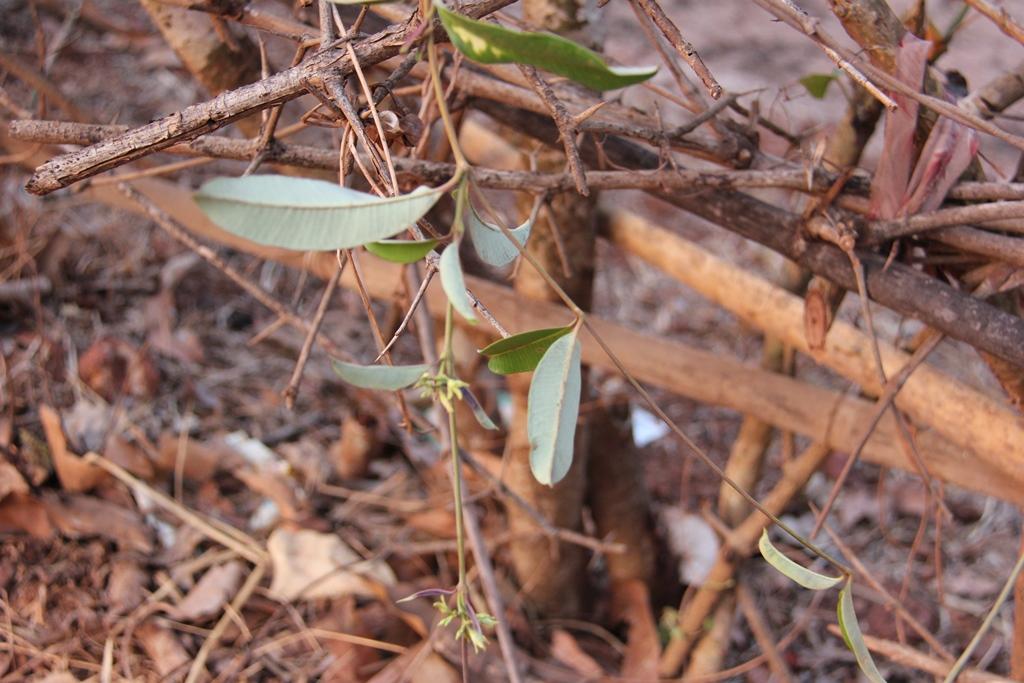
काला बेल kala bel
  • Jadhao, Ajay & Sreedevi, Anu & Sable, Poonam & Mishra, Sweta. (2025). A Comprehensive Review of Cryptolepis buchananii R.Br. ex Roem. & Schult.. 10.5281/zenodo.15380504. … (accessed: August 19, 2026)
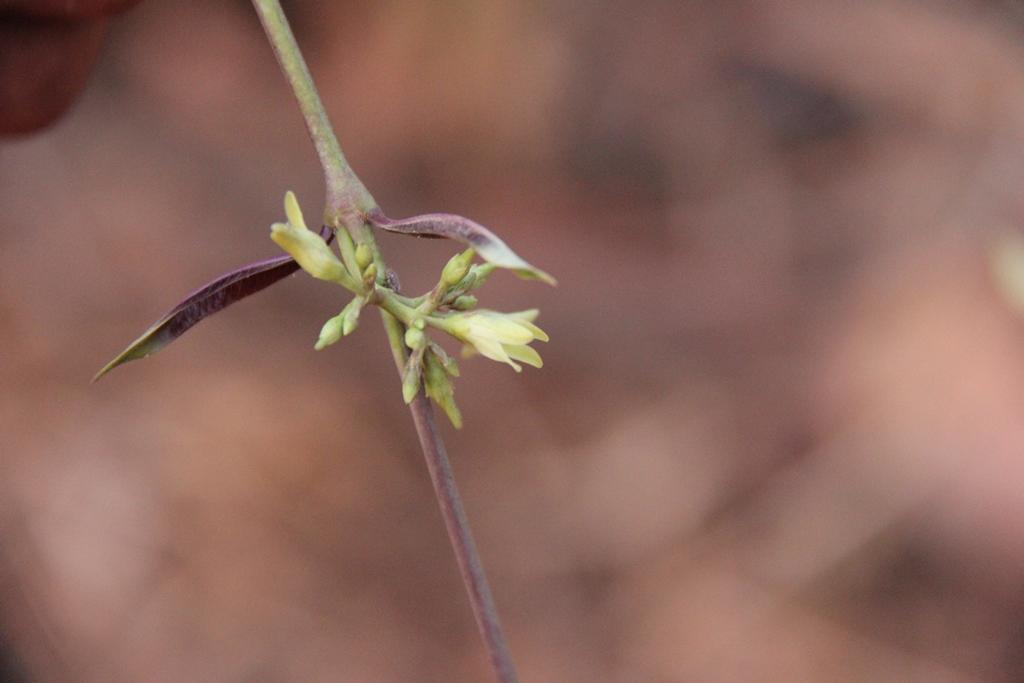
  • Kala bel” (काला बेल) — a descriptive name “Kala” (काला) meaning “black” and “Bel” (बेल) — meaning “vine” or “climber”. As the climber matures, its slender green stems shed their outer layer and develop a deeply fissured, cracked, intensely dark matte-black bark. The name translates to “The Black Vine”. … compiled from the web.
करंटा karanta (or करंट karant)
  • The Useful Plants of India (CSIR, Publications & Information Directorate)
  • Umrao Singh, A M Wadhwani, B M Johri – Dictionary of Economic Plants in India – Second Edition 1983, Indian Council of Agricultural Research, New Delhi
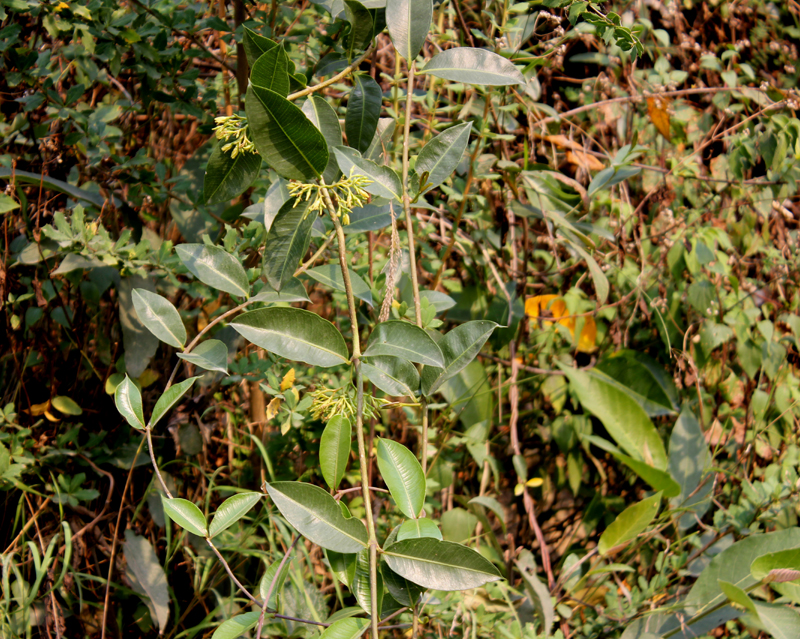
  • करंटा / करंट (Karanta / Karant) — An authenticated regional trade name prominently documented across a century of botanical literature, including the CSIR’s registries, state forest Floras, and Charles James Bamber’s historical 1916 “Plants of the Punjab”. Derived from the classical Sanskrit root Kuranta, the name visually denotes an “intertwining/sprawling climber”. It refers directly to the vine’s natural field habit of weaving and scrambling over local shrubbery across the transitional Shivalik foothill belts of Haryana, Himachal Pradesh, and Jammu borders. … compiled from the web.
नागबेल nagbel
  • Nigwal, Mekusingh (2011) – Status of tribal agriculture in Dhar district, M P – Chapter 4 :: Shodhganga :: a reservoir of Indian theses @ INFLIBNET
  • Nagbel” (नागबेल) — derived from “Nag” (Cobra/Snake) and “Bel” (Vine/Climber). The vine has long, slender, cylindrical, and flexible woody stems that twist and windingly weave through vegetation exactly like the serpentine motion of a slithering cobra. … compiled from the web.
~~~~~ KANNADA ~~~~~
written in: Kannada (ಕನ್ನಡ) … spoken in: Karnataka
ಹಾಲು ಬಳ್ಳಿ halu balli
  • Imran Baig – Plants of Mahatma Gandhi Botanical Garden – A biodiversity heritage site … (downloaded: Nov 17, 2023)
  • ಹಾಲು (Halu) — the Kannada word for “milk” or “exudate”; ಬಳ್ಳಿ (Balli) — meaning “vine”, “creeper” or “climber”. The namde translates to “The Milk Vine” or “The Milk Creeper”. The name describes the plant’s prominent milky latex oozing from cut stems and leaves. … compiled from the web.
ಕರೆ ಬಳ್ಳಿ kare balli
ಮೆಟಗುಳಿ ಹಂಬು metaguli hambu
ಮೆಟ್ಲ ಹಂಬು metla hambu
~~~~~ KONKANI ~~~~~
written in: Devanagari (कोंकणी) / Kannada (ಕೊಂಕಣಿ) / Malayalam (കൊങ്കണി) / Perso-Arabic (کونکنی) / Romi (Konknni) … spoken in: Goa, Karnataka, Maharashtra, Kerala, Gujarat
दुधवेल dudhvel, कावळी kavali
  • Pratibha Pande, Ana Margarida Pereira – A Reference Guide :: Goa’s National Park and Wildlife Sanctuaries (2014) – Forest Department, Government of Goa
  • दुधवेल / कावळी (Dudhvel / Kavali) — Validated by the Goa Forest Department’s sanctuary reference guides, these primary Marathi terms are universally utilized across Goan wildlife sanctuaries due to the lack of a distinct, native Konkani vernacular identifier for the species. They cleanly document how local forest communities seamlessly share border-state terminology to identify the plant’s distinct milky exudate and crow-black bark. … compiled from the web.
~~~~~ KUMAONI ~~~~~
written in: Devanagari … spoken in: Uttarakhand
दूधीबेल dudhi-bel
  • Osmaston, A. E. 1927. A Forest Flora for Kumaon. Govt. Press, Allahabad. … (downloaded: Aug 31, 2023)
  • दूधीबेल (Dudhi-Bel) — Authenticated by A.E. Osmaston’s historical 1927 “A Forest Flora for Kumaon”, this long-standing vernacular name translates literally to “the milk vine”. It establishes that across the Kumaon hills, the immediate, heavy flow of white sap from broken stems has served as the definitive visual identifier for forest communities for generations. … compiled from the web.
~~~~~ MALAYALAM ~~~~~
written in: Malayalam (മലയാളം) … spoken in: Kerala, Lakshadweep
കളിപ്പാൽവള്ളി kalipaalvalli, കാട്ടുപാൽവള്ളി kattupaalvalli, കിളിപ്പാൽവള്ളി kilippaalvalli, പാൽവള്ളി paalvalli
  • Subrahmanya, Prasad K – Exploration and elucidation of traditional medicinal plants of erstwhile Tulunadu and surrounding area of Kerala and Karnataka :: Chapter 4 :: Shodhganga – a reservoir of Indian theses @ INFLIBNET
  • Jose Mathew – Floristic and ethnobotanical studies of Achankovil forests Western Ghats Kerala :: Chapter 5 :: Shodhganga – a reservoir of Indian theses @ INFLIBNET
  • പാൽവള്ളി (Paalvalli) — derived from പാൽ (Paal) meaning “milk” and വള്ളി (Valli) meaning “vine or climber”. It translates literally to “The Milk Vine”. The name describes the plant’s prominent milky latex oozing from cut stems and leaves. … compiled from the web.
  • കളിപ്പാൽവള്ളി (Kalipaalvalli) — prefixed with കളി (Kali), which means “play”, “game” or “toy”. It translates literally to “The Play Milk-Vine”. In rural Kerala, children playing in the countryside or on forest fringes historically used this plant for games. Because the slender stems are highly flexible and yield a thick, sticky white sap immediately upon being broken, village children would snap the vines to use the sticky latex as a natural, non-toxic “play glue” or mock paint. … compiled from the web.
  • കാട്ടുപാൽവള്ളി (Kattupaalvalli) — prefixed with കാട്ടു (Kattu), which means “wild” or “of the forest”. It translates to “The Wild Milk-Vine”. … compiled from the web.
  • കിളിപ്പാൽവള്ളി (Kilippaalvalli) — കിളി (Kili) translates directly to “bird”. When combined, the compound name കിളിപ്പാൽവള്ളി (Kilippaalvalli) literally translates to “The Bird’s Milk-Vine”. Not being sure of its etymology, few possibilities are: 1) When the plant’s fruit matures, it develops distinctive, twin-paired woody follicles (seed pods) that grow horizontally opposite one another. To the local forest trackers, these starkly divergent pods look precisely like the outstretched wings of a bird in mid-flight or a bird’s beak. 2) Because the plant creates a dense, tangled, protective leafy mat right over the tops of host bushes, it is a highly favored, secure nesting site for small forest birds (such as bulbuls and sunbirds). 3) Additionally, when the flexible stems are broken, they instantly release an incredibly rich, thick, white fluid. In ancient folk wisdom, this prominent white fluid was metaphorically linked to “crop milk” (the nutritious fluid certain birds regurgitate for their fledglings) or simply viewed as the unique milk-yielding vine that belongs to the birds’ forest canopy. … compiled from the web.
~~~~~ MARATHI ~~~~~
written in: Devanagari (मराठी) … spoken in: Maharashtra, Karnataka
दुधवेल dudhvel (or दूध वेल dudh vel)
कावळी kavali
  • Flowers of Sahyadri by Shrikant Ingalhalikar, the first among the three field guides to identify plants of northern Western Ghats of India, based on flowers
  • Khot, V. V., Mohite, A. V., Dalavi, J. V., Shendage, S. M., Chavan, J. J., & Yadav, S. R. (2023). Checklist of Flowering Plants of Dandoba Hills (Sangli, Maharashtra) – A Dryland Ecosystem from Western Maharashtra, India. Journal of the Bombay Natural History Society (JBNHS), 120. … (downloaded: August 20, 2026)
  • कावळी (Kavali) — a Marathi term meaning “crow-black” colour. As the climber matures, its slender green stems shed their outer layer and develop a deeply fissured, cracked, intensely dark matte-black bark. The name translates to “The Wild, Matte-Black Vine”. … compiled from the web.
~~~~~ MIZO ~~~~~
written in: Latin, Bengali-Assamese … spoken in: Mizoram … other names for this language: Lushai, Duhlian
thei-kel-ki-suak
  • ENVIS :: Biological Diversity In Mizoram … (downloaded: Aug 18, 2022)
  • O. P. Singh et al. – State of Environment Report of Mizoram 2016 – Department of Environment, Forests & Climate Change, Government of Mizoram … (downloaded: Feb 9, 2022)
  • In the Mizo language, this compound phrase “thei-kel-ki-suak” functions as a precise visual blueprint of the plant. Thei = “fruit” or “edible part of plant”. Kel = goat. Ki = horn. Suak = “false”, “mimicking” or “lookalike”. Literal meaning of the descriptive name: “The False Goat-Horn Plant”. … compiled from the web.
~~~~~ NAGPURI ~~~~~
written in: Devanagari (नागपुरी), Kaithi (historically) … spoken in: Jharkhand, Chhattisgarh, Odisha … spoken by: Nagpuria people, also Nagpuri or Sadan … other names for this language: Sadri, Sadani
दूधला लार dudhla lar (or दुधला लार dudhla lar)
  • A forest flora of Chota Nagpur including Gangpur and the Santal-Parganahs by Haines, Henry Haselfoot, 1867-1943
  • दूधला लार (Dudhla lar) — An authentic tribal name heavily utilized by the Kharwar and Birhor forest communities of the Chhotanagpur plateau. The compound phrase provides a perfect visual blueprint: dudhla highlights the plant’s copious white latex, while lar serves as the traditional dialectal noun for a trailing forest vine. In local ethno-medicine, decoctions of this vine are specifically prepared to strengthen bones and treat pediatric malnutrition. … compiled from the web.
मेढा-सिंगी medha-singhi, वैश-लक्ष्मण vaish-lakashman
  • Singh, Harish. (2008). ETHNO-MEDICINAL PLANTS OF JHARKHAND, INDIA. … (downloaded: July 18, 2026)
  • मेढा-सिंगी (Medha-Singhi) — A descriptive pastoral name meaning “the ram-horn vine”. It captures a distinct visual trait: referencing how the climber’s long, curved, horizontally twin-paired seed pods look exactly like the horns of a ram (Medha). … compiled from the web.
  • वैश-लक्ष्मण (Vaish-Lakashman) — A unique folklore name translating to “the herbalist’s savior-herb”. Documented in regional tribal surveys, it uses the mythological reference of Lakshmana to denote the climber’s immense importance in local folk medicine as an emergency remedy. … compiled from the web.
~~~~~ NEPALI ~~~~~
written in: Devanagari (नेपाली) … spoken in: NepalWest BengalAssamSikkim, Himachal Pradesh, Uttarakhand, Jammu & Kashmir
दुधे dudhe, गाइसिङ्गे gaaisinge, कोइले घुरियो koile ghuriyo, कालो सरिवा kaalo sariwaa, कृष्ण सरिवा krishna sariwaa
  • Many thanks to Saroj Kumar Kasaju for help with these names … eFloraofIndia
  • दुधे (Dudhe) — A common vernacular name meaning “the milky one”, named for the immediate, heavy exudate of white sap when the vine is cut. … compiled from the web.
  • गाइसिङ्गे (Gaaisinge) — A highly descriptive name translating to “cow-horn” referencing the plant’s unique, long, twin-paired seed pods that grow horizontally opposite each other like a cow’s horns. … compiled from the web.
  • कोइले घुरियो (Koile Ghuriyo) — Meaning “the twisting cuckoo-vine”, it simultaneously captures the climber’s tightly coiling growth habit and its ecological association with forest birds. … compiled from the web.
  • कालो सरिवा / कृष्ण सरिवा (Kaalo Sariwaa / Krishna Sariwaa) — Authentic medicinal terms meaning “black sarsaparilla”, denoting the intensely dark matte-black bark of the mature vine and its roots. … compiled from the web.
~~~~~ ODIA ~~~~~
written in: Odia (ଓଡ଼ିଆ) … spoken in: Odisha, Andaman & Nicobar Islands
ଦୁଧି ନଈ dudhi nai
ଗୋପକାହ୍ନୁ gopakaanhu
  • Kumar, Sanjeet & Supriya Devi, Rajkumari. (2020). Report on Floral Diversity of SAMBHAV, Nayagarh, Odisha, India. 10.13140/RG.2.2.21260.54402. … (downloaded: July 4, 2023)
  • Chauhan, Monali & Dimri, Rakhee & Kumar, Sanjeet & Pradhan, Ilarani. (2021). Common medicinal plants of Dhenkanal (Odisha), India. … (downloaded: Sep 13, 2024)
  • ଗୋପକାହ୍ନୁ (Gopakaanhu) — A unique folklore name translating to “The Krishna of Gopa”. It blends regional pastoral culture with botany, utilizing the name of the dark-skinned deity (Kaanhu) to mirror its classical identity as Krishna Sariva (Black Sariva). … compiled from the web.
~~~~~ PAHARI (or PAHADI) ~~~~~
written in: Devanagari (पहाड़ी), Perso-Arabic (پہاڑی) … variety of languages, dialects and language groups, spoken in Himachal Pradesh, Jammu and Kashmir, Uttarakhand
चीकबेल cheekbel, दूधली dudhli, करंटा karanta
  • Green Audit Report — Swami Vivekanand Government College, Ghumarwin, District Bilaspur (H.P.) … (accessed: July 26, 2026)
  • Bamber, Charles James – Plants of the Punjab : a descriptive key to the flora of the Punjab, North-west Frontier Province, and Kashmir, the names of plants listed in this book are a mix of Punjabi, Hindi and Urdu … (downloaded: Jan 7, 2023)
  • चीकबेल (Cheekbel) — A hyper-localized name translating literally to “the sticky vine”. It beautifully captures a distinct physical trait of the plant: the rich, resinous white latex that instantly turns thick and tacky upon exposure to air. … compiled from the web.
  • दूधली (Dudhli) — A regional dialectal variant of the classic “milk vine” identifier, used by hillside communities to note the heavy, immediate flow of white sap from broken stems. … compiled from the web.
  • करंटा (Karanta) — Authenticated by institutional flora audits in Himachal Pradesh, this habit-based name is actively used across the Shivalik foothills to identify this strong, intertwining forest climber. … compiled from the web.
~~~~~ RAJASTHANI ~~~~~
written in: Devanagari (राजस्थानी) … spoken in: Rajasthan
करमाटा की बेल karmata-ki-bel
  • Tripathi, Yogesh & Prabhu, V.V. & Pal, R.S. & Mishra, R.N.. (1996). Medicinal Plants of Rajasthan in Indian System of Medicine. Ancient Science of Life. 15. 190-212. … (downloaded: Mar 10, 2018)
  • करमाटा की बेल (Karmata-ki-bel) — Documented in foundational ethnobotanical registries of Rajasthan’s medicinal flora, this name represents a specific regional phonetic adaptation of Karanta, where the trailing consonants shifted naturally to suit the local tongue. Translating conceptually to “the intertwining binder vine”, it accurately maps the climber’s field habit of aggressively scrambling over local shrubbery. … compiled from the web.
~~~~~ SANSKRIT ~~~~~
written in: Devanagari (संस्कृतम्) … used all over India by priests and scholars
कृष्णसारिवा krishnasariva

AYURVEDIC ADOPTION

The association of Cryptolepis buchananii with the classical name “Krishna Sariva” is a relatively recent, 20th-century correlation. This species is not found linked to that exact word in classical Sanskrit lexicons or early dictionaries. Historically, the identity of the “true” dark variety (Krishna) was loosely defined across India based on local geography; healers simply harvested whatever local, dark-barked, milk-bearing vine grew in their regional forests. Two distinct Apocynaceae family climbers competed for the title of “Krishna Sariva” due to their dark bark — Ichnocarpus frutescens and Cryptolepis buchananii. Because Cryptolepis buchananii yielded a much thicker, more robust, and commercially viable root system that perfectly mimicked the shape of Hemidesmus roots, modern institutional Dravyaguna textbooks officially treat Cryptolepis buchananii as the primary botanical source for Krishna Sariva. … compiled from the web.
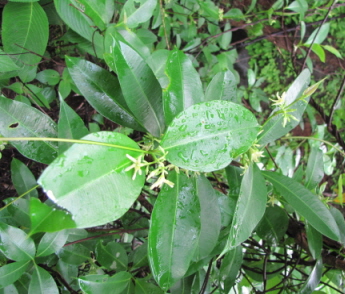
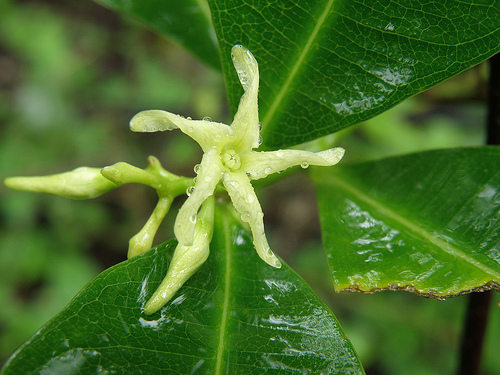
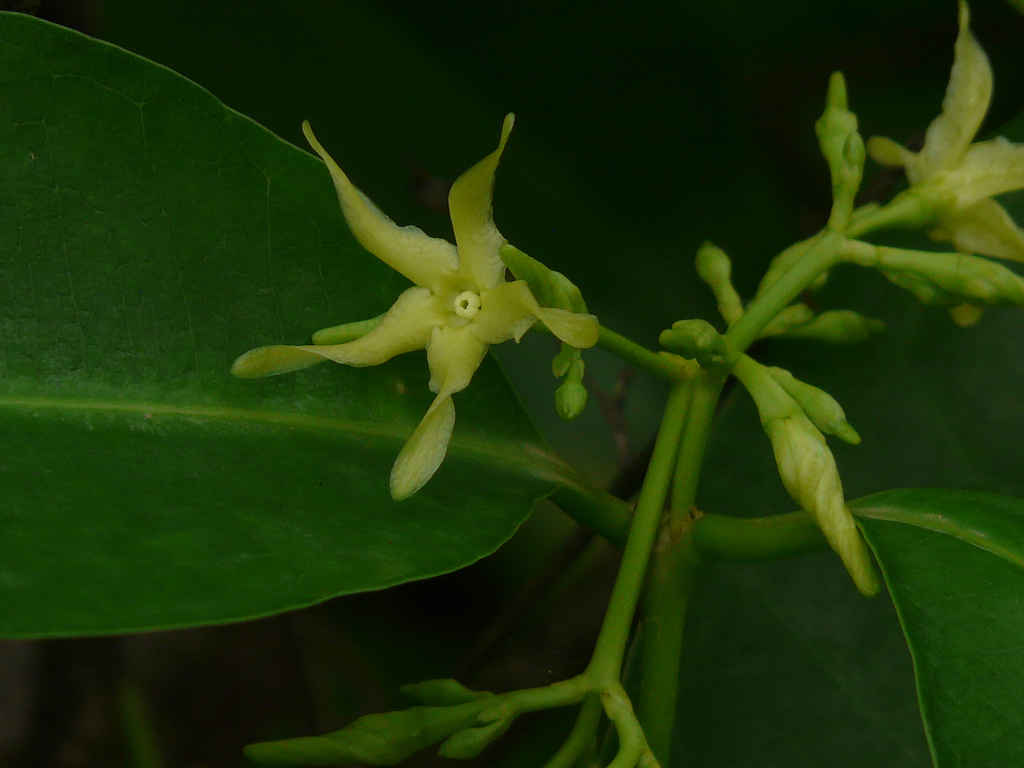
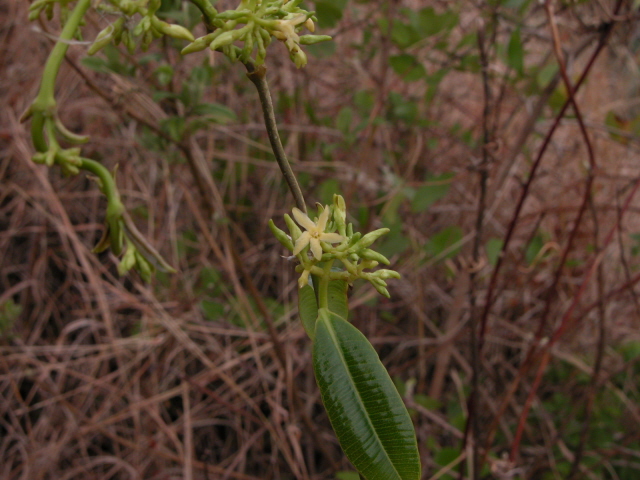
When the government mandated the formal botanical mapping of ancient drugs in the mid-1900s, scholars ran into a massive problem with this shared designation. To cleanly split these two structurally distinct forest climbers in textbooks and prevent pharmacists from sending the wrong roots to manufacturing units, Dravyaguna (Ayurvedic pharmacology) committees deliberately invented modern, hyper-descriptive prefixes to act as linguistic placeholders. Ichnocarpus frutescens (which has tiny, fine leaves) was nicknamed सूक्ष्मपत्र सारिवा (Sukshmapatra Sariva — Small-leaved Sariva), while Cryptolepis buchananii (which features thick, leathery, dark-green leaves with prominent white veins) was assigned a synthetic Sanskrit name: जम्बुपत्र सारिवा (Jambupatra Sariva — Jamun-leaved Sariva). This term was intentionally coined by 20th-century institutional committees to retroactively resolve the Krishna Sariva name sharing … compiled from the web.
~~~~~ SANTALI ~~~~~
written in: Ol Chiki (ᱥᱟᱱᱛᱟᱲᱤ), Bengali (সাঁওতালী), Odia (ସାନ୍ତାଳୀ), Devanagari (सान्ताली), Roman … spoken in: JharkhandWest Bengal, Odisha
ᱩᱛᱨᱤ ᱫᱩᱫᱷᱤ utri dudhi
  • Campbell, A., of the Santal mission A Santali-English dictionary Pokhuria, India : Santal Mission Press, 1899
  • PRAIN, DAVID – BENGAL PLANTS – VOL. II
  • In Santali, Dudhi (or Dudhi lota) translates directly to “The Milky Vine”, maintaining the precise visual loop established across mainland Indian languages (Dudhibel / Dudhvel / Haalu balli / Paalvalli). The specific prefix Utri serves as an old, traditional geographic or morphological identifier used by the Santhal Rarhi sub-clans to distinguish this strong forest climber from common lawn weeds that also bleed white latex. … compiled from the web.
~~~~~ TAMIL ~~~~~
written in: Tamil (தமிழ்) … spoken in: Tamil Nadu, Puducherry, Andaman & Nicobar Islands
மாட்டாங் கொடி maattaang kodi, பால் கொடி paal kodi
  • Yercaud Ilango – Tamil names of Botanical names … (downloaded: Jun 23, 2022)
  • மாட்டாங் கொடி (Maattaang kodi) — A descriptive pastoral name meaning “the cattle vine”. Documented by regional botanical authorities, it captures a brilliant visual and ecological marker: referencing the plant’s unique, long, twin-paired seed pods that grow horizontally opposite each other like a cow’s horns, while noting its abundance in traditional cattle grazing lands. … compiled from the web.
  • பால் கொடி (Paal kodi) — A foundational vernacular name translating literally to “the milk vine”. It directly describes the climber’s heavy flow of white latex, serving as a perfect linguistic twin to the Hindi Dudhibel and Malayalam Paalvalli. … compiled from the web.
~~~~~ TELUGU ~~~~~
written in: Telugu ( తెలుగు) … spoken in: Andhra PradeshTelangana, Puducherry
అడవి పాలతీగ adavi paalatige, రోకలిపాల rokalipaala, రైతుపాల rythupaala
  • Flora Andhrika – Plant Wealth of Andhra Pradesh, India … (accessed: August 21, 2026)
  • FRLHT’s ENVIS Centre on Medicinal Plants … (accessed: August 21, 2026)
  • అడవిపాలతీగ (Adivipalatige) — The foundational Telugu name translating literally to “the wild milk-vine”. It serves as a perfect national linguistic twin to the Hindi Dudhibel and Kannada Halu balli, highlighting the immediate flow of white latex from cut stems. … compiled from the web.
  • రోకలిపాల (Rokalipala) — A unique regional name translating to “the pestle milk-plant”. It captures a brilliant field-identification trait: referencing the plant’s mature, woody, and intensely rigid ropelike stems that grow as tough as a traditional wooden pestle. … compiled from the web.
  • రైతుపాల (Rythupaala) — A traditional agricultural name translating to “the farmer’s milk-weed”, reflecting how frequently rural cultivators encounter this scrambling climber along farm borders and hedgerows. … compiled from the web.
~~~~~ KNOWN DISTRIBUTION in INDIA ~~~~~
throughout
~~~~~ Created on: 12:22 19-08-2026 ¦ Last updated: 21:34 22-08-2026 (DD-MM-YYYY) ~~~~~
Malvani name added …
commonly known as: Indian sarsaparilla, wax-leaved climber • Angika: मटका दूधिया लतरा matka dudhiya latra • Bengali: হরজোড়া লতা harjora lata, কৃষ্ণ অনন্তমূল krishna anantamul • Bhili: दूधीबेल dudhibel, गेंडासिंगी gendasingi, नागबेल nagbel, सेता कावळी seta kawali • Dogri: काली तरेणी kali tareni • Garhwali: दूधीबेल dudhi-bel, मेडासिंगी meda-singhi • Gujarati: કાળીવેલ kalivel, કાવળી kavali • Hadauti: मेड़ासिंगी medasingi • Haryanvi: दुधी dudhi • Hindi: दूधीबेल dudhibel, काला बेल kala bel, करंटा karanta, नागबेल nagbel • Kannada: ಹಾಲು ಬಳ್ಳಿ halu balli, ಕರೆ ಬಳ್ಳಿ kare balli, ಮೆಟಗುಳಿ ಹಂಬು metaguli hambu, ಮೆಟ್ಲ ಹಂಬು metla hambu • Konkani: दुधवेल dudhvel, कावळी kavali • Kumaoni: दूधीबेल dudhi-bel • Malayalam: കളിപ്പാൽവള്ളി kalipaalvalli, കാട്ടുപാൽവള്ളി kattupaalvalli, കിളിപ്പാൽവള്ളി kilippaalvalli, പാൽവള്ളി paalvalli • Malvani: वाकांडी vakandi • Marathi: दुधवेल dudhvel, कावळी kavali • Mizo: thei-kel-ki-suak • Nagpuri: दूधला लार dudhla lar, मेढा-सिंगी medha-singhi, वैश-लक्ष्मण vaish-lakashman • Nepali: दुधे dudhe, गाइसिङ्गे gaaisinge, कोइले घुरियो koile ghuriyo, कालो सरिवा kaalo sariwaa, कृष्ण सरिवा krishna sariwaa • Odia: ଦୁଧି ନଈ dudhi nai, ଗୋପକାହ୍ନୁ gopakaanhu • Pahari: चीकबेल cheekbel, दूधली dudhli, करंटा karanta • Rajasthani: करमाटा की बेल karmata-ki-bel • Sanskrit: कृष्णसारिवा krishnasariva • Santali: ᱩᱛᱨᱤ ᱫᱩᱫᱷᱤ utri dudhi • Tamil: மாட்டாங் கொடி maattaang kodi, பால் கொடி paal kodi • Telugu: అడవి పాలతీగ adavi paalatige, రోకలిపాల rokalipaala, రైతుపాల rythupaala
~~~~~ MALVANI ~~~~~
written in: Devanagari (मालवणी) … spoken in: Maharashtra (only in the Sindhudurg district), north Goa (especially Pernem taluka) … a dialect of Konkani with significant Marathi influences and loanwords
वाकांडी vakandi
  • Many thanks to Vasant Kale for help with this name … facebook
  • वाकांडी (Vakandi) — A regional name prevalent across the southern Konkan (Malvan) and northern Goa. Documented in historical lexicons like Molesworth’s [↗] and Date’s [↗] Marathi dictionaries, the term shares an allied meaning with a traditional supportive waist-garment worn by women, wrapped tightly around the midsection. The name functions as a vivid operational analogy, referencing the climber’s distinct field habit of coiling and binding itself tightly around forest thickets. … compiled from the web.
  • वांकुडी (Vankudi) — A recorded dialectal variant derived from the regional root for “curved” or “bent” capturing the structural curvature of the climber’s distinct, horizontally opposite twin seed pods. … compiled from the web.

Both Malayalam and English names are correct.


.


200826pkd2: Id Pls collected from Gajapati Odisha on Aug 2026: 2 high res. images.


I think Cryptolepis buchanani


Yes


.

References:
Updated on September 3, 2026

Related Articles