
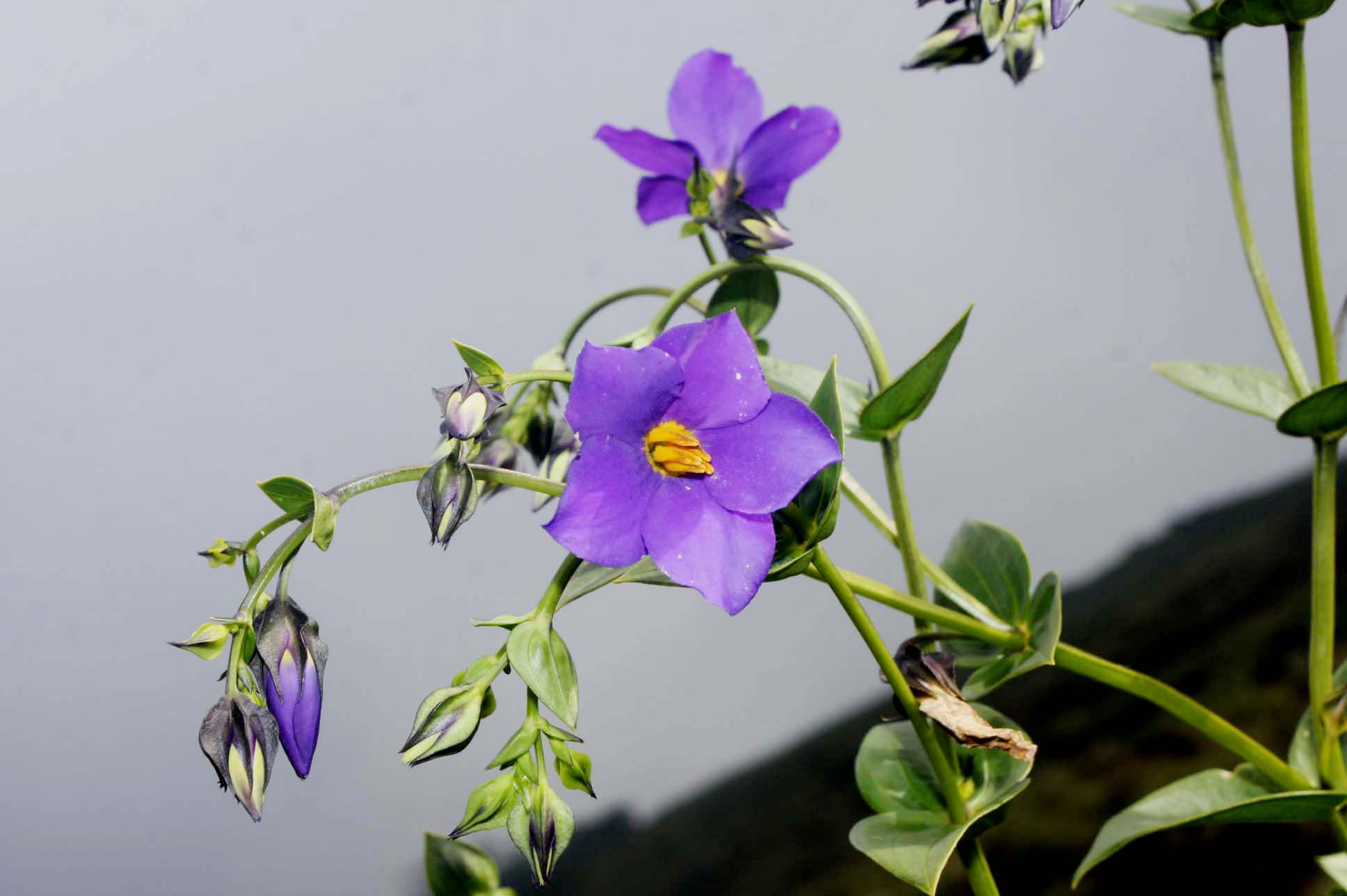
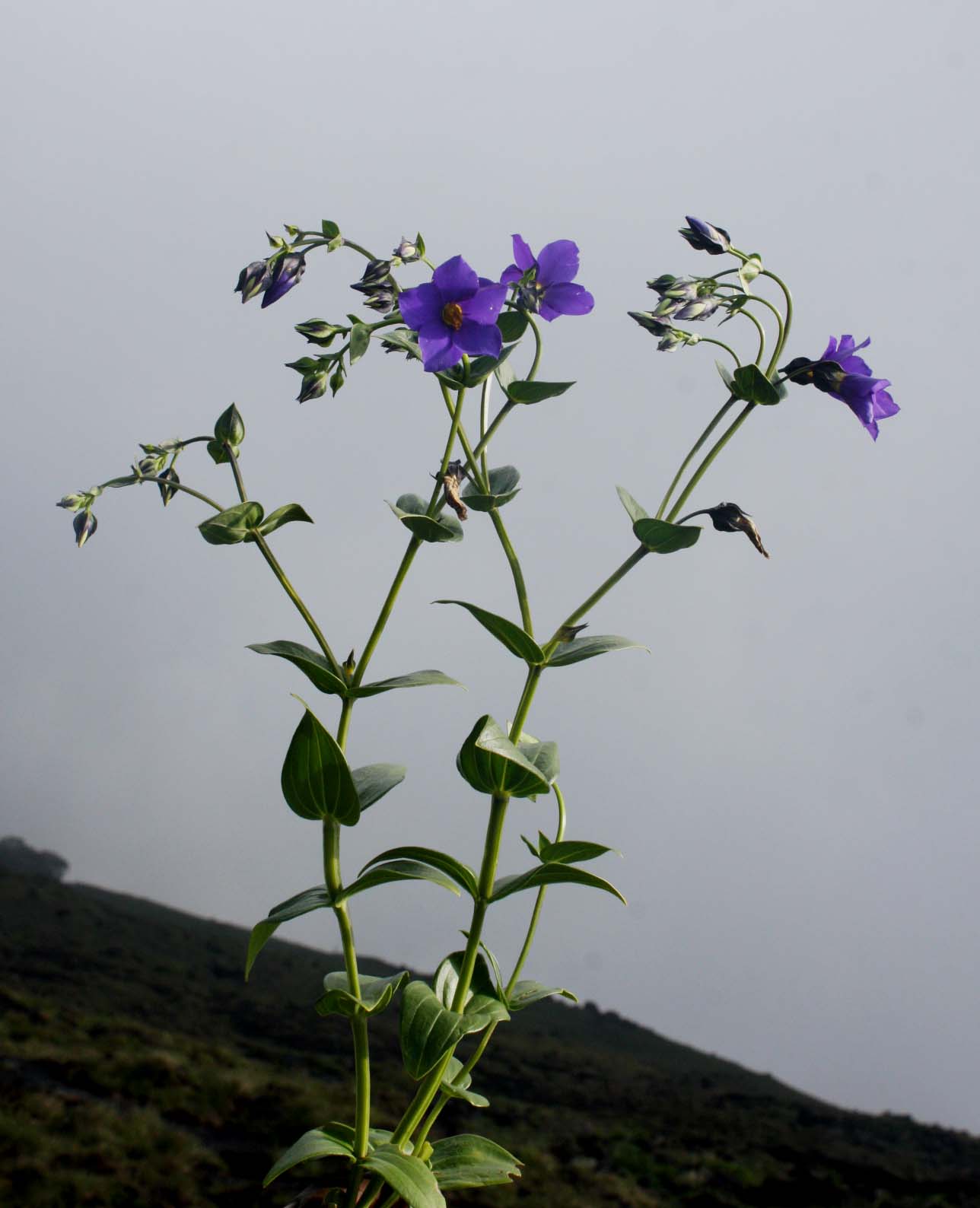
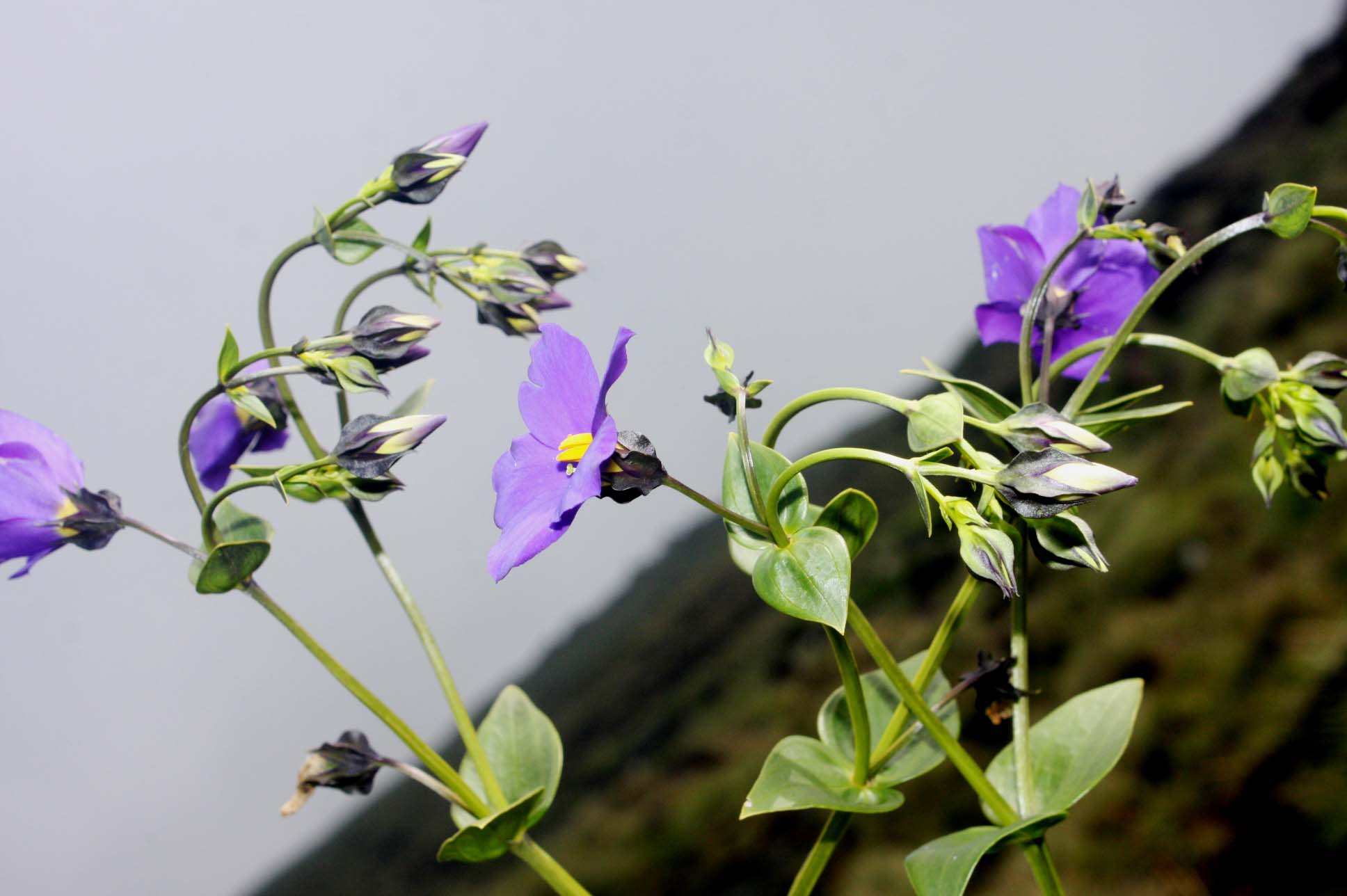
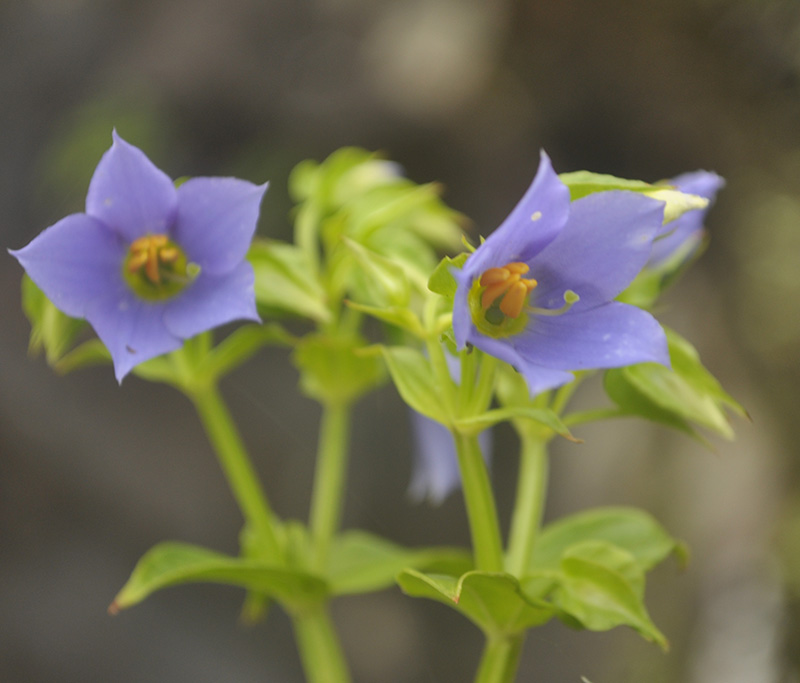
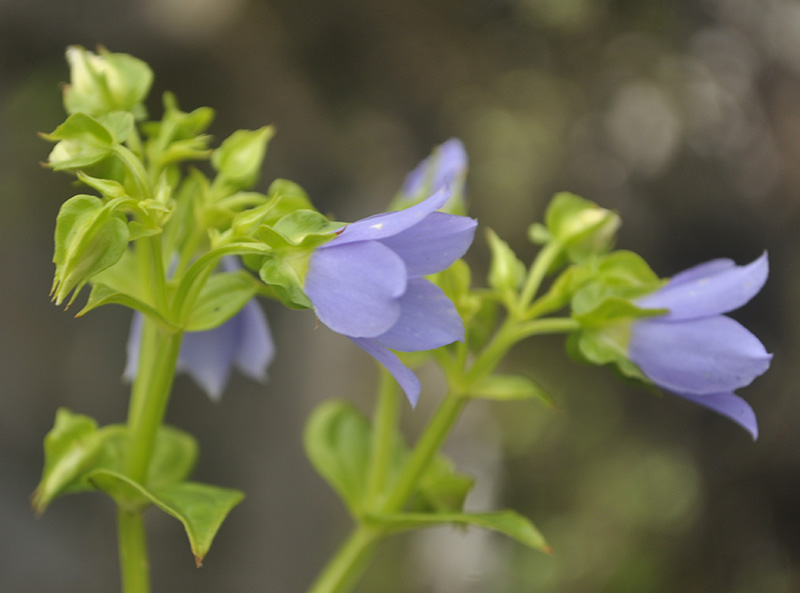
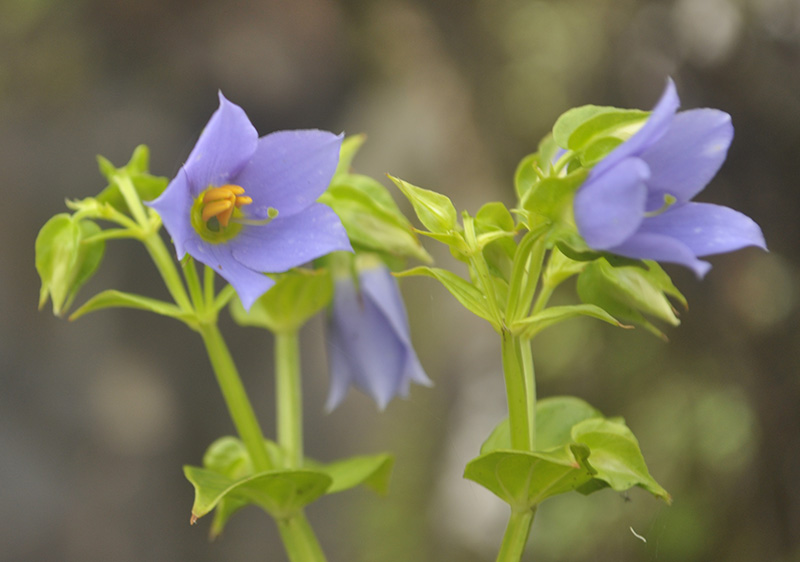
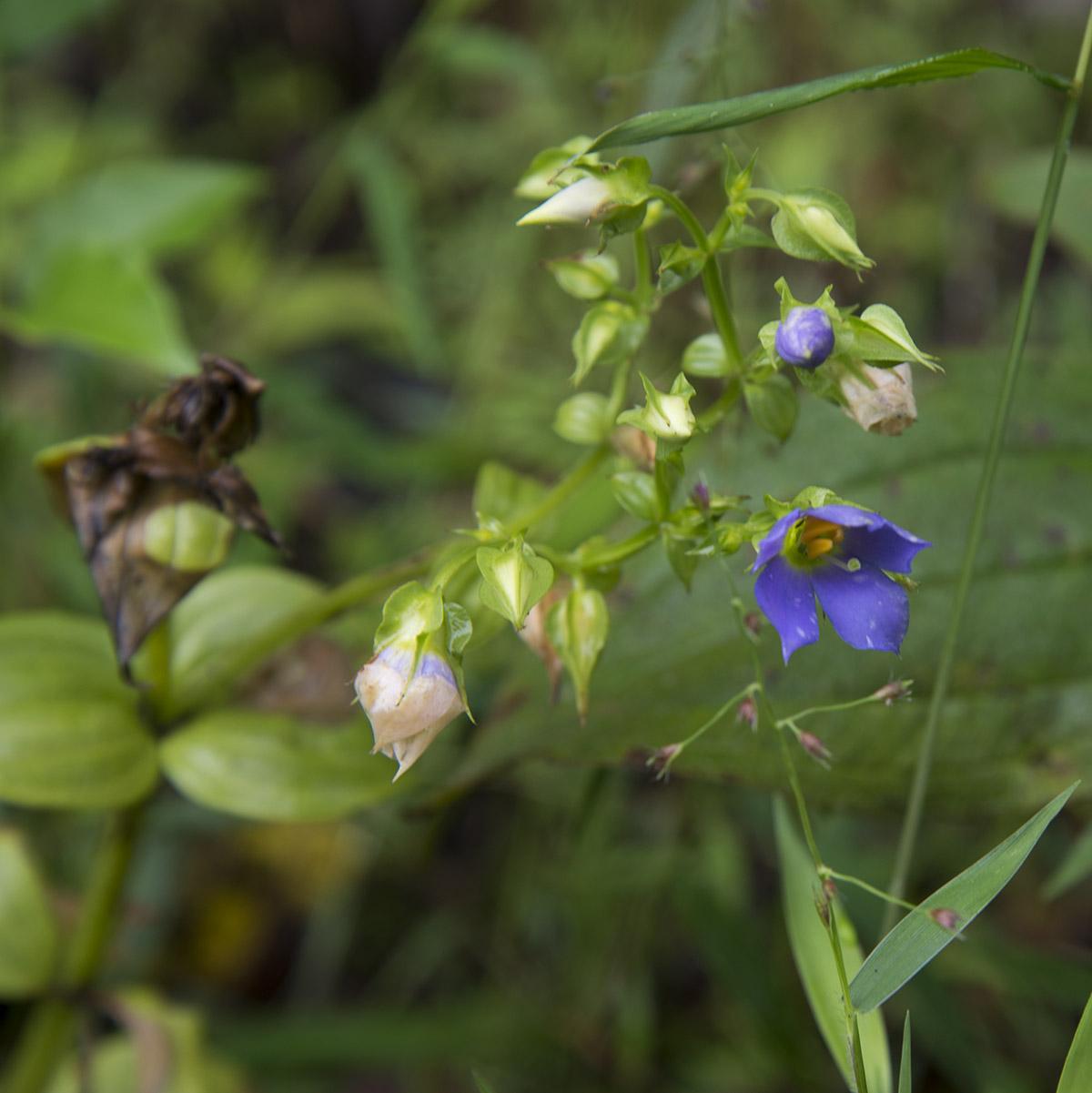
Exacum wightianum Arn., Ann. Sci. Nat., Bot. II, 11: 176 1839. (Syn: Exacum foliosum Griseb.; Lisianthius zeylanicus Spreng. (Unresolved)); Common name: Wight’s Persian Violet Shrubs, stem 4-winged. Leaves opposite, 6 x 4 cm, broadly ovate, lanceolate, acuminate, membranous, 5-nerved, sessile. Cymes axillary and terminal; calyx lobes winged, 12 mm, lanceolate, wings to 4 mm broad; corolla rotate, tube 6 mm, lobes 2 cm, oblanceolate, apiculate; stamens 5, filaments 4 mm; ovary many ovuled, style 8 mm, stigma sub capitate. Flowering and fruiting: April-July Grasslands Southern Western Ghats (Endemic) (Attributions- Dr. N Sasidharan (Dr. B P Pal Fellow), Kerala Forest Research Institute, Peechi
Gentianaceae week: Exacum wightianum : 4 posts by 4 authors. Attachments (3). Exacum wightianum collected from Muthikulam forest, Palakkad during October 2013. Exacum is a genus which I know very little. Thanks for showing another species.
Plant for id request blue flower : 2 posts by 2 authors. Attachments (3) Plant for id request. State KERALA. october 2015 Place: Thekaddy Exacum wightianum, Family Gentianaceae
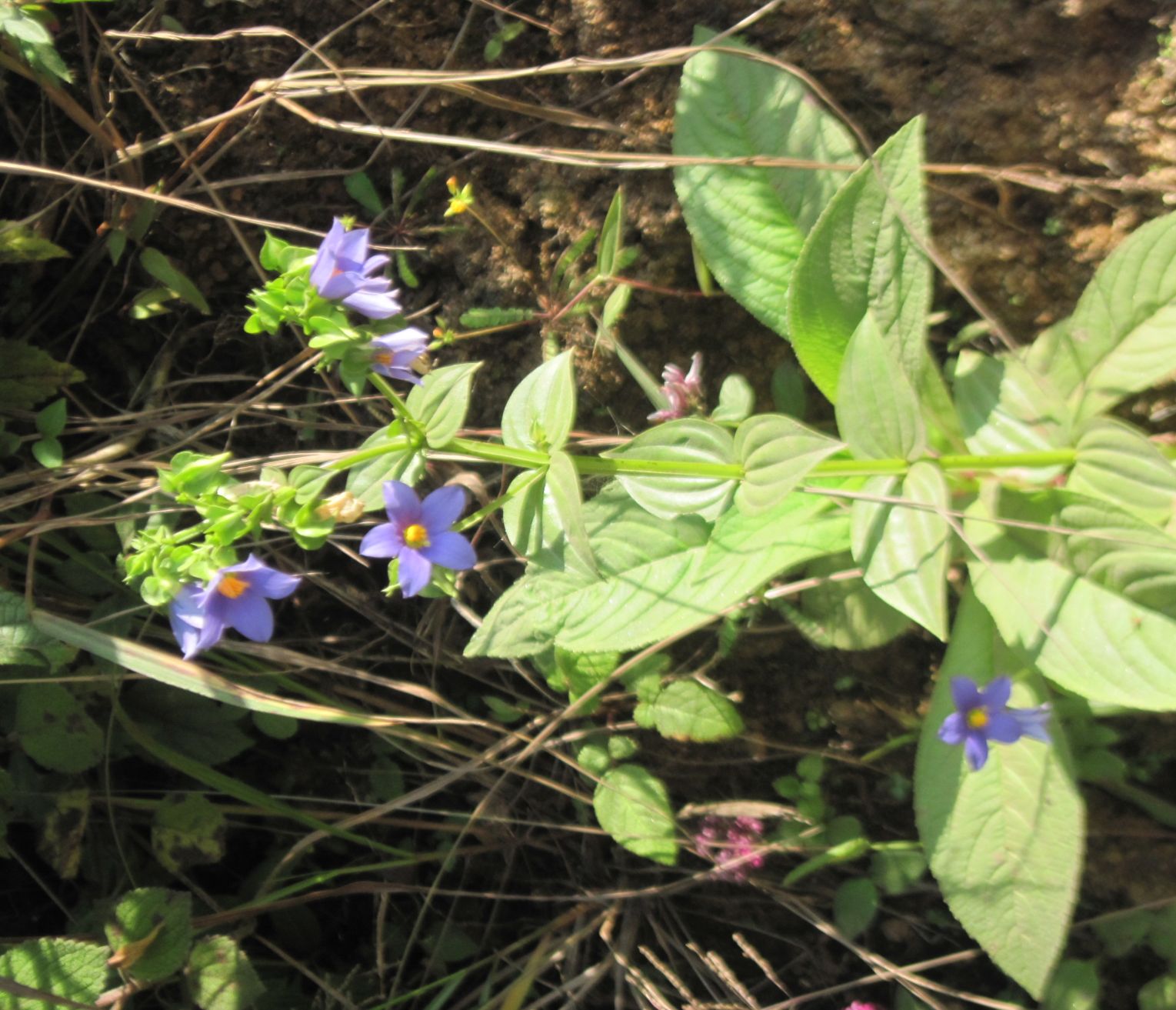
efloraindia: 141011 BRS63: Date/Time-Location- )7.10.2011 Place, Altitude, GPS- Munnar (Kerala) 1800 MSL Habitat- Urban (Road side) Exacum sp. of Gentianaceae family. Calyx lobes with broad dorsal wings that are prominently nerved (not so clear in the picture), leaves 5 nerved suggests that this could be Exacum petiolare. Leaves are petioled according to the key provided by Gamble here it seems that leaves are sessile. This appears to be interesting I agree with … The leaves here are clearcut sessile. Petals are also 5. Doesn’t fit in any key from BSI Maharashtra. or Cooke’s flora. Is it wild or garden plant? Yes I agree with … that this shows some striking difference from the one that is described in the key provided by Gamble as well. Further, I ruled out of the possibility of this being E. petiolare because of 5 petals against the 4 petals mentioned in keys. … where exactly from Munnar you collected this plant? I think this is Exacum petiolare of Gentianaceae But leaves are sessile here! No petiole for petiolare Yes … You are right. I overlooked that completely. This must be E. pedunculatum. I think close to images at Exacum wightianum Arn. Exacum wightianum I also picked this up from Munnar, Kerala, attaching Picture of my collection.
Exacum wightianum, : 2 posts by 2 authors. Attachments (1) Exacum wightianum, Pothamedu near Munnar, Kerala, in the Nilgiris First week of October 2018
|
Exacum wightianum
Updated on December 24, 2024